A bathroom remodel has a lot of moving parts. Plumbing, wiring, waterproofing, and ventilation all have to work together. If one piece is off, you may not notice until a leak or mold shows up months later.
A bathroom remodel checklist helps you avoid that. It puts every task in the right order, so you know what to decide, what to ask, and what to check at each stage. This guide covers the process only. For style and design inspiration, see our bathroom remodel ideas.
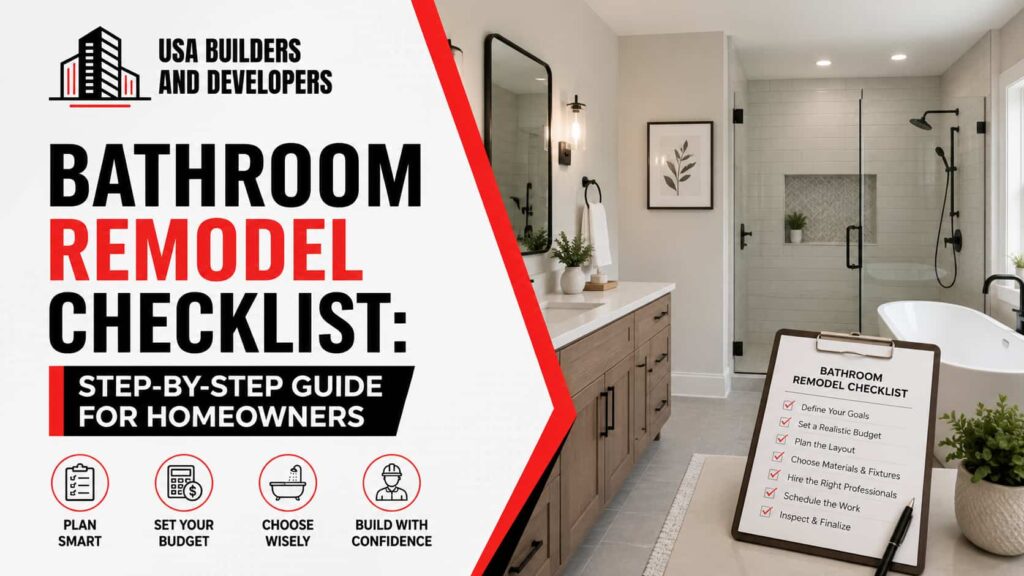
Bathroom Remodel Checklist at a Glance
| Stage | What to do |
|---|---|
| Plan | Set goals and budget, decide on the layout, confirm your selections |
| Prepare | Hire a contractor, confirm permits, clear the room |
| Build | Check for hidden damage, finish plumbing, electrical, and ventilation, then waterproof and install finishes |
| Finish | Test everything, make a punch list, collect warranties |
Step-by-Step Bathroom Remodel Checklist
1. Set Your Goals and Budget
Start by deciding what the remodel should do for you: work better, look better, or add value. Then put numbers on it. Count labor, materials, fixtures, plumbing and electrical upgrades, and permits. Keep 10% to 20% aside for surprises. A clear budget is the foundation of every bathroom remodel checklist.
2. Plan the Layout
Look at where the sink, toilet, and shower sit now. Ask whether they suit how you use the room, and whether you have enough storage and walking space. Keep in mind that moving fixtures also means moving plumbing, which raises the price.
3. Confirm Your Selections
Choose for a damp room first and style second. Floors should be slip-resistant, and walls and cabinets should handle humidity. Check fixture sizes and plumbing connections before you order, so everything fits. Pick an exhaust fan sized for the room. Add these choices to your bathroom remodel checklist before you order anything.
4. Hire a Contractor
Plumbing, electrical work, and waterproofing are not places to save money. Look for a valid license, insurance, and real bathroom experience. Get a written estimate with the scope, payment terms, and schedule. A very low bid often means skipped prep work.
5. Confirm Permits
Plumbing, electrical, and structural changes often need permits, and rules vary by county. Ask your contractor who will apply and who will book the inspections. Skipping permits can lead to delays or fines.
6. Prepare and Demolish
Clear out personal items, cover nearby floors, and expect dust and noise. Once walls and floors are open, treat demolition as an inspection. It can reveal water damage, mold, weak framing, old plumbing, or bad wiring. Each one can change your scope and budget, so do not rush this stage.
7. Finish Plumbing, Electrical, and Ventilation
The hidden work happens before the finishes. Plumbers move supply and drain lines, and electricians add wiring, lights, and outlets. Bathroom outlets need GFCI protection. The exhaust fan should vent outdoors, because poor airflow is one of the most common causes of mold. Book inspections before the walls close.
8. Waterproof and Install Finishes
Waterproofing goes on first in the shower and other wet areas. After that come flooring, wall tile, the vanity, tub or shower, toilet, fixtures, paint, and trim. Straight tile lines, tight seals, and precise fixture placement are signs of good workmanship.
9. Do the Final Inspection
Walk through the room with your contractor. Test the fixtures, drains, lights, and fan. Check the fittings, caulk, and finishes. Write down anything unfinished on a punch list, and ask for warranties, permit records, and care instructions.
The last item on your bathroom remodel checklist is simple: the job is done when everything works, not when construction stops.
Mistakes That Cost the Most
Most bathroom remodel problems come from the same few mistakes. They include starting without a clear budget, choosing style over function, skipping ventilation, cutting corners on waterproofing, hiring on price alone, and rushing design decisions. Each one is easy to avoid with a plan.
What is the difference between a bathroom remodel and a renovation?
A remodel changes the layout or design of the room. A renovation restores or updates what is already there. Many people use the two words to mean the same thing.
In what order should you remodel a bathroom?
A bathroom remodel should follow this order: planning and budgeting, demolition, plumbing and electrical work, flooring and wall installation, fixture installation, and final finishing.
How long does a bathroom remodel take?
A typical bathroom remodel takes between 2 to 4 weeks, depending on the size of the bathroom, the complexity of the work, and the availability of materials and contractors.
What is the most expensive part of a bathroom remodel?
The most expensive part of a bathroom remodel is usually labor and plumbing work, especially if the layout is changed or major upgrades are required.
Final Thoughts
A bathroom remodel checklist will not build the room for you, but it keeps every decision in order. Plan first, choose for function, and check the hidden work before the finishes go on. That is how you get a bathroom that works well for years.
If you plan to hire help, you can learn more about bathroom remodeling services in Maryland.
Have Questions? Call Us Now!
We’re here to help—quick answers, friendly service, anytime you need!



Contact USA Builders and Developers
🌐 Website: www.usabuildersanddevelopers.com
📍 Serving: Baltimore, Betheda, Silver spring, and Montgomery Maryland
📌 Address: 2144 Priest Bridge Court, Suite 8, Crofton, MD 21114, USA