If you own a commercial building or a home with a flat or low-slope roof, you’ve probably heard of EPDM roofing material. It’s one of the most common roofing materials for these roof types, and for good reason it holds up well, it’s flexible, and it’s been used for decades.
This guide breaks down what EPDM roofing material is, the different types available, how it’s installed, and what to watch out for so you can make an informed decision.
What Is EPDM Roofing?
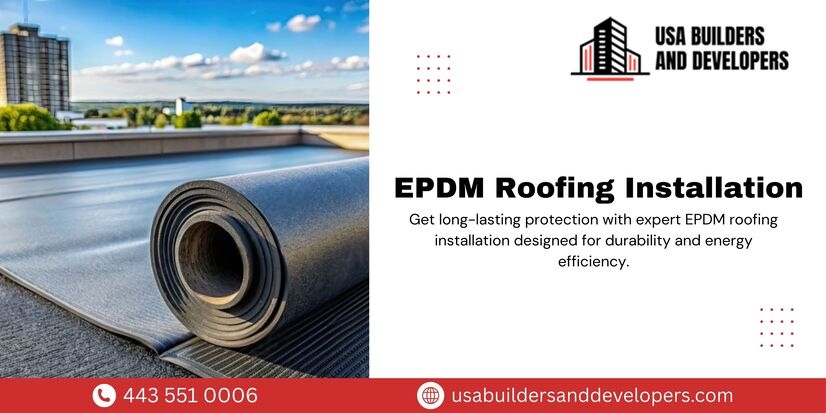
EPDM stands for ethylene propylene diene terpolymer — but you don’t need to remember that. In simple terms, EPDM roofing material is a synthetic rubber membrane used to waterproof flat and low-slope roofs.
Instead of shingles or metal panels, EPDM comes in large rubber sheets. These sheets are rolled out across the roof and sealed together at the seams to create one continuous, waterproof surface.
Quick facts:
| Feature | Details |
|---|---|
| Material type | Synthetic rubber |
| Best for | Flat and low-slope roofs, commercial buildings |
| Common colors | Black or white |
| Typical thickness | 45, 60, or 90 mil |
| Installation methods | Fully adhered, mechanically attached, or ballasted |
| Average lifespan | 20–30 years with proper maintenance |
How an EPDM Roof System Works
A roof isn’t just the top layer you see — it’s a full system. An EPDM roof typically includes:
- The roof deck (the structural base)
- Insulation
- A cover board
- The EPDM membrane itself
- Adhesive or fasteners
- Seam tape or adhesive
- Flashing around edges and openings
- Drainage components
Here’s the important part: even high-quality EPDM will fail if any of these other pieces are installed poorly. Most roof leaks don’t come from the membrane itself — they come from bad seams, poor flashing, or drainage problems. That’s why installation quality matters as much as the material.
Types of EPDM Membrane
Not all EPDM roofing material is the same. Here’s how the main types differ:
Reinforced EPDM has a fabric layer built into the rubber. This makes it stronger and more resistant to stretching or tearing — a good option for roofs that need extra durability.
Non-reinforced EPDM doesn’t have that fabric layer. It’s more flexible and is often used in fully adhered systems.
Cured EPDM has been treated so the rubber holds a stable shape. This is the standard membrane most roofs are made from.
Uncured EPDM stays soft and moldable. It’s mainly used for flashing around pipes, corners, and other tricky spots where the material needs to bend into place.
How EPDM Thickness Affects Your Roof
EPDM comes in three common thicknesses: 45, 60, and 90 mil. Thicker isn’t automatically better — the right choice depends on:
- How much foot traffic the roof gets
- What the building is used for
- Local weather conditions
- Risk of punctures (from equipment, debris, etc.)
- How the membrane will be installed
A roofing contractor can help match the thickness to your specific roof.
Installation Methods
There are three main ways to install an EPDM roof:
Fully Adhered
The membrane is glued directly to the roof surface with adhesive. This gives a clean, low-profile finish and performs well in wind — as long as the adhesive is applied correctly and is compatible with the rest of the roof system.
Mechanically Attached
The membrane is secured with screws and plates instead of adhesive. This method works well for many building types, but the fastener spacing has to be designed for local wind conditions — get this wrong, and the whole roof’s wind resistance suffers.
Ballasted
Instead of gluing or screwing the membrane down, this method uses the weight of stone or concrete pavers to hold it in place. It’s a fast way to cover a large roof, but the building has to be structurally able to support the extra weight.
The Roof Details That Actually Matter Most
The flat sections of an EPDM membrane rarely cause problems. It’s the details — the places where the membrane meets something else — that determine whether a roof leaks.
Seams: Large sheets of EPDM have to be joined together, usually with seam tape or liquid adhesive. A poorly sealed seam is one of the most common points of failure on any EPDM roof.
Flashing: This protects spots where the membrane meets walls, pipes, vents, or HVAC units. Because uncured EPDM stays flexible, it’s often used here since it can be molded around irregular shapes.
Roof edges: The perimeter of the roof needs proper edge protection to keep the membrane secure and to hold up in high winds.
Penetrations: Anything that passes through the roof — pipes, vents, skylights, equipment — needs to be sealed carefully to stop water from getting in around it.
Drains: Flat roofs don’t shed water the way sloped roofs do, so drains need to be integrated properly with the membrane. Poor drainage is one of the top causes of long-term roof damage.
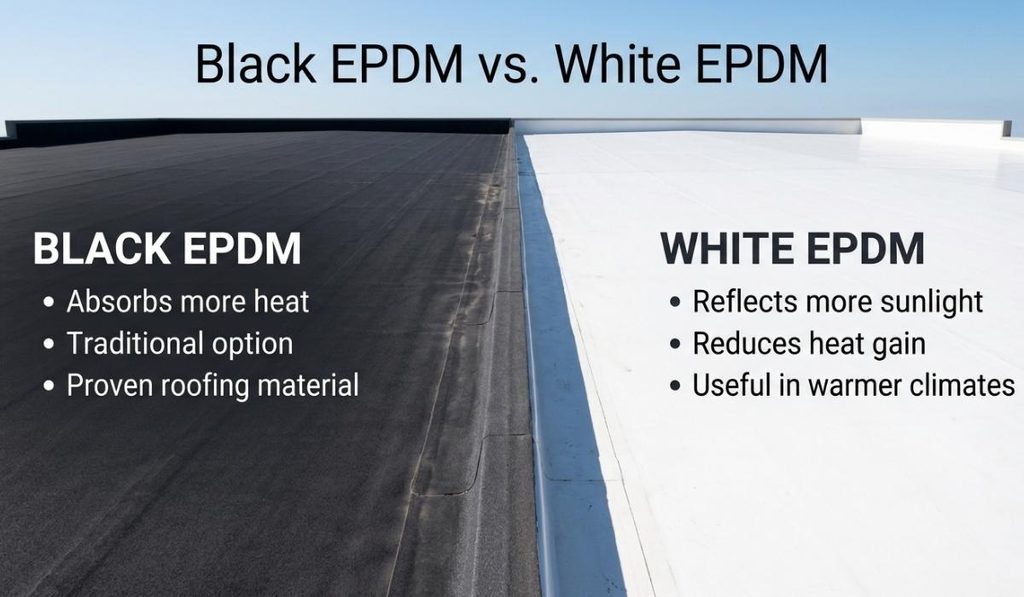
Black EPDM vs. White EPDM
The two colors aren’t just cosmetic — they behave differently:
Black EPDM absorbs sunlight and heat. It has the longest track record in the industry and is a reliable, budget-friendly choice.
White EPDM reflects sunlight instead of absorbing it, which can help reduce cooling costs in warmer climates.
The right choice depends on your climate, energy goals, and the building itself.
Benefits of EPDM Roofing
- Flexible — handles temperature swings and building movement well
- Weather-resistant — built to withstand sun, rain, and temperature changes over many years
- Large sheets — fewer seams mean fewer weak points
- Multiple installation options — adaptable to different roof types and budgets
- Long lifespan — 20-30 years is typical with good maintenance
Downsides to Consider
- Seams require careful installation — this isn’t a DIY-friendly material
- Sharp objects or heavy foot traffic can puncture the membrane
- Black EPDM absorbs more heat, which can be a downside in hot climates
- EPDM only performs well as part of a properly designed full roof system — insulation, drainage, and flashing all matter just as much
How to Maintain an EPDM Roof
A little maintenance goes a long way. A basic checklist includes:
- Inspect the membrane for punctures or cuts
- Check seams and flashing for separation
- Clear debris from drains
- Look for signs of standing water (ponding)
- Check the roof edges for damage
- Repair small issues before they turn into leaks
Have a professional inspect the roof at least once a year, especially after severe weather.
Repair or Replace?
Not every damaged EPDM roof needs to be torn off and redone. As a general rule:
Repair usually makes sense when:
- Damage is limited to a small area
- The rest of the membrane is in good shape
- Leaks are occasional, not repeated
Replacement is usually the better call when:
- Damage is spread across the roof
- The membrane is near or past its expected lifespan
- Leaks keep coming back in different spots
- Repair costs keep adding up
A professional inspection is the best way to know which category your roof falls into.
Frequently Asked Questions
What is EPDM roofing made of?
It’s a synthetic rubber membrane (ethylene propylene diene terpolymer) used mainly on flat and low-slope roofs.
How thick should my EPDM roof be?
Most roofs use 45, 60, or 90 mil membrane. The right thickness depends on your building’s use, traffic, and local weather.
How long does EPDM roofing last?
Typically 20-30 years, depending on installation quality, maintenance, and weather exposure.
Is black or white EPDM better?
Neither is universally better — black is a proven, cost-effective standard, while white reflects heat and can help with cooling costs in hotter climates.
Can a damaged EPDM roof be repaired instead of replaced?
In many cases, yes — as long as the damage is localized and the rest of the roof is in good condition.
Final Thoughts on EPDM Roofing Material
EPDM roofing material has stayed a top choice for flat and low-slope roofs for a simple reason — it works, and it lasts, when it’s installed and maintained correctly. The membrane itself is durable, but the real key to a leak-free roof is getting the details right: seams, flashing, drainage, and edges.
If you’re not sure what condition your current roof is in, or you’re weighing repair versus replacement, don’t wait for a small issue to turn into a bigger one. USA Builders and Developers offers professional roof inspections across Baltimore, Bethesda, Silver Spring, and the surrounding Maryland area, and can help you figure out the right next step for your building.
Call 443-551-0006 for a free roof estimate, or request a quote online.
Need Help with Your Next Project? Call USA Builders Today!
We’re here to help—quick answers, friendly service, anytime you need!