A poorly insulated home can feel uncomfortable in every season. Rooms may become too hot in summer, too cold in winter, and your heating or cooling system may need to work harder to maintain a comfortable temperature. Blown in insulation can help improve the thermal performance of your home by filling attic floors, wall cavities, and other suitable spaces with loose insulation material.
This type of insulation is commonly made from cellulose or fiberglass. A special blower machine distributes the material through a hose, allowing it to reach areas that can be difficult to cover with traditional insulation batts. For Maryland homeowners, choosing the right insulation is not only about adding more material. The condition of the attic or walls, air leakage, moisture, ventilation, existing insulation, and required R-value all need to be considered.
What Is Blown In Insulation?
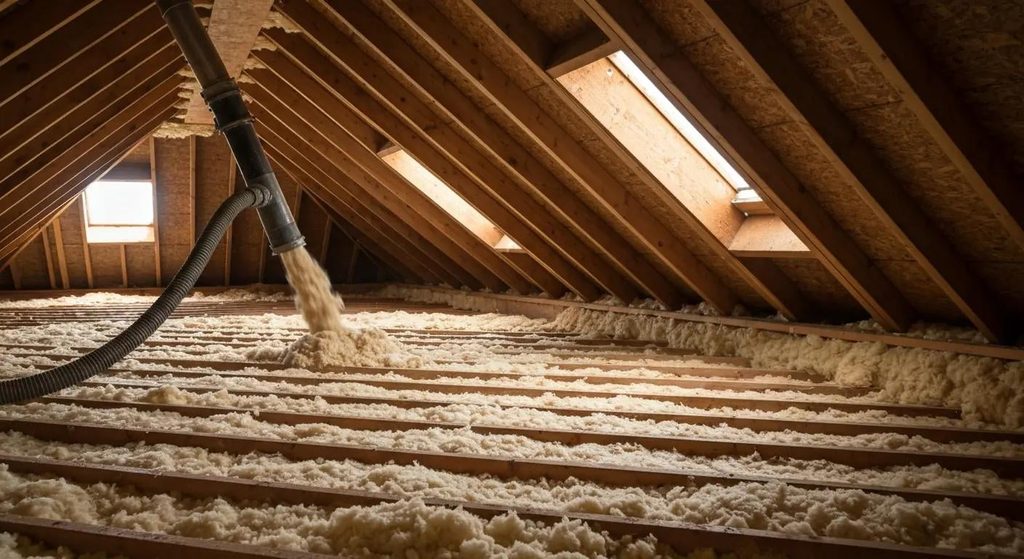
Blown in insulation is a loose-fill insulation system installed with specialized equipment. Instead of using large rolls or rigid panels, the insulation is broken into small fibers and blown into the area being insulated. The material can spread around wiring, pipes, framing, and other obstacles. This makes it useful for both new construction and many retrofit projects.
Two common materials are:
- Blown-in cellulose
- Blown-in fiberglass
The best option depends on the location, existing construction, desired R-value, moisture conditions, and installation requirements. In an attic, loose-fill material is usually installed over the ceiling plane. In suitable wall-retrofit projects, insulation can be blown into existing cavities through access holes.
How Does Blown In Insulation Work?
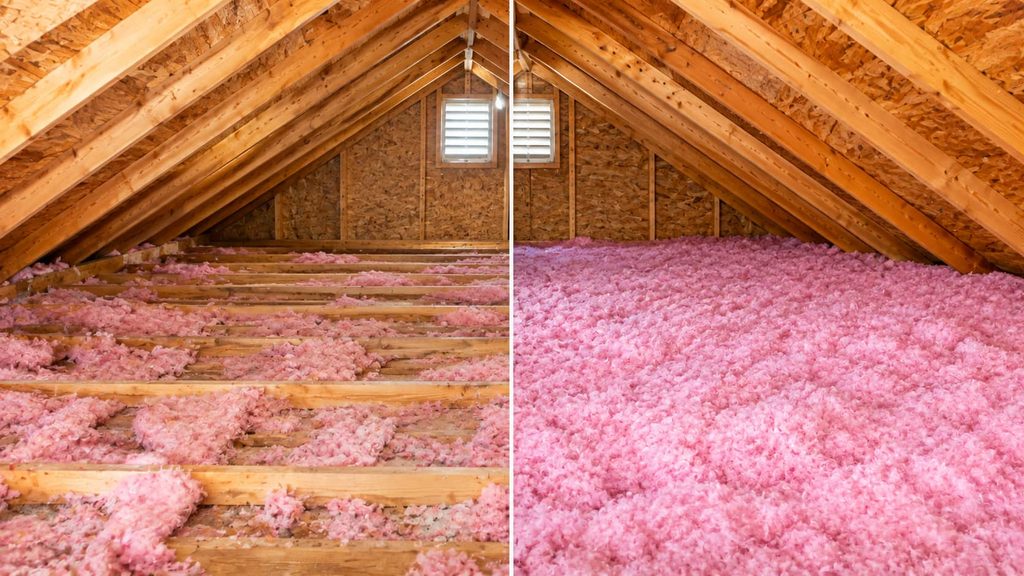
The process uses a blowing machine that breaks apart the insulation and pushes it through a long hose. For an attic project, the installer moves the hose across the attic floor and distributes the material evenly. The goal is to create a consistent layer at the required depth.
Wall applications work differently. A contractor may create small access holes and blow insulation into the wall cavities. This is often called a drill-and-fill installation The material needs to fill the intended cavity properly. Gaps, thin areas, compression, or poor coverage can reduce the effectiveness of the installation.
That is why professional installation can make a major difference.
Where Can Blown In Insulation Be Installed?
Blown-in materials are commonly used in several areas of a home.
Attics
Attics are one of the most common locations. In a vented attic, insulation is normally installed over the ceiling rather than directly against the roof deck. Before installation, important air leaks should be sealed and ventilation paths should remain open. Proper baffles can help maintain airflow near soffit vents while keeping loose insulation from blocking those areas.
Exterior Walls
Older homes may have wall cavities with little or no insulation. A contractor may be able to add insulation without completely removing the finished wall. Small access holes can be created and the insulation blown into the cavities. This can be a practical option when the walls are otherwise in good condition.
Knee Walls
Knee walls separate finished areas from attic spaces. These areas can lose heat when they are poorly insulated or have gaps around the insulation. Blown insulation can be used in appropriate assemblies, but the entire wall system needs to be considered.
Difficult or Irregular Areas
Loose-fill insulation can work around obstacles that are difficult to cover with rigid products or standard batts. This can make it useful during renovation projects where the existing structure has unusual shapes or limited access.
Blown-In Cellulose vs. Blown-In Fiberglass
Choosing between cellulose and fiberglass depends on the project.
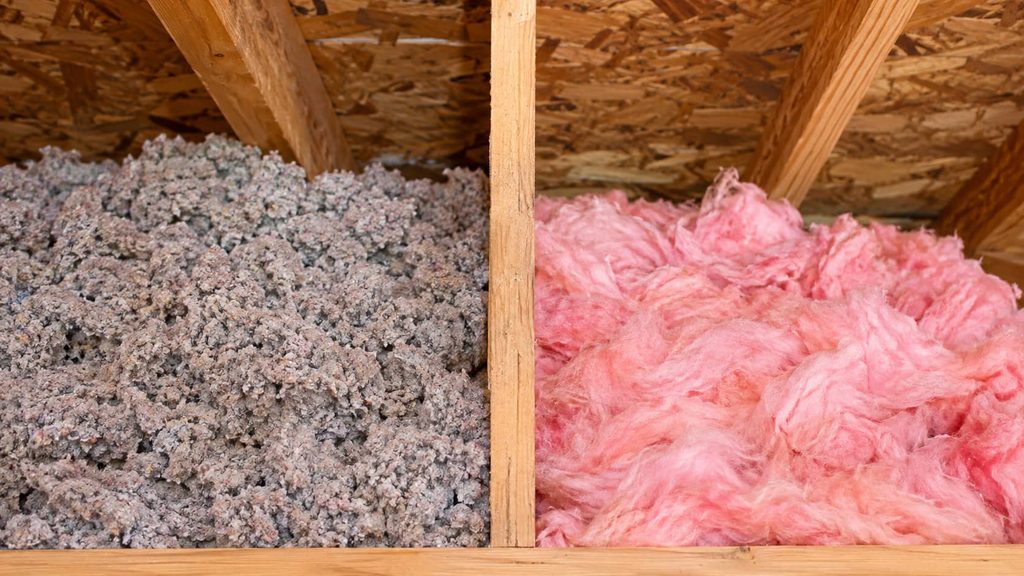
Blown-In Cellulose
Cellulose is a loose fiber insulation commonly made using recycled paper fiber. It can conform well to irregular spaces and is often used in attic and wall applications. It is also commonly used for dense-pack wall retrofits.
Blown-In Fiberglass
Blown fiberglass consists of small glass fibers designed for loose-fill installation. It is commonly used in attics and can also be used in suitable wall cavities. Both products can provide effective insulation when installed correctly. Rather than choosing a material based only on price, homeowners should consider the installation area, required R-value, product specifications, moisture conditions, and long-term performance.
What Is R-Value?
R-value measures an insulation material’s resistance to heat flow. A higher R-value generally means greater resistance to heat transfer. However, R-value is not the only factor that determines how well an insulated building performs. Installation quality matters. For example, insulation with a high rated R-value may perform poorly if it has large gaps, is compressed, or does not properly cover the intended area.
Why Air Sealing Matters Before Insulation
Adding insulation does not automatically stop air movement. Small openings around plumbing, electrical wiring, recessed fixtures, ducts, wall intersections, and other penetrations can allow conditioned air to escape. This is why air sealing should be considered before installing additional insulation.
In a vented attic, the ceiling usually acts as the air barrier. Openings through that barrier should be sealed before the insulation is installed. Think of it this way: Air sealing controls unwanted air movement. Insulation slows heat transfer. They work together, but they are not the same thing. A professional assessment can identify whether your home needs insulation, air sealing, or both.
8 Benefits of Blown In Insulation
1. Better Indoor Comfort
Insulation helps reduce heat transfer between your living space and the outdoors. A properly insulated attic can help reduce temperature swings between rooms and floors. You may notice that certain rooms feel more comfortable after insulation improvements.
2. Improved Energy Efficiency
When less heat moves through the building envelope, your heating and cooling equipment may not need to work as hard to maintain indoor temperatures. The actual energy savings vary from home to home. Factors such as windows, HVAC efficiency, air leakage, ductwork, insulation levels, and home size all affect the final result.
3. Excellent Coverage for Irregular Spaces
Loose-fill fibers can move around obstacles such as wiring and pipes. This makes them useful for areas where cutting individual insulation pieces would be difficult.
4. Good Option for Retrofit Projects
You do not always need to rebuild a wall or completely replace an attic floor to improve insulation. Certain existing homes can be upgraded using blown-in materials. This makes the method particularly useful for older properties that were built with inadequate insulation.
5. Can Improve Attic Performance
Adding insulation to an under-insulated attic can improve the thermal boundary between the living space and the unconditioned attic. Proper preparation is important. Air sealing and ventilation should be addressed before the insulation is installed.
6. Can Reduce Some Outside Noise
Insulation can help reduce certain types of sound transmission through walls and ceilings. The amount of improvement depends on the complete building assembly, including drywall, framing, windows, doors, and other materials.
7. Useful During Renovations
If you are already remodeling your home, it can be a convenient time to address insulation. For example, homeowners replacing siding or opening walls may have easier access to areas that were previously difficult to reach.
8. Can Support Long-Term Home Performance
Good insulation is part of a complete building envelope. When insulation, air sealing, moisture control, windows, and mechanical systems work together, the home can perform more efficiently and comfortably.
Signs Your Home May Need More Insulation
You may want to have your insulation inspected if you notice:
- Rooms that are much hotter or colder than others
- High heating or cooling demand
- A very hot attic during summer
- Cold ceilings during winter
- Drafty rooms
- Uneven attic insulation
- Very little visible insulation
- Settled or damaged insulation
- An older home with unknown insulation levels
- HVAC equipment running for long periods
- A renovation that exposes wall or ceiling cavities
These signs do not prove that insulation is the problem. Air leaks, HVAC problems, duct leaks, windows, moisture, and other building issues can create similar symptoms. An inspection can help determine the actual cause.
How Much Blown In Insulation Do You Need?
There is no single amount that works for every home. The required amount depends on several factors:
- Attic or wall area
- Existing insulation
- Insulation material
- Desired R-value
- Building design
- Climate
- Applicable codes
- Product specifications
- Installation method
The depth of loose-fill insulation should be consistent across the intended area. Simply adding more material does not guarantee better performance if it blocks ventilation or fails to address air leakage. For this reason, insulation should be installed according to the manufacturer’s coverage information and applicable building requirements.
Does Existing Insulation Need to Be Removed?
Not necessarily. Existing insulation may remain if it is dry, clean, and in acceptable condition. However, removal may be appropriate when insulation is:
- Wet
- Contaminated
- Heavily damaged
- Compressed
- Affected by pests
- Covering a serious building problem
The attic should be inspected before deciding. For example, adding new insulation over a roof leak does not solve the leak. The moisture source should be corrected first.
Can You Install Blown In Insulation Over Old Insulation?
In many attic projects, new loose-fill insulation can be added over existing insulation when the old material is in suitable condition. However, the area should be checked first. The contractor should look for:
- Roof leaks
- Moisture damage
- Air leaks
- Poor ventilation
- Electrical concerns
- Thin areas
- Damaged insulation
- Blocked soffit vents
If these problems are ignored, the new insulation may not provide the expected results.
What Does Blown In Insulation Cost?
The price varies significantly between homes. Important cost factors include:
| Cost Factor | Why It Matters |
|---|---|
| Attic size | Larger areas require more material and labor |
| Insulation type | Cellulose and fiberglass have different material costs |
| Existing insulation | Removal may increase labor |
| R-value | Higher insulation levels generally require more material |
| Access | Difficult attics require additional preparation |
| Air sealing | Extra sealing work adds labor |
| Wall installation | Drill-and-fill requires additional preparation |
| Repairs | Moisture or building problems may need correction first |
Because every property is different, a site inspection is more useful than relying on a generic online price. A professional can determine what work is actually required before providing an estimate.
What Happens During a Professional Installation?
A typical project may include these steps.
Step 1: Inspect the Area
The contractor evaluates existing insulation, ventilation, moisture, wiring, access, and other conditions.
Step 2: Identify Air Leaks
Common penetrations and openings are located and sealed where appropriate.
Step 3: Prepare the Space
Ventilation openings and sensitive components are protected according to installation requirements.
Step 4: Set Up the Blower
The insulation material is loaded into specialized equipment.
Step 5: Distribute the Material
The installer blows the material into the attic or wall cavities.
Step 6: Check Coverage
The material is checked for consistent depth and coverage.
Step 7: Inspect the Finished Work
The contractor checks for gaps, thin areas, blocked ventilation, and other concerns.
Is Blown In Insulation Right for Your Home?
It can be a strong option if your home has an under-insulated attic or suitable wall cavities.
It may be especially useful for:
- Older Maryland homes
- Homes with thin attic insulation
- Renovation projects
- Homes with uneven insulation
- Properties with difficult-to-reach spaces
- Wall retrofit projects
However, it may not be the right solution for every part of a home. A professional should evaluate the building before recommending a specific insulation method.
Why Professional Installation Matters
Blown-in insulation may look simple from the outside, but proper installation involves more than operating a blower machine. The installer needs to understand:
- Air sealing
- Ventilation
- R-value
- Material coverage
- Electrical clearances
- Moisture conditions
- Building codes
- Existing insulation
- Attic construction
Poor installation can leave gaps or create ventilation problems. Professional installation helps ensure the insulation is placed where it belongs and works as part of the building envelope.
Blown In Insulation for Maryland Homes
Maryland homes need insulation solutions that account for both heating and cooling seasons. State building standards include requirements related to energy efficiency, moisture management, fire protection, indoor air quality, and weather protection.
That makes a complete assessment important. For example, an attic may need additional insulation, but it may also need air sealing or improved ventilation. An older wall may need cavity insulation, while another home may benefit more from exterior insulation during a siding replacement. The right solution depends on the property.
How USA Builders and Developers Can Help
If your home has uneven temperatures, an under-insulated attic, or older walls with inadequate insulation, USA Builders and Developers can help you evaluate the project. Our team provides renovation and building services for Maryland homeowners and can help identify insulation-related improvements as part of a larger property upgrade.
We can also assist with related construction needs, including roofing, siding, waterproofing, masonry, exterior renovations, and general contracting. Instead of adding insulation without understanding the condition of your home, start with an evaluation of the area that needs improvement.
Contact USA Builders and Developers to discuss your insulation and home improvement project in Maryland.
Frequently Asked Questions
Is blown in insulation good for an attic?
Yes. It is commonly used in attics because loose-fill material can cover large areas and conform around obstacles. Proper air sealing and ventilation are important before installation.
Is cellulose or fiberglass better?
Neither is automatically better for every home. The right material depends on the application, desired R-value, existing construction, moisture conditions, and product specifications.
Can blown in insulation be installed over old insulation?
It can be possible when the existing insulation is dry and in good condition. The attic should be inspected first to identify moisture, ventilation, electrical, or other problems.
Does blown in insulation stop drafts?
Insulation itself is not a complete air barrier. Air leaks should be sealed separately so the insulation can perform effectively.
Can blown in insulation be used in walls?
Yes. Suitable existing wall cavities can sometimes be
Need Help with Your Next Project? Call USA Builders Today!
We’re here to help—quick answers, friendly service, anytime you need!