Signs of water damage in walls can start with something as small as a faint stain or slight discoloration.
At first, the problem may not look serious. But moisture can spread behind the surface and damage drywall, insulation, wood framing, and electrical components.
In Maryland homes, heavy rainfall, roof leaks, plumbing problems, basement moisture, foundation cracks, and high humidity can all contribute to wall water damage.
The most important step is knowing what to look for before the damage becomes severe. Early detection can help you prevent costly repairs and protect the structure of your home.
What Causes Water Damage Inside Walls?
Water can enter wall systems in several different ways, and the source is not always obvious. Some issues appear suddenly, while others develop slowly over time and go unnoticed for months.
Common causes include:
- Plumbing leaks inside walls or ceilings
- Roof leaks during storms or heavy rain
- Damaged or clogged gutters causing overflow
- Foundation cracks allowing groundwater intrusion
- Basement moisture seeping upward
- Poor or missing waterproofing systems
- Leaking windows and door frames
- HVAC condensation buildup
- Heavy rainfall and storm exposure
- Flooding or water intrusion events
Identifying the source of moisture is just as important as repairing the visible damage.
If the root cause is not fixed, the problem will likely return even after repairs.
10 Signs of Water Damage in Walls
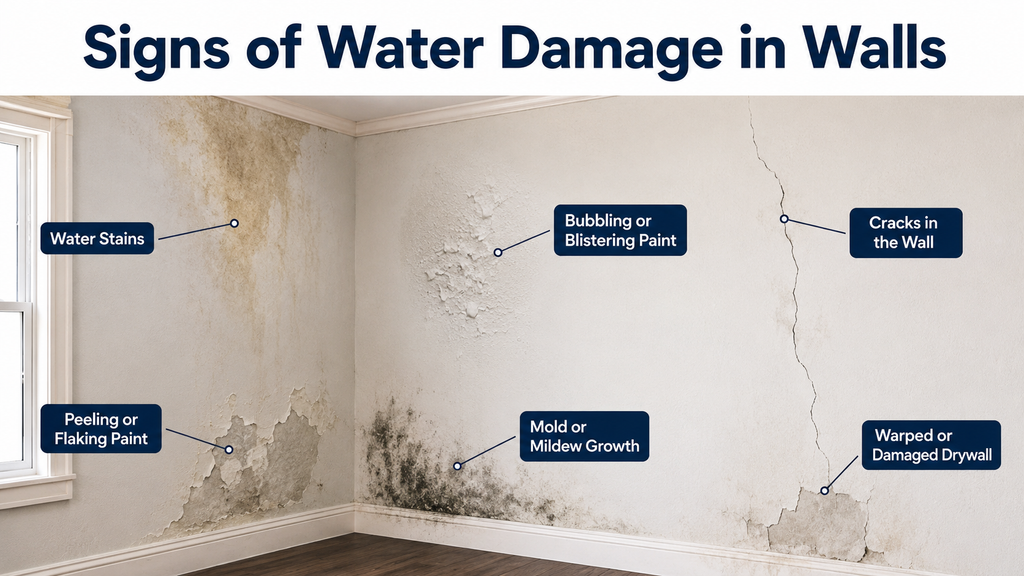
Water damage can start small, but these warning signs often show that moisture is already affecting your walls.
1. Brown or Yellow Water Stains
Water stains are one of the most common and visible warning signs.
They often appear as yellow, brown, or dark patches on walls or ceilings.
These stains may begin as small spots but can gradually expand as moisture continues to spread.
If a stain keeps returning after being cleaned or painted over, it usually indicates an ongoing moisture issue behind the surface.
2. Peeling or Bubbling Paint
Paint is designed to adhere tightly to dry surfaces, so moisture quickly disrupts that bond.
When water is present behind a wall, you may notice bubbling, peeling, flaking, or blistering paint.
Wallpaper may also begin to loosen or separate from the wall.
Repainting without addressing the moisture source will only provide a temporary fix, as the problem will likely reappear.
3. Soft or Swollen Drywall
Drywall should always feel firm and solid.
When moisture is present, it can become soft, swollen, or slightly warped.
Pressing gently on the surface may reveal a spongy or weakened texture.
In more advanced cases, drywall may sag, crack, or lose structural integrity, often requiring full replacement rather than simple repair.
4. A Persistent Musty Smell
A musty odor is often one of the earliest signs of hidden water damage.
This smell is usually caused by damp insulation, trapped moisture, mold growth, or poor ventilation within the wall cavity.
If the odor continues to return even after cleaning or airing out the space, it is likely that moisture is still present behind the wall.
5. Mold or Mildew on the Wall
Mold growth is a clear indicator of ongoing moisture problems.
It may appear as black, green, gray, or fuzzy patches on the wall surface.
Mold can develop quickly when moisture remains trapped inside wall materials for an extended period.
Visible mold should never be treated as a surface-level issue alone, as the underlying moisture source must also be identified and resolved.
6. Cracks That Keep Getting Worse
Not all wall cracks are related to water damage, but moisture can weaken drywall and plaster over time.
Cracks that expand, reappear, or spread across corners and joints may indicate a deeper issue.
Pay close attention to cracks near water stains or damp areas, as these are more likely to be moisture-related.
7. Bulging or Warped Walls
Walls should always appear flat and even.
When moisture becomes trapped behind drywall, it can cause the surface to bulge, bow, or warp.
This type of distortion often indicates prolonged exposure to water and should be inspected promptly.
Avoid applying pressure to severely swollen areas, as the material may already be weakened.
8. Damp Spots That Keep Returning
A wall should never feel consistently damp or cool to the touch.
If a specific area repeatedly feels wet, it may indicate hidden moisture behind the surface.
This can be caused by plumbing leaks, exterior water intrusion, condensation buildup, or foundation-related moisture.
Recurring dampness is a strong sign that the underlying issue has not been resolved.
9. Loose Baseboards or Warped Flooring
Water damage does not always stay confined to the wall itself.
Moisture can travel downward, affecting baseboards and nearby flooring.
You may notice baseboards becoming loose, separating from the wall, or flooring beginning to warp or lift.
These signs are especially common in areas near bathrooms, kitchens, basements, and exterior walls.
10. Water Bills Suddenly Increase
An unexpected rise in your water bill can sometimes indicate a hidden plumbing leak.
This is especially concerning when your household water usage has not changed.
Since leaks inside walls are not always visible, increased water consumption may be one of the only early indicators.
A professional inspection can help confirm whether a hidden leak is present.
Hidden Signs Homeowners Often Miss
Some water damage warning signs are subtle and easy to overlook, especially in the early stages.
These may include:
- Condensation forming near walls or windows
- Unusually high indoor humidity levels
- Loose or separating trim
- Rust forming around wall fasteners or nails
- Persistent musty odors in specific rooms
- Warped or uneven flooring near walls
- Repeated paint bubbling in the same area
- Moisture buildup around window frames
These symptoms often appear before major visible damage becomes obvious.
Why Maryland Homes Can Develop Wall Moisture Problems
Homes in Maryland are particularly vulnerable to moisture-related issues due to local climate and environmental conditions.
Seasonal heavy rainfall can place stress on roofs, gutters, and exterior walls. Basements are also prone to moisture intrusion, especially in older homes with limited waterproofing.
Foundation cracks may develop over time, allowing water to enter during wet conditions. Freeze-thaw cycles can worsen existing exterior weaknesses, while high humidity levels increase the risk of condensation inside walls.
Without proper waterproofing and maintenance, these conditions can significantly increase the likelihood of water damage.
Water Damage or Mold: What Is the Difference?
Understanding the difference can help you identify the problem early and prevent more costly wall repairs.
| Water Damage | Mold |
|---|---|
| Caused by moisture affecting materials like drywall, wood, and insulation. | Develops when moisture remains long enough to support biological growth. |
| May cause stains, peeling paint, soft drywall, or swelling. | May appear as dark, green, white, or fuzzy patches. |
| Can occur without visible mold. | Usually indicates a continuing or past moisture problem. |
| Requires finding and stopping the water source. | Requires removing the mold and addressing the moisture source. |
What Happens If You Ignore Wall Water Damage?
Even minor water damage can lead to serious long-term problems if left untreated.
Mold Growth
Persistent moisture creates ideal conditions for mold to spread behind walls and across surfaces.
Damaged Drywall
Drywall can weaken, swell, and eventually require full replacement.
Damaged Insulation
Wet insulation loses its effectiveness and may need to be removed.
Electrical Problems
Moisture near wiring or outlets can create safety hazards.
Structural Damage
Long-term exposure can weaken wood framing and other structural components.
Higher Repair Costs
Delaying repairs often turns a small issue into a much larger and more expensive restoration project.
How Professionals Find Hidden Water Damage
Hidden water damage is not always visible to the naked eye, which is why professionals use specialized tools.
Moisture meters help measure moisture levels inside walls and building materials.
Thermal imaging cameras detect temperature differences that may indicate hidden moisture.
Leak detection equipment helps locate concealed plumbing issues without unnecessary demolition.
Humidity testing provides additional insight into indoor moisture conditions.
These methods allow for accurate diagnosis while minimizing damage to finished surfaces.
How to Prevent Water Damage in Walls
While not all water damage can be prevented, regular maintenance significantly reduces the risk.
Fix Leaks Quickly
Address plumbing or roof leaks as soon as they are discovered to prevent further damage.
Keep Gutters Clean
Clogged gutters can cause water to overflow and seep into walls or foundations.
Inspect Windows and Doors
Check seals regularly to ensure rainwater cannot enter through gaps.
Control Indoor Humidity
Use exhaust fans in kitchens and bathrooms to reduce moisture buildup.
Protect the Foundation
Ensure proper drainage and waterproofing around basements and foundations.
Perform Regular Inspections
Look for stains, cracks, damp areas, and recurring paint issues before they worsen.
When Should You Call a Professional?
Some water damage issues require professional evaluation rather than DIY repairs.
You should consider calling a professional if:
- Water stains continue to grow
- Walls feel soft or unstable
- Mold keeps returning
- Musty odors persist
- Moisture keeps reappearing in the same area
- Foundation cracks are visible
- Paint repeatedly bubbles or peels
- A hidden plumbing leak is suspected
A professional inspection can help identify the source and prevent further damage.
What Does Water Damage Repair Cost?
Repair costs vary depending on the severity and cause of the damage.
Minor drywall repairs are typically less expensive, while larger restoration projects involving mold removal, plumbing repairs, or waterproofing can be significantly more costly.
The final cost depends on the size of the affected area, material type, accessibility, and extent of the damage.
Early detection is the most effective way to reduce repair expenses.
Frequently Asked Questions
What are the first signs of water damage in walls?
Early signs include water stains, peeling or bubbling paint, musty odors, damp drywall, and visible discoloration.
Can water damage in a wall go away on its own?
No, water damage will not resolve without addressing the source of moisture. If left untreated, it can worsen and lead to mold growth or structural damage.
How quickly can mold grow after water damage?
Mold can begin developing within 24 to 48 hours if moisture remains present.
Does homeowners insurance cover water damage?
Coverage depends on the cause of the damage and your specific policy. Sudden incidents may be covered, while long-term maintenance issues may not be included.
When should I call a professional for wall water damage?
You should call a professional when moisture keeps returning, walls feel soft, mold appears, or the source of the problem cannot be identified.
Can a small water stain indicate a serious problem?
Yes. Even a small stain may signal hidden leaks, moisture intrusion, or mold growth behind the wall. Investigating the source early can prevent more extensive damage.
Protect Your Maryland Home From Water Damage
Water damage inside walls should never be ignored, even when the signs appear minor. A small stain or faint odor can indicate a much larger hidden issue developing behind the surface.
By recognizing early warning signs such as stains, peeling paint, soft drywall, musty smells, and recurring dampness, homeowners can prevent more serious damage.
In Maryland, where weather and humidity frequently contribute to moisture problems, regular inspection is especially important.
If you suspect water damage in your home, USA Builders and Developers can help identify the source and recommend the right solution.
Need help with a moisture or waterproofing problem? Contact USA Builders and Developers for professional assistance in Maryland.
Need Help with Your Next Project? Call USA Builders Today!
We’re here to help—quick answers, friendly service, anytime you need!



Contact USA Builders and Developers
🌐 Website: www.usabuildersanddevelopers.com
📍 Serving: Baltimore, Bethesda, Silver spring, and Montgomery Maryland
📌 Address: 2144 Priest Bridge Court, Suite 8, Crofton, MD 21114, USA