The parts of a chimney work together to remove smoke, heat, and harmful gases from your home. Each component has a specific job.
Some parts protect the chimney from rain and snow. Others control airflow or protect the home from heat and fire. Knowing these components can help homeowners spot problems early. It can also make chimney inspections and repairs easier to understand.
In this guide, we explain the main chimney components, what they do, common problems, and simple maintenance tips.
What Is a Chimney?
A chimney is a vertical structure that carries smoke and gases from a fireplace, stove, or heating system to the outside.
A properly working chimney helps:
- Remove smoke from the home
- Improve airflow
- Control fireplace ventilation
- Reduce exposure to harmful gases
- Protect the home from heat and fire
A chimney is made up of several components. Each one needs to work properly for the entire system to perform safely.
11 Main Parts of a Chimney
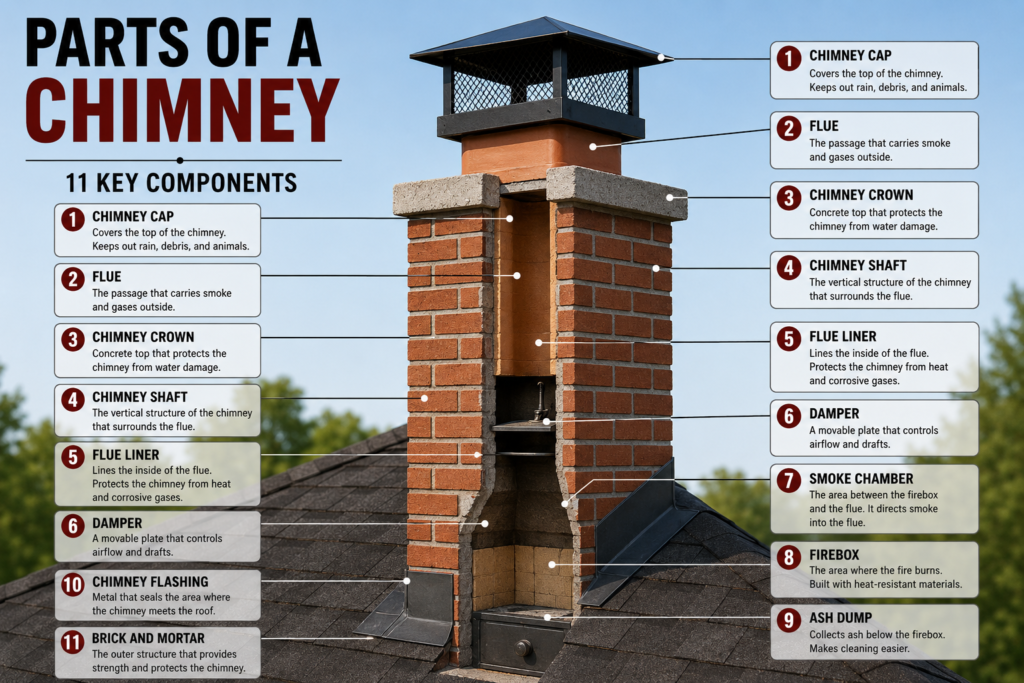
Here are the most important chimney components homeowners should know.
1. Chimney Cap
The chimney cap sits at the very top of the chimney.
It protects the opening from rain, snow, leaves, and animals.
A chimney cap can also help reduce downdrafts.
Main functions:
- Keeps rainwater out
- Blocks leaves and debris
- Prevents animals from entering
- Helps reduce downdrafts
- Protects the chimney from moisture
A missing or damaged cap can allow water to enter the chimney.
2. Chimney Crown
The chimney crown is the protective surface around the top of a masonry chimney.
It helps direct rainwater away from the chimney structure.
A properly built crown can protect the bricks and mortar from moisture.
It helps:
- Reduce water penetration
- Protect masonry
- Prevent moisture damage
- Extend chimney life
Cracks in the crown should not be ignored. Water can enter through these cracks and cause damage over time.
3. Chimney Flue
The flue is the passage inside the chimney.
It carries smoke and combustion gases from the fireplace to the outside.
A clear flue is important for proper airflow.
The flue helps:
- Remove smoke
- Carry harmful gases outside
- Improve ventilation
- Support proper fireplace operation
A blocked or damaged flue can create serious safety problems.
4. Flue Liner
A flue liner is a protective layer inside the chimney.
It separates the hot gases from the chimney structure.
A liner can help protect masonry from heat and corrosive gases.
Benefits include:
- Better protection from heat
- Reduced damage to masonry
- Improved safety
- Better flue performance
Older chimneys may have damaged or missing liners. A professional inspection can determine their condition.
5. Chimney Damper
The damper is a movable part inside the chimney.
It controls airflow between the fireplace and the chimney.
When the fireplace is not being used, closing the damper can help reduce drafts and heat loss.
A damper helps:
- Control airflow
- Reduce cold drafts
- Limit heat loss
- Improve fireplace efficiency
A damaged damper may not open or close properly.
6. Smoke Chamber
The smoke chamber sits between the firebox and the flue.
Its job is to guide smoke smoothly into the flue.
A properly designed smoke chamber helps improve airflow.
It helps:
- Direct smoke upward
- Improve draft
- Support proper ventilation
- Reduce turbulence
Problems in this area can affect how well smoke exits the home.
7. Firebox
The firebox is where the fire burns.
It is built with heat-resistant materials that can handle high temperatures.
A properly maintained firebox helps protect nearby walls and other parts of the fireplace.
Important features include:
- Heat-resistant construction
- Strong fire protection
- Properly sealed joints
- Durable interior surfaces
Cracks in the firebox should be inspected and repaired promptly.
8. Ash Dump
An ash dump is located below the firebox in some masonry fireplaces.
It collects ashes from the fireplace.
Not every fireplace has an ash dump. It is more common in certain traditional masonry fireplace designs.
An ash dump can:
- Collect fireplace ash
- Make cleaning easier
- Keep the firebox cleaner
- Move ash into a lower collection area
If your fireplace has an ash dump, it should be cleaned regularly.
9. Chimney Flashing
Chimney flashing is installed where the chimney meets the roof.
It creates a water-resistant barrier around this joint.
This is one of the most important areas for preventing roof leaks.
Chimney flashing helps:
- Stop water from entering
- Protect roofing materials
- Seal the chimney-to-roof joint
- Reduce moisture damage
Damaged flashing can allow water to enter the attic or walls.
10. Brick and Mortar
Bricks and mortar form the outer structure of many masonry chimneys.
They provide strength and protect the interior components.
Weather can damage these materials over time.
Common masonry problems include:
- Cracked bricks
- Loose mortar
- Missing mortar joints
- Water stains
- Spalling bricks
Regular inspection can help catch masonry damage before it becomes severe.
11. Chase Cover
A chase cover is commonly found on prefabricated chimney systems.
It covers the top of the chimney chase and helps keep water and debris out.
A properly installed chase cover should direct water away from the chimney.
It helps:
- Keep rainwater out
- Reduce moisture problems
- Protect the chimney chase
- Prevent debris from entering
Rust or standing water on a chase cover can be a warning sign of a problem.
How the Parts of a Chimney Work Together
A chimney is a complete system.
The components work together rather than operating separately.
For example:
- The firebox contains the fire.
- The smoke chamber guides smoke upward.
- The flue carries smoke outside.
- The flue liner protects the chimney walls.
- The damper controls airflow.
- The cap or chase cover protects the top.
- Flashing protects the area where the chimney meets the roof.
- Brick and mortar provide the outer structure.
If one component fails, other parts may also be affected.
Why Are the Parts of a Chimney Important?
Each chimney component has a different purpose.
Together, they help protect your home and improve fireplace performance.
A properly maintained chimney can help:
- Reduce water damage
- Improve airflow
- Protect against heat
- Reduce fire risks
- Prevent smoke problems
- Extend chimney life
Small problems can become expensive when they are ignored.
Common Chimney Problems
Chimneys are exposed to rain, snow, wind, heat, and temperature changes.
Over time, these conditions can cause damage.
Common problems include:
- Cracked chimney crowns
- Missing or damaged caps
- Blocked flues
- Damaged flue liners
- Broken dampers
- Cracked bricks
- Loose mortar
- Failed flashing
- Rusted metal components
- Water leaks
Regular inspections can help identify these issues early.
Signs Your Chimney Needs Repair
Some chimney problems are easy to see.
Others develop inside the chimney or roof structure.
Watch for these warning signs:
- Water stains near the fireplace
- Cracked bricks or mortar
- White stains on the chimney
- Rust on metal parts
- Smoke entering the home
- Unusual chimney odors
- Damaged chimney cap
- Pieces of flue tile inside the fireplace
- Leaks around the chimney
- Loose masonry
If you notice these signs, schedule a professional inspection.
Chimney Maintenance Tips
Regular maintenance can help prevent expensive repairs.
Homeowners should:
- Schedule regular chimney inspections
- Clean the chimney when needed
- Check the chimney cap
- Inspect flashing for damage
- Look for cracked masonry
- Repair damaged mortar
- Keep the flue clear
- Address water leaks quickly
Annual inspection is commonly recommended, especially for chimneys that are regularly used.
When Should You Call a Chimney Professional?
Some chimney maintenance can be handled by homeowners.
However, repairs often require professional knowledge and equipment.
Call a professional when you notice:
- Structural cracks
- Major water leaks
- Damaged flue liners
- Loose bricks
- Serious flashing damage
- Smoke entering the home
- Suspected chimney blockage
- Firebox damage
A professional can inspect the chimney and determine which component needs repair.
How Much Does Chimney Repair Cost?
Chimney repair costs vary by the type and extent of damage.
A minor repair may cost much less than rebuilding a damaged chimney.
The final price can depend on:
- Chimney size
- Type of damage
- Masonry condition
- Flashing condition
- Chimney height
- Accessibility
- Materials required
- Labor
The best way to get an accurate price is to have the chimney inspected before repairs begin.
Parts of a Chimney vs Parts of a Fireplace
A fireplace and chimney work together, but they have different jobs.
The fireplace contains the fire. The chimney carries smoke and gases safely outside the home.
Some components connect both systems.
| Component | Where It Is | What It Does |
|---|---|---|
| Firebox | Fireplace | Holds and contains the fire |
| Smoke Chamber | Between fireplace and chimney | Guides smoke into the flue |
| Flue | Chimney | Carries smoke and gases outside |
| Damper | Fireplace/chimney | Controls airflow and drafts |
| Chimney Cap | Top of chimney | Keeps rain, debris, and animals out |
Understanding these components makes chimney maintenance easier. It also helps homeowners recognize potential problems before they become expensive repairs.
Frequently Asked Questions
What are the main parts of a chimney?
The main parts include the chimney cap, crown, flue, flue liner, damper, smoke chamber, firebox, ash dump, flashing, masonry, and chase cover.
What is the most important part of a chimney?
There is not one single most important component. The chimney works as a complete system. The flue, liner, cap, flashing, and other components all have important safety and protection roles.
What does a chimney cap do?
A chimney cap protects the chimney opening from rain, snow, debris, and animals. It also helps reduce moisture problems.
What is chimney flashing?
Chimney flashing is the material installed where the chimney meets the roof. It helps prevent water from entering the roof and building.
How often should a chimney be inspected?
A professional chimney inspection is commonly recommended at least once a year, especially when the fireplace is used regularly. Additional inspections may be needed after a chimney fire, major weather event, or suspected damage.
Final Thoughts
Knowing the parts of a chimney can help homeowners understand how their fireplace system works.
The chimney cap protects the top. The flue carries smoke outside. The liner protects the chimney walls. The damper controls airflow. Flashing helps keep water away from the roof.
Each component has an important job.
Regular inspections and maintenance can help catch problems early. They can also reduce the risk of leaks, fire hazards, and expensive structural repairs.
If you notice cracks, water stains, smoke problems, loose masonry, or other warning signs, have your chimney professionally inspected.
Have Questions? Call Us Now!
We’re here to help—quick answers, friendly service, anytime you need!