Nobody plans for a roof problem. It starts as a brown ring on the ceiling, a damp patch beside the office window, or a crumbling edge you notice while pulling into the driveway. Then the stress begins. Who can you trust? How much will it cost? Will the same leak come back after the next storm?
Here is something many Maryland owners are never told. Plenty of stubborn leaks begin at the very top of the wall, where a worn-out roofing cop has stopped doing its job. Contractors who only look at the roof surface can patch the same ceiling stain again and again without ever touching the real cause.
This guide is written for homeowners, landlords, and business owners who want a better outcome. You will learn what a roofing cop is, how professional roofing cop services for homes and businesses actually work, what drives the price, and how to tell a trustworthy contractor from one who just wants a quick sale. Keep reading, because a few minutes now can save you thousands later.
What Is a Roofing Cop, and Why Does It Matter?
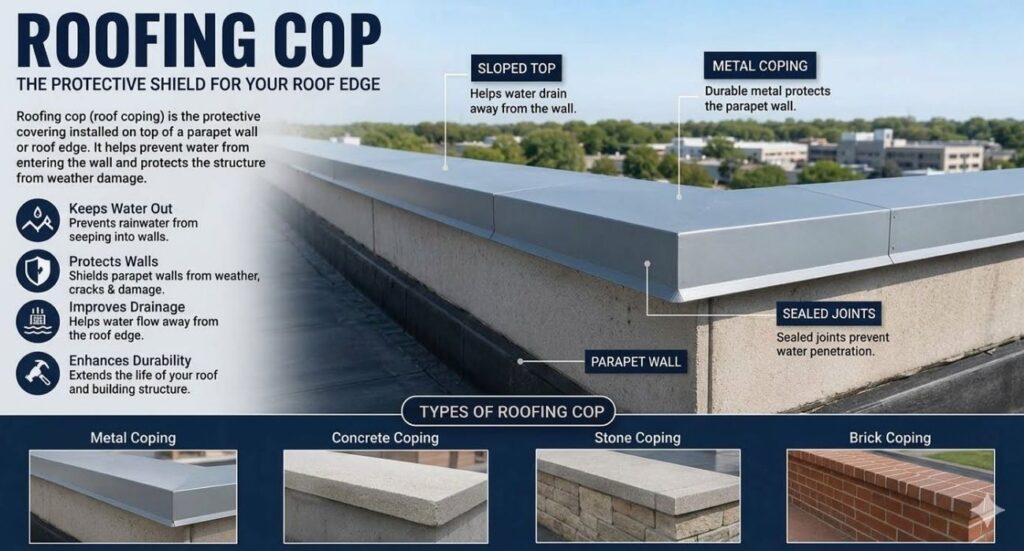
A roofing cop is a protective cap that sits on top of a parapet wall or an exposed roof edge. Roofers and masons also call it roof coping or parapet coping. Its job is simple but vital: keep rain, snow, and melting ice from soaking into the wall, and send water away from surfaces that cannot handle it.
Think of it as a hat for your building. Without one, the highest and most exposed part of the wall takes the full force of every storm. With a sound roofing cop, that same area stays covered, drained, and protected.
It also works closely with flashing and the roof membrane, so a failing roofing cop puts extra stress on everything around it.
Why a Healthy Roof Edge Protects Your Whole Investment
Most owners think about shingles and membranes first, yet the wall tops face weather from every direction. Here is what a well-built cap does for you.
It keeps water out of the wall. A tight roofing cop covers the full top surface and closes off the joints, so rain cannot creep into porous brick or block.
It protects your masonry. Wet masonry cracks, stains, and crumbles. A dry wall top slows that damage dramatically.
It improves drainage. A properly sloped cap moves water off the wall instead of letting it sit.
It extends roof life. When every edge component works together, the whole roof system lasts longer.
It lifts curb appeal. Clean lines and the right finish give any roofline a polished look.
It prevents costly surprises. Fixing a cracked cap costs far less than repairing a rotted wall, soaked insulation, and ruined interiors. A small investment in your roofing cop often prevents a large bill later.
Roofing Cop Services for Homes
Many people assume coping only belongs on big commercial buildings. In reality, plenty of residential properties need a dependable roofing cop too. Town homes with flat roofs, older city houses with short parapets, and homes with rooftop terraces all have wall tops that face the weather every day.
Homeowners usually call for help because of:
- A stain on an upper-floor ceiling or wall
- Cracked or crumbling stone, concrete, or brick on the wall top
- A loose cap that rattles in the wind
- Peeling paint or damp plaster near the roofline
- A past roof repair that never stopped the leak
For a house, the work is usually smaller in scale, but the stakes feel personal. That is why every roofing cop inspection we perform comes with a plain-English explanation of what we found and what it means for your home.
Roofing Cop Solutions for Commercial Properties
Business owners face a different set of pressures. A leak in a shop, office, warehouse, or apartment building can mean damaged stock, unhappy tenants, and lost income. Long parapet runs also mean more joints, more corners, and more places for water to find a way in.
A professional commercial roofing cop project often includes:
- A full inspection of the cap, parapet wall, and roof membrane
- Replacement of damaged metal, concrete, or stone sections
- Re-sealing of joints and end caps
- Repair of flashing where the roof meets the wall
- Drainage corrections to stop standing water
- A clear written scope and schedule that limits disruption
Good contractors plan the work around your operations, so tenants and customers feel as little impact as possible.
Homes vs. Businesses: What Changes in the Work?
The basic goal of a roofing cop is the same on every building, but the approach is not.
Scale. A home may need a few feet of repair. A commercial roof can have hundreds of feet of exposed wall.
Materials. Commercial buildings lean toward metal systems, while homes often use concrete, stone, or brick that matches the architecture.
Scheduling. Business projects are planned around opening hours and tenant needs. Residential projects are planned around family routines.
Access and safety. Taller buildings require extra equipment, fall protection, and planning.
Documentation. Property managers often need detailed reports and photos, and we provide them for any roofing cop project, large or small.
Which Material Is Right for Your Building?
The best roofing cop depends on your building style, budget, and how much maintenance you want to handle.

Metal. A metal roofing cop is lightweight, weather resistant, available in many finishes, and generally low maintenance. Aluminum, galvanized steel, and coated metal are the usual choices.
Concrete. Precast concrete is strong and suits both homes and businesses. It needs the correct slope, because standing water can lead to staining and cracks.
Stone. A stone roofing cop suits higher-end and historic properties, offering a rich, lasting finish when drainage is detailed correctly.
Brick. Brick blends naturally with traditional masonry, though its many joints demand careful workmanship.
Your contractor should explain the pros and cons of each option instead of pushing the most expensive one.
Common Problems We See in the Field
Because a roofing cop sits in the harshest spot on the building, it usually ages faster than the wall beneath it. These are the issues we run into most often.
Cracks. Age, temperature movement, and poor installation all cause cracking. Even hairline cracks can let moisture in.
Loose or shifted sections. Wind, rusted fasteners, and wall movement can loosen the cap. A loose roofing cop lets water in and can become a falling hazard.
Rust and corrosion. Once the protective coating on metal wears away, moisture attacks the surface. Rust spreads quietly, so early treatment matters.
Failed sealant. Joints depend on sealant, and sealant does not last forever. When it shrinks or cracks, each joint becomes a tiny water channel.
Poor drainage. A cap that is too flat or tilted the wrong way holds water against the wall.
Water stains. Dark streaks or damp spots often signal moisture getting past the top. Because water travels, the stain may show up far from the true entry point.
Red Flags on Your Roof Edge Worth Checking Today
Damage to a roofing cop often builds quietly, and much of it is hard to see from the ground. Walk around your property, look up at the roof edge, and watch for:
- Cracks or chips in the cap
- Sections that look tilted, lifted, or misaligned
- Rust streaks or bubbling paint on metal
- Missing or crumbling sealant at the joints
- Dark stains or damp patches on the wall
- Flaking, crumbling, or soft masonry
- Interior water marks near the roofline
- A leak that keeps returning after patching
One of these signs deserves a closer look. Several together usually mean water has been getting in for some time.
How a Professional Inspection Works
A proper inspection goes well beyond a quick glance from the ground. A qualified inspector will typically:
- Examine the roofing cop for cracks, movement, rust, and loose fasteners.
- Check the sealant at joints, corners, and end caps.
- Look at the parapet wall for moisture damage or deteriorated masonry.
- Inspect the flashing and roof membrane where they meet the wall.
- Evaluate slope and drainage along the roof edge.
- Explain the findings clearly and recommend repair or replacement.
Ask for photos and a written summary. A trustworthy contractor is happy to show you exactly what was found.
Repair or Replacement: Making the Smart Call
Not every problem calls for a full tear-off. The right choice depends on how widespread the damage is.
Repair is often enough when:
- Damage is limited to a small area
- Most sections are firmly attached
- Sealant is the main issue
- Cracks are small and stable
Replacement is usually better when:
- Large sections are broken or heavily corroded
- Several pieces have come loose
- Leaks continue after repairs
- The entire system is old and worn out
Paying for patch after patch can cost more than one proper replacement. A good contractor will walk you through both options and tell you honestly which one makes sense for your roofing cop.
From First Visit to Final Walkthrough
Installation is precision work, and small errors can cause leaks that take years to appear. Here is how a professional roofing cop installation typically unfolds:
- Prepare the wall top. It must be clean, solid, and repaired where needed.
- Measure and fabricate. Pieces are made to fit the exact dimensions of the wall.
- Fasten securely. Clips, anchors, mortar, adhesives, or concealed fasteners are used, depending on the system.
- Create the right slope. Water should flow away from vulnerable surfaces.
- Seal joints and transitions. Compatible sealants and careful detailing close off entry points.
- Complete a final walkthrough. Alignment, attachment, drainage, and flashing tie-ins are all checked.
Our Workmanship Checklist
Good work follows local building requirements, manufacturer instructions, and accepted roofing practices. For every roofing cop we install or repair, quality means:
- Correct surface preparation
- Materials suited to the climate and the building
- Accurate slope and drainage
- Secure, corrosion-resistant attachment
- Carefully detailed joints and corners
- Approved sealants
- Proper integration with flashing and membrane
- A final quality review
Maryland requirements can vary by building type, location, and project scope, so a qualified local contractor can confirm what applies to your property.
Understanding Your Roofing Cop Estimate
There is no honest one-size-fits-all price. Costs depend on:
- Material choice
- Total wall length
- Building height and roof access
- Existing damage
- Removal of old coping
- Masonry repairs underneath
- Flashing work
- Number of joints and corners
- Custom fabrication
- Labor
A small re-sealing job on a townhome and a full roofing cop replacement on a large commercial roof are very different projects. A written, project-specific estimate is always more reliable than a number you find online.
How to Choose a Roofing Contractor You Can Trust
Whether you own a house or a business, these questions help separate professionals from pretenders:
- Are they licensed and insured to work in Maryland?
- Will they inspect the whole roof edge, not just the visible damage?
- Do they provide a detailed written estimate?
- Can they show photos or examples of past projects?
- Do they explain repair and replacement options honestly?
- Do they stand behind their workmanship?
Be cautious of anyone who quotes over the phone, pressures you to sign on the spot, or offers to coat over the problem without finding its source. A reliable roofing cop contractor earns your business through clear communication, not pressure.
Costly Mistakes Property Owners Make
- Ignoring small cracks because the roofing cop still “looks fine”
- Hiring the cheapest bidder without checking insurance
- Covering the problem with sealant instead of finding the source
- Skipping inspections after storms
- Repairing the roof surface while ignoring the wall top
Each of these mistakes can turn a manageable roofing cop repair into a major project.
What to Do in a Roofing Emergency
If a section of roofing cop is hanging loose, or water is actively entering after a storm, stay calm and stay safe:
- Keep people away from the area below the damaged edge.
- Stay off the roof, especially in wet or windy conditions.
- Move valuables and protect interiors where you safely can.
- Take clear photos for your records and for insurance.
- Call a qualified professional as soon as possible.
Temporary protection can limit damage, but a permanent roofing cop repair should always follow.
Easy Maintenance Habits for Homes and Businesses
A few simple habits protect your investment.
Look after storms. Inspect the roofing cop after heavy rain, snow, ice, or strong wind for shifted pieces, new cracks, or fresh stains.
Check the sealant. Replace any that is shrinking, cracked, or missing.
Watch for rust. On metal, look for flaking, bubbling, or bare spots.
Clear debris. Leaves and dirt can trap water near the roof edge.
Schedule yearly checks. A yearly professional look at your roofing cop catches small issues before they turn into big bills.
Why Maryland Properties Need Extra Care
Maryland weather is tough on exposed roof edges. Heavy rain, humid summers, snow, ice, strong wind, and repeated freezing and thawing all take a toll. When water slips into a small crack and freezes, it expands and widens the gap, so every winter makes a minor flaw worse.
Owners in Baltimore, Bethesda, Silver Spring, Montgomery County, and surrounding areas should plan inspections before winter arrives. Older buildings and flat or low-slope roofs deserve special attention, because an aging roofing cop may already be near the end of its service life.
Why Choose USA Builders and Developers for Roofing Cop Services
At USA Builders and Developers, we treat the roof edge as part of the whole building envelope. Every roofing cop we inspect is evaluated alongside the parapet wall, flashing, membrane, and drainage, so our recommendations come from what is actually happening on your roof.
Here is what you can expect from our team:
- Honest assessments with clear explanations
- Written estimates with no vague line items
- Skilled work for residential and commercial properties
- Careful attention to detail and a clean job site
- Service across Baltimore, Bethesda, Silver Spring, Montgomery County, and nearby Maryland communities
Whether your roofing cop is cracked, loose, rusted, or simply worn out, we will tell you whether repair or replacement is the smarter move.
Frequently Asked Questions About Roofing Cop Services
What is a roofing cop?
It is a protective cap installed on top of a parapet wall or exposed roof edge. It keeps moisture out of the wall and directs water away from vulnerable areas.
Do you provide roofing cop services for both homes and businesses?
Yes. We handle inspections, repairs, and replacements for residential and commercial properties across Maryland.
How long does a roofing cop last?
That depends on the material, installation quality, weather exposure, and maintenance. A well-installed and well-maintained system can protect a building for many years.
Can I repair a roofing cop myself?
Simple tasks like clearing debris are fine. Work involving heights, sealants, fasteners, or hidden damage is safer and more reliable in professional hands.
When should a roofing cop be replaced?
Replacement is the better option when damage is widespread, sections keep loosening, corrosion is heavy, or leaks continue after repairs.
How do I know if my roof edge is leaking?
Look for water stains, damp masonry, cracked or missing sealant, and interior moisture near the roofline. A professional inspection can confirm the exact source.
Ready to Protect Your Property?
A roofing cop may be a small part of your building, but it guards one of the most exposed areas of the structure. Keeping it in good condition means drier walls, fewer surprise leaks, and a longer-lasting roof.
If you have noticed stains, loose sections, or leaks that keep returning, do not wait for the next storm. Schedule an inspection with USA Builders and Developers and get a clear answer before a small repair becomes a big one.
Have Questions? Call Us Now!
We’re here to help—quick answers, friendly service, anytime you need!



Contact Us
Need Help With Your Next Project?
Get in touch with USA Builders and Developers for trusted construction, remodeling, and renovation services across Maryland.
Contact: +1 443 551 0006
Website: www.usabuildersanddevelopers.com
Serving: Baltimore, Bethesda, Silver Spring, and Montgomery, Maryland