Planning a roof repair or replacement in Maryland? The first question most homeowners ask is how many shingles in a bundle. Most asphalt shingle bundles hold about 20 to 29 shingles, depending on the type and manufacturer. But the piece count is not what decides your order. The roof area each bundle covers is.
In this guide, we explain shingle counts by type, how roofing squares work, and how to calculate the bundles you need, including waste and roof pitch. We also cover what else belongs on your material list.
Quick Answer: How Many Shingles Are in a Bundle?
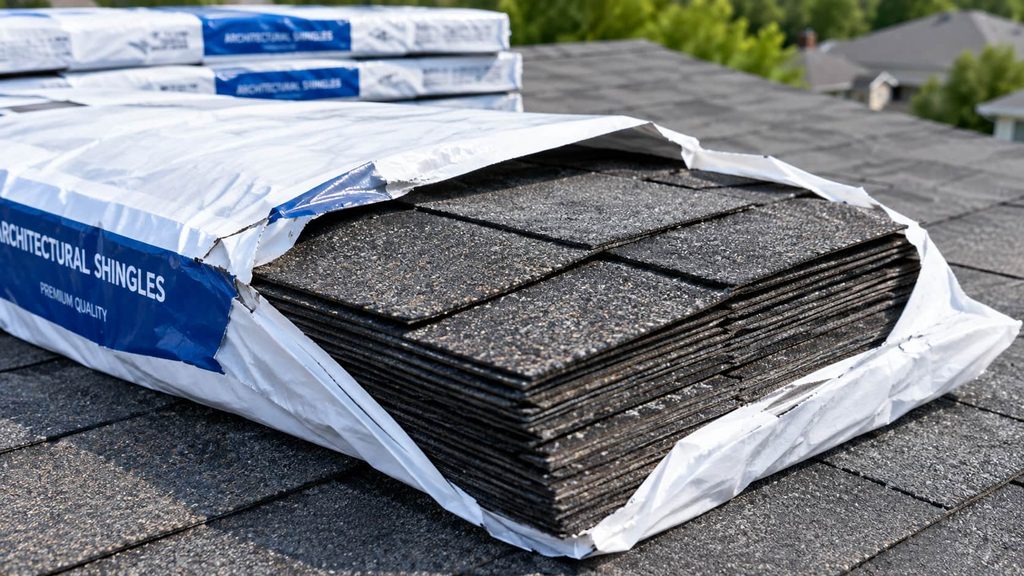
A typical asphalt shingle bundle contains 20 to 29 shingles. Here is a simple breakdown:
| Shingle type | Approx. shingles per bundle | Typical bundles per square |
|---|---|---|
| 3-tab asphalt | 26 to 29 | 3 |
| Architectural (laminated) | 20 to 22 | 3 |
| Luxury or designer | 10 to 16 | 4 to 5 |
These are common ranges, not universal rules. Counts change between brands and product lines, so always read the wrapper on the exact product you plan to buy.
The number to remember is this: one roofing square is 100 square feet, and most standard asphalt shingles need 3 bundles to cover one square. That means one bundle usually covers about 33.3 square feet.
Why the Number of Shingles in a Bundle Varies
You might expect every bundle to hold the same number of shingles. It does not work that way, because manufacturers balance several things when they package shingles:
- Thickness and construction of the shingle
- Shingle size and exposure
- Weight, so a bundle stays safe to lift and carry
- The coverage area the bundle is designed to give
A thicker, laminated shingle takes up more room and weighs more, so fewer pieces fit in a bundle. That is why a bundle of 20 architectural shingles can cover about the same area as a bundle with more 3-tab pieces.
This is also why comparing piece counts between brands can mislead you. A brand with 20 shingles per bundle may cover more roof than a brand with 26. The figure that counts is the coverage per bundle printed on the package.
Shingles Per Bundle by Type
3-Tab Shingles
3-tab shingles are the thinnest and lightest option, so they usually have the most pieces per bundle, commonly 26 to 29. Most are designed so that three bundles cover one square.
If you want a rough per-square figure: 26 shingles × 3 bundles = 78 shingles per square, and 29 × 3 = 87. So a 3-tab square holds roughly 78 to 87 shingles. Use that only for general understanding, not for ordering.
Architectural Shingles
Architectural (laminated) shingles are thicker and layered, so a bundle usually holds around 20 to 22 pieces. Many architectural lines still cover a third of a square per bundle, which means 3 bundles per square.

Luxury and Designer Shingles
Premium shingles that imitate slate or wood shake are heavier and larger. A bundle may hold only 10 to 16 pieces, and these products often cover less roof per bundle, roughly 20 to 25 square feet. That works out to 4 or 5 bundles per square.
This is the best example of why the simple “3 bundles per square” rule does not apply to every product.
How Many Square Feet Does One Bundle Cover?
Knowing how many shingles in a bundle is only half the story, because coverage per bundle decides your order. Here is what to expect:
- Most 3-tab and architectural lines: about 33 square feet per bundle, so 3 bundles per square.
- Some 3-tab lines: a little under that, around 32 square feet, which can leave you a few shingles short of a full square after 3 bundles.
- Slate-style and shake-style premium lines: about 20 to 25 square feet per bundle, so 4 or 5 bundles per square.
To find bundles per square for any product, divide 100 by the coverage printed on the wrapper. At 33.3 square feet that gives 3 bundles, at 25 it gives 4, and at 20 it gives 5.
Manufacturers differ, and even two lines from the same brand can differ, so always use the figure on the label or data sheet of the exact shingle you are buying.
What Is a Roofing Square?
A roofing square is the standard unit roofers use to measure and price work. One square equals 100 square feet of roof surface. Some examples:
- 1,000 square feet = 10 squares
- 1,500 square feet = 15 squares
- 2,000 square feet = 20 squares
- 3,000 square feet = 30 squares
Squares make material math simple. If your roof is 20 squares and your shingles need 3 bundles per square, you need 60 bundles before waste.
One important warning: your roof area is not the same as your home’s floor area. Roof pitch, overhangs, dormers, valleys and attached garages or porches all add surface area.
How to Calculate How Many Bundles You Need
You can turn how many shingles in a bundle into a solid planning estimate in five steps.
Step 1: Find Your Roof Area
Measure each roof section and add them together. For a simple estimate without climbing on the roof, multiply your home’s footprint (length × width, including eaves) by a pitch factor from the table below. Satellite and drone measurement tools can also give a close figure, but confirm with a tape measure or your roofer’s measurement before ordering.
Step 2: Apply the Roof Pitch Factor
A sloped roof has more surface than the footprint under it, and the steeper the slope, the bigger the gap. Multiply your footprint by a pitch factor. These are the roof’s slope length divided by its horizontal run, and roofers use them every day. Here is how much extra area to expect:
- Low slope (4:12): about 5% more area, a factor of 1.05
- Average slope (6:12): about 12% more, a factor of 1.12
- Steeper (8:12): about 20% more, a factor of 1.20
- Very steep (12:12): about 41% more, a factor of 1.41
Pitches in between, such as 5:12, 7:12 or 9:12, fall between these values. Your roofer can confirm the exact factor for your roof.
Step 3: Convert to Squares
Divide the roof area by 100.
Step 4: Multiply by Bundles Per Square
Check your product’s label for coverage, not just how many shingles in a bundle. If it needs 3 bundles per square, multiply the squares by 3. If it needs 4 or 5, use that number instead.
Step 5: Add Waste
Shingles get cut around valleys, hips, edges, chimneys and vents. A common rule of thumb is to add about 10% for a simple gable roof and up to 15% for a roof with hips, valleys or dormers. Smaller and more complex roofs usually waste more.
Worked Example
Say your home measures 36 feet by 52 feet including the eaves, and the roof has an 8:12 pitch.
- Footprint: 36 × 52 = 1,872 square feet
- Apply the 8:12 pitch factor: 1,872 × 1.20 = about 2,246 square feet of roof
- Convert to squares: 2,246 ÷ 100 = about 22.5 squares
- Add 12% waste for a roof with a few valleys and cuts: 22.5 × 1.12 = about 25.2, rounded up to 26 squares
- Multiply by 3 bundles per square: 26 × 3 = 78 bundles
If the shingles you pick need 4 bundles per square, the same roof needs 26 × 4 = 104 bundles. That 26-bundle difference is why you check the label before you order.
Does Roof Size Equal House Size?
No.
This is one of the most common mistakes homeowners make.
A 2,000-square-foot house does not necessarily have a 2,000-square-foot roof.
The roof may be larger because of:
- Roof pitch
- Overhangs
- Multiple roof sections
- Dormers
- Attached garages
- Porches
- Valleys
- Hip sections
- Complex roof designs
For an accurate estimate, measure the roof itself.
This is one reason professional roofing estimates are useful when planning a replacement.
How Many Bundles for Common Roof Sizes?
This table assumes 3 bundles per square and shows the actual roof surface area, not floor area.
| Roof area | Squares | Bundles (no waste) | With 10% waste | With 15% waste |
|---|---|---|---|---|
| 1,000 sq ft | 10 | 30 | 33 | 35 |
| 1,500 sq ft | 15 | 45 | 50 | 52 |
| 2,000 sq ft | 20 | 60 | 66 | 69 |
| 2,500 sq ft | 25 | 75 | 83 | 87 |
| 3,000 sq ft | 30 | 90 | 99 | 104 |
Remember that a 2,000-square-foot house rarely has a 2,000-square-foot roof. Pitch and overhangs usually push the roof area higher.
Estimating the Cost of Shingle Bundles
Once you know your bundle count, a rough material cost is easy:
Number of bundles × price per bundle = shingle cost
Prices vary a lot by brand, product line and supplier, and they change over time, so get current quotes from local Maryland suppliers or your roofer. As a simple illustration only, if a product cost $40 per bundle, a 60-bundle roof would cost about $2,400 in shingles.
Keep in mind that shingles are only part of the budget. Underlayment, starter strips, ridge caps, flashing, drip edge, nails, ventilation and labor all add to the total, and labor is often the largest share of a replacement.
What Else Does a Complete Roof Need?
Buying enough field shingles does not mean you have everything. A full roof system usually also includes:
- Underlayment: sold in large rolls, with the coverage per roll printed on the label
- Ice and water protection: sold in rolls measured by length, used along eaves and in valleys
- Starter shingles: measured in linear feet along eaves and rakes
- Ridge and hip caps: also measured in linear feet, with coverage per bundle that varies by product
- Flashing, drip edge, roofing nails and ventilation parts
Your roofer will measure total eave length, rake length, valleys, ridges and hips to calculate these. Many of these items are priced by length, not area.
How Much Does a Shingle Bundle Weigh?
Weight depends on the product, and so does how many shingles in a bundle. As a rough guide, many bundles fall somewhere in the range of 60 to 80 pounds, and heavier designer products can weigh more. Check the label for the exact figure.
Weight matters when materials are delivered and loaded onto the roof. A large job can involve dozens of bundles, so stacking too many in one spot can stress the roof structure. Professional crews spread loads out for this reason.
Roofing in Maryland: What to Keep in Mind
Maryland roofs deal with hot, humid summers, freezing winters, heavy rain, snow and storm winds. A few practical points for local homeowners:
- Plan for ice and water protection. Along eaves and valleys, it adds a layer of defense against ice dams and wind-driven rain, and it increases your accessory material list.
- Check wind and warranty ratings. Different shingle lines carry different wind ratings and warranties, so compare them along with coverage and price.
- Do not mix product lines. Different lines can differ in size, color, texture and coverage, which affects both appearance and your bundle count.
- Ask about ventilation. Good attic ventilation helps shingles last longer through temperature swings.
Should You Buy Extra Shingles?
Yes, it is wise to include a proper waste allowance, and many homeowners also keep one or two extra bundles from the same lot for future repairs. Colors can change slightly between production runs, and older shingles can be hard to match later. Store spare bundles flat in a dry, protected place.
What Other Roofing Materials Do You Need?
How Many shingles in a Bundle are only one part of a complete roofing system?
A roof replacement may also require:

- Underlayment
- Ice and water protection
- Starter shingles
- Ridge cap shingles
- Hip shingles
- Flashing
- Drip edge
- Roofing nails
- Ventilation materials
- Sealants
These products are often measured differently.
For example, starter strips and ridge materials may be sold based on linear feet rather than square feet. IKO provides separate coverage information for starter and hip-and-ridge products.
This means you should not assume that buying enough field shingles means you have everything needed for the roof.
Common Mistakes When Estimating Shingles
- Using house square footage instead of actual roof area
- Assuming 3 bundles always equal one square
- Comparing products by how many shingles in a bundle instead of coverage
- Forgetting waste for cuts and complex roof shapes
- Ignoring starter, ridge cap and underlayment needs
- Mixing different shingle lines on the same roof
- Ordering without reading the manufacturer’s label
Can You Estimate Without a Professional?
For a simple roof, a homeowner can use how many shingles in a bundle and the steps above to make a reasonable planning estimate. For a roof replacement, however, professional measurement is worth the investment. A roofer accounts for roof pitch, separate roof planes, valleys, dormers, hips, and the appropriate waste factor. They can also inspect the condition of the decking and flashing, which may affect the project’s scope and cost.
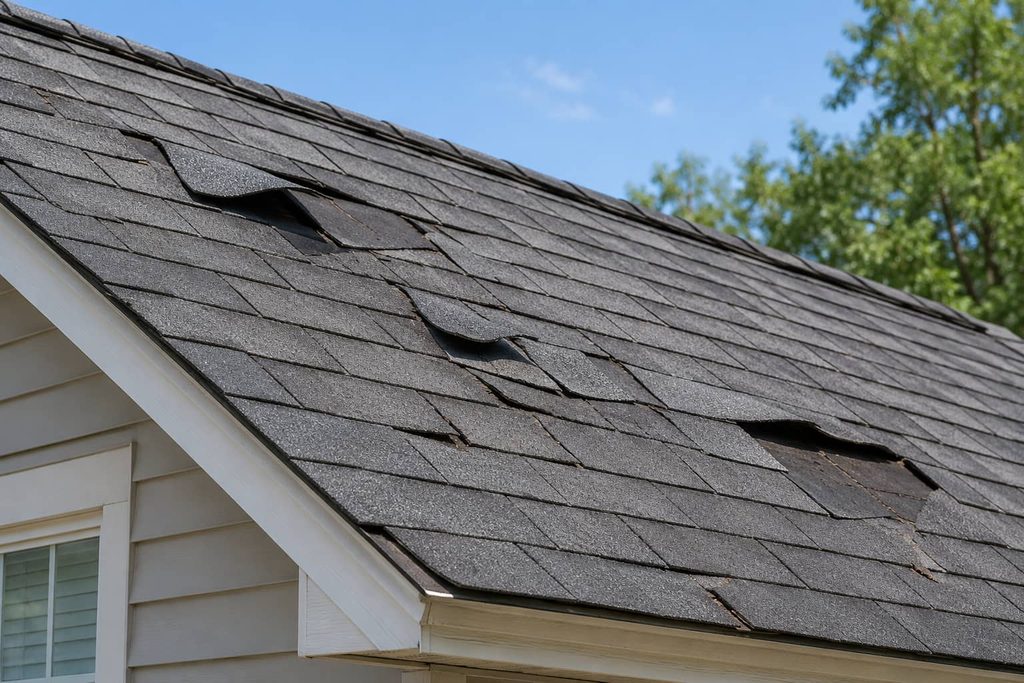
A professional can confirm how many shingles in a bundle your chosen product contains and what that means for your material order. It is also a good idea to schedule an inspection if you notice missing or cracked shingles, curling edges, bald spots, water stains on ceilings, sagging areas, damaged flashing, frequent leaks, or granules collecting in your gutters.
Frequently Asked Questions
How many shingles in a bundle?
How many shingles in a bundle depends on the type, but most asphalt bundles contain about 20 to 29 shingles. 3-tab shingles often have 26 to 29, while architectural shingles commonly have around 20 to 22. The exact count depends on the manufacturer and product line.
How many bundles of shingles are in a square?
Most standard asphalt shingles use 3 bundles per square. Some specialty and designer products need 4 or 5 bundles per square, so check the product label.
How many square feet does one bundle cover?
Many common shingles cover about 33.3 square feet per bundle. Some products cover less, such as 25 or 20 square feet per bundle.
How many bundles do I need for 1,000 square feet?
At 3 bundles per square, 1,000 square feet of roof needs about 30 bundles before waste, or roughly 33 to 35 with a 10% to 15% allowance.
How many bundles do I need for a 2,000-square-foot roof?
A roof with 2,000 square feet of actual surface needs about 60 bundles before waste and about 66 to 69 with waste added, assuming 3 bundles per square.
Do architectural shingles have fewer pieces per bundle?
Usually yes, because they are thicker, so how many shingles in a bundle is lower, but many architectural lines still cover about a third of a square per bundle.
How many shingles are in one roofing square?
There is no single answer, because a square is defined by area (100 square feet), not by a fixed number of pieces. For 3-tab shingles it works out to roughly 78 to 87 pieces.
Should I buy extra bundles?
Yes. Include a waste allowance of about 10% to 15% depending on roof complexity, and consider keeping a spare bundle or two for future repairs.
Final Thoughts
So, how many shingles in a bundle? For common asphalt shingles, about 20 to 29. But the better question is how much roof area a bundle covers. Start with your actual roof area, convert it to squares, check how many bundles your chosen product needs per square, add waste, and do not forget starter, ridge, underlayment and ice and water protection.
Not sure how many shingles in a bundle or how many bundles your roof needs? USA Builders and Developers can measure your roof, recommend the right shingles and give you an accurate material and cost estimate. Contact us today to schedule a roof inspection and get your free quote.
Not sure how many bundles you need? Call us for an exact estimate.
Have Questions? Call Us Now!
We’re here to help—quick answers, friendly service, anytime you need!



Contact USA Builders and Developers
🌐 Website: www.usabuildersanddevelopers.com
📍 Serving: Baltimore, Bethesda, Silver spring, and Montgomery Maryland
📌 Address: 2144 Priest Bridge Court, Suite 8, Crofton, MD 21114, USA