Painting Aluminum Siding is one of the easiest ways to refresh an older home without tearing off the old panels. Aluminum is tough, but sun, rain, and big temperature swings slowly wear down the finish. Over the years it can fade, turn chalky, or start to peel.
Maryland weather adds to the wear. Summers are hot and sticky, storms bring heavy rain, and winters can get very cold. A new coat of paint can bring back your home’s color and add a layer of protection, as long as the siding is prepped the right way.
This guide explains how to paint aluminum siding, which paint works best, what it may cost, and when it makes sense to call a professional.
Quick Answer
Yes, you can paint aluminum siding. Wash it well, repair any damage, prime bare or chalky spots, and use a 100% acrylic exterior paint made for metal. Work on a dry, mild day. Painting Aluminum Siding takes a few days from start to finish, but most of that time goes to cleaning and prep, not to the paint itself. If the panels are badly dented or corroded, replacing them is usually the better choice.

Key Takeaways
- Painting Aluminum Siding works best when the panels are straight, firmly attached, and not badly corroded.
- Prep work matters more than the paint brand.
- A 100% acrylic exterior paint is a strong choice for metal siding.
- Bare, chalky, or repaired spots need primer first.
- Mild, dry weather gives the best results in Maryland.
- Badly damaged siding should be replaced, not painted.
Can You Paint Aluminum Siding?

Yes. Aluminum holds paint well when the surface is clean and the old finish is stable. The best candidates are panels that are still flat, firmly attached, and free of deep corrosion.
Before you buy supplies, walk around the whole house. Look for loose panels, dents, scratches, peeling spots, and powdery patches. Small problems can be fixed. Big ones cannot be hidden with paint. If most of your panels are warped or pitted, Painting Aluminum Siding will only cover the problem for a short time.
Take your time on this check. Pay extra attention to corners, areas around windows and doors, and spots under gutters, where water tends to sit.
Why Paint Instead of Replacing It?
Replacing siding means removing every panel and siding installing new ones. That brings higher cost, more noise, and more mess. Painting lets you keep what you already have while still changing how your home looks.
Here is why many homeowners choose paint:
- It restores faded color
- It usually costs less than new siding
- It is less disruptive than a full replacement
- It lets you pick a brand-new color
- It can extend the life of siding that is still in good shape
When the panels are sound, Painting Aluminum Siding is often the most budget-friendly way to update the exterior. It is not right for every home, though. Heavily damaged siding needs a different fix.
When Is the Best Time to Paint in Maryland?
Weather controls how fast paint dries and how well it sticks, so timing matters a lot when Painting Aluminum Siding in Maryland. Late spring and early fall are usually the best windows. Temperatures are mild, and long dry stretches are more common.
Most exterior paints need air and surface temperatures between about 50°F and 90°F. Always check the label on your can for the exact range.
Try to avoid painting when there is:
- Rain in the forecast
- Heavy dew or very high humidity
- Strong wind that blows dust onto wet paint
- Direct, scorching sun on the wall
- A chance of freezing overnight
A helpful trick is to follow the shade. Paint the sides of the house that are out of direct sun, then move around as the sun moves. Paint dries too fast in hot sun, which can leave marks and weak spots.
Tools and Supplies You Will Need
Gather everything before you start so you do not have to stop halfway:

- Garden hose or pressure washer
- Soft brush and mild soap or siding cleaner
- Scraper and fine sandpaper or a sanding sponge
- Exterior filler made for metal
- Bonding primer for aluminum siding
- Exterior acrylic paint
- Painter’s tape and drop cloths
- Brushes, rollers, or a paint sprayer
- A sturdy ladder
- Gloves, safety glasses, and a dust mask
How to Prepare Aluminum Siding for Painting
Prep is the most important part of Painting Aluminum Siding. Paint cannot grip dirt, mildew, or chalky residue, so skipping these steps usually leads to peeling later.
1. Do a chalk test
Rub your hand across the siding. If a colored powder comes off on your palm, the old finish is chalking. That powder needs to be washed away before you paint.
2. Check for lead paint
If your home was built before 1978, the old paint may contain lead. Test it before scraping or sanding, and follow safe work practices if the test is positive.
3. Repair damage
Tighten loose panels, fill small holes with an exterior filler made for metal, and replace any panel that is too damaged to save.
4. Wash the siding
Use a garden hose and a soft brush with mild soap or a siding cleaner. A pressure washer on a low setting also works, but spray downward so water does not get behind the panels. Treat green or black mildew spots with a mildew cleaner. Rinse well and let the siding dry fully, which can take a day or two.
5. Scrape and sand
Remove loose or flaking paint with a scraper. Lightly sand rough edges so the new paint goes on smoothly, then wipe off the dust. Go gently so you do not scratch the aluminum.
6. Prime where needed
A bonding primer for aluminum siding helps paint stick to bare metal, oxidized areas, and repaired spots. Apply a thin coat and let it dry as directed. Oxidized aluminum often looks dull, white, or gray, and it needs primer more than any other area.
What Is the Best Paint for Aluminum Siding?
The best paint for aluminum siding is usually a 100% acrylic exterior paint made for metal or labeled safe for use on aluminum. Acrylic paint flexes as the metal expands in heat and shrinks in the cold, so it is less likely to crack or peel.
Look for a paint with:
- Strong grip on metal
- UV and fade resistance
- Good flexibility
- Mildew resistance
- A solid warranty
Better paint costs more per gallon, but it often lasts longer, which means fewer repaints. Saving money on cheap paint is a common regret with Painting Aluminum Siding projects. Never use interior paint outside, because it breaks down quickly in sun and rain.
Whatever you choose, read the label and the maker’s instructions first. They will tell you about drying times, coverage, and the right primer.
How to Paint Aluminum Siding Step by Step
Once the walls are clean, dry, and primed, Painting Aluminum Siding goes much faster. Follow these steps in order.
Step 1: Protect nearby areas
Cover windows, doors, plants, and walkways. Use painter’s tape on trim and any spot where you want a clean edge.
Step 2: Prime the problem spots
Spot-prime bare metal, oxidized patches, and repairs. Let the primer dry fully before moving on.
Step 3: Apply the first coat
A paint sprayer gives the smoothest finish and works fastest on large walls. Many pros spray and then lightly brush or roll the paint in. If you use a brush or roller, work in sections that follow the length of the panels so you avoid lap marks. Keep the coat thin and even, and watch the seams and edges, where paint tends to build up.
Step 4: Let it dry
Do not rush. Humid Maryland days can slow drying, so follow the recoat time on the can.
Step 5: Add a second coat
Most projects look better and last longer with two thin coats than with one thick one.
Step 6: Check your work
Walk around the house in good light. Look for drips, thin spots, and missed areas, and touch them up. Remove the tape soon after the last coat, before the paint fully hardens.
What Color Should You Choose?
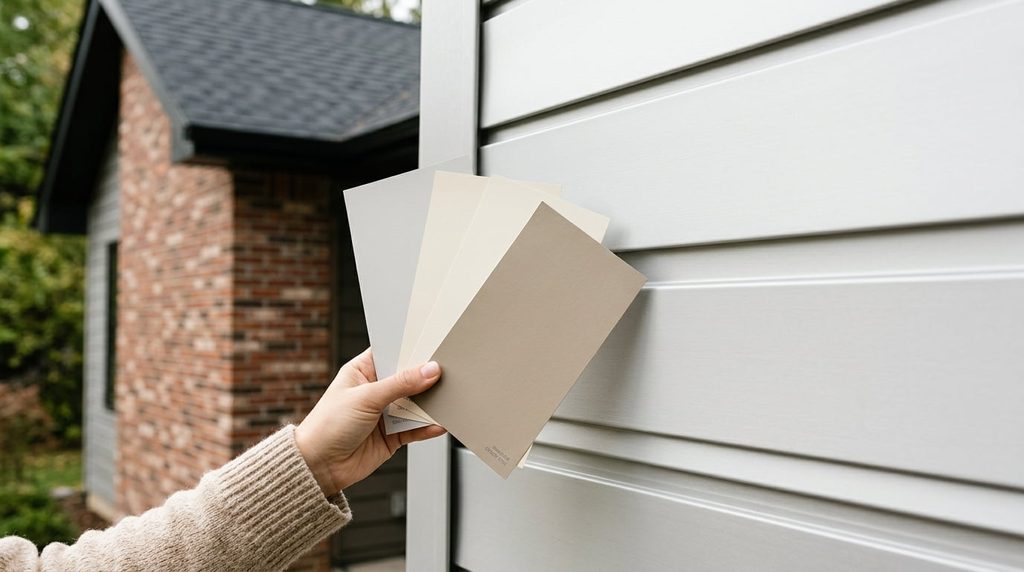
Light and mid-tone colors are popular for aluminum siding, and they tend to stay cooler in the sun. Darker colors absorb more heat and may fade faster. If you love a dark shade, check the paint label to make sure it is approved for metal siding.
Think about your roof, brick, trim, door, and landscaping. Buy a small sample and paint a test patch. Then look at it in the morning, at noon, and in the evening, because color changes with the light. A good color choice can make Painting Aluminum Siding feel like a full home makeover.
How Much Does Painting Aluminum Siding Cost in Maryland?
The aluminum siding paint cost depends on the size of your home and the condition of the siding. No single price fits every house.
These factors change the price the most:
- Home size and number of stories
- Siding condition
- Amount of prep, such as washing, repairs, and scraping
- Heavy oxidation or peeling paint
- Paint and primer quality
- Hard-to-reach areas
- Labor and number of coats
If you do the work yourself, you pay for paint, primer, cleaning supplies, tape, and tools. As a rough guide, one gallon of paint usually covers about 250 to 400 square feet per coat, so a whole house takes a good amount. Many national guides put professional pricing at a few thousand dollars for an average home, but Maryland quotes can come in higher or lower.
Get two or three written estimates. A good contractor will inspect your siding and tell you whether Painting Aluminum Siding or replacement is the smarter spend.
Paint or Replace: How to Decide
| Painting | Replacing | |
|---|---|---|
| Upfront cost | Usually lower | Usually higher |
| Disruption | Less | More |
| Best for | Sound panels with faded or peeling paint | Badly damaged or corroded panels |
| Color choice | Any color you like | New color and new material |
| Timeline | A few days | Often longer |
Painting Aluminum Siding is the better pick when the main problem is color, not condition. Replacement makes more sense when you see widespread corrosion, many damaged panels, or paint that keeps failing. If you are unsure, ask a pro to inspect the siding before you decide.
How Long Does Painted Aluminum Siding Last?

There is no exact number. A well-prepped job with quality paint can last several years, and sometimes a decade or more. The result depends on prep, paint quality, how the paint was applied, sun and moisture, and how well you take care of it afterward.
The results of Painting Aluminum Siding depend heavily on how much care went into the prep. Clean, sound siding gives the paint a strong base. A quick job over dirt or chalk usually fails early.
Common Mistakes to Avoid
- Painting over dirt or chalk. Paint will not stick to a dirty or powdery surface.
- Skipping repairs. Paint will not fix loose panels or dents.
- Using the wrong paint. Interior or unsuitable paint breaks down outside.
- Skipping primer. Bare or oxidized metal needs it for good grip.
- Painting in bad weather. Rain, heat, humidity, and cold can ruin a fresh coat.
- Applying thick coats. Heavy coats dry unevenly and can drip or wrinkle.
Most problems with Painting Aluminum Siding start in the prep stage, before the first drop of paint goes on.
How to Maintain Painted Aluminum Siding?
A little upkeep protects the money you put into Painting Aluminum Siding.
- Wash the siding once a year with mild soap and water
- Check for scratches, chips, and peeling spots
- Touch up small chips quickly so moisture cannot get in
- Keep gutters and downspouts clear so water drains away from the walls
- Trim branches that rub against the siding in the wind
- Avoid harsh scrubbers that can scratch the finish
Should You Paint It Yourself or Hire a Pro?
For a small, one-story home, Painting Aluminum Siding can be a manageable DIY project if you have the right tools and some patience. The hard part is not the painting. It is the cleaning, repairs, primer, and weather planning.
Hiring a pro is also smart when your home has two or more stories, when the siding is heavily oxidized, or when you are not comfortable working on a tall ladder. Professional painters know how to prep different surfaces, spot damage early, and pick coatings that fit your siding.
A pro can also help with:
- Thorough prep and repairs
- Even coverage and clean lines
- Choosing paint, primer, and color
- Safer work at height
- Faster project completion
If you want help with exterior painting in Maryland, you can contact USA Builders and Developers.
Frequently Asked Questions
Can you paint aluminum siding?
Yes. Aluminum siding can be painted when it is solid and properly prepped. Clean it, repair damage, prime bare spots, and use a quality exterior paint made for metal.
What is the best paint for aluminum siding?
A 100% acrylic exterior paint made for metal is usually a good choice. Always follow the instructions on the product label.
How much does painting aluminum siding cost?
The cost depends on home size, siding condition, prep work, access, paint quality, and labor. For an accurate price, get a written estimate from a local contractor.
How long does painted aluminum siding last?
There is no guaranteed lifespan. Prep, paint quality, weather, and upkeep all play a part.
Is it better to paint or replace aluminum siding?
If the panels are sound, Painting Aluminum Siding is often a practical and lower-cost choice. If the siding is badly corroded or damaged, replacement is usually the better long-term fix.
Final Thoughts
Painting Aluminum Siding can give your Maryland home a fresh look without the cost and mess of a full replacement. The key is prep. Wash the siding, fix any damage, remove loose paint, and use primer where needed. Then choose a quality exterior paint and work on a mild, dry day.
If your siding is still solid, a new coat can boost curb appeal and add protection. If it is badly corroded, replacement may be the smarter move. For homeowners who want expert help with Painting Aluminum Siding, USA Builders and Developers offers exterior painting services for Maryland properties.
Have Questions? Call Us Now!
We’re here to help—quick answers, friendly service, anytime you need!