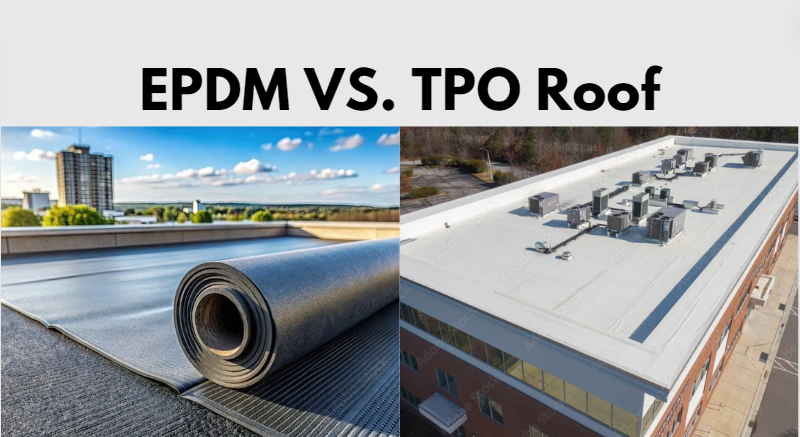
When selecting a flat roofing system many property owners compare EPDM vs TPO to determine which option offers better durability and value. Both materials are widely used for commercial and residential flat roofs due to their weather resistance and cost-effectiveness. However they differ in installation methods, energy efficiency, lifespan, and overall performance.
What is EPDM?
EPDM (Ethylene Propylene Diene Monomer) is a synthetic rubber roofing membrane commonly installed on low-slope roofs. It is known for its flexibility, strong weather resistance, and long lifespan. EPDM performs especially well in cold climates because it can handle temperature fluctuations without cracking.
Key Features:
- Resistant to UV radiation and extreme weather
- Made from durable rubber material
- Available in black or white sheets
- Installed using adhesive, mechanical fasteners or ballasting
Pros:
- Affordable
- Long lifespan (20–30 years)
- Excellent weather resistance
- Easy repairs
Cons:
- Black surface absorbs heat
- Seams may weaken over time
What Is TPO Roofing?
TPO (Thermoplastic Polyolefin) is a single-ply white membrane known for its energy efficiency and reflective properties.It features heat-welded seams for strong waterproof protection and is commonly used on commercial flat roofs. Its reflective surface helps reduce cooling costs in hot climates.
Key Features:
- Heat-welded seams
- Highly reflective white surface
- UV resistant
- Lightweight
Pros:
- Energy efficient
- Strong seam strength
- Mold and dirt resistant
- Environmentally friendly
Cons:
- Quality varies by manufacturer
- Slightly shorter track record than EPDM
Why Choose TPO?
TPO (Thermoplastic Polyolefin) is a single-ply white membrane designed for energy efficiency. Its reflective surface helps reduce heat absorption making it ideal for warmer climates. TPO membranes use heat-welded seams which create strong and secure waterproof connections
EPDM vs TPO : Key Differences Comparison
Here is a quick comparison of EPDM and TPO roofing systems:
| Feature | EPDM | TPO |
| Material Type | Synthetic Rubber | Thermoplastic |
| Color | Black / White | Mostly White |
| Lifespan | 20–30 Years | 15–25 Years |
| Energy Efficiency | Moderate | High |
| Installation | Adhesive / Fastened | Heat-Welded |
| Cost | Lower | Moderate |
Which Roofing System Is Better for Your Climate?
- Hot Climates → TPO is better due to reflectivity
- Cold Climates → EPDM performs better
- Budget Projects → EPDM
- Energy Efficiency Focus → TPO
Common Mistakes When Choosing Between EPDM and TPO
Many property owners focus only on upfront cost when selecting a roofing system. However long-term performance, climate conditions, and maintenance requirements should also be considered. Choosing the wrong membrane for your region can lead to higher energy bills or premature wear.
It is always recommended to evaluate your building’s location, insulation system and long-term budget before making a final decision.
Environmental Considerations
In addition to climate performance environmental impact is also important. TPO roofing is often considered more eco-friendly because of its reflective properties and energy saving benefits. EPDM can also be recyclable in some cases and offers a long lifespan which reduces material waste over time.
Maintenance and Repairs
EPDM repairs are generally easier because rubber patches can be applied quickly.
TPO repairs require heat welding, which may need professional installation.
Regular inspections every 6–12 months are recommended for both systems.
Durability and Performance
Both EPDM and TPO roofing systems are designed to withstand harsh weather conditions. EPDM is highly flexible which allows it to expand and contract during extreme temperature changes without cracking. This makes it a reliable choice in regions with heavy snowfall or freezing temperatures.
While TPO on the other hand, performs exceptionally well in sunny and high-heat environments. Its reflective surface reduces heat absorption helping to maintain indoor comfort and lower cooling costs during summer months.
Installation Differences
Installation methods also play an important role when comparing EPDM and TPO. EPDM membranes can be fully adhered, mechanically attached, or ballasted depending on the building structure. This flexibility makes it easier to install on various roof designs.
TPO roofing requires heat-welded seams which create strong waterproof bonds. While this method offers excellent seam strength it usually requires skilled professionals and specialized equipment.
FAQs
Is EPDM cheaper than TPO?
Yes, EPDM usually has a lower upfront installation cost.
Does TPO last longer than EPDM?
Typically, EPDM has a slightly longer lifespan, but high-quality TPO can also perform well.
Which roofing system is better for commercial buildings?
Both are suitable, but TPO is often preferred for energy efficiency.
Can EPDM and TPO be installed over existing roofs?
In some cases yes, depending on roof condition and local building codes.
Final Thoughts
Both roofing systems offer durability and reliable performance for flat roofs. When comparing EPDM vs TPO the best choice depends on your building’s needs and climate conditions. EPDM is a cost-effective option with a long proven track record making it ideal for budget-focused projects.
While TPO however stands out for its energy efficiency and reflective properties especially in warmer climates. Before making a decision consider your budget long-term maintenance plans and local weather conditions to choose the most suitable roofing system.
Have Questions? Call Us Now!
We’re here to help—quick answers, friendly service, anytime you need!