Masonry is one of the most durable parts of a building. Brick walls, concrete surfaces, stone features, walkways, chimneys, and retaining walls can last for decades when they are built and maintained correctly. However, masonry work requires more than placing bricks or pouring concrete. The right materials, preparation, drainage, bonding, mortar, and finishing methods all affect the final result.
That is why choosing the right masonry contractor is important for property owners, business owners, and property managers. A professional contractor can handle new construction, repairs, restoration, and maintenance while helping you avoid problems that may become more expensive later.
For properties in Maryland, professional masonry work is especially valuable. Seasonal temperature changes, moisture, rain, snow, and freezing conditions can place stress on masonry surfaces over time. Whether you need brick repair, concrete work, stone installation, tuckpointing, or masonry restoration, knowing what a professional contractor can provide will help you make a better decision.
What Does a Masonry Contractor Do?
A masonry contractor specializes in building, repairing, restoring, and maintaining structures made from materials such as brick, concrete, stone, and masonry blocks. Their work can range from small repairs to large construction projects.
Common services include:

- Brick installation and repair
- Concrete sidewalks and driveways
- Stone masonry
- Masonry restoration
- Tuckpointing and repointing
- Foundation masonry repairs
- Retaining walls
- Chimney masonry
- Concrete block construction
- Exterior wall repairs
- Walkway and patio construction
- Masonry waterproofing and related repairs
A professional should also understand how masonry interacts with drainage, foundations, roofing, siding, and other parts of a building. This broader knowledge is important because visible masonry damage is not always caused by the surface itself. Water movement, settling, poor drainage, or damaged joints may contribute to the problem.
1. Professional Masonry Work Can Improve Property Durability
Masonry is valued because it can withstand demanding outdoor conditions. But even strong materials can fail when installation is poor. For example, improperly installed brick can develop cracks, loose sections, or moisture problems. Concrete can crack or settle when the base is not prepared correctly. Stone can become unstable when it lacks proper support.
A professional contractor considers the conditions before starting the work. This can include:
- Existing structural conditions
- Soil and drainage
- Water exposure
- Masonry material
- Mortar compatibility
- Surface preparation
- Expansion and movement
- Existing damage
- The property’s intended use
Proper preparation helps the finished masonry perform better over time. For commercial properties, durability is even more important. A damaged walkway, wall, or entrance can affect daily operations and create maintenance concerns.
Professional installation can help reduce unnecessary repairs and protect the long-term value of the property.
2. You Can Get the Right Masonry Service for the Problem
Not every masonry problem requires complete replacement. A qualified contractor should first determine what is damaged and why. For example, deteriorated mortar joints may require tuckpointing or repointing. A few damaged bricks may need replacement. Cracked concrete may require repair rather than full removal.
Some common masonry services include the following.
Brick Work
Brick is commonly used for exterior walls, chimneys, walkways, steps, and other structures. Brick repair may involve replacing damaged units, repairing joints, addressing cracks, or restoring deteriorated sections. Matching the existing brick can be important for older buildings because differences in size, texture, and color can be noticeable.
Concrete Work
Concrete is widely used for sidewalks, driveways, steps, slabs, and other hard surfaces. Professional concrete work includes proper base preparation, forming, reinforcement when needed, placement, finishing, and curing. Poor preparation can contribute to cracking, uneven surfaces, and premature deterioration.
Tuckpointing and Repointing
Mortar joints can deteriorate as a building ages. Tuckpointing and repointing involve repairing or replacing damaged mortar between masonry units. This work does more than improve appearance. Sound mortar joints help protect the masonry from moisture penetration and further deterioration.
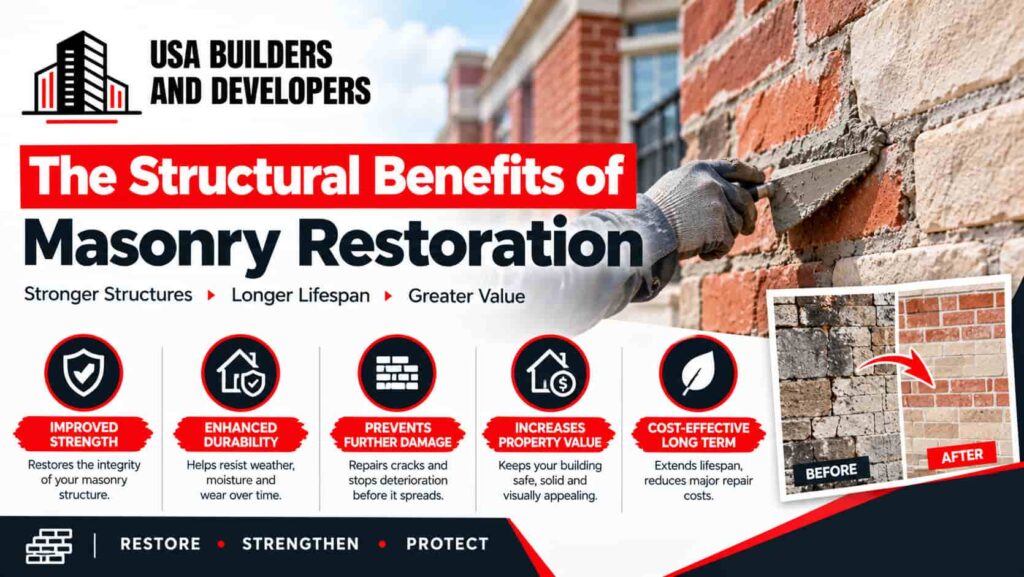
Masonry Restoration
Older buildings may need restoration instead of simple repairs. Restoration can involve repairing damaged brick or stone, replacing deteriorated mortar, rebuilding sections, and preserving the appearance of existing masonry. A careful approach is especially important for historic or older properties.
3. A Professional Can Help Identify Hidden Masonry Problems
Masonry damage is not always obvious. A small crack may seem harmless, but its location and pattern can provide clues about the underlying problem. Other warning signs include:
- Loose bricks
- Crumbling mortar
- Bulging walls
- Water stains
- Spalling concrete
- Missing mortar
- Uneven walkways
- Cracks around windows or doors
- Damaged chimney joints
- Moisture entering through masonry walls
The important question is not only, “How bad does it look?”. The better question is, “What is causing the damage?” A professional inspection can help identify whether the problem is related to water, movement, aging materials, poor drainage, installation issues, or another condition. Finding the cause early can prevent a small repair from becoming a much larger project.
4. Professional Masonry Can Improve Curb Appeal
Masonry is both functional and visual. Damaged brick, stained concrete, deteriorated mortar, or cracked walkways can make an otherwise attractive property look neglected. Repairing masonry can improve the overall appearance of:
- Residential homes
- Office buildings
- Retail properties
- Apartment buildings
- Restaurants
- Commercial entrances
- Schools
- Industrial buildings
- Multi-unit properties
For businesses, appearance matters. A clean and well-maintained entrance can create a better first impression for customers, tenants, employees, and visitors. Masonry improvements can also complement other exterior upgrades such as siding, roofing, landscaping, doors, and windows.
5. The Right Contractor Can Handle Commercial Masonry Projects
Commercial masonry projects often have different requirements than small residential repairs. A commercial property may have larger surfaces, heavier traffic, multiple structures, or strict scheduling requirements. For example, a business may need repairs to a damaged walkway without disrupting customer access. An apartment building may need exterior masonry restoration while residents continue using the property.
Commercial projects may involve:
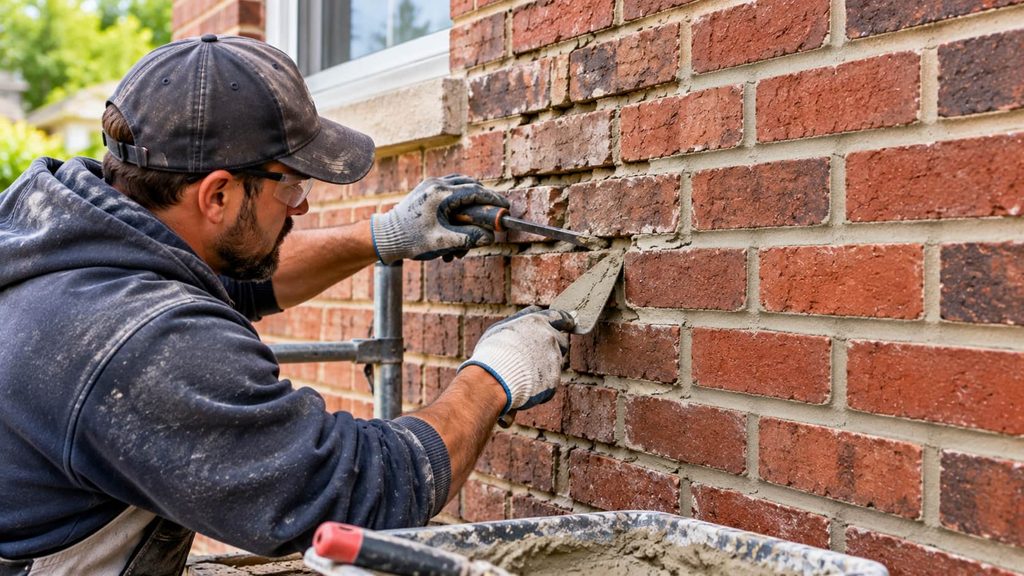
- Building walls
- Concrete sidewalks
- Driveways
- Entryways
- Retaining walls
- Brick facades
- Stone features
- Masonry repairs
- Exterior restoration
- Foundation-related masonry work
A contractor should understand the project’s scope before work begins. The planning process may include reviewing the existing conditions, identifying materials, determining the repair method, estimating labor and materials, and developing a practical work schedule.
For larger projects, clear communication is essential. A property owner should know what work will be performed, what materials will be used, how long the project may take, and what conditions could affect the schedule.
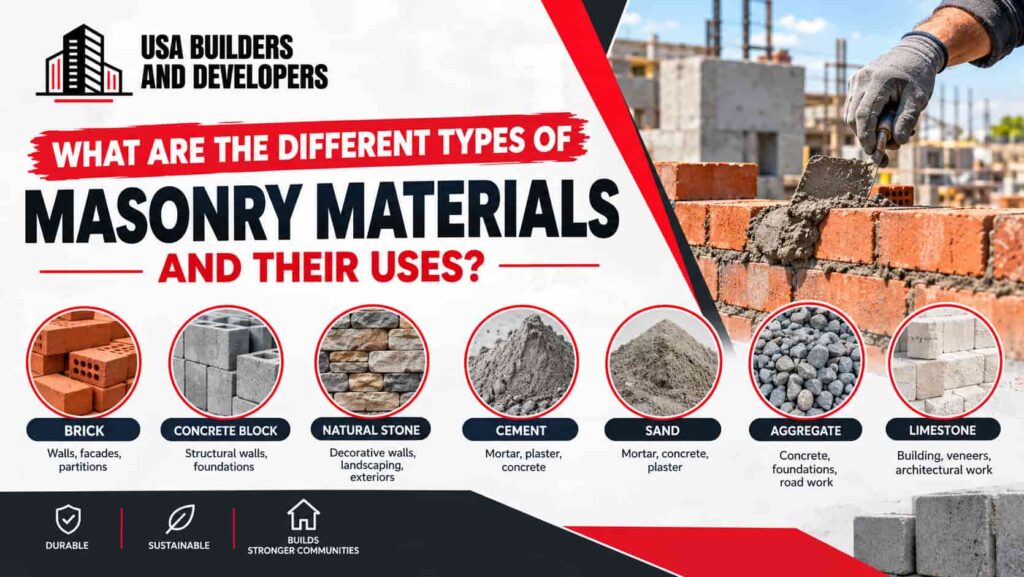
6. Choosing the Correct Masonry Materials Matters
Different masonry materials have different strengths, appearances, and maintenance requirements. The right choice depends on the project.
Brick
Brick provides a classic appearance and is widely used for exterior walls, chimneys, and architectural features. It is durable and can work well with many building styles.
Concrete
Concrete is a practical option for driveways, sidewalks, slabs, steps, and other surfaces. It can provide a strong and functional surface when properly installed.
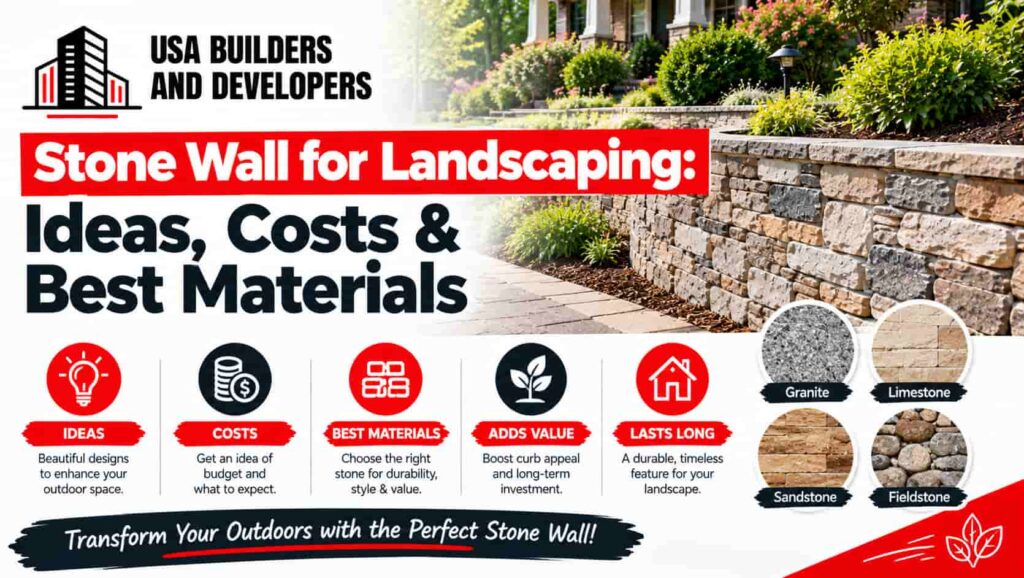
Natural Stone
Natural stone can create a distinctive appearance for walls, steps, patios, entrances, and landscape features. Stone types vary in color, texture, strength, and cost.
Concrete Block
Concrete masonry units are commonly used for walls, foundations, utility structures, and other construction applications. The material can provide strength while offering practical installation options. The existing building should also be considered when selecting materials.
A new material that does not match the surrounding structure can create an uneven appearance. A professional can help determine which materials are suitable for the property’s design and conditions.
7. Professional Repairs Can Help Prevent More Expensive Damage
Ignoring masonry problems rarely makes them disappear. Small defects can become larger when exposed to repeated moisture, temperature changes, and normal movement. For example, deteriorated mortar can allow water to reach areas that should remain protected. Freeze-thaw cycles can make existing cracks worse. Loose bricks can eventually become unstable.
Regular maintenance can help identify these problems earlier. Some repairs are relatively straightforward when addressed at the right time. Waiting until a wall, chimney, walkway, or foundation area has extensive damage can make the project more complicated. This is one reason property owners should not judge masonry work only by its initial price.
The better question is whether the proposed solution addresses the actual problem and provides lasting value.
When Should You Hire a Masonry Contractor?
You should consider professional masonry services when you notice visible damage or when you are planning a new masonry project. Some signs that deserve attention include:
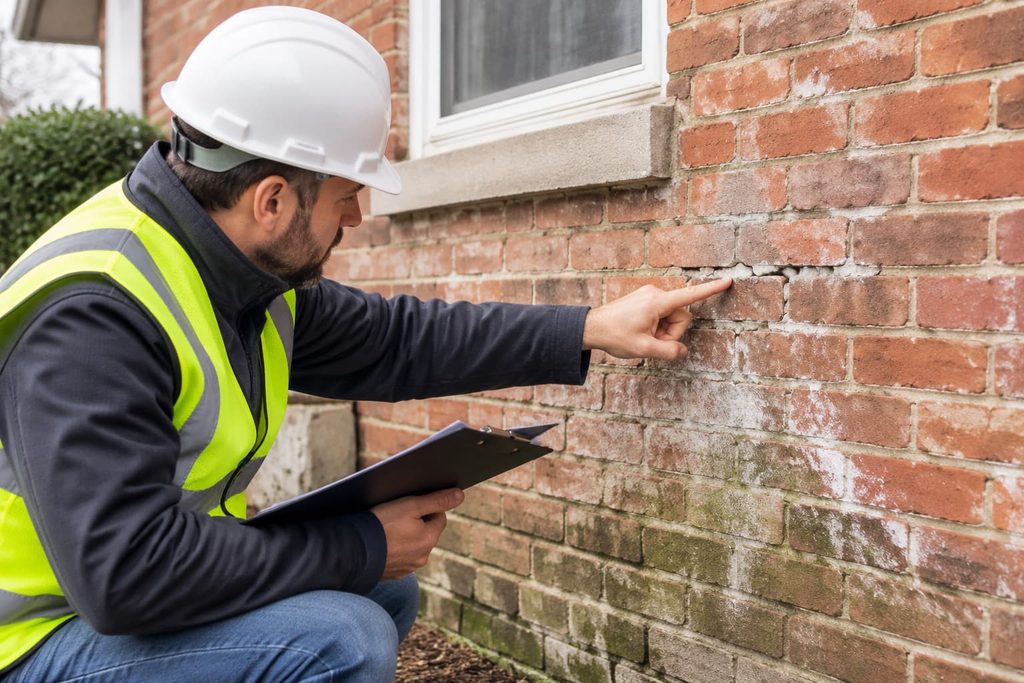
- Large or growing cracks
- Loose bricks or stones
- Missing mortar
- Crumbling joints
- Water entering through masonry
- Spalling concrete
- Uneven sidewalks
- Damaged steps
- Bowing or bulging masonry walls
- Deteriorated chimney mortar
- Repeated masonry repairs in the same location
You should also contact a professional before starting major masonry construction. Early planning can help you select appropriate materials, establish the correct scope, and avoid unnecessary work.
How Much Does Masonry Work Cost?
The cost of masonry work varies from one project to another. There is no single price that applies to every property. Several factors can affect the final cost, including:
- Type of masonry material
- Size of the project
- Amount of damage
- Labor requirements
- Accessibility
- Material availability
- Surface preparation
- Demolition or removal
- Structural conditions
- Repair versus replacement
- Project location
A small mortar repair will usually require a different budget than rebuilding a damaged masonry wall. Commercial projects can also have additional costs because of their size, scheduling requirements, access limitations, and coordination needs.
The best way to understand your project cost is to request an inspection and detailed estimate. A professional estimate should explain the work that needs to be completed rather than providing only a single unexplained number.
How to Choose the Right Masonry Contractor
Choosing a contractor is an important part of the project. Do not base your decision only on the lowest estimate. Instead, look for a contractor who can clearly explain the project and demonstrate relevant experience. Consider these factors:
Experience
Ask whether the contractor has completed projects similar to yours. Experience with residential work does not always mean the company has the right experience for a large commercial project.
Services
Make sure the contractor provides the specific service you need. If you need tuckpointing, brick repair, concrete work, or restoration, ask about their experience with that type of project.
Insurance and Licensing
Ask about applicable licensing and insurance requirements for your location and project. Proper coverage can help protect both the property owner and workers during construction.
Written Estimate
A written estimate should make the project easier to understand. It should identify the proposed work, materials, labor, and other important costs where applicable.
References and Past Work
Look at previous projects when possible. Photos can help you understand the quality and type of work a contractor performs. For larger commercial projects, references can also provide insight into communication, scheduling, and project management.
Why Maryland Property Owners Should Pay Attention to Masonry Maintenance
Maryland properties experience changing weather throughout the year. Rain, humidity, snow, freezing temperatures, and temperature changes can affect masonry surfaces. Water is one of the biggest concerns because it can enter damaged joints and cracks.
When temperatures fall below freezing, trapped moisture can expand and place additional stress on masonry. This makes routine inspection and timely maintenance important. Property owners in Maryland should pay particular attention to:
- Brick mortar joints
- Exterior walls
- Chimneys
- Concrete sidewalks
- Driveways
- Steps
- Retaining walls
- Foundation masonry
- Stone surfaces
Keeping these areas in good condition can help protect the property and reduce the chance of extensive deterioration.
Why Choose USA Builders and Developers for Masonry Services?
USA Builders and Developers provides masonry services for property owners looking for reliable construction, repair, and restoration solutions. Our masonry services include brick work, concrete sidewalks and driveways, tuckpointing and repointing, restoration, and masonry repairs.
We understand that every property has different needs. Some projects require repairing a small damaged area. Others involve larger exterior improvements or restoration work. Our goal is to identify the work your property needs and provide a practical solution.
Whether you are maintaining a residential property or improving a commercial building, professional masonry work can help protect your investment and improve the appearance of your property. If you have cracked masonry, damaged mortar, deteriorating brick, uneven concrete, or another masonry concern, it is better to evaluate the problem before it becomes more serious.
Get Professional Masonry Services in Maryland
Masonry can provide lasting strength and visual appeal, but quality installation and timely maintenance matter. The right contractor can help you choose suitable materials, identify damage, complete repairs, and plan new masonry construction.
For commercial property owners, professional masonry services can also help maintain safe, functional, and attractive exterior spaces. If your property needs brick work, concrete sidewalks or driveways, tuckpointing, repointing, restoration, or masonry repairs, USA Builders and Developers can help.
Contact us today to discuss your project and find the right masonry solution for your property.
Frequently Asked Questions
What is a masonry contractor?
A masonry contractor specializes in constructing, repairing, restoring, and maintaining structures made from brick, stone, concrete, and masonry blocks.
What services does a masonry contractor provide?
Common services include brick work, concrete installation and repair, stone masonry, tuckpointing, repointing, masonry restoration, retaining walls, and other masonry repairs.
When should I hire a masonry contractor?
You should consider hiring one when you notice cracked or loose masonry, deteriorating mortar, water damage, uneven concrete, or other visible problems. Professional help is also useful before starting a new masonry project.
Can masonry contractors work on commercial properties?
Yes. Many masonry contractors handle commercial projects such as sidewalks, entrances, exterior walls, retaining walls, brick facades, concrete surfaces, and masonry restoration.
Is masonry repair better than replacement?
It depends on the condition of the masonry. Some damaged areas can be repaired, while severely deteriorated or unstable sections may require replacement. A professional assessment can help determine the appropriate solution.
How long does masonry work take?
Project time depends on the size, materials, repair requirements, site conditions, and weather. A small repair may take much less time than a large commercial restoration project.
How do I find a reliable masonry contractor in Maryland?
Look for relevant experience, appropriate licensing and insurance, clear written estimates, examples of completed work, and services that match your specific project.
How can I get a masonry estimate?
Contact a masonry contractor and provide details about the property and the work you need. An on-site evaluation can help the contractor understand the existing conditions and prepare a more accurate estimate.