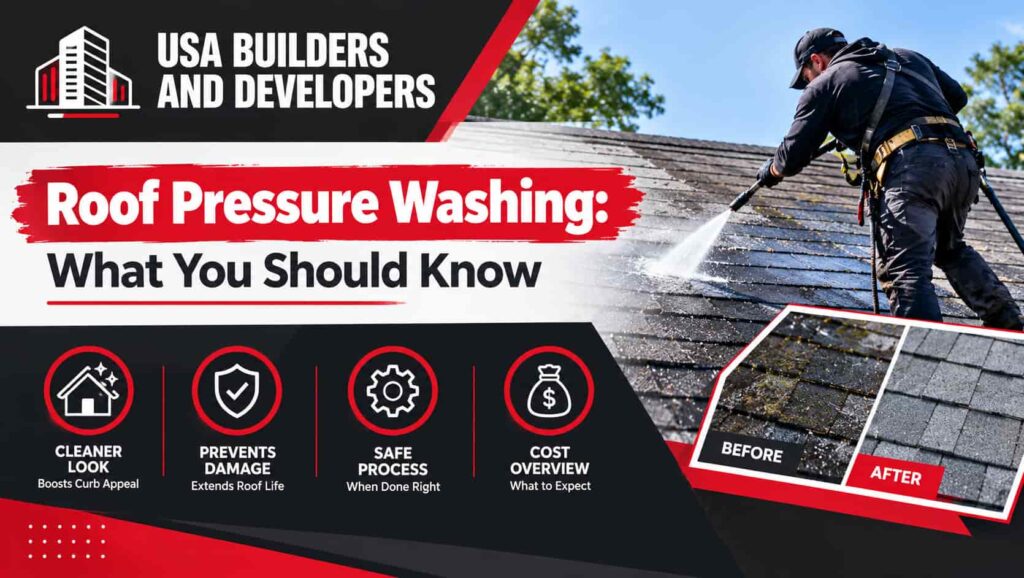
Roof pressure washing is a cleaning method used to remove dirt, algae, moss, mildew, and other unwanted buildup from residential roofs. Over time, rain, humidity, and changing weather conditions can cause stains and organic growth to develop on roofing materials, affecting the appearance of your home.
For Maryland homeowners, regular roof cleaning can help maintain the property’s exterior appearance and identify potential roofing problems early. However, using excessive water pressure can damage certain roofing materials, especially asphalt shingles. Choosing the right cleaning method is important for protecting your roof.
In this guide, you’ll learn about roof pressure washing, different roof cleaning methods, their benefits, potential risks, installation and cleaning costs, and maintenance tips to help keep your Maryland home’s roof clean and in good condition.
What Is Roof Pressure Washing?
Roof pressure washing is a cleaning process that uses water under pressure to remove dirt, debris, algae, moss, and other buildup from roof surfaces. It is commonly used to improve the appearance of roofs and remove accumulated contaminants that develop over time.
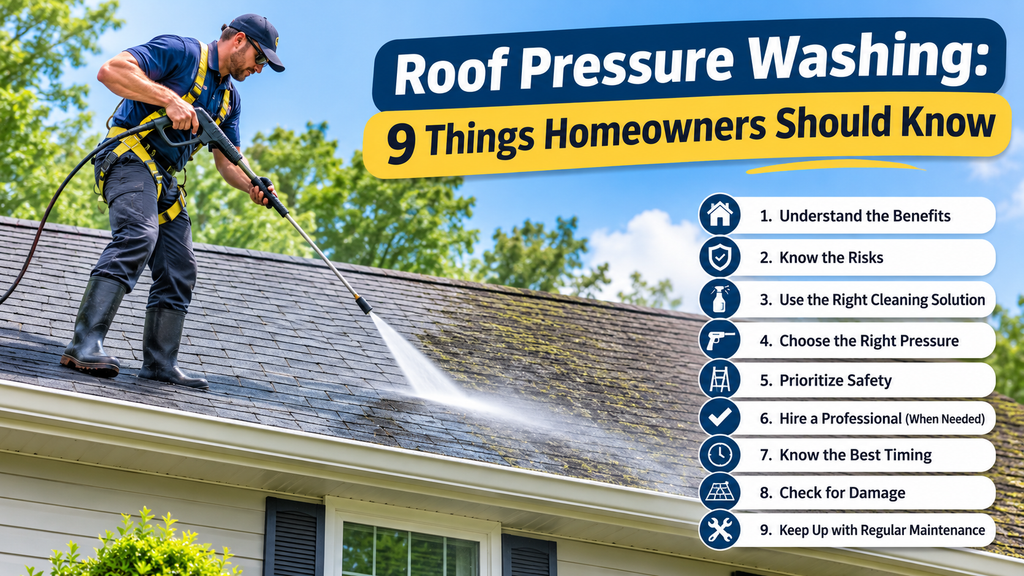
Roofs are regularly exposed to rain, dust, sunlight, humidity, and changing temperatures. These environmental conditions can contribute to dark stains, moss growth, and algae buildup, particularly in areas with moisture and limited sunlight.
However, not every roofing material can safely withstand high-pressure water. Excessive pressure can damage asphalt shingles, remove protective granules, and force water beneath roofing materials. For this reason, professional roof cleaners often recommend low-pressure soft washing for suitable residential roofs.
How Does Roof Pressure Washing Work?
A typical roof cleaning process involves the following steps:
- Roof inspection: The cleaning professional checks the roof’s condition, material, and visible damage.
- Debris removal: Loose leaves, branches, and other debris are removed.
- Cleaning preparation: Nearby plants, outdoor furniture, and surrounding areas are protected.
- Cleaning application: A suitable cleaning method is selected based on the roofing material.
- Final inspection: The roof is checked to ensure the cleaning process has been completed properly.
Which Roof Materials Can Be Cleaned?
Different roofing materials require different cleaning approaches.
- Asphalt shingles: Usually require low-pressure soft washing rather than high-pressure cleaning.
- Metal roofs: Can often be cleaned using suitable low-pressure methods and manufacturer-approved products.
- Tile roofs: Require careful cleaning to avoid cracking or damaging tiles.
- Slate roofs: Need specialized cleaning because of their delicate and expensive nature.
Important: Before starting roof pressure washing, always check the roofing manufacturer’s cleaning recommendations or consult a qualified professional.
Why Is Roof Cleaning Important?
Regular roof cleaning is an important part of home maintenance. Over time, dirt, algae, moss, and other debris can accumulate on roofing materials, making your home look less attractive and potentially contributing to maintenance problems.
For Maryland homeowners, regular roof cleaning can help maintain the roof’s appearance and identify potential issues before they become more expensive repairs.
Here are some important reasons why roof cleaning matters.
1. Improves Your Home’s Appearance
Dark stains, moss, and algae can make your roof look old and poorly maintained. Professional roof pressure washing or an appropriate soft washing method can help remove unwanted buildup and improve your home’s overall appearance.
2. Helps Remove Algae and Moss
Moisture and limited sunlight can encourage algae and moss growth on roof surfaces. These organisms can retain moisture and contribute to roofing material deterioration over time.
Using an appropriate roof cleaning method helps remove this buildup while reducing the risk of unnecessary damage.
3. Supports Roof Maintenance
Regular roof cleaning provides an opportunity to identify visible roofing problems, such as damaged shingles, loose flashing, and blocked drainage areas.
Finding these issues early can help homeowners arrange necessary repairs before the damage becomes more serious.
4. Helps Maintain Proper Roof Drainage
Leaves, branches, and other debris can collect around roof valleys and drainage areas. Removing this debris helps maintain proper water flow and reduces the likelihood of blockages.
However, gutters and downspouts should also be inspected and cleaned separately when necessary.
5. May Help Extend Roof Lifespan
Algae, moss, and accumulated debris can contribute to moisture-related roofing problems. Proper cleaning and routine maintenance may help protect roofing materials from avoidable deterioration.
Keep in mind that roof cleaning alone cannot guarantee a longer roof lifespan. Proper installation, ventilation, inspections, and timely repairs are also important.
6. Helps Protect Your Property Investment
Your roof is an important part of your home’s structure. Keeping it clean and addressing maintenance issues can help preserve its condition and overall appearance.
Important tip: Roof pressure washing should never involve excessive water pressure, particularly on asphalt shingles. Choose a cleaning method that is appropriate for your roofing material and follows manufacturer recommendations.
Signs Your Roof Needs Cleaning
Over time, roofs collect dirt, debris, algae, moss, and other unwanted materials due to changing weather conditions. These problems can affect your home’s appearance and may contribute to roofing maintenance issues.
Recognizing the signs early can help Maryland homeowners decide when professional roof cleaning or roof pressure washing may be necessary.
1. Dark Stains on Roof Shingles
Dark streaks or black stains on asphalt shingles may indicate algae growth. These stains can spread across the roof and make it look older than it actually is.
Professional roof cleaning using an appropriate low-pressure method can help remove these stains without unnecessarily damaging the shingles.
2. Moss Growing on the Roof
Moss commonly develops in shaded and damp areas. It can retain moisture against roofing materials and may contribute to shingle deterioration over time.
If you notice green patches or thick moss growth, consider having your roof inspected and cleaned by a professional.
3. Visible Algae or Mildew
Green, black, or brown discoloration may indicate algae or other organic growth. These problems are more common on roofs exposed to moisture and limited sunlight.
An appropriate cleaning treatment can help remove organic buildup and improve the roof’s appearance.
4. Leaves and Debris Accumulation
Leaves, small branches, and dirt can collect in roof valleys and around drainage areas. This debris may interfere with water flow and contribute to drainage problems.
Regular roof and gutter inspections can help prevent unnecessary blockages.
5. Roof Looks Older or Discolored
If your roof has uneven colors, visible stains, or accumulated dirt, it may need professional cleaning.
However, discoloration can also indicate aging or material damage, so an inspection is important before choosing a cleaning method.
6. Water Drainage Problems
If you notice water collecting around roof valleys or overflowing gutters, debris or drainage issues may be responsible.
Cleaning the roof and inspecting the gutters and downspouts can help identify the problem.
When Should You Consider Professional Roof Cleaning?
Consider contacting a roof cleaning professional if you notice persistent algae, moss growth, heavy debris, or widespread staining.
Before scheduling roof pressure washing, make sure the cleaning method is suitable for your roofing material. High-pressure cleaning can damage certain roof surfaces, particularly asphalt shingles.
Tip for Maryland homeowners: Inspect your roof periodically, especially after severe storms and during seasons when leaves and debris accumulate.
Types of Roof Cleaning Methods
Choosing the right roof cleaning method is important for removing dirt, algae, moss, and other buildup without damaging roofing materials. Different roofs require different cleaning techniques depending on their material, age, and overall condition.
For Maryland homeowners, understanding the available roof pressure washing and soft washing methods can help them make informed decisions about roof maintenance.
1. Soft Washing
Soft washing is a low-pressure roof cleaning method that uses water and specially formulated cleaning solutions to remove algae, moss, mildew, and stains.
Benefits:
- Uses low water pressure to reduce the risk of shingle damage.
- Helps remove organic growth and dark roof stains.
- Suitable for many asphalt shingle roofs when performed correctly.
- Can provide longer-lasting results against algae when appropriate treatments are used.
Soft washing is often preferred for asphalt shingles because it avoids the excessive pressure associated with traditional pressure washing.
2. Traditional Pressure Washing
Traditional pressure washing uses a machine to spray water at higher pressure to remove dirt, mud, and stubborn surface buildup.
Benefits:
- Can remove certain types of surface dirt quickly.
- Useful for some durable exterior surfaces.
- May be appropriate for certain roofing materials when specifically approved by the manufacturer.
Potential risks:
- Can remove protective granules from asphalt shingles.
- May damage roofing materials.
- Can force water beneath shingles and flashing.
- May create leaks if used incorrectly.
High-pressure washing is generally not recommended for asphalt shingle roofs.
3. Manual Roof Cleaning
Manual roof cleaning involves removing loose debris, leaves, and certain types of moss using appropriate tools and careful techniques.
Benefits:
- Does not require high-pressure equipment.
- Allows professionals to target specific areas.
- Can help remove loose debris from suitable roof surfaces.
However, aggressive scraping or brushing can damage shingles and other roofing materials. Manual cleaning should follow manufacturer recommendations.
4. Chemical Roof Cleaning
Chemical roof cleaning uses specially formulated solutions to treat algae, moss, mildew, and other organic growth.
Benefits:
- Helps treat stubborn algae and organic stains.
- Can reduce the need for mechanical scrubbing.
- May be combined with soft washing.
- Can help maintain the appearance of suitable roofing materials.
Cleaning chemicals must be selected and applied carefully to protect roofing materials, landscaping, and surrounding surfaces.
Which Roof Cleaning Method Is Best?
The best method depends on your roof’s material, condition, and the type of buildup.
| Cleaning Method | Best Application |
|---|---|
| Soft washing | Many asphalt shingle roofs |
| Pressure washing | Only suitable manufacturer-approved surfaces |
| Manual cleaning | Loose debris and carefully managed localized buildup |
| Chemical cleaning | Algae, moss, and organic stains |
Important: Before choosing roof pressure washing, consult a qualified roof cleaning professional and check the manufacturer’s recommendations. The goal should be to clean the roof effectively without causing unnecessary damage.
Soft Washing vs. Pressure Washing
When planning roof cleaning, homeowners often compare soft washing and traditional pressure washing. Both methods use water to clean exterior surfaces, but they differ in water pressure, cleaning techniques, and suitable applications.
Understanding the difference can help Maryland homeowners choose a safer and more effective roof cleaning solution.
1. Water Pressure
The biggest difference between these methods is the amount of water pressure used.
- Soft washing: Uses low-pressure water combined with appropriate cleaning solutions to remove algae, moss, and stains.
- Pressure washing: Uses higher-pressure water to remove dirt and stubborn surface buildup.
Soft washing is generally preferred for asphalt shingles because excessive pressure can damage their protective granules.
2. Cleaning Process
Soft washing relies mainly on cleaning solutions to treat organic growth, while traditional pressure washing relies more heavily on the force of water.
Both methods require proper equipment and techniques to avoid damaging roofing materials.
3. Cleaning Results
Soft washing can effectively treat algae and organic stains on suitable roofing materials. Pressure washing may remove certain surface contaminants quickly, but it does not necessarily address the underlying cause of organic growth.
The cleaning result depends on the roof’s condition, material, and treatment used.
4. Risk of Roof Damage
High-pressure water can damage asphalt shingles, loosen roofing materials, and force water underneath the roof surface.
Soft washing generally reduces these risks when the correct cleaning solution and application technique are used.
However, improper chemical application can also damage roofing materials and surrounding landscaping.
5. Cost Differences
The cost of each method depends on roof size, accessibility, material, contamination level, and cleaning requirements.
Rather than choosing a service based only on price, homeowners should compare the cleaning method, included services, and professional experience.
Soft Washing vs. Pressure Washing Comparison
| Feature | Soft Washing | Pressure Washing |
|---|---|---|
| Water pressure | Low | High |
| Cleaning approach | Cleaning solutions | Water force |
| Asphalt shingles | Generally preferred | Generally not recommended |
| Algae removal | Effective with suitable treatment | May remove surface growth |
| Risk to shingles | Lower when properly performed | Higher |
| Best application | Suitable residential roofs | Manufacturer-approved durable surfaces |
Which Method Should Maryland Homeowners Choose?
For most asphalt shingle roofs, soft washing is generally the safer cleaning option. It helps remove algae, moss, and stains without relying on excessive water pressure.
Traditional pressure washing may be suitable for certain durable roofing materials, but only when the manufacturer permits it and the correct equipment and technique are used.
Important tip: Always ask your roof cleaning professional which method they recommend for your specific roofing material before scheduling a service.
Is Pressure Washing Safe for Roof Shingles?
Pressure washing can remove dirt, algae, moss, and other buildup from certain exterior surfaces. However, using high-pressure water on roof shingles can cause serious damage if the cleaning process is not handled correctly.
For Maryland homeowners, understanding the risks of roof pressure washing is important before scheduling a professional cleaning service.
1. It Can Remove Protective Granules
Asphalt shingles contain protective granules that help shield the roofing material from sunlight and weather exposure.
High-pressure water can loosen or remove these granules, potentially reducing the shingles’ ability to protect your home.
2. It Can Damage Shingles
Excessive water pressure can lift, crack, or loosen shingles, particularly when they are already old or damaged.
This may affect the roof’s ability to prevent water from entering your home.
3. It Can Cause Water Leaks
Spraying water directly under shingles or around roof flashing can force moisture into areas that are designed to remain dry.
This may lead to leaks, damp insulation, ceiling stains, and interior water damage.
4. It May Reduce Roof Lifespan
Repeated aggressive cleaning can contribute to premature deterioration of roofing materials.
Using an appropriate cleaning method and following manufacturer recommendations can help protect your roof.
5. It Can Create Safety Risks
Wet roofing surfaces become slippery, increasing the risk of falls during cleaning. High-pressure equipment also requires proper handling and protective equipment.
Professional roof cleaners should follow appropriate safety procedures when working at heights.
What Is the Safest Way to Clean Asphalt Shingles?
For most asphalt shingle roofs, manufacturers and roofing professionals generally recommend appropriate low-pressure cleaning methods rather than traditional high-pressure washing.
Soft washing may be suitable when:
- The cleaning solution is approved for the roofing material.
- Application follows manufacturer recommendations.
- Water pressure remains low.
- Nearby plants and landscaping are protected.
- Excessive scrubbing and aggressive brushing are avoided.
Should You Pressure Wash an Old Roof?
Pressure washing an old or damaged roof is generally not recommended. Aging shingles may already have loose granules, cracks, or weakened areas that can become worse during aggressive cleaning.
Have a qualified roofing professional inspect the roof before deciding whether cleaning or replacement is more appropriate.
Important: The purpose of roof cleaning is to remove unwanted buildup without compromising the roof’s protective structure. Always prioritize the condition and safety of your roofing materials.
Roof Pressure Washing Cost in Maryland
The cost of roof pressure washing in Maryland depends on the roof’s size, material, condition, and cleaning method. A small, single-story home may cost less to clean than a large property with a steep or complex roof.
Factors That Affect Roof Cleaning Costs
- Roof size: Larger roofs generally require more time, labor, and cleaning products.
- Roof pitch and height: Steep or multi-story roofs may require additional safety equipment and labor.
- Roofing material: Asphalt shingles, metal, and tile roofs may need different cleaning methods.
- Amount of buildup: Heavy moss, algae, and stubborn stains can increase the work involved.
- Cleaning method: Soft washing and pressure washing may have different labor and equipment costs.
Estimated Roof Cleaning Prices
As a general U.S. budgeting guide, professional roof cleaning may cost around $300–$900, although the final price can be higher or lower depending on the property. One 2026 cost guide estimates soft washing at approximately $0.30–$0.60 per square foot. These are estimates, not guaranteed Maryland prices. Angi+1
How to Get an Accurate Estimate
Before hiring a roof cleaning company:
- Request quotes from at least three contractors.
- Ask which cleaning method they recommend for your roofing material.
- Confirm whether algae or moss treatment is included.
- Ask if gutter cleaning and plant protection cost extra.
- Check that the company has appropriate insurance and provides a written estimate.
Important: Don’t choose a contractor based on the lowest price alone. Protecting your roofing material should be a priority, especially if your home has asphalt shingles.
Step-by-Step Roof Cleaning Process
Professional roof cleaning involves more than simply spraying water over the surface. A proper process helps remove dirt, algae, and moss while protecting the roofing material.
1. Inspect the Roof
The cleaning process starts with a roof inspection. Professionals check for damaged shingles, loose flashing, existing leaks, heavy moss, and other problems that may need attention before cleaning.
2. Remove Loose Debris
Leaves, branches, and other loose debris are carefully removed from the roof. This helps prevent blockages and allows the cleaning process to work more effectively.
3. Protect Plants and Surrounding Areas
Cleaning solutions can affect nearby landscaping. Professionals should protect plants, outdoor furniture, windows, and other surfaces before starting the work.
4. Choose the Appropriate Cleaning Method
The cleaning method depends on the roofing material and its condition. Soft washing may be suitable for many asphalt shingle roofs, while metal and tile roofs may require different manufacturer-approved methods.
5. Apply the Cleaning Solution
A suitable roof-cleaning solution is applied according to the product instructions. It helps treat algae, mildew, and other organic growth without relying on excessive water pressure.
6. Rinse or Allow Natural Treatment
Depending on the cleaning product and roof type, professionals may gently rinse the surface or allow the treatment to work naturally. Aggressive pressure should be avoided on delicate roofing materials.
7. Perform a Final Inspection
After cleaning, the contractor checks the roof for remaining buildup, visible damage, and drainage concerns. Homeowners should also ask whether any repair work is recommended.
Maryland homeowner tip: Schedule roof inspections after severe storms and during seasonal maintenance. Regular checks can help identify small roofing problems before they become expensive repairs.
Common Roof Cleaning Mistakes to Avoid
Cleaning your roof can improve its appearance, but the wrong approach may damage roofing materials or create expensive problems. Maryland homeowners should avoid these common mistakes when planning roof maintenance.
1. Using Excessive Water Pressure
High-pressure water can remove protective granules from asphalt shingles, loosen roofing materials, and force water underneath the shingles. Always choose a cleaning method suitable for your roof type.
2. Ignoring Roof Inspections
Cleaning a damaged roof without inspecting it first can make existing problems worse. Check for missing shingles, cracks, leaks, and loose flashing before starting.
3. Using Harsh Cleaning Chemicals
Some chemicals can damage roofing materials, discolor surfaces, or harm nearby plants. Use products approved for the specific roofing material and follow the manufacturer’s instructions.
4. Walking Directly on the Roof Without Proper Safety Equipment
Wet roofing surfaces are slippery and dangerous. Walking on them without appropriate safety equipment can lead to serious falls and accidental roof damage.
5. Neglecting Gutters and Downspouts
Leaves and debris can block drainage systems, causing water to collect around the roof edges. Keep gutters and downspouts clear as part of your regular roof maintenance routine.
6. Choosing the Cheapest Contractor Without Checking Credentials
A low-cost service may not always provide proper cleaning techniques or safety precautions. Check contractor experience, insurance, customer reviews, and written estimates before hiring.
Remember: The purpose of roof cleaning is to remove unwanted buildup without damaging the roofing system. Choosing the right method and avoiding these mistakes can help protect your home’s exterior.
How Often Should You Clean Your Roof?
The frequency of roof cleaning depends on the roofing material, local weather, surrounding trees, and the amount of algae or moss growth. There is no single cleaning schedule that works for every home.
For Maryland homeowners, seasonal weather changes, humidity, rainfall, and falling leaves can contribute to roof stains and debris buildup.
Recommended Roof Maintenance Schedule
- Once a year: Inspect your roof for visible stains, loose shingles, moss, and other signs of damage.
- After severe storms: Check for fallen branches, missing shingles, and debris accumulation.
- During fall: Remove leaves and check gutters and downspouts for blockages.
- When algae or moss appears: Consider professional treatment before the growth spreads.
- Every few years: Evaluate whether professional cleaning is needed based on your roof’s condition.
Factors That Affect Cleaning Frequency
- Nearby trees: Homes surrounded by trees may collect more leaves, branches, and moisture.
- Humidity: Moist conditions can encourage algae and moss growth.
- Roof material: Different roofing materials have different maintenance requirements.
- Roof design: Shaded areas and sections with poor drainage may develop buildup more quickly.
Important: Avoid cleaning your roof simply because a certain amount of time has passed. Inspect its condition first and follow the roofing manufacturer’s maintenance recommendations.
When to Hire Professional Roof Cleaners
Roof cleaning may look like a simple maintenance task, but working at heights and using cleaning equipment can be dangerous. Hiring professional roof cleaners can help protect your property and reduce the risk of accidental damage.
1. When Your Roof Has Heavy Algae or Moss
Thick moss, algae, and dark stains may require specialized cleaning products and techniques. Professionals can assess the buildup and recommend an appropriate treatment.
2. When Your Roof Has a Steep Design
Steep roofs and multi-story homes create additional safety challenges. Professional cleaners have the experience and safety equipment needed to work in these conditions.
3. When You Have Asphalt Shingles
Asphalt shingles can be damaged by excessive water pressure. A qualified contractor can recommend a suitable low-pressure cleaning method based on the manufacturer’s guidance.
4. When You Notice Roof Damage
If you see missing shingles, leaks, damaged flashing, or loose roofing materials, arrange an inspection before cleaning. Cleaning cannot replace necessary roof repairs.
5. When You Are Unsure Which Cleaning Method to Use
Different roofing materials require different care. Professional advice can help you avoid using unsuitable chemicals or cleaning equipment.
How to Choose the Right Roof Cleaning Company
Before hiring a contractor, check:
- Experience with your specific roofing material.
- Proper insurance and safety practices.
- Customer reviews and references.
- Cleaning methods and products used.
- Written estimates and service details.
For Maryland homeowners, choosing an experienced local contractor can make roof maintenance easier and help protect the property’s exterior.
Roof Maintenance Tips for Homeowners
Regular roof maintenance helps Maryland homeowners identify potential problems early and keep their roofing systems in good condition. Along with professional cleaning, a few simple maintenance habits can help protect your home.
1. Inspect Your Roof Regularly
Look for missing shingles, damaged flashing, dark stains, moss, and other visible signs of wear. Arrange a professional inspection if you notice anything unusual.
2. Keep Gutters and Downspouts Clean
Remove leaves and debris from gutters so rainwater can flow away from your home. Blocked gutters may cause water overflow and moisture problems.
3. Trim Overhanging Tree Branches
Branches hanging close to your roof can drop leaves, create shade, and cause damage during storms. Keep nearby trees properly maintained.
4. Address Algae and Moss Early
Dark streaks and green patches may indicate algae or moss growth. Ask a roofing professional about suitable treatment options before the buildup becomes extensive.
5. Check Roof Flashing and Seals
Flashing around chimneys, vents, and skylights helps prevent water from entering your home. Damaged or loose flashing should be inspected and repaired promptly.
6. Schedule Professional Inspections
A qualified roofing contractor can identify hidden problems that may not be visible from the ground. Consider an inspection after severe weather or whenever you notice signs of damage.
7. Avoid Unnecessary Pressure Washing
Not every roof needs high-pressure cleaning. Choose a method that suits your roofing material and follow the manufacturer’s maintenance recommendations.
Homeowner tip: Keep a record of roof inspections, repairs, and cleaning services. This makes it easier to track maintenance and plan future work.
Frequently Asked Questions About Roof Pressure Washing
1. Is roof pressure washing safe for asphalt shingles?
High-pressure washing is generally not recommended for asphalt shingles because it can remove protective granules and damage the roofing surface. A suitable soft-washing method is often preferred.
2. How much does roof cleaning cost in Maryland?
Roof cleaning costs depend on roof size, height, material, condition, and cleaning method. Request estimates from local contractors to understand the cost for your specific property.
3. What is the difference between soft washing and pressure washing?
Soft washing uses low-pressure water and suitable cleaning solutions to treat stains and organic growth. Pressure washing uses stronger water pressure and may damage delicate roofing materials.
4. Can pressure washing remove algae from a roof?
Water pressure may remove some surface buildup, but excessive pressure can damage roofing materials. Professionals may recommend an appropriate cleaning treatment to address algae safely.
5. How often should a roof be cleaned?
There is no fixed schedule for every roof. Cleaning frequency depends on weather, shade, nearby trees, roof material, and visible buildup. Regular inspections help determine when cleaning is necessary.
6. Can I clean my roof myself?
DIY roof cleaning can be dangerous because roofs are elevated and slippery. Using the wrong equipment or chemicals can also cause damage. Professional cleaning is generally a safer choice.
7. Does roof cleaning extend the life of a roof?
Proper maintenance and suitable cleaning can help prevent certain buildup-related problems and support roof care. However, cleaning cannot reverse aging or guarantee a longer roof lifespan.
8. Should I pressure wash my roof after a storm?
Not necessarily. After a storm, inspect for visible damage, fallen branches, and debris. If cleaning or repairs are needed, consult a qualified roofing professional.
Conclusion
Roof pressure washing can help improve your home’s appearance by addressing dirt, algae, moss, and other buildup. However, choosing the wrong cleaning method can damage shingles and create costly problems.
For Maryland homeowners, the best approach is to inspect the roof regularly, select a cleaning method suitable for the roofing material, and hire experienced professionals when necessary. Soft washing is often a better option for asphalt shingles than traditional high-pressure washing.
Proper roof maintenance, timely cleaning, and professional inspections can help keep your roofing system in good condition.
Need professional help with your roof? Contact USA Builders & Developers to discuss your roofing maintenance needs and request a free estimate.
Have Questions? Call Us Now!
We’re here to help—quick answers, friendly service, anytime you need!