
A gutter system does more than collect rainwater from your roof. It must also move that water to a safe location away from your home. That is where a gutter downspout becomes important.
A downspout carries water from the gutter to the ground. Without proper placement, roof runoff can collect beside your foundation, erode soil, damage landscaping, or contribute to basement moisture. The good news is that many downspout problems can be prevented with the right design and regular maintenance.
This guide explains what a downspout does, where it should discharge water, the different extension options, common problems, and when professional help may be needed.
What Is a Gutter Downspout?
A gutter downspout is the vertical pipe connected to a gutter. It carries rainwater from the roof-level gutter down to the ground or another drainage system. Gutters collect water along the roof edge. Downspouts then move that collected water downward. The two parts work together:
Roof → Gutter → Downspout → Extension or Drainage Area
A downspout by itself does not solve a drainage problem. The water must have a safe place to go after it reaches ground level. Building America recommends using properly sized gutters and downspouts to direct roof runoff away from the foundation. It also recommends terminating surface drainage away from the foundation or using an appropriate underground catchment system.
Why Is a Downspout Important?
Rainwater can place a surprising amount of pressure on the drainage system around your home. Your roof collects rainfall over a large area. Gutters concentrate that water and send it through a small number of downspouts. If the water is released directly beside the foundation, the soil in that area can become saturated. Over time, this may contribute to:
- Foundation moisture
- Basement leaks
- Crawl space moisture
- Soil erosion
- Muddy landscaping
- Standing water
- Damage around walkways
- Water entering window wells
- Excess moisture near exterior walls
A properly positioned downspout helps prevent these problems by moving roof runoff toward a suitable drainage area.
How Does a Gutter Downspout Work?
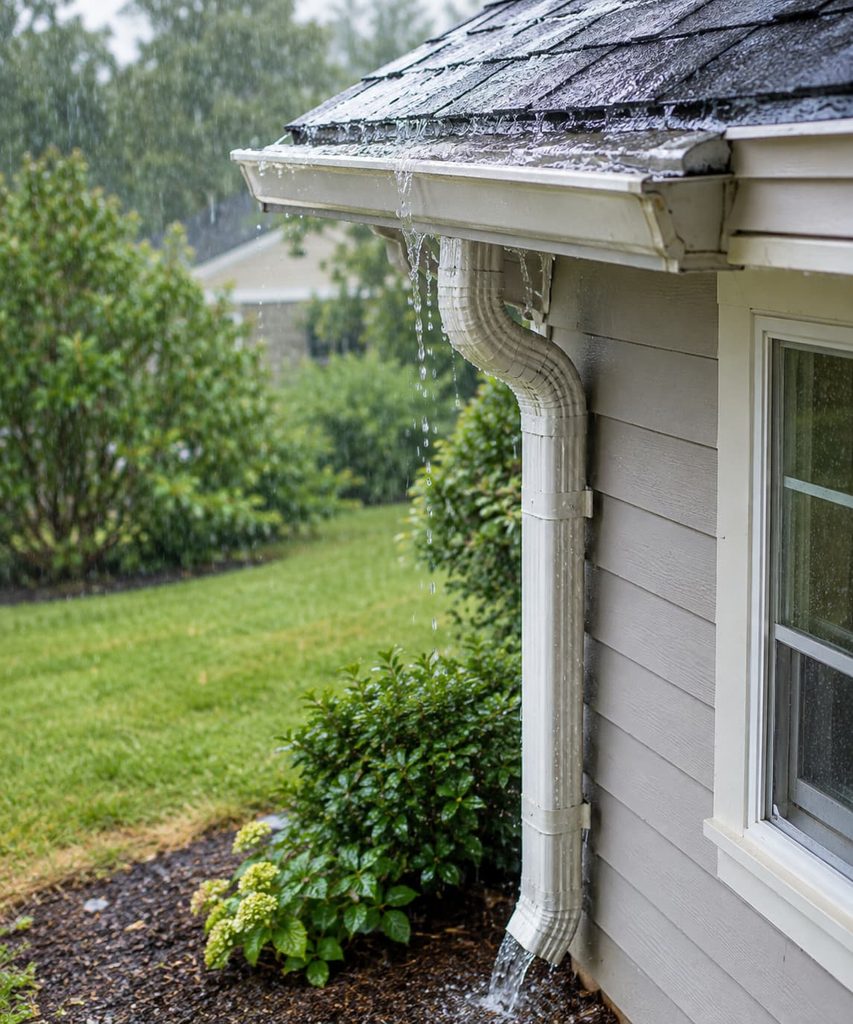
The process is simple. Rain falls onto the roof and flows toward the roof edge. The gutter catches the runoff and carries it along a slight slope. The water reaches an outlet connected to the downspout.
Gravity then pulls the water down through the vertical pipe. At the bottom, an elbow, extension, splash block, or underground pipe directs the water away from the building.
The system works best when every part is properly sized and connected. A clogged gutter can restrict water flow before it reaches the downspout.
A clogged or disconnected downspout can then cause water to overflow or discharge in the wrong location.
Where Should a Downspout Drain?
The water should drain somewhere that can safely handle the runoff without sending it back toward your home. A suitable location may include:
- A sloped lawn
- A landscaped area
- A drainage swale
- A rain garden
- A properly designed underground drainage system
- An approved stormwater discharge point
The exact distance depends on the property’s grading, soil, foundation type, local requirements, and drainage design. Building America recommends surface discharge at least 5 feet from the foundation or an underground catchment system at least 10 feet from the foundation in the situations covered by its guidance.
Prince George’s County, Maryland, gives homeowners a similar practical recommendation of keeping downspout discharge about 5–10 feet away from the foundation and using extensions or splash blocks when needed. These numbers should not be treated as a universal rule for every property. Local conditions and regulations can change the appropriate solution.
Why Should Downspouts Be Extended?
A standard downspout may end too close to the house. When this happens, water can collect next to the foundation instead of moving safely into the yard.
A downspout extension adds horizontal distance between the discharge point and the home. This is one of the simplest ways to improve roof drainage. An extension can help:
- Reduce water pooling near the foundation
- Protect soil around the house
- Reduce erosion
- Keep basement walls drier
- Protect landscaping
- Move runoff away from walkways
- Reduce splashback against exterior walls
Delaware’s environmental guidance also warns that downspouts ending at the base of a structure can allow stormwater to pool against the foundation. Extending them helps move runoff away from the building.
How Far Should a Downspout Extend?
There is no single distance that works for every property. The correct length depends on where the water can safely discharge. For many homes, several feet of extension can make a major difference. Some properties may need a longer route because of flat grades, poor soil drainage, basements, or recurring water problems.
A common professional approach is to move water at least several feet away from the foundation and ensure that the ground continues to slope away. Building America uses a minimum 5-foot surface discharge distance in its guidance, while some foundation drainage recommendations call for approximately 10 feet when conditions require it.
The goal is not simply to make the extension as long as possible. The goal is to send water to a safe location where it will not return toward the foundation or create another drainage problem.
Types of Downspout Extensions
Homeowners have several options for extending roof runoff.
1. Splash Blocks
A splash block sits below the downspout outlet. Its sloped surface spreads and redirects water away from the foundation. Splash blocks are simple and inexpensive, but they need suitable grading underneath them. If the ground slopes toward the house, a splash block will not solve the underlying problem.
2. Flexible Extensions
Flexible extensions can be attached to the bottom of a downspout. They are useful when the discharge path needs to bend around landscaping or other obstacles. However, flexible material can shift, become crushed, or collect debris if it is not installed correctly.
3. Rigid Extensions
Rigid extensions provide a more stable path for runoff. They can be useful in areas where you want a cleaner and more predictable drainage route. The extension should be properly supported and positioned so it does not become a tripping hazard.
4. Underground Downspout Drainage
An underground system can create a cleaner appearance because much of the drainage pipe is hidden below the ground. The downspout connects to a solid drainage pipe that carries water to an appropriate outlet.
Possible discharge locations include daylight outlets, approved drainage areas, or properly designed catchment systems. Underground drainage needs careful planning. A buried pipe that is too flat, poorly connected, or directed toward the foundation can create another problem instead of solving one.
Can You Connect a Downspout to an Underground Drain?
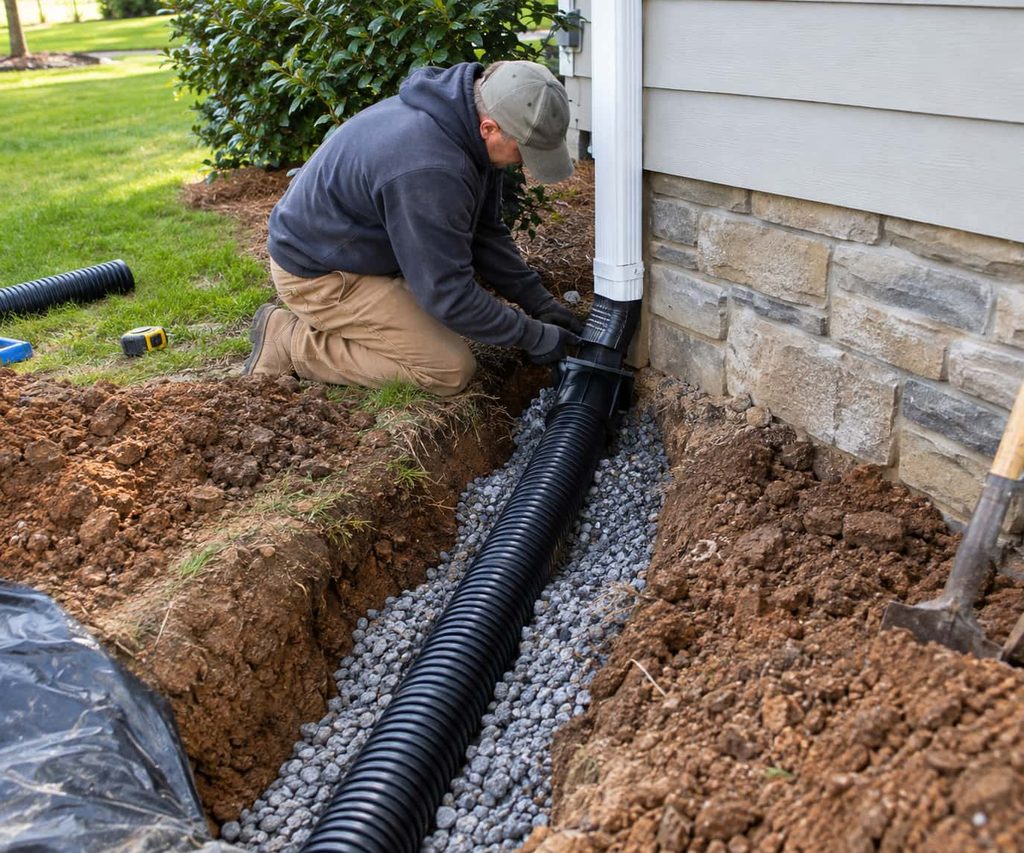
Yes, an underground drainage system can be used when the property is suitable for it. The system should be designed to move water away from the foundation and toward a safe discharge location.
Building America specifically warns against connecting gutter drainage to a perforated foundation drain because doing so can introduce roof runoff into the area around the foundation. Underground drainage should also be checked for local requirements before installation.
If you are unsure where the pipe should terminate, professional evaluation is a better option than simply burying a pipe in the yard.
Downspout Problems You Should Not Ignore
A downspout can look fine from a distance while still causing drainage problems. Watch for these warning signs.
Water Pooling Near the Foundation
If water remains around the base of your house after rain, check where the downspouts discharge. The outlet may be too close to the foundation, or the surrounding grade may be directing water back toward the house.
Downspout Overflow
Water coming over the sides of the gutter or around the downspout connection may indicate a clog, undersized drainage system, or heavy runoff. Start by checking for leaves and other debris.
Disconnected Sections
A loose elbow or disconnected downspout can release water directly beside the wall. Check joints after major storms. Water is heavy, so poorly secured connections can separate over time. Maryland home inspection guidance also recommends checking downspout joints and ensuring extensions are securely connected.
Soil Erosion
A strong stream of water can wash soil away from the end of a downspout. You may notice:
- Exposed roots
- Small channels in the soil
- Washed-out mulch
- Bare patches
- Soil collecting in another part of the yard
A splash block or better drainage route may help control the flow.
Basement or Crawl Space Moisture
Water near the foundation can contribute to moisture problems below ground. If you notice wet basement walls, damp crawl space areas, or water after heavy rain, inspect the entire drainage system instead of looking only at the basement.
Common Gutter Downspout Mistakes
Several simple mistakes can reduce the effectiveness of your drainage system.
Ending the Downspout Beside the House
This concentrates roof runoff directly beside the foundation. The water should be carried toward an appropriate discharge area.
Directing Water Toward a Walkway
A downspout should not create a wet or slippery path. In colder weather, standing water can also freeze.
Sending Water Toward a Neighbor’s Property
Your drainage system should not create problems for neighboring properties. The discharge location should be selected carefully and should comply with applicable local requirements.
Ignoring the Yard’s Slope
An extension cannot overcome every grading problem. If the surrounding soil slopes toward the home, water may still return to the foundation.
Using a Buried Pipe Without Planning the Outlet
Burying a pipe does not automatically create proper drainage. The pipe needs a suitable slope and a safe place for the water to exit.
How to Maintain a Gutter Downspout
Downspout maintenance starts with the gutters. Clean gutters allow water to reach the downspout instead of overflowing over the roof edge.
At least twice a year is a common maintenance starting point, with more frequent cleaning needed around homes with many overhanging trees. American Water guidance also recommends clearing downspout bends and checking that sections remain securely connected.
During maintenance, check:
- Gutter channels
- Downspout openings
- Elbows
- Fasteners
- Extension connections
- Splash blocks
- Underground outlets
- Soil around the discharge point
It is also useful to inspect the system after heavy storms. A drainage problem may only become obvious when the system handles a large volume of water.
Should Downspouts Be Connected to a French Drain?
Sometimes. A French drain and a downspout drainage system serve different purposes. A French drain is generally designed to collect and redirect water moving through or across the ground. A downspout system handles concentrated roof runoff.
The two systems may work together when properly designed, but they should not simply be connected without understanding how the drainage system works.
If your property has both roof runoff and groundwater problems, a professional can determine whether separate or combined drainage solutions make sense.
Gutter Downspout and Foundation Protection
Your gutters are part of your home’s exterior water management system. Their job is not only to keep rainwater off the siding. They also help control where water reaches the ground. When a downspout sends water too close to the foundation, the surrounding soil can become saturated. That can increase moisture around foundation walls and contribute to basement water problems.
The Building America Solution Center recommends combining gutters and downspouts with proper grading and other water-management measures to reduce soil saturation around foundations. This is especially important for homes with basements.
Gutter Downspouts for Maryland Homes
Maryland properties can experience heavy rainfall, seasonal storms, freezing temperatures, and changing ground conditions. That makes proper roof drainage important.
A downspout should work with the property’s grading rather than against it. Maryland housing rehabilitation standards also specify that gutters and downspouts should direct stormwater away from residences and call for properly angled splash blocks or extensions at downspout ends.
Homeowners should still check local requirements before making significant drainage changes. The right solution for a sloped property may be different from the right solution for a flat yard.
When Should You Replace a Downspout?
A downspout may not need complete replacement just because it is old. Sometimes cleaning or reconnecting a section is enough. Replacement may be appropriate when you notice:
- Severe dents
- Rust or corrosion
- Holes
- Loose sections
- Repeated separation
- Crushed extensions
- Persistent overflow
- Poorly positioned outlets
- Water damage around connections
If the downspout itself is fine but the water is discharged too close to the home, an extension or drainage modification may be all that is needed.
When Should You Call a Professional?
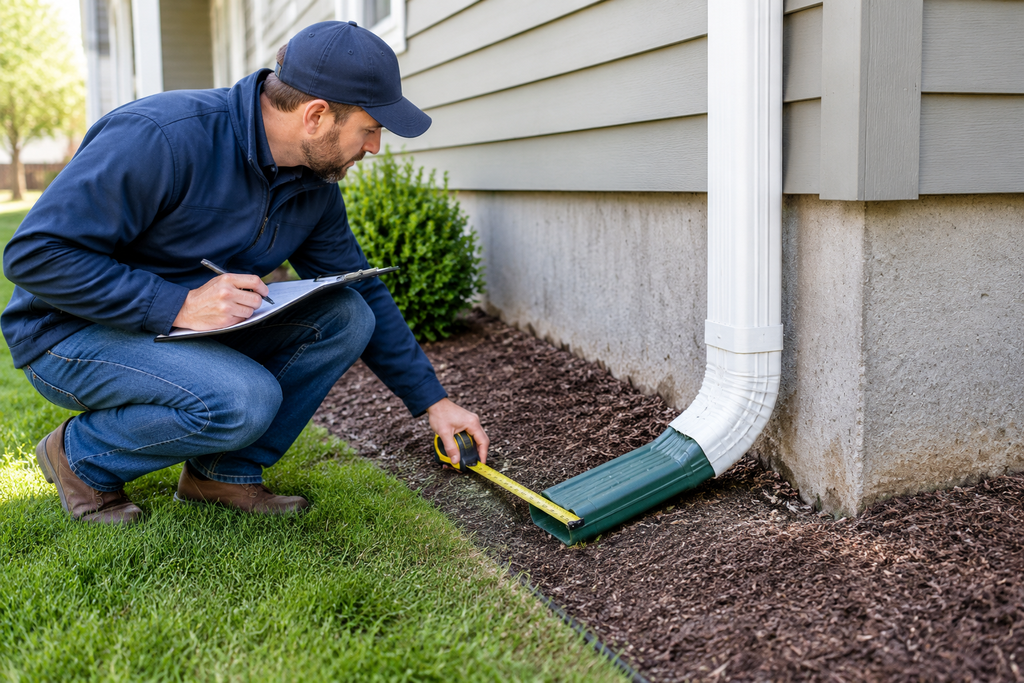
Simple above-ground extensions can often be handled by homeowners who are comfortable with basic maintenance. Professional help is more appropriate when the problem involves:
- Repeated basement leaks
- Severe foundation moisture
- Poor property grading
- Underground drainage
- Major erosion
- Multiple downspouts
- Flat or poorly draining yards
- Water flowing toward the house
- Drainage that affects neighboring properties
A professional can look at the complete water path instead of treating only the visible downspout.
How to Choose the Right Downspout Solution
Start by asking four questions:
Where does the water come from?
Determine which roof sections drain into each gutter and downspout.
Where does the water currently go?
Watch the discharge during rainfall if possible.
Where should the water go?
Choose an area that can safely receive the runoff without creating another problem.
What happens during heavy rain?
A drainage system that works during light rain may still overflow during a major storm.
This simple evaluation can help identify whether you need cleaning, a downspout extension, grading changes, or a more complete drainage solution.
Final Takeaway
A gutter downspout is a small part of your home’s exterior drainage system, but it has an important job. It carries roof runoff away from the gutter and helps control where that water reaches the ground. A properly installed system should move water away from the foundation, prevent unnecessary erosion, and send runoff toward a safe discharge area.
If water is pooling near your house, your downspouts may be part of the problem. Start by checking for clogs, disconnected sections, short extensions, and poor grading. If the issue continues, a professional drainage evaluation can help identify the right solution.
For homeowners in Maryland, USA Builders and Developers can help assess exterior drainage concerns and determine whether your property needs gutter downspout extensions, drainage improvements, or related waterproofing work.
Contact USA Builders and Developers to discuss your property’s drainage needs and find a practical solution for directing water away from your home.
Frequently Asked Questions
What does a gutter downspout do?
A gutter downspout carries rainwater collected by the gutters from the roof down to the ground. It then directs the water toward a suitable drainage area.
How far should a downspout extend from the house?
The correct distance depends on grading, soil, foundation conditions, and local requirements. Several feet is a common starting point, while some guidance recommends at least 5 feet for surface discharge.
Can a downspout cause foundation problems?
Yes. If roof runoff is discharged directly beside the foundation, water can saturate the surrounding soil and contribute to basement or foundation moisture problems.
Do all downspouts need extensions?
Not necessarily. A downspout may already discharge into a suitable drainage area. If it releases water too close to the foundation, an extension or another drainage solution may be necessary.
Are underground downspout drains better?
They can provide a cleaner appearance and move water farther across the property, but they must be designed correctly. The pipe needs an appropriate route and safe discharge point.
How often should downspouts be cleaned?
Check them at least twice a year and more often if your property has many trees. Inspect them after major storms as well.
Why does my downspout overflow during heavy rain?
Possible causes include clogged gutters, clogged downspouts, undersized drainage components, poor gutter slope, or more runoff than the system can safely handle.
Can a downspout drain into a French drain?
It can be part of a properly designed drainage system, but the two should not be connected without considering how the system handles concentrated roof runoff and groundwater.
Should downspouts drain onto concrete?
It depends on the drainage design. Roof runoff should not be allowed to create pooling or flow back toward the foundation. USDA guidance recommends directing runoff away from impervious surfaces when possible.
What is the best way to keep water away from the foundation?
Use a complete drainage approach that includes functioning gutters, properly positioned downspouts, suitable extensions or underground drainage, and grading that directs water away from the home.
Have Questions? Call Us Now!
We’re here to help—quick answers, friendly service, anytime you need!