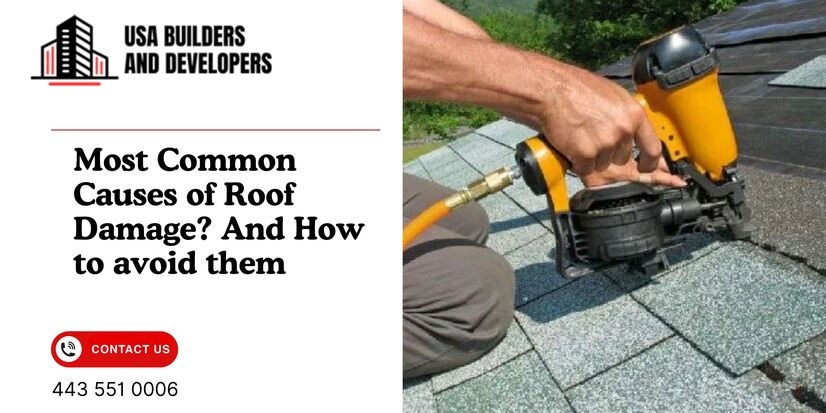
The best roofing nails for most asphalt shingle roofs are hot-dipped galvanized ring shank nails, about 1¼ inches long. They resist rust and grip the deck well, so your shingles stay flat and sealed through heat, rain, and snow. If you own a shingle roof this one small choice affects how well it stands up to storms.
Metal roofs work differently, since most panels need screws and nails fit only a few jobs. This guide shows homeowners across the USA which roofing nail size, type, and count to choose. You will also learn common mistakes to avoid and what to ask a contractor before work begins.
What Are Roofing Nails and Why Do They Matter?
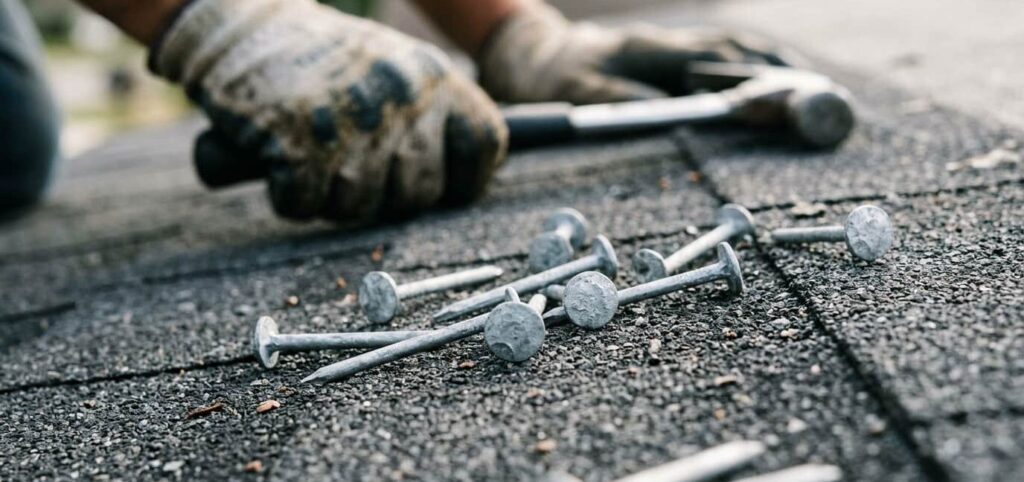
Roofing nails are short, wide-headed fasteners made to hold shingles, underlayment, and flashing to your roof deck. They matter because they are the only thing keeping your roof covering attached in a storm. The wrong nail can rust, back out, or let wind lift your shingles.
A typical roof uses thousands of nails. Each one is small, but together they decide whether your roof survives a hard storm. Roofing nails differ from common nails in three ways. They have a wide, flat head that grips the shingle without tearing it. They have a thin shank that drives through the deck with ease. They also carry a coating that fights rust. Framing and box nails lack these features, so never swap them in to save a few dollars.
Nail failure is easy to miss. A popped nail may look harmless, yet it can open a path for water. Over time, that small gap can rot the deck and stain your ceiling. Choosing the right nail at the start is cheap insurance.
Which Roofing Nails Are Best for Asphalt Shingles?
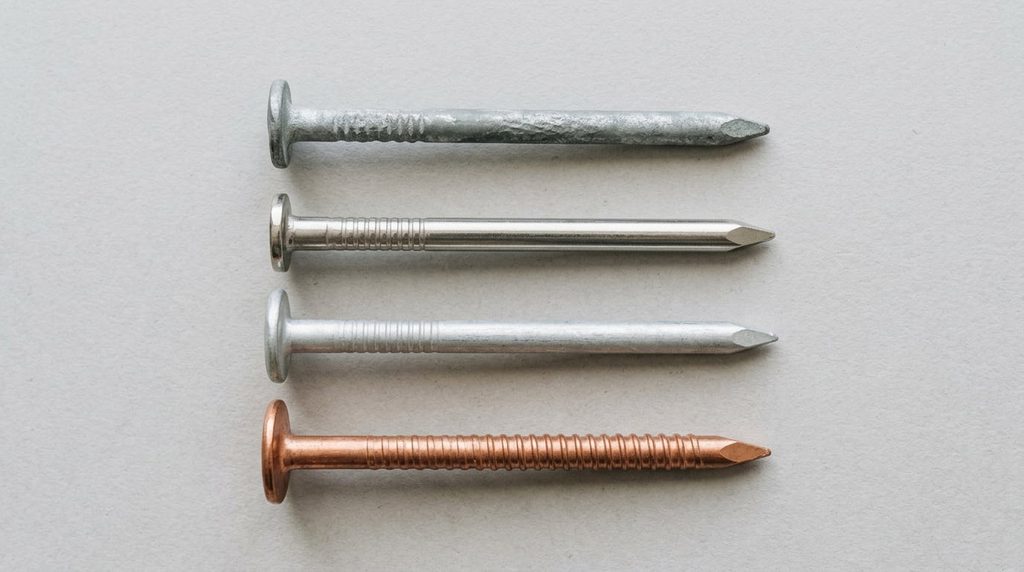
For asphalt shingles, hot-dipped galvanized roofing nails with a ring shank are the best choice for most homes. They resist rust, grip the deck well, and cost far less than stainless steel. Choose 12-gauge nails with a 3/8-inch head, and follow your shingle maker’s instructions.
The International Residential Code and most shingle makers call for corrosion-resistant fasteners. That means galvanized steel, stainless steel, aluminum, or copper. In practice, hot-dipped galvanized steel is the standard for asphalt shingles across the USA. The table below compares the main options.
| Nail type | Best for | Main strength | Main limit |
|---|---|---|---|
| Hot-dipped galvanized steel | Most asphalt shingle roofs | Strong, rust-resistant, low cost | Zinc can wear in salty air |
| Electro-galvanized steel | Light, short-term jobs | Cheap and smooth | Thin coating, rusts sooner |
| Stainless steel | Coastal and very wet areas | Best rust resistance | Higher price |
| Aluminum | Aluminum flashing and trim | Will not rust, avoids metal reaction | Soft and bends easily |
| Copper | Copper flashing and slate | Very long lasting | Costly, rarely needed for shingles |
Are Galvanized Roofing Nails Good Enough?
Yes, for most homes. Galvanized roofing nails are coated with zinc, which slows rust and protects the steel for many years under normal weather. Choose hot-dipped over electro-galvanized. The hot-dipped coating is much thicker, so it handles rain, snow, and humid summers better.
Check the box label. It should say hot-dipped galvanized and list the gauge and length. If it only says “galvanized,” ask the store which process was used.
When Should You Use Stainless Steel Roofing Nails?
Use stainless steel roofing nails when your home sits near salt water or in a very wet area. They resist rust better than galvanized nails, but they cost more. Homes along the Chesapeake Bay or the Atlantic coast are good examples. For a house inland, galvanized nails are usually enough.
Nails are a tiny share of total roof cost, so the price gap is small on a single house. If salty air, sea fog, or heavy humidity is part of your daily weather, the upgrade can be worth it.
Are Aluminum and Copper Nails Ever the Right Choice?
Sometimes, but not for typical shingle roofs. Aluminum nails suit aluminum flashing and trim, while copper nails suit copper flashing and slate. Both metals are softer than steel and can bend. Use them only when the other roofing metal matches, so the two do not react with each other.
Mixing metals can cause galvanic corrosion, where one metal slowly eats away at the other when moisture is present. Always match the nail metal to the flashing or panel it touches.
Can You Use Roofing Nails on a Metal Roof?
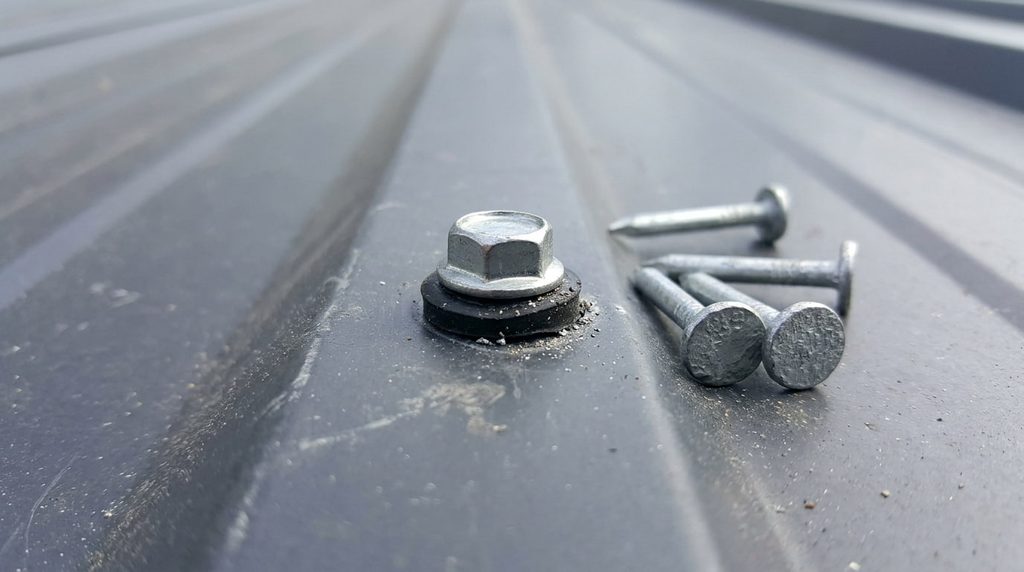
Sometimes. Most exposed-fastener metal panels need screws with rubber washers, not nails. Roofing nails for metal roofs are mainly used on metal shingles, trim, drip edge, and underlayment. Always check the panel maker’s instructions first, because the wrong fastener can void your warranty.
Metal expands and shrinks with the temperature. Across a year with freezing nights and hot, humid afternoons, panels move a little every day. A nail can slowly work loose under that movement. Screws with neoprene washers hold tighter and seal the hole. The table shows how the two compare.
| Feature | Nails | Screws with washers |
|---|---|---|
| Holding power | Lower, can back out over time | Higher, threads grip the deck |
| Sealing | Needs a wide head or sealant | Rubber washer seals the hole |
| Handles panel movement | Struggles | Handles it better |
| Best use | Metal shingles, trim, underlayment | Exposed-fastener panels, many clip systems |
| Install speed | Fast with a nailer | Slower, needs a drill |
Which Nails Work for Metal Shingles and Trim?
Use ring shank nails made from the same metal as the product, or stainless steel. They should have a head wide enough to hold the piece flat. Matching metals avoids rust streaks and reactions between metals. Always follow the shingle or trim maker’s chart for size and spacing.
If your metal roof already leaks around fasteners, a metal roof repair visit can find loose or rusted fasteners before they cause deck damage.
Are Ring Shank Roofing Nails Better Than Smooth Shank?
Yes, in most cases. Ring shank roofing nails have small ridges that lock into the deck, so they resist pulling out in high wind. Smooth shank nails are cheaper and drive easily, but they hold less. Many roofers choose ring shanks in windy or storm-prone areas.
Smooth shank nails are still allowed for many shingles, so read your shingle maker’s instructions and local code. Ring shanks give extra margin when storms hit, such as nor’easters on the East Coast or severe thunderstorms in the Midwest. One downside is that they are harder to pull out during repairs, so expect a little more effort when you replace a shingle.
What Size Roofing Nail Do You Need?
Most asphalt shingle roofs use 12-gauge roofing nails that are 1¼ inches long with a 3/8-inch head. The nail must go through the shingle and at least ¾ inch into the deck, or all the way through a thinner deck. Use longer nails for roof-overs and thick shingles.
| Roof situation | Typical nail length | Note |
|---|---|---|
| New roof, one shingle layer | 1¼ inch | Standard for most decks |
| Thick laminated shingles | 1¼ to 1½ inch | Check the bundle wrapper |
| Roof-over (new shingles over old) | 1½ to 1¾ inch | Only where local code allows |
| Thin deck (3/8 to 7/16 inch) | 1 to 1¼ inch | Tip should pass through the deck |
Gauge matters too. The 12-gauge size is common because it gives strength without splitting the deck. The right roofing nail length depends on your deck thickness plus the shingle stack. A short nail that only grabs the top of the deck is a common cause of blow-offs. If you are unsure, measure the shingle layers and add ¾ inch, or use the deck thickness if the deck is thinner.
How Many Roofing Nails Do You Need Per Shingle?
Most asphalt shingles need 4 nails each, placed on the nailing line. Use 6 nails per shingle in high-wind areas, on steep slopes, or when the maker’s instructions require it. A 3-tab roof at 4 nails per shingle needs about 320 nails per square, which is 100 square feet.
Architectural shingles have fewer pieces per square, so the nail count is lower, but always check the wrapper. In weight, plan for roughly 2 to 3 pounds of nails per square. Buy about 10% extra roofing nails to cover bent nails, misfires, and trim pieces. Over-nailing does not add strength. It can crush the shingle, so stick to the maker’s count.
How Do You Install Roofing Nails the Right Way?
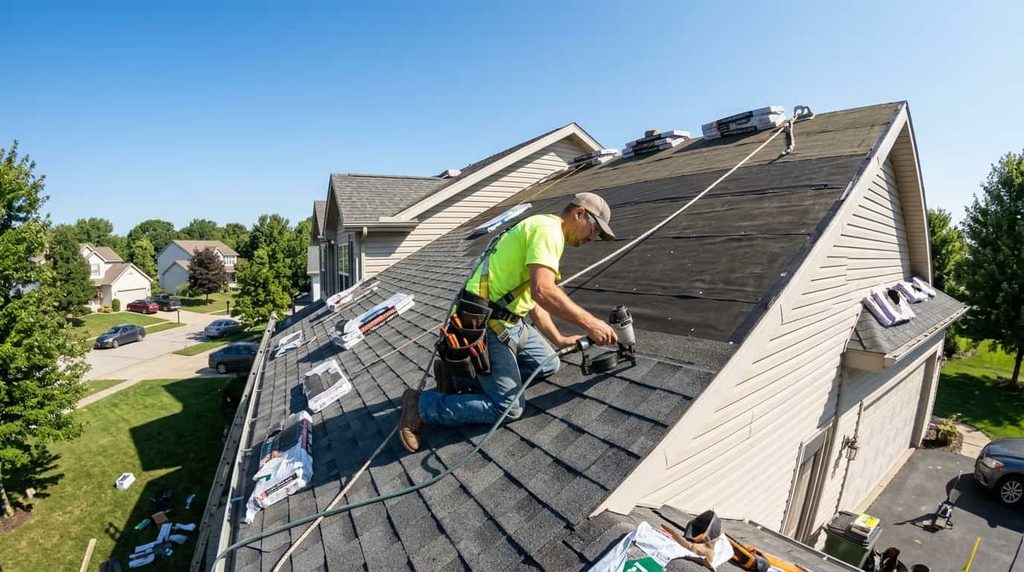
Drive each nail straight and flush with the shingle surface, on the nailing line the maker shows. Do not drive it too deep or leave it standing proud. Keep the nail gun on the correct depth setting, and test on a scrap piece first.
Start with a clean, dry deck and smooth underlayment. Follow the nailing line printed on the shingle, because the right spot differs by product. Place nails straight down, evenly spaced, and never near the edge of the shingle. Wear fall protection and stay off wet or icy roofs. This guide is general information, so your shingle maker’s instructions, local code, and warranty always come first.
Is a Nail Gun Better Than Hammering by Hand?
A roofing nail gun is faster and gives more even depth on large roofs when set correctly. Hand nailing gives better feel on small repairs and tricky spots. Pros often use both. The tool matters less than the setup, so check pressure and depth often.
A cordless nailer is handy for small jobs because you skip the hose and compressor. A pneumatic gun is usually lighter and cheaper to run on big roofs. Test on a scrap shingle every time the temperature changes, since cold and heat change how deep a nail sets.
What Mistakes Should You Avoid With Roofing Nails?
The most common mistakes are overdriving, underdriving, high nailing, and using the wrong nail type. Each one reduces holding power or lets water in. Avoid them by following the shingle maker’s nailing line, checking gun depth, and using corrosion-resistant nails.
- Overdriving: A nail driven too deep cuts the shingle mat and weakens its grip.
- Underdriving: A nail left standing proud can poke the shingle above and cause bumps or leaks.
- High nailing: Nails placed above the nailing line may miss the shingle below, which can cause blow-offs and void the warranty.
- Wrong nail type: Plain steel, short, or thin nails rust or pull out early.
Use this checklist before the crew leaves, or before you finish a DIY repair:
☐ Nails are hot-dipped galvanized or stainless steel
☐ Nail length reaches ¾ inch into the deck, or through a thin deck
☐ 4 nails per shingle, or 6 where required
☐ Nails sit flush, not crushed into the shingle or sticking up
☐ Nails are on the maker’s nailing line, not high
☐ Nails are straight, not angled
☐ Flashing and drip edge nails match the metal they touch
☐ Old, popped, or rusty nails are replaced with new ones
How Does Weather Affect Your Choice of Roofing Nails?
Weather changes which nail coating and shank you need. Coastal and humid areas call for stainless steel. Windy regions call for ring shanks and six nails. Cold weather makes shingles brittle, and hot weather makes them soft, so adjust your nailing depth to match.
Maryland is a good example of mixed weather. Summers are hot and humid, winters bring freezing rain and snow, and storms can push strong wind off the Chesapeake Bay. A home near the water may need stainless steel, while a home inland can do well with hot-dipped galvanized ring shanks. Along the Gulf Coast, hurricane wind and salt air raise the bar even higher. In the Midwest, hail and straight-line wind are the bigger tests.
In any climate, shingle makers give cold-weather and hot-weather instructions, so follow them. Cold shingles crack more easily, and hot shingles scuff and soften, so you may need to change gun depth during the day.
How Often Should You Inspect Roofing Nails and Shingles?
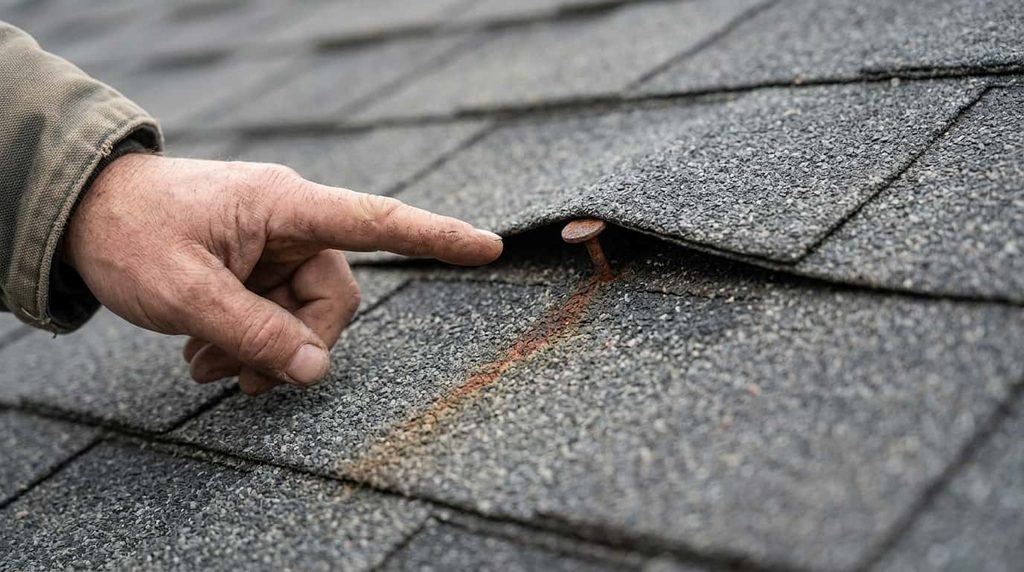
Inspect your roof twice a year, in spring and fall, and after any major storm. Look for nail pops, exposed nail heads, rust streaks, and lifted shingles. Catching a loose nail early costs little, while water damage costs far more.
Start from the ground with binoculars. Look for wavy shingle lines, small bumps under shingles, and dark rust streaks near flashing. Inside, check the attic for daylight, damp wood, or stains near nail tips. Frost on nail tips in winter can point to trapped attic moisture.
Nail pops happen when the deck moves, when moisture gets in, or when a nail was not set deep enough. A few can be fixed with a simple repair. If you see many across the roof, read our guide on roof repair vs replacement to decide your next step. Stay off wet, icy, or steep roofs, and call a pro when in doubt.
How Much Do Roofing Nails Cost?
Roofing nails are one of the cheapest parts of a roof. A box of hot-dipped galvanized nails costs a small amount compared with shingles and labor. Stainless steel costs more per pound, but the total difference on one roof is usually modest. Labor and shingles drive the real price.
Prices change by store, brand, and season, so check current listings. Do not pick the cheapest nail just to save a few dollars. A failed nail can lead to leaks, repairs, and warranty trouble that cost far more. Nails are only one line in the budget.
What Should You Ask a Roofing Contractor About Nails?
Ask what nail type, length, and count they plan to use, and whether they follow the manufacturer’s instructions. A good contractor answers clearly and puts the details in writing. Vague answers are a warning sign. These simple questions show how careful the crew really is.
- Which nails will you use, and are they hot-dipped galvanized or stainless steel?
- How long are the nails for my deck and shingle type?
- How many nails will you use per shingle?
- Will you use a nail gun, and how do you set the depth?
- Do you follow the shingle maker’s written instructions to protect my warranty?
- What will you use around flashing, drip edge, and metal parts?
- Are you licensed and insured in my state? In Maryland, look for an MHIC license.
- What does your written workmanship warranty cover?
The way a contractor answers tells you a lot. USA Builders and Developers provides roofing services across Maryland, and homeowners can ask these same questions before any project starts.
Frequently Asked Questions
What Are the Best Roofing Nails for Shingles?
Hot-dipped galvanized ring shank nails, 12-gauge and 1¼ inches long with a 3/8-inch head, suit most asphalt shingle roofs. Use stainless steel near the coast. Always follow your shingle maker’s instructions.
Can You Use Galvanized Nails on a Metal Roof?
Only for certain parts, like metal shingles, trim, and underlayment. Most metal panels need screws. Avoid mixing galvanized nails with aluminum or copper, because the metals can react. Check the panel maker’s guide first.
How Long Should Nails Be for Shingles?
Most shingle roofs need 1¼ inch nails. Use 1½ to 1¾ inch for roof-overs or thick shingles. The nail must reach ¾ inch into the deck or pass through it.
Do Stainless Steel Nails Last Longer Than Galvanized?
They resist rust better, especially in salty or very wet areas. Still, quality hot-dipped galvanized nails last many years inland, so stainless is mainly worth it near the coast.
Can You Reuse Old Nails on a Roof?
No. Old nails may be bent, rusty, or weak. Reusing them can leave loose spots in your roof. Use new nails for every repair and replacement.
Can You Use a Hammer Instead of a Nail Gun?
Yes, for small repairs. Nail guns are faster for full roofs. Either tool works if the nails sit flush and on the nailing line.
Why Are Nails Popping Up on My Roof?
Nail pops come from deck movement, moisture, or nails that were not set properly. A roofer can fix a few of them. Many pops across the roof need a full inspection.
Ready for a Roof That Lasts?
The right nail is a small choice that protects your whole roof. If you are unsure what is holding your shingles or metal roof down, let a licensed team take a look. USA Builders and Developers provides roofing services across Maryland, from inspections and repairs to full replacements. Request a roof inspection today, or contact our team for a clear, written estimate.
Have Questions? Call Us Now!
We’re here to help—quick answers, friendly service, anytime you need!