A concrete foundation holds up your whole building. It carries the weight of the structure and passes it safely into the ground. In Maryland, that job is not easy. Clay soil, heavy rain, and freeze-thaw weather all put stress on concrete foundations over time.
This guide explains the main types of concrete foundations, what they cost in Maryland, common problems, and when repair makes sense.
Why Maryland Conditions Matter for Concrete Foundations
Every region treats a foundation differently. In Maryland, these things matter most:
- Freeze-thaw weather. Water gets into small gaps, freezes, and expands. Over many winters, this can widen cracks. Footings must also sit below the frost line. In many areas that is about 30 inches, but local code decides.
- Clay soil. Clay is common in parts of the state. It swells when wet and shrinks when dry, which can push and pull on a foundation.
- Heavy rain and high water tables. Areas near the Chesapeake Bay and the Eastern Shore can have a lot of groundwater. That adds pressure on basement walls.
- Older homes. Many Baltimore-area homes have stone, brick, or block foundations that have aged for decades.
Types of Concrete Foundations

Slab Foundation
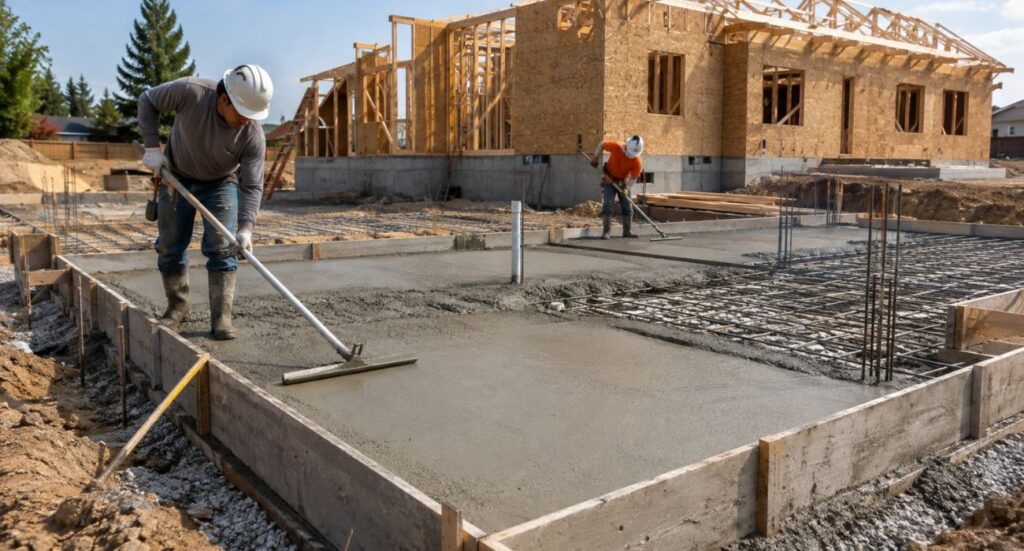
A slab is a flat layer of reinforced concrete poured on or near the ground. It is often the simplest and lowest-cost option. It works well for garages, additions, and homes on level lots.
Pipes may run under or inside the slab, so plans must be right before the pour. Slabs can crack or settle if the soil moves or water is not drained away.
Crawl Space Foundation
A crawl space lifts the home off the ground and leaves a short space below. It gives easy access to plumbing and wiring.
The main concern is moisture. Poor drainage, leaks, or weak ventilation can lead to mold and rotting wood. Good grading and moisture control are key.
Basement Foundation
A basement uses tall concrete walls below ground and creates extra living or storage space. These walls face soil pressure and water pressure every day. That is why drainage and waterproofing matter so much in Maryland.
Pier and Footing Foundation
This system uses separate concrete supports to carry the load into the soil. It is used for decks, porches, some additions, and certain home designs. Size, depth, and spacing depend on the load and the soil.
Poured Concrete vs. Concrete Block
Many homeowners ask which is better. Poured concrete walls are one solid piece, with fewer joints for water to enter. Block walls are built from many blocks and mortar joints. They can cost less in some cases, but the joints can be weak points if water builds up outside. The right choice depends on the design, the soil, and your budget.
How Much Do Concrete Foundations Cost in Maryland?
There is no single price. Here are rough ranges from national and Baltimore-area cost guides:
| Foundation Type | Cost Per Square Foot | Typical Total Cost |
|---|---|---|
| Slab | $6 to $14 | $12,000 to $28,000 (2,000 sq ft) |
| Pier and beam | $6.75 to $13.50 | $9,000 to $17,000 |
| Basement | About $35 to $50+ | $70,000 to $100,000+ (2,000 sq ft) |
Your final price depends on:
- Foundation type and size
- Excavation and site access
- Soil conditions
- Concrete and steel materials
- Labor and concrete pumping
- Drainage and waterproofing
- Removal of an old foundation
- Permits and local requirements
Existing properties can cost more than new builds. Tight access, old structures, and damaged walls all add time and equipment. Permit rules also change by county and city, so check with your local office before work starts. For a real number, you need an on-site evaluation. You can call us at 443-551-0006 to get started.
Common Concrete Foundation Problems
Foundation Cracks
Small hairline cracks can form as concrete cures and shrinks. Cracks that grow, run sideways, or show up with sticking doors and uneven floors need a closer look. Location, width, and direction all matter.
Foundation Settlement
Settlement happens when part of the building sinks because the soil under it cannot hold the load. Signs include sloping floors, gaps around windows and doors, and new wall cracks. The cause must be found first. Filling a crack will not fix a foundation that keeps moving.
Settlement can also crack the brick and block around the foundation, which may need professional masonry repair.
Bowed or Leaning Walls
Soil and water pressure can push basement walls inward. Horizontal cracks and walls that are no longer straight are warning signs. The repair depends on how far the wall has moved and why.
Water Leaks
Water can enter through cracks, joints, or porous concrete. Check gutters, downspouts, grading, and drains to find out why water is reaching the foundation. Covering the leak does not fix the cause.
Concrete Spalling
Spalling is when the surface chips, flakes, or breaks off. Moisture and freeze-thaw cycles are common causes. If the steel inside the concrete gets exposed, it can rust and make the damage worse.
When Should a Concrete Foundation Be Repaired?
Not every crack means major work. But get the foundation checked if you notice:
- Cracks that keep growing
- Uneven or sloping floors
- Doors or windows that stick
- Bowed basement walls
- Repeated water in the basement or crawl space
- Gaps around doors, windows, or brick
Good repair fixes the cause, not just what you can see. Foundation trouble can also crack nearby brick, block, and mortar, so masonry services may be part of the job.
Concrete Foundation Repair vs. Replacement
| Repair | Replacement |
|---|---|
| Fixes a specific problem | Fixes widespread damage or failure |
| Focuses on the affected area | May mean major rebuilding |
| Usually less disruptive | Usually more costly and time-consuming |
| Good for cracks, leaks, or local damage | Considered when repair is no longer practical |
A foundation should not be replaced just because it has cracks. The cause and the extent of the damage decide the right fix.
How to Protect Your Concrete Foundation
Water control is the best protection. You can:
- Keep gutters clear
- Point downspouts away from the house
- Keep the ground sloping away from the walls
- Watch for standing water near the foundation
- Fix plumbing leaks fast
- Keep an eye on existing cracks
- Check the foundation once or twice a year
Frequently Asked Questions About Concrete Foundations
How long do concrete foundations last?
A well-built concrete foundation can last many decades. Construction quality, soil, drainage, and upkeep all affect its lifespan.
Are cracks in concrete foundations normal?
Small cracks can be normal. Cracks that widen or come with other signs of movement should be checked.
What causes concrete foundations to crack in Maryland?
Common causes include concrete shrinkage, clay soil movement, settlement, water pressure, freeze-thaw cycles, and poor construction.
How much do concrete foundations cost in Maryland?
Slabs often run about $6 to $14 per square foot. Basements cost much more. An on-site visit is needed for an exact price.
Do I need a permit for foundation work in Maryland?
In most cases, yes. Rules depend on your county or city, so check with your local permit office or ask your contractor.
Can a damaged concrete foundation be repaired?
Often, yes. The method depends on the type and extent of the damage.
When does a foundation need replacement?
When damage is widespread and repair is no longer practical.
Final Thoughts
Concrete foundations do more than hold up a building. Soil, drainage, construction quality, and upkeep decide how well they last. In Maryland, freeze-thaw weather, clay soil, and heavy rain make that even more true.
If you see new cracks, settling, wall movement, or water, don’t wait. An early check can save you a bigger repair later.
Call USA Builders and Developers at 443-551-0006 to schedule a foundation evaluation. You can also visit usabuildersanddevelopers.com to learn more about our work.