
Choosing the right sink is an important part of planning or remodeling a kitchen. Many homeowners focus on cabinets, countertops, and appliances, but the sink is also used every day for washing dishes, preparing food, and cleaning cookware.
Understanding kitchen sink sizes can help you choose a sink that fits your space and makes daily kitchen tasks easier. Kitchen sinks come in different shapes, depths, and styles. The right size depends on your cabinet space, cooking needs, and kitchen design.
In this guide, we explain standard kitchen sink sizes, common dimensions, and popular sink styles to help you choose the best option for your kitchen.
What Are Standard Kitchen Sink Sizes?
Most kitchen sinks are designed to fit standard kitchen cabinets. Standard kitchen sinks typically range from 22 to 33 inches wide, although smaller and larger options are also available depending on the sink style.
The most common kitchen sink dimensions include:
| Sink Type | Typical Width | Typical Depth |
|---|---|---|
| Small kitchen sink | 22–24 inches | 7–8 inches |
| Standard kitchen sink | 30–33 inches | 8–10 inches |
| Large kitchen sink | 33–36 inches | 9–12 inches |
These measurements represent the average size kitchen sink used in many residential kitchens. However, the exact size depends on the number of bowls and the installation style.
Common Kitchen Sink Sizes and Dimensions
Kitchen sinks come in different styles, widths, and depths. Understanding common kitchen sink sizes and dimensions can help you choose the right option for your cabinet space, kitchen layout, and daily needs.
The kitchen sink size chart below compares popular sink styles, standard kitchen sink dimensions, and their best uses.
| Sink Type | Typical Width | Typical Depth | Best For |
|---|---|---|---|
| Bar sink | 15 to 20 inches | 6 to 8 inches | Wet bars and kitchen islands |
| Small kitchen sink | 20 to 24 inches | 7 to 9 inches | Apartments and compact kitchens |
| Single bowl sink | 24 to 33 inches | 8 to 10 inches | Washing large pots and pans |
| Double bowl sink | 30 to 36 inches | 8 to 10 inches | Busy kitchens and multitasking |
| Triple bowl sink | 36 to 48 inches | 8 to 10 inches | Large kitchens and food preparation |
| Farmhouse sink | 30 to 36 inches | 9 to 12 inches | Traditional and modern kitchens |
| Corner sink | 25 to 33 inches | 8 to 10 inches | Corner cabinets and small layouts |
| Prep sink | 15 to 24 inches | 6 to 8 inches | Food preparation and kitchen islands |
| Workstation sink | 30 to 45 inches | 9 to 12 inches | Large kitchens and heavy daily use |
1. Single Bowl Kitchen Sink Sizes
Single bowl sinks have one large basin. They provide plenty of space for washing large pots, pans, baking trays, and other cookware.
Typical single bowl kitchen sink dimensions include:
- Width: 24 to 33 inches
- Depth: 8 to 10 inches
These standard kitchen sink sizes are a good choice for small and medium-sized kitchens. They also work well for homeowners who prefer a simple design and more open washing space.
2. Double Bowl Kitchen Sink Sizes
Double bowl sinks have two separate basins. Homeowners can wash dishes in one bowl while rinsing food or cookware in the other.
Typical double bowl kitchen sink dimensions include:
- Width: 30 to 36 inches
- Depth: 8 to 10 inches
Double bowl sinks are popular in busy households because they improve kitchen workflow and make daily tasks more organized. They are also one of the most common kitchen sink sizes used in family kitchens.
3. Triple Bowl Kitchen Sink Sizes
Triple bowl sinks usually have two large basins and one smaller middle basin. The smaller bowl may be used for food preparation, rinsing, or a garbage disposal.
Typical triple bowl sink dimensions include:
- Width: 36 to 48 inches
- Depth: 8 to 10 inches
These large kitchen sink sizes need more cabinet and countertop space. They are better suited to spacious kitchens and homeowners who prepare large meals.
4. Farmhouse Kitchen Sink Sizes
Farmhouse sinks, also called apron-front sinks, are wider and deeper than many traditional sinks. They offer extra space for large cookware and create a noticeable design feature.
Typical farmhouse kitchen sink sizes include:
- Width: 30 to 36 inches
- Depth: 9 to 12 inches
Because farmhouse sinks are large and heavy, they usually require a strong base cabinet and additional support during installation.
5. Bar and Prep Sink Sizes
Bar and prep sinks are smaller than the average kitchen sink size. They are often installed in kitchen islands, wet bars, or secondary food preparation areas.
Typical bar and prep sink dimensions include:
- Width: 15 to 24 inches
- Depth: 6 to 8 inches
These compact kitchen sink sizes are useful for preparing food, washing vegetables, serving drinks, and completing smaller kitchen tasks.
6. Workstation Kitchen Sink Sizes
Workstation sinks include built-in accessories such as cutting boards, drying racks, colanders, and strainers.
Typical workstation kitchen sink dimensions include:
- Width: 30 to 45 inches
- Depth: 9 to 12 inches
These larger sink dimensions are ideal for modern kitchens and homeowners who need extra space for cooking, cleaning, and food preparation.
7. Corner Kitchen Sink Sizes
Corner sinks are designed to fit inside corner base cabinets. They can help homeowners use limited kitchen space more efficiently.
Typical corner kitchen sink dimensions include:
- Width: 25 to 33 inches
- Depth: 8 to 10 inches
Corner sinks are often used in compact kitchens, L-shaped layouts, and kitchens with limited countertop space.
Kitchen Sink Sizes and Dimensions Chart
Here is a quick overview of typical kitchen sink sizes dimensions used in modern kitchens.
| Sink Style | Width | Length | Depth |
|---|---|---|---|
| Bar Sink | 15–20 in | 15–20 in | 6–7 in |
| Small Kitchen Sink | 22–24 in | 18–22 in | 7–8 in |
| Standard Sink | 30–33 in | 18–22 in | 8–10 in |
| Large Sink | 33–36 in | 20–24 in | 9–12 in |
This chart helps homeowners compare sink options before choosing a size that fits their cabinet and countertop layout.
Average Size Kitchen Sink for Modern Homes
The average size kitchen sink in most homes today is around 30 to 33 inches wide and about 8 to 10 inches deep. This size offers enough space for daily kitchen tasks while fitting standard kitchen cabinets.
Modern kitchen designs often favor deeper sinks because they allow homeowners to wash large cookware without splashing water onto the countertop. However, choosing the right sink size also depends on the size of the kitchen and the cabinet layout.
How to Choose the Right Kitchen Sink Size
Choosing the right kitchen sink size involves more than selecting a design you like. Consider these important factors:
- Cabinet Size
Your base cabinet determines the maximum sink width you can install. Most kitchen sinks need at least 2 to 3 inches of cabinet clearance. - Kitchen Layout
Small kitchens usually work better with compact sinks. Larger kitchens can hold wider and deeper sink styles. - Cooking Habits
A deeper or wider sink may be more useful if you often prepare large meals or wash oversized cookware. - Installation Style
The installation method can affect the available kitchen sink size. Common options include:- Top-mount sinks
- Undermount sinks
- Farmhouse sinks
- Integrated sinks
- Household Size
Larger households may need a bigger sink to handle more dishes and daily kitchen tasks. - Countertop Space
A large sink offers more washing space but reduces the amount of available countertop. - Sink Depth
Most standard kitchen sinks are 8 to 10 inches deep. Choose a depth that provides enough capacity without making the sink uncomfortable to use.
Why Kitchen Sink Depth Matters
Sink depth affects comfort, capacity, and everyday use. Shallow sinks, usually around 6 to 7 inches deep, may cause more splashing and provide less space for large pots and pans.
Deeper sinks, often 9 to 12 inches deep, can hold more dishes and cookware. However, they may require more bending and feel uncomfortable for some users.
Most standard kitchen sinks are 8 to 10 inches deep. This range offers a practical balance between comfort, washing space, and daily convenience.
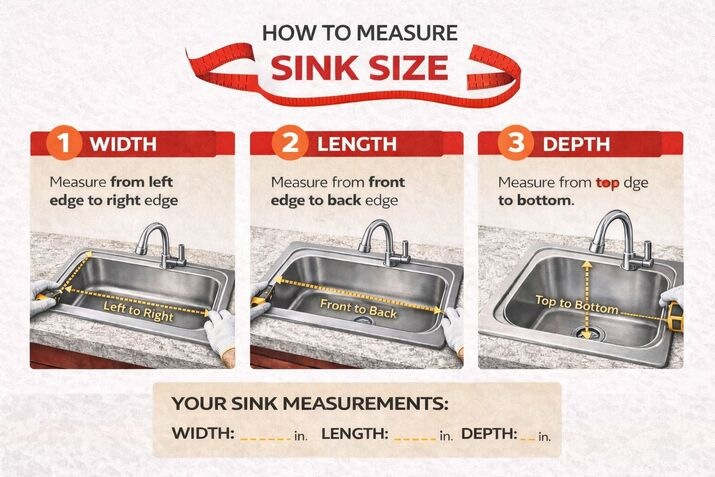
Tips for Measuring Your Kitchen Sink Space
Before buying a new sink, measure the available space carefully. Even a small measuring mistake can cause fitting or installation problems.
Follow these simple steps:
- Measure the base cabinet
Measure the inside width of the cabinet. The sink should usually be 2 to 3 inches narrower than the cabinet. - Check the countertop opening
Measure the width and front-to-back length of the existing cutout, especially when replacing an old sink. - Measure the available depth
Make sure there is enough space below the sink for the drain, pipes, and garbage disposal. - Check faucet clearance
Leave enough room behind the sink for the faucet, backsplash, and other accessories. - Confirm the product requirements
Check the manufacturer’s minimum cabinet size before purchasing the sink.
Accurate measurements help ensure the new kitchen sink fits properly and reduces installation problems.
Kitchen Sink Installation Considerations
Installing a new kitchen sink requires careful planning. The sink should look good, fit properly, and work well with your cabinets, countertop, and plumbing.
Before installation, check:
- Cabinet size and support
- Countertop cutout
- Plumbing connections
- Faucet placement
- Sink weight and mounting style
Professional installation can help prevent leaks, poor alignment, and damage to nearby surfaces.
For kitchen upgrades and remodeling projects in Maryland, USA Builders and Developers can install the sink correctly and make sure it fits the overall kitchen design.
FAQs
Kitchen sink standard size?
A standard kitchen sink is usually 30 to 33 inches wide, 18 to 22 inches long, and 8 to 10 inches deep. The exact size depends on the cabinet, bowl style, and installation type.
What are the standard kitchen sink dimensions?
Standard kitchen sink dimensions are usually 30 to 33 inches wide, 18 to 22 inches from front to back, and 8 to 10 inches deep. Smaller sinks may be around 20 to 24 inches wide, while larger models can reach 36 inches or more.
How do I choose a sink size based on my cabinet?
Measure the inside width of your base cabinet first. Choose a sink that is usually 2 to 3 inches narrower than the cabinet to leave space for mounting clips and plumbing.
For example, a 36-inch cabinet usually fits a sink up to about 33 inches wide. Always check the manufacturer’s minimum cabinet size before buying.
What sink sizes are recommended for single vs double bowls?
| Sink Type | Recommended Width | Typical Depth |
|---|---|---|
| Single bowl sink | 24 to 33 inches | 8 to 10 inches |
| Double bowl sink | 30 to 36 inches | 8 to 10 inches |
Single bowl sinks offer more open washing space, while double bowl sinks are better for washing and rinsing at the same time.
Final Thoughts
Understanding kitchen sink sizes makes it easier to choose the right option for your kitchen. Whether you need a compact sink or a large farmhouse model, the correct size can improve comfort, appearance, and daily use.
Before buying, check the cabinet width, sink depth, installation style, and available countertop space. Accurate measurements can help prevent fitting problems and extra installation costs.
By choosing the right kitchen sink size, you can create a practical and efficient space for cooking, cleaning, and food preparation.
Have Questions? Call Us Now!
We’re here to help—quick answers, friendly service, anytime you need!


Contact USA Builders and Developers
🌐 Website: www.usabuildersanddevelopers.com
📍 Serving: Baltimore, Bethesda, Silver Spring, and Montgomery County, Maryland
📌 Address: 2144 Priest Bridge Court, Suite 8, Crofton, MD 21114, USA