Vertical siding is an exterior siding style where the panels or boards run from the top of a wall toward the ground. Unlike traditional horizontal siding, it creates strong vertical lines that can make a home look taller, cleaner, and more modern.
This siding style works well on many types of homes and commercial buildings. It can be installed across an entire exterior or used on selected areas, such as gables, entryways, garages, and additions. But appearance is only one part of the decision. The right siding should also match your home’s structure, climate, maintenance needs, and budget.
In this guide, you will learn:
- What vertical siding is
- The most common siding materials
- Different design styles
- Benefits and drawbacks
- Vertical vs. horizontal siding
- Installation considerations
- Maintenance requirements
- Typical cost factors
- How to choose the right option for your property
If you are planning an exterior renovation, understanding these factors can help you choose siding that looks good and performs well for years.
What Is Vertical Siding?
Vertical siding is exterior cladding installed with the boards or panels running vertically rather than horizontally. The installation creates long, continuous lines across the exterior. Depending on the material and design, the siding can have a traditional, rustic, contemporary, or modern appearance.
Some homeowners use vertical panels across the entire house. Others combine them with horizontal siding to create contrast.
For example, vertical siding can work especially well on:
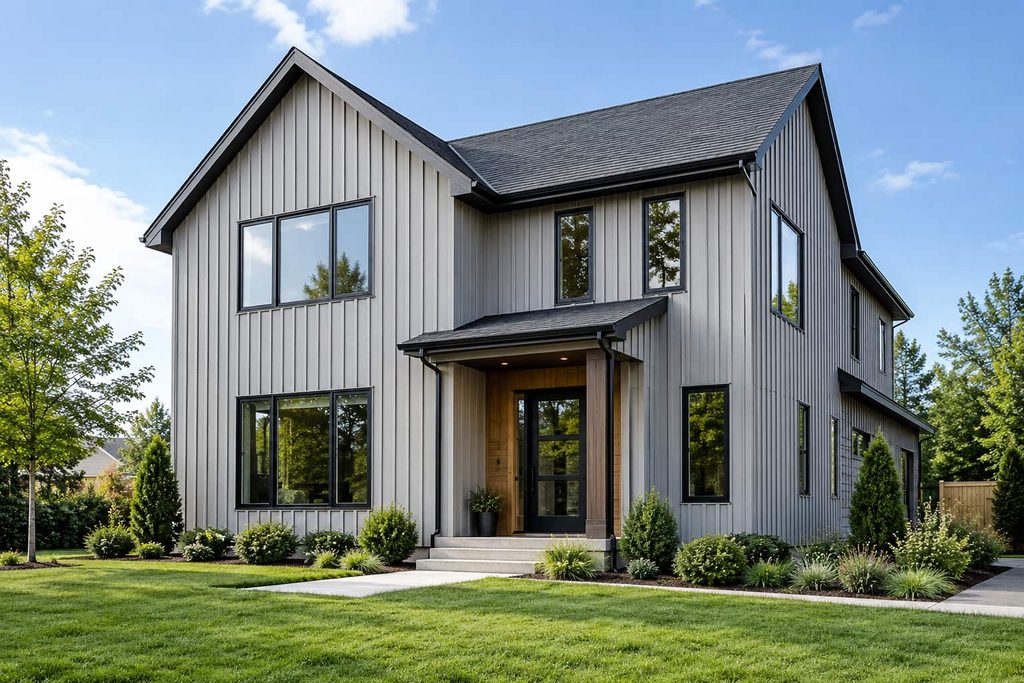
- Gable ends
- Front entry areas
- Garage walls
- Dormers
- Home additions
- Porches
- Accent walls
- Modern exterior designs
The final appearance depends on the material, board width, color, trim, and installation pattern.
Popular Vertical Siding Materials
Vertical siding is available in several materials. Each option has different strengths, maintenance requirements, and price considerations.
1. Fiber Cement Siding
Fiber cement is a popular choice for homeowners who want a durable exterior with a wide range of design options. It is made from a mixture that includes cement and reinforcing fibers. Manufacturers can produce it in board and panel styles that work well for vertical installation.
Advantages include:
- Strong and durable construction
- Good resistance to weather
- Many color and texture options
- Can imitate the appearance of wood
- Suitable for many architectural styles
Fiber cement can be heavier than some other siding products, so proper installation is important.
2. Wood Siding
Wood provides a natural appearance that many homeowners prefer. Vertical wood siding can create a warm and traditional look while also fitting modern designs. Different wood species, stains, paints, and board profiles can change the final appearance significantly. However, wood requires more maintenance than some manufactured siding materials.
Regular inspections are important to identify:
- Moisture damage
- Rot
- Cracking
- Peeling paint
- Insect damage
- Loose boards
Proper sealing and painting can help protect the material.
3. Vinyl Siding
Vinyl is often chosen because it is relatively affordable and easy to maintain. Vertical vinyl siding comes in different colors and textures. It can be useful for homeowners who want a clean exterior without frequent painting. Good installation matters because siding must allow for normal movement caused by temperature changes.
4. Metal Siding
Metal siding can provide a sharp, contemporary appearance. Steel and aluminum are common choices. Metal can also be useful for certain commercial and residential applications where durability is important. Potential concerns include dents, scratches, and corrosion depending on the product and environment.
5. Engineered Wood Siding
Engineered wood products are designed to provide a wood-like appearance while offering different performance characteristics from traditional wood. They are available in various profiles and finishes and can work well with both traditional and modern homes. Always check the manufacturer’s installation requirements before choosing a particular product.
Vertical Siding Styles
The word “vertical” describes the direction of installation, but there are several styles to consider.
Board-and-Batten Siding
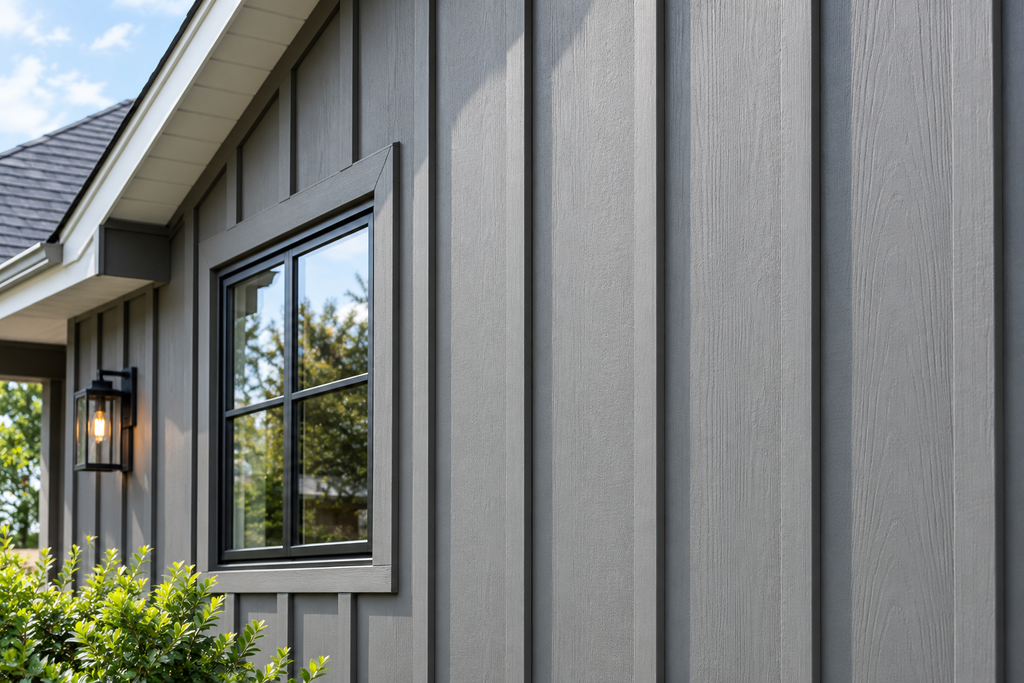
Board-and-batten is one of the most recognizable vertical siding designs. Wide boards are installed vertically, with narrower strips covering the joints between them. The result is a strong pattern with noticeable vertical lines.
It is commonly associated with farmhouse and traditional architecture, but modern homes can also use simplified versions of the style.
Vertical Panel Siding
Large siding panels can create a smoother and more contemporary appearance. This style usually has fewer visible seams than narrow individual boards. It can work especially well on modern homes, garages, and commercial buildings.
Shiplap-Style Vertical Siding
Shiplap-inspired profiles can add visual texture while maintaining vertical lines. The exact appearance depends on the product and installation method. Some designs have a more rustic appearance, while others look clean and modern.
Mixed Siding Designs
You do not have to use one siding style everywhere. A home may combine horizontal siding on the main walls with vertical siding on the gables or front entrance. This approach can add depth without making the exterior look too busy.
Benefits of Vertical Siding
Creates a Taller Appearance
Vertical lines naturally draw the eye upward. This can make a low-profile home appear taller or give certain sections of a building more visual height.
Adds Architectural Interest
Using a different siding direction can break up a large exterior wall. For example, vertical panels around an entrance can make that area stand out from the rest of the house.
Works With Many Design Styles
Vertical siding can fit farmhouse, contemporary, traditional, modern, and mixed-style homes. The material, color, trim, and board width determine much of the final appearance.
Can Be Used as an Accent
You do not need to cover the entire exterior. Using vertical siding on a gable or entryway can create contrast while keeping the rest of the home simple.
Offers Multiple Material Choices
Homeowners can choose between wood, fiber cement, vinyl, metal, engineered wood, and other siding products. This makes it easier to balance appearance, maintenance, performance, and budget.
Disadvantages to Consider
Vertical siding is not perfect for every property.
Installation Can Require More Planning
The installer must account for the wall structure, seams, trim, flashing, and moisture management. The correct installation method varies by siding material.
Repairs May Be More Noticeable
Replacing one section can sometimes create a visible difference if the replacement material has a different color, texture, or weathering level. This is particularly important with painted or naturally weathered materials.
Some Materials Need Regular Maintenance
Wood, for example, may need periodic painting, staining, and sealing. Other materials may require less maintenance, but no siding is completely maintenance-free.
Water Management Is Important
Siding is part of the exterior weather barrier, but it should not be treated as the property’s only defense against water. Proper flashing, drainage, house wrap, trim, and installation details help manage moisture.
Vertical vs. Horizontal Siding
The biggest visual difference is the direction of the siding.
| Feature | Vertical Siding | Horizontal Siding |
|---|---|---|
| Board direction | Up and down | Side to side |
| Visual effect | Draws the eye upward | Emphasizes width |
| Design use | Accents and full exteriors | Common for full exteriors |
| Style options | Modern, farmhouse, traditional | Traditional, modern, classic |
| Maintenance | Depends on material | Depends on material |
| Material choices | Wood, fiber cement, vinyl, metal, etc. | Wood, fiber cement, vinyl, metal, etc. |
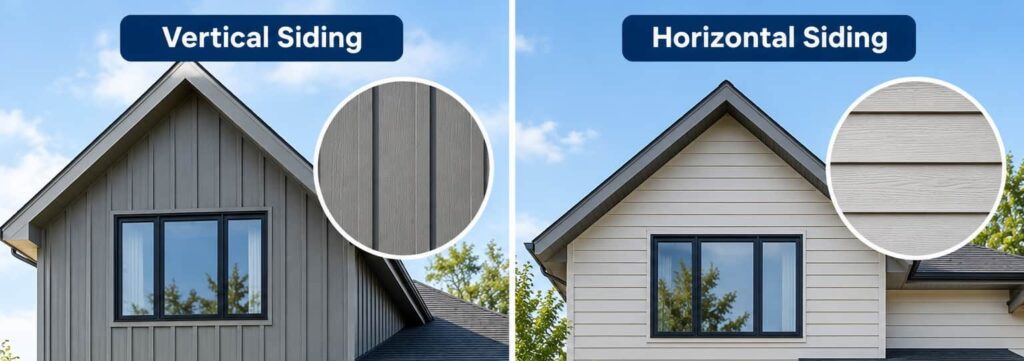
Neither option is automatically better. The right choice depends on your home’s architecture, preferred appearance, budget, and maintenance expectations.
Is Vertical Siding Good for a House?
Yes. Vertical siding can be a good choice for a house when the material and installation method fit the property.
It can be particularly effective when you want to:
- Add height to the exterior
- Highlight architectural features
- Create a modern appearance
- Add contrast to horizontal siding
- Give an older home a refreshed exterior
- Create a farmhouse-inspired design
The condition of the existing exterior should also be evaluated before installation. If there is rot, water damage, structural deterioration, or moisture behind the existing siding, those problems should be addressed first.
How Is Vertical Siding Installed?
The exact process depends on the siding material, but a professional installation generally involves several important steps.
1. Inspect the Existing Exterior
The contractor checks the walls, existing siding, trim, openings, and areas where water could enter.
2. Prepare the Wall
Old siding may need to be removed. Damaged sheathing or other deteriorated materials should be repaired before new siding is installed.
3. Install Moisture Protection
The wall assembly may require a suitable weather-resistant barrier, flashing, and other water-management components.
4. Install Supporting Materials
Some vertical siding systems require specific furring, framing, or fastening arrangements. These details should follow the product manufacturer’s instructions.
5. Install the Siding
Panels or boards are positioned vertically and securely fastened. Careful measurements help maintain straight lines and consistent spacing.
6. Finish Corners and Openings
Windows, doors, corners, roof intersections, and other transitions require proper trim and flashing.
7. Inspect the Finished Exterior
The installer checks the siding for alignment, secure fastening, clean joints, and proper finishing details.
How Much Does Vertical Siding Cost?
There is no single price for vertical siding installation because several factors affect the final project cost.
The biggest factors include:
- Siding material
- Square footage
- Labor
- Existing siding removal
- Wall repairs
- Trim and accessories
- Number of windows and doors
- Building height
- Accessibility
- Design complexity
- Location
- Insulation or moisture-control improvements
Fiber cement, wood, vinyl, and metal can all have different material and labor costs. A small accent wall will also cost much less than replacing siding across an entire house. For an accurate estimate, a contractor should inspect the property and measure the areas that need new siding.
How to Choose the Right Vertical Siding
Start with your property’s needs rather than choosing a product based only on appearance.
Consider Your Climate
Weather exposure matters. Think about rain, humidity, strong winds, temperature changes, and sun exposure in your area.
Consider Maintenance
If you want to spend less time painting or sealing siding, compare lower-maintenance materials. If natural wood is important to you, understand the maintenance it requires before making a decision.
Look at the Existing Architecture
The siding should work with your roof, windows, doors, trim, and overall home design. Vertical siding can be especially effective when used to highlight specific architectural areas.
Set a Realistic Budget
Do not compare materials based only on their purchase price. Include installation, preparation, trim, repairs, maintenance, and long-term performance when comparing options.
Check Installation Requirements
Different products have different fastening, spacing, flashing, and moisture-management requirements. Professional installation can help prevent problems caused by incorrect installation.
Maintenance Tips
Regular maintenance can help extend the life of your siding. Inspect the exterior at least periodically for:
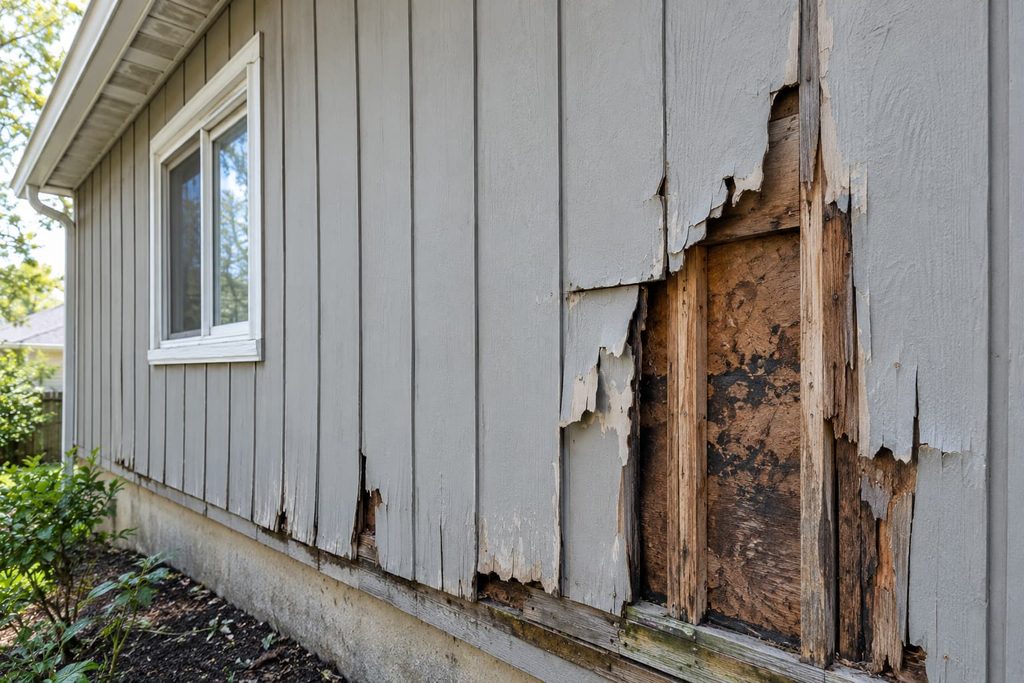
- Cracks
- Loose boards or panels
- Damaged trim
- Peeling paint
- Stains
- Mold or mildew
- Rot
- Rust
- Open joints
Keep gutters and downspouts working properly so water does not repeatedly run down the siding. Trim vegetation that stays against the exterior and address leaks around windows, doors, and roof areas promptly. The maintenance schedule depends on the material and manufacturer’s recommendations.
Can Vertical Siding Be Combined With Other Siding?
Yes. Combining siding directions is a common way to create visual contrast. For example, a house could use horizontal siding on most walls and vertical siding on:
- Gables
- Porches
- Entry walls
- Garage fronts
- Dormers
- Additions
Using two siding directions can make a large exterior more visually interesting without requiring a complicated design. The key is to create a clear transition between the materials.
When Should You Replace Your Siding?
Replacement may be worth considering when siding has widespread damage that cannot be solved with small repairs.
Warning signs include:
- Extensive cracking
- Rot or decay
- Repeated water damage
- Loose or missing sections
- Significant warping
- Persistent moisture problems
- Severe fading or deterioration
- Damaged areas throughout the exterior
However, damaged siding does not always mean the entire exterior needs replacement. A professional inspection can help determine whether repair or full replacement makes more sense.
Professional Vertical Siding Services
Choosing the right siding is only part of a successful exterior renovation. Proper preparation and installation are just as important. At USA Builders and Developers, we provide siding services for homeowners and property owners looking to improve the appearance and protection of their buildings.
Our siding options include:
- Fiber cement siding
- Wood siding
- Metal siding
- Insulated vinyl siding
- Aluminum siding
We can help evaluate your exterior, discuss suitable material options, and plan the installation around your property’s needs. If your existing siding has damage, we can also help identify areas that may need repair before new siding is installed. For homeowners planning a larger exterior renovation, siding can also be coordinated with other improvements such as masonry, roofing, waterproofing, and general exterior renovation work.
Ready to improve your home’s exterior? Contact USA Builders and Developers to discuss your siding project and request an estimate.
Frequently Asked Questions
Is vertical siding more expensive than horizontal siding?
Not necessarily. The total price depends on the material, installation requirements, property size, wall condition, trim, and labor. The direction of the siding is only one part of the overall cost.
Is vertical siding better than horizontal siding?
Neither is automatically better. Vertical siding can create a taller appearance and work well as an accent, while horizontal siding offers a different visual effect. The best choice depends on your property and design goals.
What is the best material for vertical siding?
There is no single best material for every home. Fiber cement, wood, vinyl, metal, and engineered wood all have different benefits. Your budget, maintenance expectations, climate, and preferred appearance should guide the decision.
Can I put vertical siding over existing siding?
Sometimes, but it depends on the existing siding and the condition of the wall underneath. The installer must determine whether the existing surface is suitable and whether additional preparation is required.
Does vertical siding make a house look taller?
Yes. Vertical lines can draw attention upward and create the visual impression of greater height. This is one reason the style is often used on gables and entry areas.
Does vertical siding require more maintenance?
Maintenance depends mostly on the material rather than the direction of installation. Wood generally requires more ongoing care than many low-maintenance manufactured products.
Can vertical and horizontal siding be used together?
Yes. Combining the two directions can add contrast and highlight architectural features. The transition should be properly planned and installed.
How long does siding last?
Lifespan varies by material, product quality, climate, installation, and maintenance. Following the manufacturer’s maintenance and installation requirements can help maximize the siding’s service life.
Final Thoughts
Vertical siding can give a home a distinctive exterior while offering plenty of flexibility in design. You can use it across the entire building or as an accent around gables, entrances, garages, and other features. The best choice depends on more than appearance. Consider the siding material, maintenance requirements, weather exposure, installation method, existing wall condition, and total project budget.
If you are unsure which siding option fits your property, getting a professional evaluation can help you compare the choices before starting the project.
USA Builders and Developers can help you choose and install siding that fits your property’s style, needs, and renovation goals.
Need Help with Your Next Project? Call USA Builders Today!
We’re here to help—quick answers, friendly service, anytime you need!