Metal roofs can last 40 to 70 years, but they are not maintenance-free. Wind, rain, sun, and falling branches slowly wear them down. A loose screw or a tiny gap may look harmless today, yet it can turn into a leak or a rust patch within a single season.
The good news is that most damage can be fixed without replacing the roof. In this guide, you will learn what causes the damage, how to spot it early, how the work is done, what it costs, and how to choose the right contractor. At USA Builders and Developers, our team handles metal roof repair and other roofing services across Maryland using strong materials and proven methods.

What Is Metal Roof Repair?
Metal roof repair is the work of fixing specific problems on a metal roof, such as leaks, rust, loose fasteners, damaged seams, and worn panels, without replacing the whole roof. A professional finds the source of the damage, repairs that area, and seals it against water.
Most metal roof repair jobs take a day or two. They cost far less than a new roof, and they stop small issues from spreading to the insulation, the wood deck, and the ceilings below.
What Causes Metal Roof Damage?
Knowing what causes the damage helps you plan metal roof repair before the bill grows. Most damage comes from a few common sources:
- Weather: Heavy rain, strong wind, hail, snow, and ice put constant stress on panels and seams.
- Moisture: Water that sits on the roof or under loose flashing leads to rust.
- Sun and heat: UV rays fade the finish. Panels also expand in heat and shrink in cold, which slowly loosens screws and seams.
- Debris and trees: Falling branches cause dents and punctures. Leaves clog gutters and trap water.
- Poor installation: Gaps, wrong fasteners, or weak flashing can fail within a few years.
- Skipped maintenance: Small issues go unnoticed until they become expensive.
How Maryland Weather Affects Your Roof
Maryland has four real seasons, and each one tests a metal roof in a different way.
Spring brings steady rain and wind. This is when weak seams and loose flashing show up as leaks.
Summer brings heat, humidity, and sudden thunderstorms. Hot panels expand, and humid air speeds up rust on any spot where the coating has worn off.
Fall drops leaves into valleys and gutters. Wet leaves hold water against the metal for days.
Winter brings freezing nights and ice. Water that seeps into a small gap can freeze, expand, and make the gap bigger.
Because of this cycle, many roofing pros suggest a check in early spring and another in late fall, so any needed metal roof repair is done before the harshest weather.
Common Metal Roof Problems and How to Fix Them
| Problem | What Causes It | How to Fix It |
|---|---|---|
| Leaks and drips | Loose seams, punctures, or gaps around flashing | Seal the leaks and replace damaged flashing |
| Rust and corrosion | Long-term moisture exposure | Clean, prime, and repaint the area, or replace rusted panels |
| Loose fasteners | Panels expanding and shrinking with temperature | Tighten or replace with gasketed screws |
| Dents and impact damage | Hail or falling debris | Repair or replace damaged panels |
| Fading or discoloration | UV rays and oxidation | Apply a protective roof coating |
Leaks are the problem homeowners notice first, and they are also the hardest to trace. Water often travels along a panel or rafter before it drips into your home, so the stain on your ceiling may sit several feet away from the real hole. Good metal roof repair starts with tracing the water to its true source. Common hiding spots include roof edges, valleys, areas around vents and chimneys, and any place where two panels overlap.
Signs Your Metal Roof Needs Repair
Check for these warning signs:
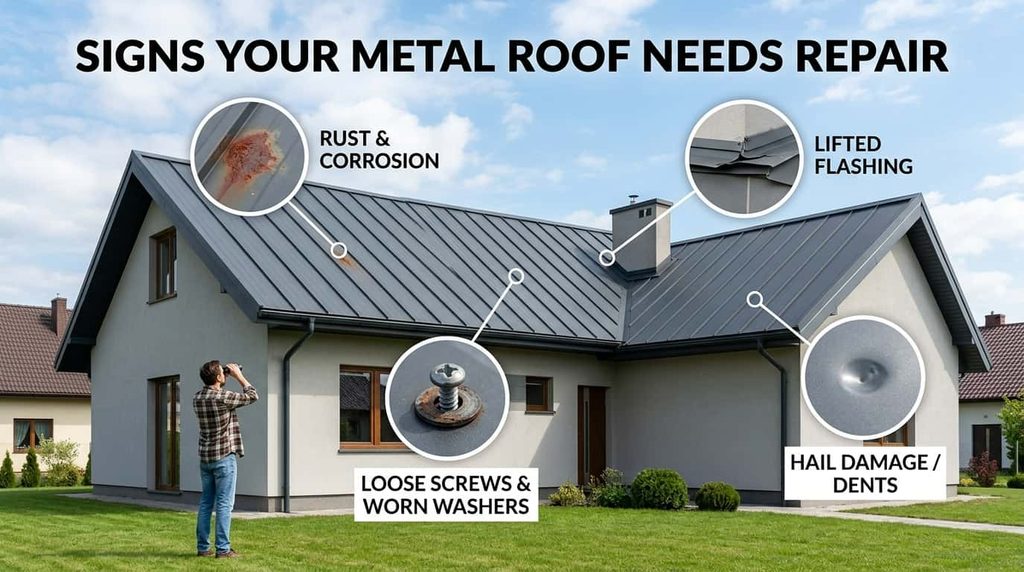
- Water stains or leaks in the attic
- Rust or color changes on the panels
- Loose or missing screws
- Strange noises during strong winds
- Peeling or cracked coatings
- Dents from hail or debris
- Higher cooling bills than usual
You can do a safe first check from the ground. Walk around the house with binoculars and look for lifted edges, missing screws, bent flashing, and dark streaks. Then check your attic after a heavy rain with a flashlight. Look for damp insulation, wet wood, and daylight coming through the roof deck. Never climb onto a metal roof yourself, because wet or dusty panels are very slippery. If you spot any of the signs above, book a roof inspection soon.
What to Do When You Find a Leak
A leak needs quick action, even if the drip is small.
- Protect your home. Move furniture away and place a bucket under the drip. If the ceiling bulges with water, poke a small hole to let it drain slowly into a bucket.
- Take photos. Photograph the stain, the attic, and any visible roof damage. Add the date. These help your contractor and your insurance claim.
- Call a professional. Choose a company that offers metal roof repair, and do not wait for the next storm. A trained crew can find the real source and fix it safely.
- Ask about insurance. Many policies cover sudden storm damage but not damage from age or poor upkeep. Your insurance agent can tell you what applies to you.
How Metal Roof Repair Works, Step by Step

- Inspection: The contractor checks the whole roof for leaks, loose seams, rust, and weak flashing. Good contractors share photos so you can see the damage.
- Cleaning: Dirt, debris, and oxidation are removed so sealants and coatings stick well.
- Rust treatment: Rust is treated with cleaners or inhibitors. Badly corroded panels are replaced.
- Fasteners and sealing: Loose screws are swapped for new ones with neoprene washers. Seams and joints are resealed with waterproof sealant.
- Flashing repair: Flashing around chimneys, vents, and skylights is checked and replaced if needed.
- Protective coating: A coating restores shine and reflects heat. It also adds a layer of UV protection.
- Final inspection: The team checks the work to make sure the roof is leak-free.
Materials Used in Roof Repairs
The right materials matter as much as the right method in any metal roof repair. Here are the ones you will hear about most.
- Gasketed screws: These have a rubber washer that seals the hole. They replace old screws that have backed out or worn loose.
- Butyl tape and polyurethane sealant: These seal seams, laps, and small gaps. They stay flexible as the metal moves.
- New flashing: Metal flashing replaces bent or rusted pieces around vents, chimneys, and roof edges.
- Replacement panels: Used when a panel is badly dented, split, or rusted through.
- Roof coatings: Acrylic, silicone, and polyurethane coatings protect the surface and reflect sunlight. The best choice depends on your roof type and climate.
A good contractor will tell you which products they plan to use and why.
How Much Does Metal Roof Repair Cost?
Most homeowners pay between $650 and $3,250 for professional metal roof repair. The final price depends on the type of damage, the roof material, how easy the roof is to reach, and how much area is affected.
| Repair Type | Average Cost |
|---|---|
| Minor cracks, gaps, or punctures | $200–$1,000 |
| Metal roof leak repair | $400–$1,000 |
| Rust and corrosion repair | $500–$3,000 |
| Buckled or damaged panel repair | $500–$3,000 |
| Storm damage repair | $700–$4,000 |
Several things can push the price higher:
- A steep roof or a roof with several levels
- Hard-to-reach areas that need extra safety gear
- Premium or custom panels that are costly to match
- Damage spread across a large part of the roof
- Hidden water damage found after the first inspection
Always ask for a detailed written estimate before work begins. A repair is almost always cheaper than a full replacement.
DIY vs. Professional Metal Roof Repair
| Factor | DIY Repair | Professional Repair |
|---|---|---|
| Cost | Lower labor cost | Higher upfront cost |
| Skills | Needs roofing experience | Done by trained crews |
| Time | Can take days or weeks | Usually finished faster |
| Tools | You buy or rent them | Contractor brings them |
| Safety | Metal roofs are slippery and risky | Safety gear and procedures are used |
| Quality | Mistakes can create new leaks | Cleaner, longer-lasting results |
| Warranty | Mistakes may void your coverage | Workmanship warranty often included |
| Best for | Tiny fixes, like one loose screw | Leaks, rust, damaged panels, and steep roofs |
If you are handy and the problem is small, such as one loose screw near the ground-level edge of a low roof, a DIY fix may be fine. For anything on a steep roof, near flashing, or involving rust and leaks, hire a pro for the metal roof repair. A wrong sealant or a missed layer can trap water and cause more damage than the original problem.
Benefits of Professional Metal Roof Repair
- Longer roof life: Fixing rust and leaks early protects the roof’s structure.
- Better energy efficiency: A well-kept metal roof reflects heat and can lower cooling costs.
- Avoids early replacement: Small repairs can delay a much bigger bill.
- Higher property value: A clean, sound roof improves curb appeal and gives buyers confidence.
- Less waste: Repairing instead of replacing means less scrap going to landfills and fewer new materials. Many metal panels also contain recycled content.
- Peace of mind: You stop worrying about every storm.
Repair, Restoration, or Replacement?

Repair fixes specific problems like a leak, a few rust spots, or a damaged panel. It works best when damage is limited to a few areas.
Restoration treats the whole roof. It includes cleaning, sealing, fixing problem spots, and adding a protective coating. It improves looks and performance and costs much less than replacing the roof.
Replacement makes sense when you see:
- Widespread rust or corrosion
- Leaks in many places
- Panels older than 40 years
- Sagging or structural damage
- Repairs needed again and again
A professional inspection can tell you which option saves you the most money over time.
Common Repairs by Metal Roof Type
| Roof Type | Common Issue | Repair Method |
|---|---|---|
| Standing seam | Loose clips or separated seams | Reseal seams and replace damaged clips |
| Corrugated metal | Rust, dents, or loose fasteners | Remove rust, repaint, tighten fasteners, or replace panels |
| Metal shingles | Loose or missing shingles | Reattach or replace single shingles |
| Stone-coated steel | Worn or damaged coating | Repair the area and apply a restoration coating |
Knowing your roof type helps the contractor choose the right materials for metal roof repair. Standing seam roofs, for example, hide their fasteners under the panels, so repairs focus on seams and clips. Corrugated roofs have exposed screws, so loose or rusted fasteners are a bigger concern.
How Long Does a Repair Last?
A well-done metal roof repair can last many years, and some last for the rest of the roof’s life. The result depends on three things: the quality of the materials, how clean the surface was before sealing, and how old the roof is. Sealants on older roofs may need a fresh check every few years, which is another reason regular inspections pay off. Ask your contractor for a written workmanship warranty so you know exactly what is covered.
Metal Roof Maintenance Tips
- Inspect twice a year: Check in spring and fall to catch damage early.
- Clean gutters and drains: Remove leaves and use gutter cleaning at least twice a year, because standing water leads to leaks and rust.
- Trim nearby trees: Overhanging branches cause dents and drop debris.
- Check seams and fasteners: Make sure screws, seams, and flashing are tight and sealed.
- Add a protective coating: Coatings guard against UV rays, moisture, and corrosion.
- Clear snow and ice carefully: Use a roof rake from the ground. Never chip ice off the metal.
- Call a pro when needed: Don’t wait if you notice leaks, rust, loose panels, or damaged flashing.
Mistakes to Avoid
Some well-meant fixes turn a simple metal roof repair into a bigger job. Avoid these:
- Using the wrong sealant. Some products crack in the sun or do not stick to metal.
- Covering rust with paint. Paint hides rust but does not stop it. The rust must be removed first.
- Mixing different metals. Contact between some metals can cause corrosion.
- Walking on panels. Footsteps can dent thin panels and loosen seams.
- Pressure washing. Strong spray can push water under seams and strip protective coatings.
- Waiting too long. A small leak left through winter can become a large repair by spring.
How to Choose a Metal Roof Repair Contractor in Maryland
- Experience: Pick a contractor who works with metal roofs, not just shingles.
- License and insurance: Confirm both before any work starts.
- Reviews: Read customer feedback for a proven record.
- Clear estimate: Materials and labor should be listed line by line.
- Warranty: Look for coverage on both workmanship and materials.
- Local knowledge: Ask about Maryland weather and building codes. A contractor who knows both will plan repairs better.
It also helps to ask a few direct questions before you sign:
- Will you inspect the whole roof or only the leak?
- Which sealants, screws, and coatings will you use?
- How long will the job take?
- What does your warranty cover, and for how long?
- Who will clean up when the work is done?
Clear, confident answers are a good sign. Vague answers or pressure to sign on the spot are red flags.
Trusted Metal Roof Repair in Maryland
USA Builders and Developers handles leaks, rust, loose fasteners, damaged panels, storm damage, and full roof restoration for homeowners across Maryland. Whether your roof needs a small fix or a bigger restoration, our team works carefully and uses quality materials for lasting results.
FAQs
Can a metal roof be repaired instead of replaced?
Yes. Most problems, including leaks, loose fasteners, rust, damaged flashing, and dented panels, can be fixed without replacing the whole roof.
What is the most common metal roof problem?
Leaks. They usually start around loose screws, open seams, damaged flashing, or spots where the metal has begun to rust.
How do you fix a leaking metal roof?
Clean the area first. Then tighten or replace loose fasteners and apply a metal-roof sealant around seams, flashing, and small gaps.
How do you patch a hole in a metal roof?
Clean and dry the area, remove any rust, and cover the hole with a metal patch and roofing sealant. Large holes or badly rusted areas may need a new panel.
How often should a metal roof be inspected?
Twice a year, once in spring and once in fall. Also check after any major storm or hail.
Does metal roof repair stop a leak for good?
Yes, when the real source is found and sealed correctly. The key is fixing the cause, not just the stain.
Is metal roof repair worth it for an older roof?
Often, yes. If the panels are mostly sound and the damage is limited, repair is usually the cheaper choice. If rust and leaks are widespread, ask for an inspection to compare repair and replacement costs.
Final Thoughts
Metal roofs are tough, but weather, moisture, and age will find the weak spots. Catching them early keeps repairs small and your home dry for years.
Call USA Builders and Developers today to schedule your free metal roof repair estimate in Maryland.
Have Questions? Call Us Now!
We’re here to help—quick answers, friendly service, anytime you need!