If you are trying to understand chimney repair cost, the first thing to know is that there is no single price for every chimney. A small crack in a crown costs far less to fix than a leaning chimney or damaged flue liner.
In 2026, basic chimney repairs commonly fall around $160 to $750, while more extensive repairs can cost several thousand dollars. A partial or complete rebuild can reach $4,000 to $15,000 or more, depending on the chimney, damage, materials, access, and location.
The type of damage is the biggest factor. A chimney cap, flashing, mortar joints, crown, bricks, and flue all require different repair methods. This guide explains what homeowners should expect to pay, which repairs cost the most, what causes chimney damage, and when repair is better than rebuilding. To learn more about chimneys, visit our page.
How Much Does Chimney Repair Cost?
Most homeowners spend somewhere between $160 and $750 for basic chimney repairs, but larger projects can cost much more. For example, a minor crown repair or small masonry repair may cost a few hundred dollars. Repointing, flashing replacement, flue liner work, structural repairs, or rebuilding can push the project into the thousands. Current 2026 estimates put extensive chimney repairs at roughly $500 to $7,000, while complete rebuilds can reach $4,000 to $15,000.
Here is a simple way to think about the cost:
| Type of Work | Typical 2026 Cost Range |
|---|---|
| Minor chimney repair | $160–$750 |
| Small masonry or crack repair | $150–$500 |
| Crown repair | $150–$700+ |
| Flashing repair | $300–$1,800 |
| Repointing or tuckpointing | $500–$2,500 |
| Spalling brick repair | $1,000–$3,500 |
| Chimney liner replacement | $1,500–$7,000 |
| Partial chimney rebuild | $1,000–$5,000+ |
| Full chimney rebuild or replacement | $4,000–$15,000 |
These are broad U.S. pricing ranges, not a quote for a specific property. Labor rates, chimney height, roof access, materials, and local conditions can change the final price.
What Determines Chimney Repair Cost?
Several factors can change the final price of a chimney project.
1. Type of Chimney Damage
The repair needed matters more than the word “chimney.” A cracked chimney crown is a different job from damaged mortar. A leaking flashing system is different from a cracked flue liner.
Common problems include:
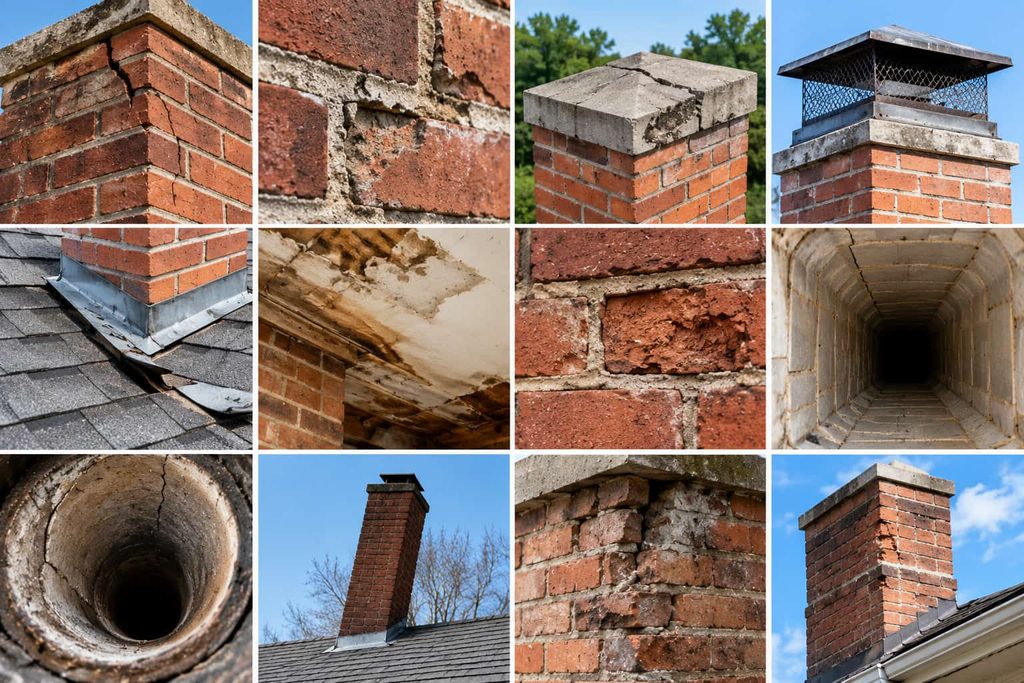
- Cracked or damaged bricks
- Deteriorating mortar
- Damaged chimney crown
- Broken chimney cap
- Leaking flashing
- Water damage
- Spalling bricks
- Cracked flue tiles
- Damaged chimney liner
- Leaning masonry
- Structural deterioration
A small surface problem may need a simple repair. Deep masonry damage may require rebuilding part of the chimney.
2. Size and Height of the Chimney
A tall chimney usually takes more time and equipment to repair. Workers may need ladders, roof equipment, staging, or scaffolding to reach the damaged area safely. This adds labor and setup time to the project.
Chimneys that extend several stories above the ground can therefore cost more to repair than short, easily accessible chimneys. Access is one of the factors that can significantly affect labor costs. The roof pitch also matters. A steep roof can make access more difficult and may require additional safety equipment.
3. Extent of the Damage
A few damaged mortar joints do not require the same work as an entire chimney stack with failing masonry. For example, a contractor may be able to repair a small damaged section without disturbing the rest of the chimney. If bricks are loose across a large area, more extensive masonry work may be necessary. The earlier you address damage, the more likely it is that a smaller repair will be possible.
4. Chimney Material
Brick chimneys are common, but chimneys can also be made from other materials. Masonry chimneys may require brick replacement, mortar repair, crown work, and waterproofing. Metal and prefabricated chimneys require different repair methods.
Masonry chimneys can also become more expensive when extensive structural work is needed. Current cost guides show that the type and material of the chimney affect the repair price.
5. Roof Access
A chimney is located in one of the most difficult places to reach on a home. If the roof is steep, the chimney is tall, or the damaged area is difficult to access, the contractor may need additional equipment. This is why two homeowners with similar chimney damage can receive very different estimates.
6. Materials and Replacement Parts
The material used for the repair also affects the final price. A basic mortar repair may require relatively inexpensive materials. Replacing a chimney crown, flashing system, liner, or large amount of brick requires more materials and labor. Brick matching can also add complexity. Older homes may have brick that is difficult to match with modern products.
7. Local Labor and Permit Requirements
Labor costs vary by location. Some chimney projects may also require permits, especially when structural changes or rebuilding are involved. Permit requirements depend on local building rules and the scope of the project. Disposal costs may also apply when damaged brick, mortar, or an old chimney section must be removed.
Chimney Repair Cost by Type
Understanding the individual repair can make an estimate much easier to understand.
Chimney Cap Repair or Replacement
A chimney cap sits at the top of the chimney and helps keep rain, debris, and animals out. A damaged or missing cap can allow moisture into the chimney. A replacement cap may cost roughly $200 to $850, depending on the design, size, and material.
Although this can be one of the smaller chimney expenses, ignoring a damaged cap can allow water to reach other parts of the chimney.
Chimney Crown Repair
The crown is the sloped or protective top surface around the chimney. Cracks in the crown can allow water to enter the masonry. Minor crown repairs are often less expensive than complete crown replacement.
Current estimates place minor crown repairs around $150 to $700, while full crown replacement can reach approximately $1,000 to $3,000. The exact price depends on the crown’s condition, size, materials, and accessibility.
Chimney Flashing Repair
Flashing connects the chimney to the roof and helps prevent water from entering the joint. Damaged flashing can cause leaks around the chimney even when the brick itself looks fine.
Current 2026 estimates commonly place chimney flashing repair or replacement around $400 to $1,600, although smaller resealing jobs can cost less. If water is entering around the chimney, both the flashing and masonry should be inspected.
Repointing and Tuckpointing
Mortar joints can crack, crumble, and wash away over time. Repointing removes damaged mortar and replaces it with new mortar. Tuckpointing is related but can involve using contrasting mortar colors to create a cleaner joint appearance.
Current estimates commonly put repointing or tuckpointing around $500 to $2,500, depending on the size of the chimney and amount of deteriorated mortar. If only a small section has failed, the cost may be much lower.
Spalling Brick Repair
Spalling occurs when the surface of brick begins to break, flake, or crumble. Moisture is a major concern because water can enter masonry and contribute to deterioration. Freeze-thaw cycles can make the problem worse in colder climates.
Repairing damaged brick can cost around $1,000 to $3,500, depending on how much masonry needs to be removed and replaced.
Chimney Liner Repair or Replacement
The chimney liner helps protect the chimney structure and directs combustion gases safely through the flue.
Liner work is more specialized than many exterior masonry repairs. Current estimates for chimney liner replacement can range from approximately $1,500 to $7,000 depending on liner type, chimney size, and installation requirements. Because liner problems can involve fire and carbon monoxide risks, this is not a repair to postpone.
Partial Chimney Rebuild
A chimney may need partial rebuilding when a section of masonry has become unstable or badly damaged. The contractor may carefully remove the damaged portion and rebuild it using suitable materials. Partial rebuilds can range from about $1,000 to $5,000 or more, depending on the size and location of the damaged section.
Full Chimney Rebuild
Severe structural damage may make a complete rebuild necessary. Current cost guides place full chimney rebuilding or replacement around $4,000 to $15,000, although difficult projects can vary outside this range. A contractor should inspect the entire structure before recommending this level of work.
Signs Your Chimney Needs Repair
You may need chimney repair if you notice:
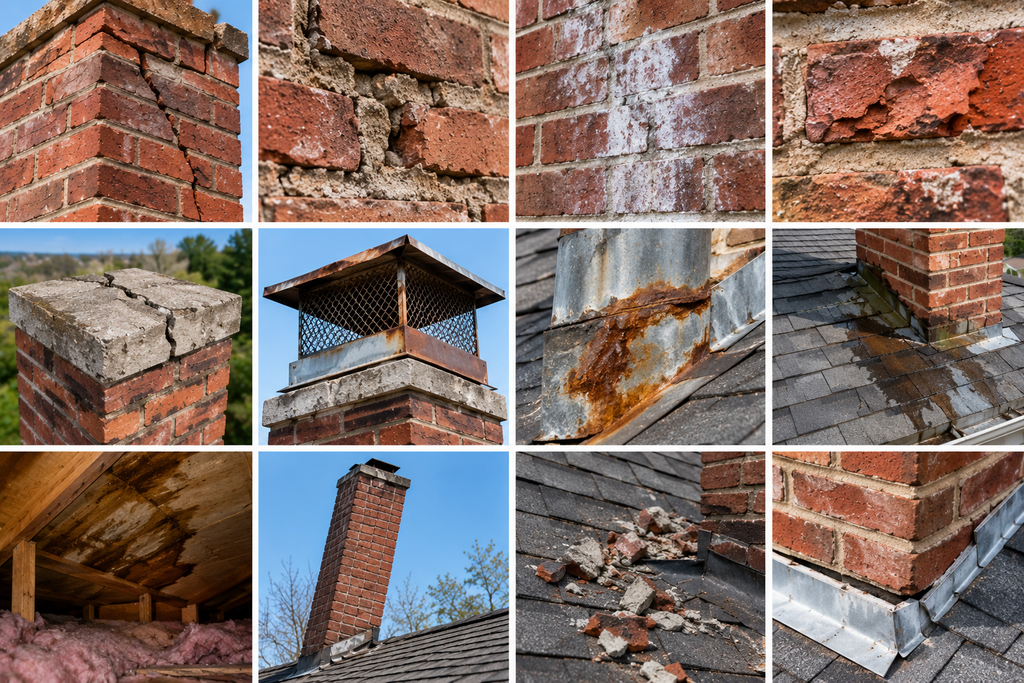
- Cracked bricks
- Crumbling mortar
- White staining on the masonry
- Bricks that are flaking or breaking
- Cracks in the chimney crown
- Damaged chimney cap
- Rust around metal components
- Water stains near the chimney
- Damp areas in the attic
- A chimney that appears to lean
- Pieces of brick or mortar on the roof
- Visible gaps around the chimney flashing
Do not ignore a chimney that is visibly leaning or losing large pieces of masonry. Structural problems can become more serious and may require rebuilding rather than a simple surface repair.
Does a Chimney Leak Mean It Needs Repair?
Not always, but a leak should be investigated. Water can enter through several areas, including the crown, flashing, chimney cap, masonry joints, or damaged brick.
The visible leak inside your home may not be directly below the point where water entered. Moisture can move through building materials before appearing as a stain. For this reason, sealing the first visible crack without finding the source may not solve the problem.
Can You Repair a Chimney Yourself?
Small cosmetic maintenance may seem simple, but chimney repairs can involve working at roof height and dealing with structural masonry. Homeowners should avoid climbing onto steep or unsafe roofs. Structural cracks, loose bricks, damaged liners, leaning chimneys, and major water intrusion should be evaluated by a qualified professional. A professional can inspect the entire chimney instead of focusing only on the most obvious damaged area.
Chimney Repair vs. Chimney Replacement
Repair is usually more practical when the damage is limited. For example, you may only need repair if:
- A few mortar joints are deteriorated.
- The crown has small cracks.
- Flashing has a localized leak.
- A small number of bricks are damaged.
- The chimney cap needs replacement.
Replacement or rebuilding may be more appropriate when:
- The chimney is leaning.
- Large sections of masonry are unstable.
- Bricks are severely deteriorated.
- The structure has extensive water damage.
- The flue liner has major damage.
- Repairs have repeatedly failed.
- A large section of the chimney must be removed.
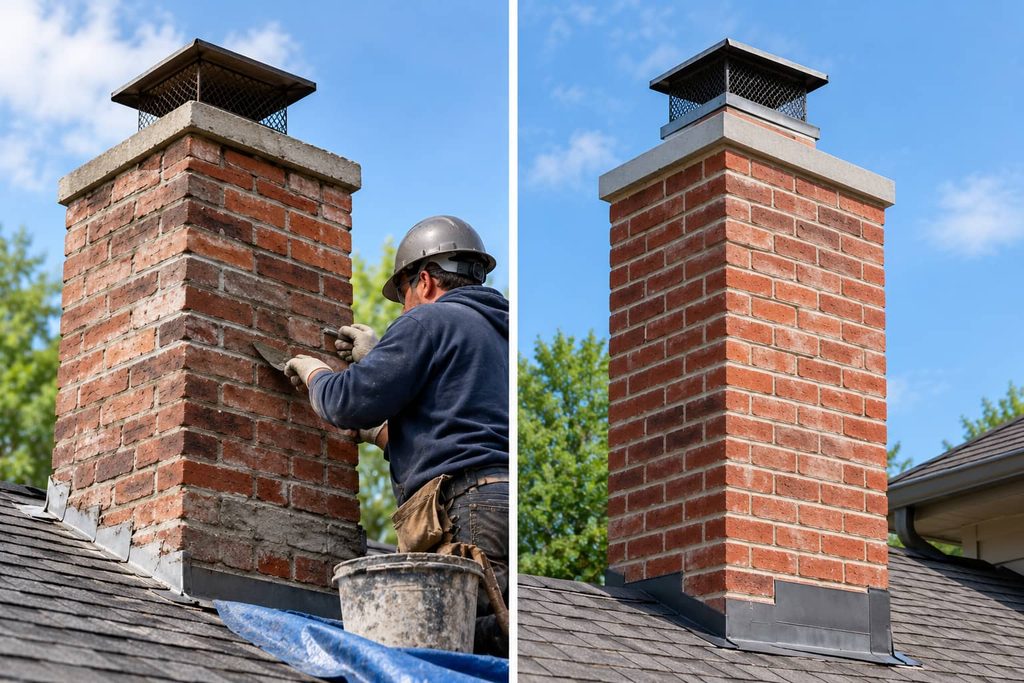
The cheapest option is not always the best option. A proper repair should solve the cause of the problem rather than temporarily hide the visible damage.
How to Lower Your Chimney Repair Cost
You cannot control every cost, but you can avoid unnecessary expenses.
Fix Small Problems Early
A damaged mortar joint can become a larger masonry problem if water continues entering the chimney.
Get a Detailed Inspection
Do not accept an estimate that only says “chimney repair.” Ask the contractor to explain what is damaged and what work is required.
Compare Written Estimates
Get more than one estimate for major work. Compare the scope of work, materials, labor, warranties, and exclusions rather than looking only at the final number.
Ask About the Cause
If the contractor repairs a leak without identifying why water entered, the problem may return. Ask whether the source is the crown, flashing, masonry, cap, or another component.
Repair Before Rebuilding
If the structure can safely be repaired, rebuilding may not be necessary. However, a contractor should determine this after inspecting the damage.
How Much Does Chimney Repair Cost in Maryland?
Maryland homeowners can face different chimney repair prices depending on the property, location, roof height, chimney design, and extent of damage. Older masonry homes may also require careful brick and mortar matching. Weather exposure can gradually affect mortar, bricks, flashing, and chimney crowns.
For Maryland homeowners, the best way to get an accurate estimate is to have the chimney inspected in person. USA Builders and Developers provides masonry, restoration, and repair services for Maryland properties. If your chimney has damaged brick, deteriorating mortar, water intrusion, or other masonry problems, a professional evaluation can help determine whether you need a targeted repair or more extensive restoration.
Questions to Ask Before Hiring a Chimney Repair Contractor
Before approving the work, ask:
- What caused the chimney damage?
- Which parts need repair?
- Is the damage structural?
- Does the chimney need repointing?
- Is the crown cracked or deteriorated?
- Does the flashing need repair?
- Does the chimney liner need inspection?
- Will scaffolding or special equipment be required?
- Does the estimate include cleanup?
- Is the repair covered by a workmanship warranty?
A detailed answer to these questions can help you compare estimates and understand what you are actually paying for.
Final Thoughts
The answer to chimney repair cost depends mainly on the type and extent of damage. A small crack or crown repair may cost a few hundred dollars. Flashing, repointing, brick restoration, and liner work can cost more. Serious structural damage may require a partial or complete rebuild costing several thousand dollars.
The most important step is to identify the actual cause of the problem before choosing a repair. If you notice cracked masonry, deteriorating mortar, water stains, damaged flashing, or a leaning chimney, do not wait for the damage to spread. A professional inspection can help you understand the condition of the chimney and decide whether repair, restoration, or rebuilding makes the most sense.
Frequently Asked Questions
What is the average chimney repair cost in 2026?
Basic chimney repairs commonly fall around $160 to $750, but larger repairs can cost several thousand dollars. Full chimney rebuilding can reach approximately $4,000 to $15,000 or more.
How much does it cost to repair a cracked chimney?
Small cracks may cost around $150 to $500 to repair, depending on their location and severity. Larger cracks can indicate structural problems and require more extensive work.
How much does chimney flashing repair cost?
Chimney flashing repair or replacement commonly falls around $400 to $1,600 in current 2026 estimates, although minor resealing can cost less.
How much does chimney repointing cost?
Repointing or tuckpointing commonly costs about $500 to $2,500, depending on the amount of mortar that needs to be removed and replaced.
How much does chimney crown repair cost?
Minor chimney crown repairs can cost around $150 to $700, while complete crown replacement may cost approximately $1,000 to $3,000.
Is it cheaper to repair or rebuild a chimney?
Repair is usually less expensive when the damage is limited. Rebuilding becomes necessary when the chimney has major structural deterioration, extensive masonry damage, or an unstable section.
How do I know if my chimney needs to be rebuilt?
A leaning chimney, widespread loose bricks, severe masonry deterioration, or major structural damage can indicate the need for rebuilding. A professional inspection is needed before making that decision.
Does chimney repair include waterproofing?
Not always. Waterproofing may be recommended when moisture is contributing to masonry deterioration. Ask whether waterproofing is included in the estimate or priced separately.
Should I repair my chimney before selling my house?
If the chimney has visible damage or active leaks, repairing it before selling can make the property easier to market and may prevent a small problem from becoming a larger issue. A professional inspection can help you decide what work is worthwhile.
Need Help with Your Next Project? Call USA Builders Today!
We’re here to help—quick answers, friendly service, anytime you need!