Flat roofs are a practical option for many homes and commercial buildings. However, they need more attention than sloped roofs. Leaks are one of the most common flat roof problems. Knowing when to schedule flat roof repair can help prevent serious damage. Since flat roofs have little or no slope, water can collect on the surface. Poor drainage or damaged waterproofing can then lead to leaks.
Even a small leak should not be ignored. It can damage insulation, cause mold, and lead to expensive structural repairs. Early flat roof leak repair can protect the building and extend the life of the roof.

Identifying Flat Roof Leaks and Assessing Damage
Finding the exact source of a flat roof leak can be difficult. Water may enter in one area and appear inside the building somewhere else.
Start by checking the roof surface and the room below the leak. Look for signs such as:
- Standing water or poor drainage
- Cracks, holes, or open seams
- Blisters or bubbles in the membrane
- Damaged flashing around vents and edges
- Water stains on ceilings or walls
- Damp insulation or mold growth
The size of the damaged area should also be checked. Small surface problems may only need sealing or patching. Wider damage may require membrane replacement or professional flat roof repair.
What Causes Flat Roof Leaks?
Flat roof leaks usually develop over time due to a combination of material wear, drainage issues, and environmental exposure. Identifying the root cause is essential for effective flat roof leak repair and preventing recurring problems.
Common causes include:
- Standing Water (Ponding)
Water that remains on the roof surface for extended periods weakens the roofing membrane and increases the risk of moisture penetration. - Membrane Damage
Cracks, blisters, and separated seams often develop as flat roofs age, creating weak points where water can enter. - Flashing Failure
Poorly sealed or deteriorated flashing around vents, skylights, drains, and roof edges is a common source of leaks. - Weather-Related Stress
Temperature fluctuations cause expansion and contraction, which can lead to gradual material breakdown and surface damage. - Poor Installation or Workmanship
Incorrect installation of roofing materials or improper sealing can result in early failure and leakage issues.
In most cases, flat roof leaks occur due to a combination of these factors, making proper inspection and repair essential for long-term performance.
Signs You Need Flat Roof Repair
Recognizing early warning signs is essential to prevent minor roofing issues from turning into serious structural damage. In many cases, a leaking flat roof shows both visible and hidden indicators before the problem becomes severe. Identifying these signs early allows for timely flat roof repair and helps avoid costly repairs later.
Some of the most common warning signs include:
- Water stains on ceilings or walls, which indicate moisture entering the building
- Damp insulation or mold growth, often caused by hidden leaks beneath the surface
- Bubbling or blistering on the roof membrane, a sign of trapped moisture
- Cracks or soft spots, suggesting prolonged water exposure and material weakening
- Loose seams or damaged flashing around roof edges, vents, or penetrations
Ignoring these signs can lead to more extensive damage, including structural weakening and higher repair costs. Regular inspections and early action are key to maintaining the performance and lifespan of your flat roof.
Flat Roof Leak Repair Methods
Effective flat roof leak repair starts with finding the exact source of the problem. A temporary patch may stop water for a short time. However, long-term flat roof repair must address the main cause of the leak.
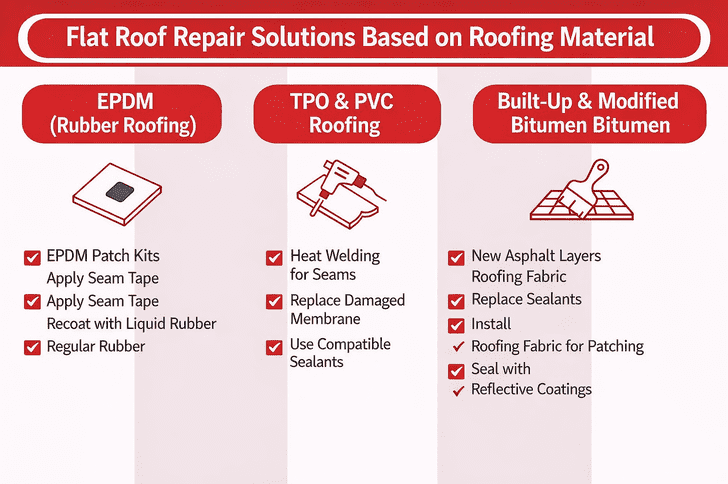
The right repair method depends on the type and size of the damage. Small cracks, holes, and open seams can often be fixed with roof sealant or patching materials. These methods work best when the damage is limited and has not spread below the roof membrane.
Larger or deeper damage may require membrane replacement. The damaged roofing section is removed and replaced with new material. This helps stop moisture from entering through weak or worn areas.
A waterproof roof coating may be suitable for an older or leaking flat roof. The coating creates a protective layer over the surface. It can improve waterproofing, seal small cracks, and extend the roof lifespan.
Common flat roof repair methods include:
- Crack sealing for small openings and surface damage
- Flat roof patch repair for minor leaks
- Membrane replacement for larger damaged areas
- Seam repair around loose or separated roofing sections
- Waterproof roof coatings for added protection
- Flashing repair around vents, drains, and roof edges
A proper flat roof leak repair should do more than cover visible damage. The roofer must also identify poor drainage, damaged flashing, open seams, or trapped moisture. Fixing the underlying issue helps prevent recurring leaks and supports long-term roof performance.
Flat Roof Repair Process: Step-by-Step Guide
A professional flat roof repair process follows a clear series of steps. Each stage helps locate the damage, stop the leak, and protect the roof from future problems.
1. Flat Roof Inspection
The process begins with a complete roof inspection. The contractor checks the membrane, seams, flashing, drains, and roof edges. Finding the exact source of a leaking flat roof is important because water may travel beneath the surface before appearing indoors.
2. Surface Preparation
The damaged area is cleaned and fully dried. Dirt, standing water, loose roofing material, and debris are removed. Proper preparation helps the flat roof repair materials bond securely to the surface.
3. Repair Application
The repair method depends on the type and size of the damage. Small cracks and holes may require sealing or patching. Larger problems may need membrane replacement, seam repair, or new flashing. These methods provide a stronger and more lasting flat roof leak repair.
4. Roof Waterproofing
A waterproof sealant or protective roof coating may be applied over the repaired area. This layer improves water resistance and helps prevent future leaks. Waterproofing can also extend the life of an aging flat roof.
5. Final Roof Inspection
The contractor inspects the completed repair to confirm that the area is fully sealed. Roof drains and nearby seams are also inspected. A careful final inspection helps ensure the flat roof repair is secure, durable, and ready to handle rain and changing weather conditions.
Common Mistakes to Avoid During Flat Roof Repair
Even small mistakes can weaken a flat roof repair and cause the leak to return. Proper preparation and the right materials are essential for long-lasting results.
Avoid these common flat roof repair mistakes:
- Skipping a full inspection before starting the repair
- Using materials that are not compatible with the roof membrane
- Covering visible damage without finding the source of the leak
- Ignoring damaged flashing, loose seams, or membrane edges
- Failing to fix standing water or poor roof drainage
- Applying sealant to a wet, dirty, or damaged surface
- Using temporary patches as a permanent solution
- Attempting flat roof leak repair during rain or unsafe weather
- Walking on weak or severely damaged roofing areas
- Delaying professional repair when the damage is widespread
A successful flat roof leak repair should address both the visible damage and its underlying cause. Careful inspection, proper surface preparation, and suitable repair materials help prevent recurring leaks and extend the life of the flat roof.
Flat Roof Repair Materials
Choosing the right flat roof repair materials is important for a durable and long-lasting result. The best option depends on the roof type, the size of the damage, and the building needs.
| Material Type | Best Use | Typical Lifespan |
|---|---|---|
| EPDM rubber | Residential flat roofs and small leaks | 20 to 30 years |
| TPO membrane | Commercial roofs and energy-efficient systems | 20 to 25 years |
| Modified Bitumen | Heavy-duty roofs with multiple layers | 15 to 20 years |
| Liquid roof coating | Small cracks, surface protection, and maintenance | 5 to 10 years |
EPDM is flexible and works well for many residential roofs. TPO is often used on commercial buildings because it is durable and reflects heat.
Modified bitumen provides strong protection in high-traffic or demanding areas. Liquid coatings are useful for sealing small cracks and adding an extra waterproof layer.
Using high-quality materials helps the repair resist rain, UV exposure, and daily wear. USA Builders and Developers can recommend the right material based on the roof condition and repair needs.
How to Prevent Flat Roof Leaks
Preventive maintenance plays a critical role in extending the lifespan of a flat roof and reducing the risk of costly repairs. While repairs address existing issues, consistent maintenance helps prevent leaks from developing in the first place.
A proactive approach to roof care ensures that small problems are identified early before they turn into major structural concerns. Regular inspections and proper upkeep can significantly improve the long-term performance of your roofing system.
Key maintenance practices include:
- Inspect the roof regularly
Conduct inspections at least twice a year and after severe weather to identify early signs of damage. - Keep drainage systems clear
Clean drains, gutters, and scuppers to ensure proper water flow and prevent ponding. - Remove debris from the roof surface
Leaves, dirt, and debris can trap moisture and lead to standing water issues. - Check flashing and seams
Inspect roof edges, joints, and penetrations to ensure they remain properly sealed. - Apply protective roof coatings
Periodic coatings improve waterproofing and add an extra layer of protection against environmental damage.
Regular maintenance not only prevents leaks but also extends the life of the roof and improves overall performance. Investing in preventative care reduces the likelihood of emergency flat roof leak repair and helps maintain a reliable roofing system.
DIY vs Professional Flat Roof Repair
| Factor | DIY Flat Roof Repair | Professional Flat Roof Repair |
|---|---|---|
| Best for | Small cracks or minor surface damage | Large leaks, soft spots, and widespread damage |
| Leak detection | May only address visible damage | Identifies the exact source of the leak |
| Materials | Risk of using incompatible products | Uses suitable and high-quality repair materials |
| Safety | Higher risk without proper equipment | Completed with professional safety equipment |
| Repair quality | Often temporary | More durable and long-lasting |
| Cost | Lower initial cost | Higher upfront cost but may prevent future repairs |
| Time | Can take longer without experience | Usually completed more efficiently |
| Warranty | Usually no warranty | May include workmanship or material warranties |
DIY flat roof repair may be suitable for a small and easy-to-reach problem. However, professional flat roof repair is the safer choice for larger leaks, damaged membranes, standing water, or recurring issues.
Flat Roof Maintenance for Long-Term Protection
Regular flat roof maintenance helps prevent leaks and extends the life of the roofing system. Small problems are easier and less expensive to repair when found early.
Important maintenance steps include:
- Inspecting the roof at least twice a year
- Checking the roof after heavy rain or storms
- Removing leaves, dirt, and other debris
- Keeping drains and gutters clear
- Looking for cracks, blisters, and loose seams
- Checking flashing around vents and roof edges
- Repairing small leaks before they spread
- Removing standing water from the roof surface
Professional inspections can also reveal hidden moisture and membrane damage. Proper maintenance reduces the need for major flat roof repair and helps protect the building for years.
Advanced Flat Roof Repair Techniques and Solutions
Some flat roof problems require more than basic sealing or patching. Advanced flat roof repairs are used when leaks are difficult to locate, damage covers a larger area, or the roofing system has repeated drainage issues.
Common advanced solutions include:
- Infrared scanning to locate hidden moisture
- Reinforced membrane patches for damaged sections
- Liquid waterproof coatings for seamless protection
- Improved drainage systems to reduce standing water
- Tapered insulation to create better roof slope
- New flashing around vents, drains, and roof edges
- Reflective coatings to reduce heat and UV damage
In some cases, contractors may combine several repair methods. For example, they may replace a damaged membrane section, improve drainage, and apply a protective coating.
These solutions address both visible damage and the underlying cause. A professional inspection can determine which repair method offers the best long-term protection.
Why Professional Flat Roof Repair Is Important
Flat roofs require the right materials, tools, and repair methods. Poor repairs can cause leaks to return and may increase future maintenance costs.
Professional roofers can find the true source of the problem, repair damaged areas correctly, and check for hidden moisture or structural concerns. This helps improve roof performance and prevent further damage.
USA Builders and Developers provides professional flat roof repair services that address the root cause and provide long-lasting protection.
FAQs
How much does it cost to have a flat roof repaired?
Flat roof repair usually costs between $300 and $1,100. The final cost depends on the damage, roof material, labor, and repair size.
Can I fix a flat roof myself?
Yes, you can repair a small crack or loose seam yourself. However, larger leaks, standing water, damaged membranes, or recurring problems should be handled by a professional roofer.
How to temporarily repair a flat roof?
Clean and dry the damaged area, then apply roofing sealant or a temporary membrane patch over the leak. This is only a short-term solution. Schedule professional flat roof repair as soon as possible.
How to repair a low spot in a flat roof?
A low spot in a flat roof can be repaired by cleaning the area, improving drainage, and adding compatible roofing material or tapered insulation to create a slight slope. Because ponding water can damage the membrane, this repair is usually best handled by a professional roofer.
Final Thoughts
Proper flat roof repair is important for protecting your property from leaks and water damage. Regular maintenance and early repairs can help the roof perform well for many years.
Fixing leaks quickly and using the correct repair methods can prevent larger problems. Professional flat roof repair also improves durability, protects the building, and helps maintain its value.
Need Help with Your Next Project? Call USA Builders Today!
We’re here to help—quick answers, friendly service, anytime you need!