Tuckpointing is a masonry technique used to repair worn mortar joints between bricks or stones. It can also improve the appearance of older brickwork by creating clean, narrow joint lines.
Over time, rain, moisture, freezing temperatures, and seasonal changes can cause mortar to crack, crumble, or pull away from the bricks. Tuckpointing can repair these damaged joints and help maintain the surrounding masonry.
For Maryland homes, chimneys, and brick structures, understanding tuckpointing can help homeowners recognize mortar problems early and choose the right type of repair.
What Is Tuckpointing?
Tuckpointing involves repairing mortar joints between bricks and adding a thin contrasting line to create the appearance of narrow, even joints.
The process begins by removing damaged mortar from the affected joints. New mortar is then placed into the joints and finished to match the surrounding masonry. A thin contrasting line is added to create the distinctive tuckpointed appearance.
Tuckpointing is not simply a cosmetic treatment. When deteriorated mortar is properly removed and replaced, the repair can also help protect the masonry from moisture and further joint deterioration.
Signs Your Masonry May Need Tuckpointing
Tuckpointing may be appropriate when mortar joints have started to deteriorate while the surrounding bricks remain in good condition.
Common signs include:
- Cracked mortar joints
- Crumbling or soft mortar
- Missing sections of mortar
- Gaps between bricks
- Mortar separating from brick edges
- White or powdery deposits on brickwork
- Moisture stains around masonry joints
- Worn mortar on older walls or chimneys
Not every crack or gap means tuckpointing is needed. Damaged bricks, structural movement, foundation problems, or another source of water may require a different type of repair.
Common Causes of Mortar Damage
Mortar is exposed to weather throughout the year. Over time, repeated exposure can cause it to weaken and deteriorate.
Moisture
Rainwater can enter damaged mortar joints. Repeated wetting and drying may gradually weaken the mortar and surrounding masonry.
Freeze-Thaw Cycles
During cold weather, water that enters small cracks or openings can freeze and expand. Repeated freezing and thawing can cause mortar to crack and break down.
Age
Older brickwork may have mortar that has naturally deteriorated after decades of weather exposure. Older buildings may also require mortar that is compatible with their original construction.
Previous Repairs
A previous repair may have used mortar that was not suitable for the existing masonry. Differences in strength, composition, or movement can contribute to future problems.
The Tuckpointing Process
A proper tuckpointing job involves several steps. The exact approach depends on the age, condition, and type of masonry.
1. Inspection
The masonry is inspected for deteriorated mortar, cracked bricks, moisture problems, and other signs of damage.
This helps determine whether the issue is limited to the mortar or whether another masonry problem needs attention.
2. Mortar Removal
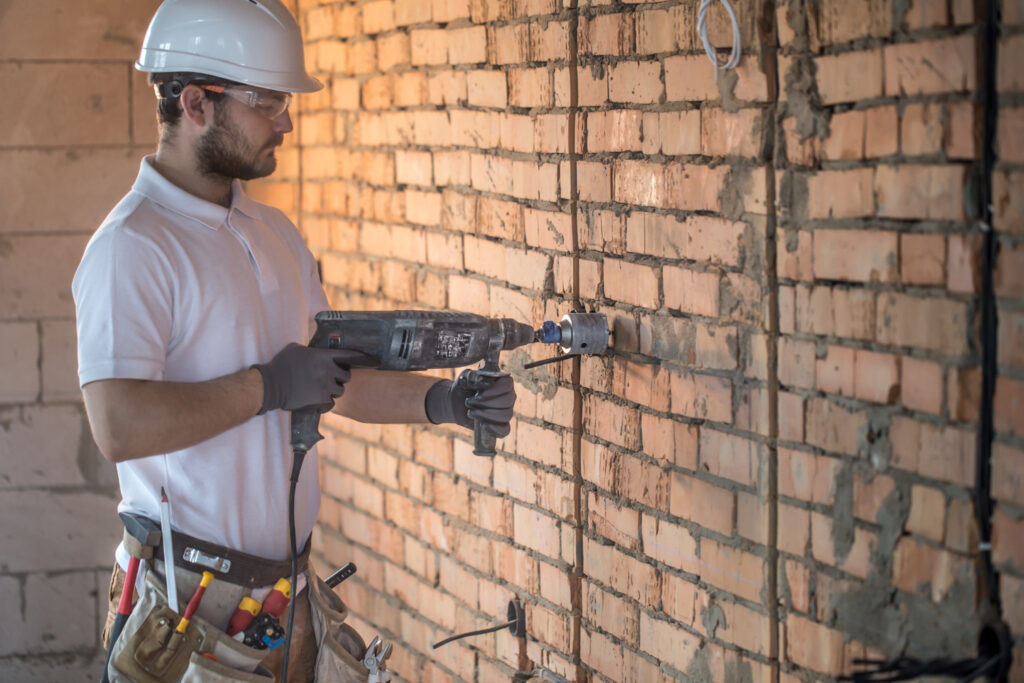
Loose and deteriorated mortar is carefully removed from the affected joints. This creates space for the new mortar to bond properly.
Care is important during this step because aggressive removal can damage the edges of the bricks.
3. Joint Cleaning
The joints are cleaned to remove dust and loose debris. Depending on the masonry and weather conditions, they may also be lightly dampened before new mortar is applied.
4. Mortar Selection
The replacement mortar should be compatible with the existing masonry. Color and texture are important for appearance, but the mortar’s composition and strength also need to be considered.
This is especially important when working on older or historic brickwork.
5. New Mortar Application
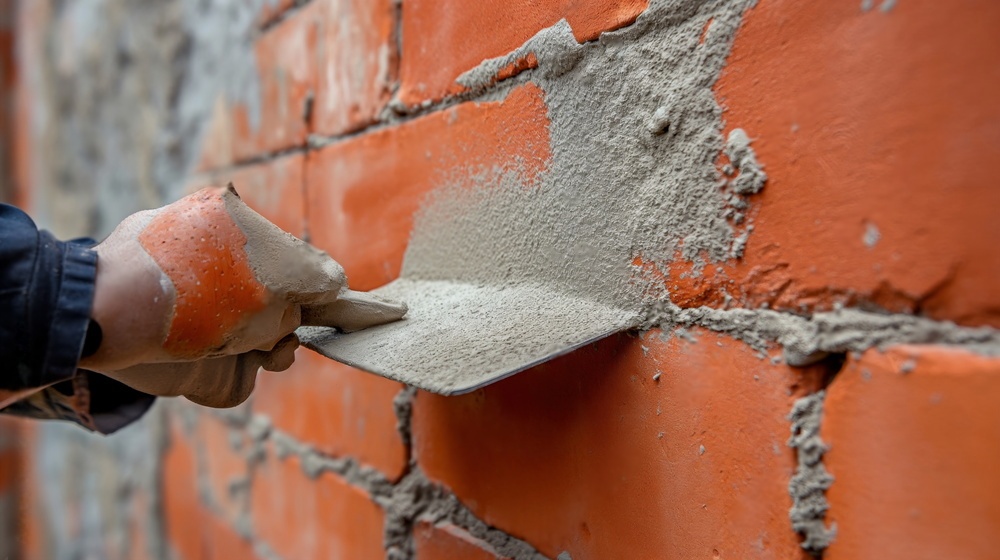
Fresh mortar is packed into the prepared joints and shaped to match the surrounding masonry.
The mortar needs to be applied evenly and firmly so the repaired joints bond properly with the existing brickwork.
6. Tuck Line Application
After the mortar is placed, a thin contrasting line is added along the center of the joint.
This creates the visual effect that gives tuckpointing its name. It makes the mortar joints appear narrower and more defined.
7. Final Finishing
The repaired joints are tooled and cleaned to create a consistent finish. Excess mortar is removed from the brick faces, and the repaired area is allowed to cure properly.
Tuckpointing vs. Repointing
Tuckpointing and repointing are closely related masonry techniques, but they are not exactly the same.
Repointing focuses on removing deteriorated mortar and replacing it with new mortar. Its primary purpose is to restore the mortar joints and protect the masonry.
Tuckpointing also involves repairing mortar joints, but it adds a thin contrasting line to create the appearance of precise, narrow joints.
| Feature | Tuckpointing | Repointing |
|---|---|---|
| Removes damaged mortar | Yes | Yes |
| Replaces deteriorated mortar | Yes | Yes |
| Adds a contrasting line | Usually | No |
| Improves joint appearance | Yes | Yes |
| Main focus | Mortar repair and defined appearance | Mortar restoration |
The terminology can vary between contractors and regions. When discussing a masonry project, it is useful to ask what specific repair method will be performed.
Benefits of Tuckpointing
Tuckpointing can provide both practical and visual benefits when the existing masonry is suitable for repair.
Helps Reduce Moisture Entry
Damaged mortar can leave openings between bricks where water may enter. Repairing deteriorated joints helps close these gaps.
Protects Existing Masonry
Sound mortar joints help protect the edges of bricks from continued exposure to weather and moisture.
Improves Brick Appearance
The clean lines created by tuckpointing can make older brickwork look more uniform and well maintained.
Helps Preserve Older Masonry
Repairing mortar joints can help maintain older brick walls and chimneys without replacing the entire masonry surface.
Supports Long-Term Maintenance
Addressing deteriorated mortar early can help reduce the chance of more extensive masonry repairs later.
Tuckpointing in Maryland
Maryland properties experience rain, humidity, summer heat, freezing temperatures, and seasonal weather changes. These conditions can gradually affect exterior mortar joints.
Older brick walls and chimneys may be more vulnerable when the mortar has already started to deteriorate.
Homeowners can check their masonry after periods of heavy rain, freezing weather, or visible changes in the brickwork. Early inspection can help determine whether the problem is limited to the mortar or involves another part of the structure.
When Tuckpointing May Not Be Enough
Tuckpointing is not the right solution for every masonry problem.
If bricks are badly cracked, loose, displaced, or extensively damaged, they may need to be repaired or replaced separately.
Likewise, if mortar deterioration is caused by an ongoing moisture problem, repairing the joints without addressing the source of the water may only provide a temporary solution.
The condition of the bricks, mortar type, age of the structure, and cause of the damage should all be considered before selecting a repair method.
DIY Tuckpointing vs. Professional Repair
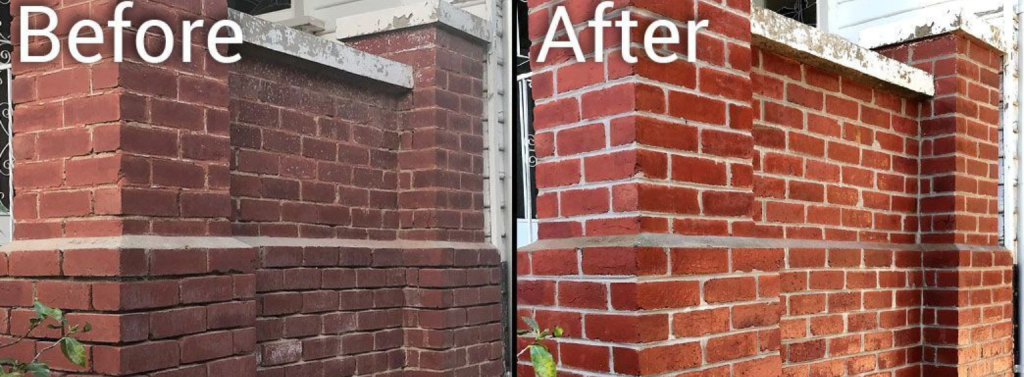
Small areas of mortar damage may look simple to repair, but proper tuckpointing requires careful preparation and suitable materials.
DIY work may be possible for someone with masonry experience and a small, straightforward repair. However, matching existing mortar can be difficult, especially on older brickwork.
Professional help is worth considering for:
- Large areas of deteriorated mortar
- Chimneys and difficult-to-access areas
- Older or historic masonry
- Loose or damaged bricks
- Widespread cracking
- Recurring moisture problems
Frequently Asked Questions
What is tuckpointing used for?
Tuckpointing is used to repair deteriorated mortar joints between bricks or stones while creating a clean, defined joint appearance.
Is tuckpointing the same as repointing?
No. Repointing replaces deteriorated mortar, while tuckpointing adds a thin contrasting line to create the appearance of narrow, precise joints.
Does tuckpointing prevent water damage?
Properly repaired mortar joints can help reduce water entry through damaged joints. However, tuckpointing will not fix every moisture problem. Roof leaks, flashing problems, drainage issues, or other sources of water may require separate repairs.
Can cracked bricks be fixed with tuckpointing?
No. Tuckpointing is primarily a mortar-joint repair technique. Cracked or severely damaged bricks may need a separate repair or replacement.
Does old brickwork require special mortar?
It can. Older masonry may contain softer mortar that requires a compatible replacement material. The age and construction of the masonry should be considered before selecting new mortar.
Conclusion
Tuckpointing is a useful masonry technique for repairing deteriorated mortar joints while creating a clean and defined appearance. When the surrounding brickwork is still in good condition, repairing the joints can help reduce moisture entry and maintain the masonry.
For Maryland homeowners, regular attention to mortar joints is especially important because seasonal weather can place repeated stress on exterior masonry. If you notice crumbling mortar, open joints, or other changes in your brickwork, identifying the cause early can help you choose the appropriate repair.
Have Questions? Call Us Now!
We’re here to help—quick answers, friendly service, anytime you need!



Contact USA Builders and Developers
🌐 Website: www.usabuildersanddevelopers.com
📍 Serving: Baltimore, Bethesda, Silver Spring, and Montgomery Maryland
📌 Address: 2144 Priest Bridge Court, Suite 8, Crofton, MD 21114, USA