Commercial roof replacement is an important investment for any business owner. A strong, well-installed roof helps protect your building, employees, equipment, and inventory from weather damage. If your commercial roof has frequent leaks, visible damage, or rising repair costs, it may be time to consider a replacement.
For businesses in Maryland, choosing the right roofing system is especially important. Seasonal rain, humidity, summer heat, and winter weather can affect roof performance over time. A suitable roofing system can help reduce maintenance needs and protect your property for years.
This guide explains the signs you need a new roof, commercial roof replacement costs in Maryland, available roofing materials, the replacement process, and how to choose a qualified contractor.
Signs Your Commercial Roof Needs Replacement
Commercial roofs can develop problems as they age. Some issues can be fixed with repairs, while others may indicate that a complete replacement is the better long-term option.
Here are some common warning signs to watch for.
1. Frequent Roof Leaks
Repeated leaks are one of the most common signs of roof damage. Water may enter through damaged seams, flashing, roof penetrations, or worn roofing materials.
If leaks continue after several repairs, the existing roofing system may have reached the end of its useful life.
2. Visible Roof Damage
Inspect your roof for cracks, bubbles, loose seams, punctures, and damaged flashing. These problems can allow water to enter the building.
Standing water on a flat roof may also indicate drainage problems. If water remains on the surface long after rainfall, the roof may need professional inspection.
3. Rising Energy Bills
A damaged roof or poorly performing insulation can contribute to heat loss in winter and heat gain in summer.
If your heating and cooling costs continue to increase, ask a roofing professional to inspect the roof membrane, insulation, and ventilation where applicable.
4. Aging Roofing Materials
Every roofing system has an expected service life. The actual lifespan depends on the material, installation quality, maintenance, weather exposure, and drainage.
An older roof does not always need immediate replacement. However, an inspection can help determine whether repairs are still practical.
5. Repeated Repair Expenses
Small repairs can be cost-effective when the rest of the roof is in good condition. However, repeated repairs may become expensive when the same problems return.
Compare the cost of continued repairs with the estimated cost and expected service life of a new roof before making a decision.
Commercial Roof Repair vs. Replacement: Which Is Better?
Choosing between commercial roof repair and replacement depends on the condition of your existing roof.
Roof repair may be suitable when the damage is limited to a small area. For example, a contractor may be able to repair damaged flashing, seal a minor leak, or fix a limited section of roofing membrane.
Commercial roof replacement may be the better choice when the roof has widespread damage, recurring leaks, saturated insulation, or deteriorated roofing materials.
Consider these factors before deciding:
- Extent of damage: Localized damage may need a repair, while widespread deterioration may require replacement.
- Age of the roof: An older roof with repeated problems may be more economical to replace.
- Repair history: Frequent service calls can increase long-term costs.
- Insulation condition: Wet or damaged insulation may require more extensive work.
- Long-term plans: Property owners planning to keep a building for many years may benefit from investing in a new roofing system.
A professional inspection can help you compare both options. You should also request a written estimate that explains the recommended work and any additional costs.
Types of Commercial Roofing Systems in Maryland
The right roofing material depends on your building design, budget, drainage, insulation needs, and maintenance expectations. Below are common commercial roofing systems to consider.
1. TPO Roofing
Thermoplastic Polyolefin (TPO) is a popular choice for many flat and low-slope commercial roofs.
TPO roofing membranes are commonly available in light colors that can reflect sunlight. Properly installed systems can help manage heat absorption and provide protection against water intrusion.
TPO may be suitable for offices, warehouses, retail buildings, and other commercial properties.
Learn more about how TPO roofing is installed.
2. EPDM Roofing
Ethylene Propylene Diene Monomer (EPDM) is a synthetic rubber roofing membrane commonly used on flat and low-slope roofs.
It is known for flexibility and resistance to outdoor exposure. EPDM is available in different thicknesses and installation configurations.
It may be a practical option for property owners seeking a rubber roofing system with established maintenance and repair methods.
3. PVC Roofing
Polyvinyl Chloride (PVC) roofing is another single-ply membrane used on commercial buildings.
PVC can offer resistance to moisture and certain chemicals. This may make it suitable for some restaurants, food-service facilities, and buildings where rooftop grease exposure is a concern.
The suitability of PVC depends on the building’s needs and the specific roofing product selected.
4. Metal Roofing
Metal roofing is commonly used on commercial buildings with sloped roofs. Depending on the system, it can offer durability, weather resistance, and a long service life.
Metal roofing may be suitable for industrial facilities, retail buildings, offices, and agricultural or storage structures.
The initial cost can be higher than some membrane systems. However, long-term performance and maintenance requirements should also be considered.
5. Modified Bitumen Roofing
Modified bitumen is an asphalt-based roofing system often used on flat and low-slope commercial roofs.
It can provide multiple layers of protection and is available in different installation methods. The right system depends on the building design, roof traffic, and manufacturer requirements.
Installation should be handled by experienced professionals, particularly when the selected method involves heat or open flames.
6. Built-Up Roofing (BUR)
Built-up roofing uses multiple layers of bitumen and reinforcing materials to form a protective roof assembly.
It can provide a durable surface for certain commercial buildings. However, the finished system may be heavier than some alternatives, so the building structure and existing roof conditions must be evaluated.
How to Choose the Right Commercial Roofing Material
Before selecting a roofing system, consider:
- The roof’s slope and drainage design
- Local weather exposure
- Building insulation requirements
- Expected roof traffic and equipment access
- Initial installation cost
- Maintenance and repair needs
- Manufacturer warranties
- The contractor’s experience with the selected material
A qualified commercial roofing contractor can assess these factors and recommend suitable options for your Maryland property.
Commercial Roof Replacement Cost in Maryland
The cost of commercial roof replacement in Maryland depends on several factors. These include roof size, roofing material, insulation requirements, labor, accessibility, and the condition of the existing roof.
As a broad planning estimate, some commercial roofing projects may cost around $4.50 to $16 or more per square foot installed. This is an indicative range, not a fixed price or a quote for every roofing system. Actual costs can fall outside this range depending on the project scope and material selected. Maryland cost reference.
For example, a 10,000-square-foot roof at an assumed rate of $8 per square foot would have an estimated cost of $80,000. This is only a simple calculation to demonstrate how pricing works. It is not an actual contractor quote.
Factors That Affect Commercial Roof Replacement Costs
1. Roof Size
Larger roofs require more materials and labor. Contractors generally calculate roofing quantities using the total roof area.
However, a larger project does not always cost exactly the same per square foot as a smaller project.
2. Roofing Material
Different roofing materials have different purchase and installation costs. TPO, EPDM, PVC, metal, and built-up roofing systems vary in price, durability, and maintenance requirements. Choosing a material that fits your budget and building needs can help you get better long-term value.
3. Existing Roof Condition
If the existing roof has extensive water damage, deteriorated insulation, or damaged decking, additional work may be necessary before installing the new roofing system. A professional inspection can identify these issues and help provide a more accurate estimate.
4. Labor and Installation Complexity
Labor costs depend on the project’s size, roof accessibility, safety requirements, and installation complexity. Roofs with multiple levels, rooftop equipment, or difficult access may require additional time and specialized equipment.
5. Insulation and Drainage
Insulation and drainage improvements can add to the initial project cost but may help improve building performance. Proper drainage is especially important for flat and low-slope commercial roofs because standing water can contribute to leaks and premature roof deterioration.
6. Removal and Disposal of Old Roofing
Some commercial roof replacement projects require the existing roofing materials to be removed and disposed of before installation begins. The cost depends on the amount of material, disposal requirements, and whether the existing roof can legally and safely remain in place under the new system.
To receive an accurate estimate, request a detailed inspection from a qualified commercial roofing contractor. Compare the proposed materials, labor, warranties, and scope of work rather than choosing a contractor based on price alone.
Maryland Building Codes and Roofing Requirements
Commercial roof replacement may involve building permits, energy-code requirements, and other local rules. Requirements can vary by jurisdiction and by the type of work being performed.
Maryland uses the Maryland Building Performance Standards, which incorporate state-adopted building codes and standards with applicable modifications. Local jurisdictions administer and enforce the requirements for projects in their areas.
Before beginning work, ask your contractor or local permitting office whether a permit is required and which code requirements apply to your property.
You can review official information through the Maryland Department of Labor’s Building Codes Administration.
Do not assume that every roof replacement follows the same rules. The applicable requirements should be confirmed for your specific building and project.
The Commercial Roof Replacement Process: Step by Step
Understanding the replacement process helps business owners prepare for the project and reduce disruption.
Step 1: Roof Inspection
The contractor examines the existing roof, drainage, flashing, insulation, and visible damage.
The inspection helps determine whether repair, roof recovery, or complete replacement is appropriate.
Step 2: Material Selection and Project Planning
After the inspection, the contractor recommends suitable roofing systems and prepares an estimate.
This stage should cover material specifications, project costs, warranties, safety procedures, and the expected schedule.
Step 3: Site Preparation
Before work begins, the contractor plans material storage, equipment access, worker safety, and debris removal.
Building owners should also discuss access restrictions, noise, parking, and the protection of nearby property.
Step 4: Removal of Existing Roofing
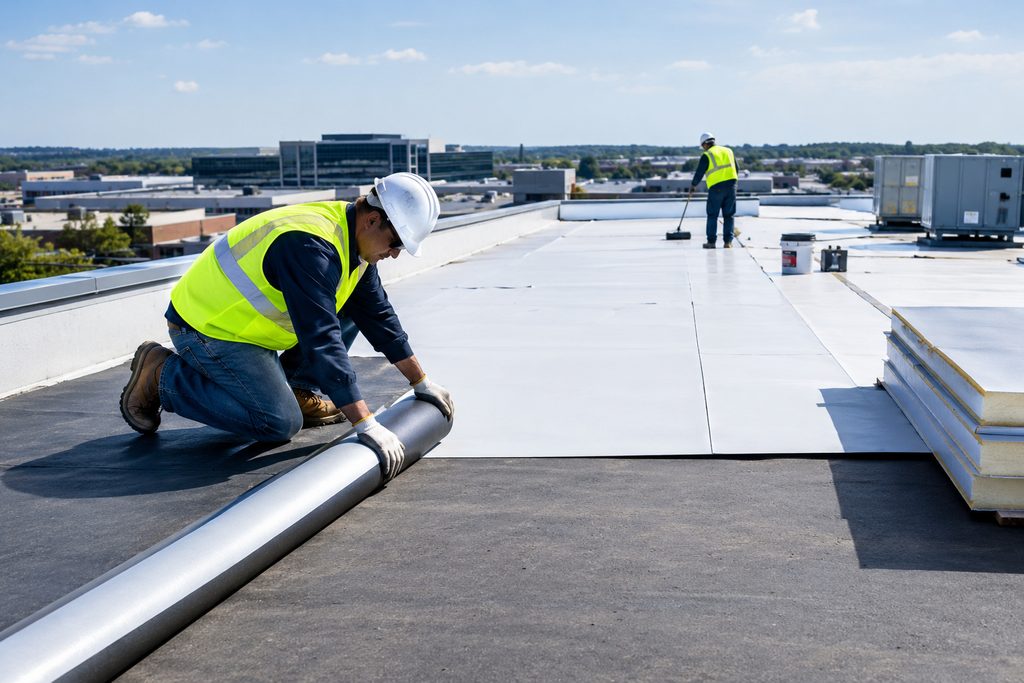
When a full tear-off is required, the old roofing materials are removed according to the approved project plan.
The exposed roof deck can then be inspected for damage that was not visible before removal.
Step 5: Deck and Insulation Repairs
Damaged decking and unsuitable insulation may need to be repaired or replaced.
The contractor also checks that the roof surface is properly prepared for the new roofing assembly.
Step 6: Installation of the New Roofing System
The new insulation, membrane, metal panels, or other selected materials are installed according to the project specifications and manufacturer instructions.
Step 7: Final Inspection
The contractor checks the completed work, including seams, flashing, drainage, and other critical details.
Ask for documentation of the installed system, warranty information, and any maintenance instructions before closing out the project.
How Long Does Commercial Roof Replacement Take?
The time required for commercial roof replacement depends on the roof’s size, material, condition, and installation complexity.
A relatively straightforward project may take several days, while a larger or more complicated roof can take several weeks or longer.
The schedule can also be affected by:
- Rain, snow, wind, and temperature conditions
- Roof deck or insulation damage
- Material delivery
- Rooftop equipment and access restrictions
- Permit and inspection requirements
- The size of the roofing crew
Ask your contractor for a written schedule that includes preparation, installation, inspections, and cleanup. For occupied buildings, discuss how the work will affect employees, tenants, customers, and daily operations.
How to Choose a Commercial Roofing Contractor in Maryland
Choosing the right contractor is an important part of a successful roofing project.
Before hiring a company, review the following factors.
1. Commercial Roofing Experience
Look for a contractor with experience in commercial properties similar to yours. Ask about previous projects involving your preferred roofing system.
2. Licensing and Insurance
Confirm the applicable licensing requirements for your location and type of work. Ask for proof of relevant insurance and verify that the coverage is appropriate for the project.
3. Detailed Written Estimates
A reliable proposal should explain the roofing materials, labor, removal work, insulation, flashing, warranties, and payment terms.
Avoid comparing quotes based only on the final price. A lower price may reflect a different scope of work.
4. Manufacturer Warranties
Ask what warranties are available for materials and installation. Understand the coverage period, exclusions, maintenance obligations, and process for making a claim.
5. References and Past Projects
Request references from previous commercial clients. Where possible, review completed projects and ask about communication, workmanship, scheduling, and follow-up service.
6. Clear Communication
The contractor should explain the work, discuss potential problems, and keep you informed about changes to the schedule or project cost.
For additional information, visit our roofing contractors page.
How to Prepare Your Business for Roof Replacement
Commercial roof replacement requires planning, especially when the building will remain open during construction.
Use these steps to prepare:
- Inform employees and tenants: Explain the expected schedule and any temporary access restrictions.
- Protect equipment and inventory: Move sensitive items away from areas that may be affected by construction.
- Plan parking and deliveries: Reserve space for roofing materials, equipment, and contractor vehicles.
- Discuss safety arrangements: Confirm how the contractor will control access to work areas.
- Coordinate with facility managers: Identify rooftop equipment, ventilation systems, and other services that may need attention.
- Plan for weather delays: Discuss how exposed areas will be protected if work is interrupted by rain or other unfavorable conditions.
- Keep communication open: Establish a main contact for project updates and urgent concerns.
Good preparation helps reduce disruption and makes it easier for the contractor to complete the work safely and efficiently.
How to Maintain Your New Commercial Roof
After replacement, regular maintenance can help identify small problems before they lead to expensive damage.
Follow the roofing manufacturer’s maintenance recommendations and arrange inspections with a qualified professional.
Important maintenance tasks include:
- Inspecting flashing, seams, and roof edges
- Checking drains and gutters for blockages
- Looking for signs of standing water
- Checking for punctures or damage after severe weather
- Monitoring interior areas for signs of leaks
- Keeping records of inspections and repairs
- Following warranty requirements
Avoid allowing untrained staff to walk on the roof or perform repairs without proper authorization and safety measures.
Routine maintenance does not eliminate every risk, but it can help preserve roof performance and identify developing issues early.
Conclusion
Commercial roof replacement in Maryland can help protect your building, reduce recurring repair problems, and support long-term property maintenance. The right solution depends on the roof’s current condition, the selected roofing material, insulation needs, drainage, and project budget.
Before making a decision, arrange a professional inspection, compare repair and replacement options, and request detailed written estimates. Confirm applicable building-code and permit requirements for your location.
If you are planning a roofing project, explore our roofing contractors page or visit our Get a Quote page to take the next step.
Frequently Asked Questions
1. How much does commercial roof replacement cost in Maryland?
Commercial roof replacement costs vary by roofing material, roof size, insulation, labor, accessibility, and the condition of the existing roof. Some projects may fall within an indicative range of $4.50 to $16 or more per square foot, but a professional inspection and written estimate are needed to determine the actual price.
2. How do I know if my commercial roof needs replacement?
Frequent leaks, widespread membrane damage, recurring repair costs, damaged insulation, and an aging roofing system may indicate that replacement is worth considering. A professional inspection can help determine the best option.
3. What is the best roofing material for commercial buildings in Maryland?
There is no single best material for every building. TPO, EPDM, PVC, modified bitumen, built-up roofing, and metal roofing each have different advantages. The right choice depends on the roof design, budget, insulation requirements, maintenance expectations, and building use.
4. How long does a commercial roof replacement take?
A straightforward project may take several days, while a larger or more complex replacement may take several weeks or longer. Weather, material availability, roof condition, and project size all affect the schedule.
5. Can I replace my commercial roof without removing the old roof?
Sometimes. A roof recovery system may be possible if the existing roof meets the relevant structural, condition, manufacturer, and code requirements. If the existing roof is too damaged or unsuitable, a complete tear-off may be necessary.
6. Do I need a permit for commercial roof replacement in Maryland?
Permit requirements depend on the type of work and the local jurisdiction. Contact your local permitting office or a qualified contractor to confirm the requirements for your property before work begins.
7. How can I reduce commercial roof replacement costs?
Compare detailed estimates, select a suitable roofing system, address drainage problems, and plan the project before major damage develops. Avoid choosing a contractor based only on the lowest price; material quality, installation, and warranty terms also matter.
8. Why is regular commercial roof maintenance important?
Regular maintenance helps identify leaks, damaged flashing, blocked drains, and other issues early. It can reduce the risk of unexpected repairs and help preserve the performance of your roofing system.
Have Questions? Call Us Now!
We’re here to help—quick answers, friendly service, anytime you need!