A bathroom is small, but remodeling one is rarely simple. Water lines, wiring, tile, and airflow all depend on each other. One missed step can turn into a leak, a patch of mold, or a repair bill nobody planned for.
A bathroom remodel checklist is a step-by-step list of the tasks, decisions, and inspections your project needs, in the right order. Use it to plan before you buy, check before the walls close, and test before you make the final payment.
This guide is written for U.S. homeowners, with extra notes for older homes and Maryland weather.
What Should a Bathroom Remodel Checklist Include?
A good bathroom remodel checklist covers six areas: budget, condition check, permits, layout, hiring, and the build itself. Each area brings its own decisions and risks. Skip one, and the others get harder, so work through them in order.
| Budget | How much can I spend, with a safety buffer? | Prevents a project that stops halfway |
| Condition | What is hiding behind the walls and floor? | Avoids surprise repairs |
| Permits | Does my county need to approve the work? | Avoids fines and failed inspections |
| Layout | Will fixtures stay or move? | Moving plumbing raises the price |
| Hiring | Who is licensed and insured? | Protects your home and your money |
| Build | In what order should trades work? | Stops one trade from undoing another’s work |
This list also works as a bathroom renovation checklist. The steps are the same whether you gut the room or update part of it. When planning is done, our bathroom remodel ideas page can help you pick a style.
How Much Should You Budget for a Bathroom Remodel?
Start with the total you are comfortable spending, then divide it across labor, materials, fixtures, and permits. Add a 10 to 20 percent buffer for surprises. Prices vary by region and scope, so collect local quotes before you lock in your bathroom remodel budget.
Labor and plumbing often take the largest share. Fixtures and finishes can push the total up or down, depending on your choices. Online price averages are only a starting point, because your home, layout, and local labor market are different.
Split your wish list into must-haves and nice-to-haves. If costs rise, you can drop the nice-to-haves without hurting the project. Write the total at the top of your bathroom remodel checklist and update it after every change.
How Do You Check Your Bathroom’s Condition Before Remodeling?
Look for soft floors, stained ceilings below the bathroom, musty smells, cracked grout, slow drains, and old wiring. These signs often point to hidden problems. A condition check before design helps you set a realistic scope and budget.
Older homes need extra care. In houses built before 1978, paint may contain lead. Federal rules require lead-safe work practices from contractors who disturb it. Old vinyl floor tile and some adhesives may contain asbestos, so have them tested before anyone sands or breaks them up.
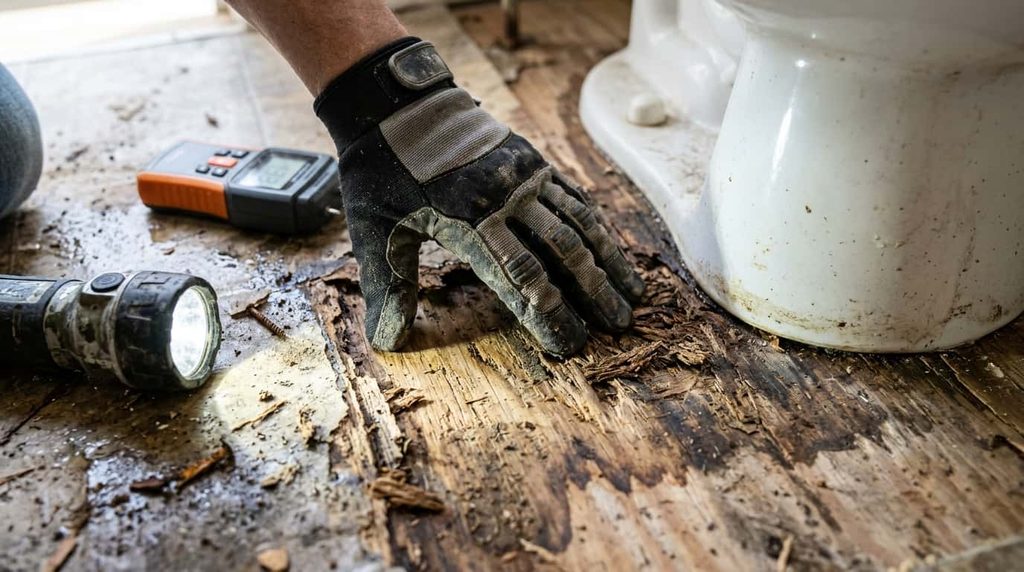
Also check the plumbing and wiring. Galvanized pipes can corrode inside. Older bathrooms may lack GFCI protection near water. Press on the floor near the toilet and tub. If it feels spongy, the subfloor may be damaged.
A quick visual check helps, but it does not replace a professional inspection. Write down what you find and add it to your bathroom remodel checklist so your contractor can price the real job.
Do You Need a Permit for a Bathroom Remodel?
Often, yes. If you change plumbing, wiring, or structure, you will likely need bathroom remodel permits. Cosmetic work, like paint or a new faucet, usually does not. Rules differ by city and county, so call your local building office before work begins.
Ask your contractor who applies for permits and who schedules inspections. Inspections usually happen before walls are closed, so timing matters. Unpermitted work can cause trouble when you sell your home or file an insurance claim. In Maryland, each county runs its own process, so check the one where you live. Add permit steps and inspection dates to your bathroom remodel checklist so nothing slips.
How Do You Plan a Bathroom Layout Without Overspending?
Keep the sink, toilet, and shower where they are if you can. Moving drains and water lines adds labor and may mean opening the floor. Spend on better storage, lighting, and use of space instead of relocating fixtures.
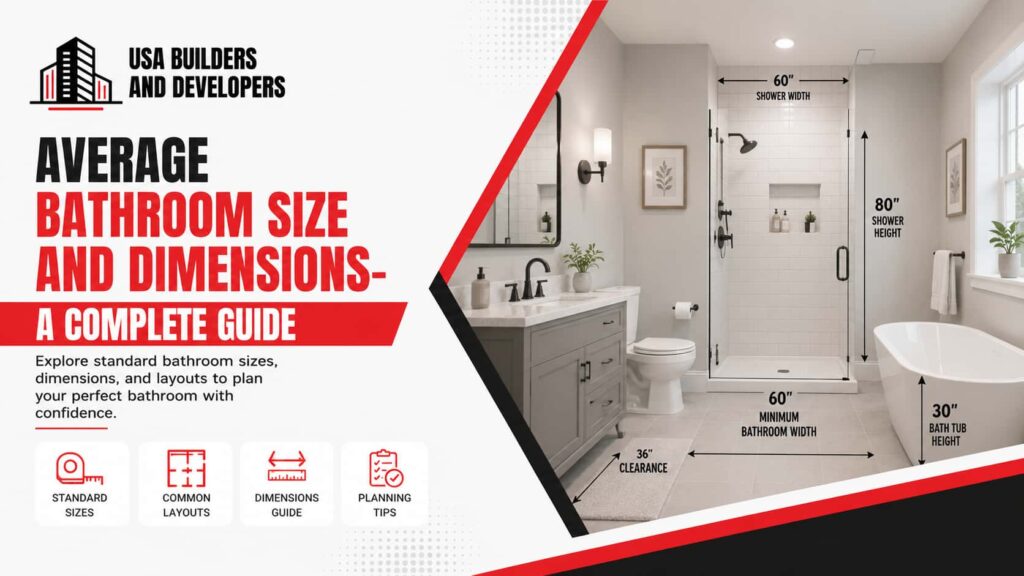
Building codes commonly require about 15 inches from the toilet’s center to the nearest wall and about 21 inches of open space in front. Showers also have minimum size rules. Check your local code before you finalize any plan.
Choose materials for a wet room first and for style second. Look for floor tile with a wet-area slip rating from the maker. Pick cabinets and trim that handle humidity. Confirm fixture sizes and rough-in measurements before you order anything. Every item on your bathroom remodel checklist should be checked against these measurements.
Should You Hire a Contractor or DIY Your Bathroom Remodel?
Hire a licensed pro for plumbing, electrical work, and waterproofing. DIY can work for painting, simple demolition, and some finishing if you have the skills and time. The right choice depends on risk, tools, and local rules.
| Task | DIY Possible? | Hire a Pro? |
|---|---|---|
| Painting and caulking | Usually yes | Optional |
| Like-for-like fixture swap | Often | Yes, if shutoffs or pipes are old |
| Tile installation | With practice | Recommended for showers |
| Waterproofing | Risky | Strongly recommended |
| Moving plumbing | Rarely | Yes |
| Electrical work | Check local rules | Yes, licensed electrician |
DIY can save labor costs, but mistakes behind a wall can cost far more to fix. Be honest about your skills. A mixed approach, where you handle painting and a pro handles the rest, is common. Note who does what on your bathroom remodel checklist.
What Questions Should You Ask a Bathroom Contractor?
Ask about license, insurance, similar projects, timeline, payment schedule, and who handles permits. Clear answers in writing show that a contractor is organized. Vague answers are a warning sign.
In Maryland, home improvement contractors must hold a license from the Maryland Home Improvement Commission. Always verify a license on the official state site. Then ask these questions:
- Can I see photos of bathrooms you have finished recently?
- Who applies for permits and books inspections?
- What does the written estimate include, and what does it leave out?
- How is payment split across the project?
- Who will be on site each day?
- How do you handle surprises, like rot behind the wall?
- What warranty do you offer on labor and materials?
Keep the answers with your bathroom remodel checklist. If you want a local team, see our bathroom remodeling services in Maryland.
How Do You Prepare Your Home Before Demolition?
Clear the room, cover nearby floors, seal doorways with plastic sheeting, and plan a backup bathroom. Good preparation limits dust, protects your home, and lowers stress once demolition begins.
Cover heating and cooling vents near the work area so dust does not spread. Take photos of the room before work starts. Find your main water shutoff and show it to everyone on the job. If your family is staying home, plan for a few weeks without that bathroom. Keep pets away from the work zone.
What Is the Correct Order of Work in a Bathroom Remodel?
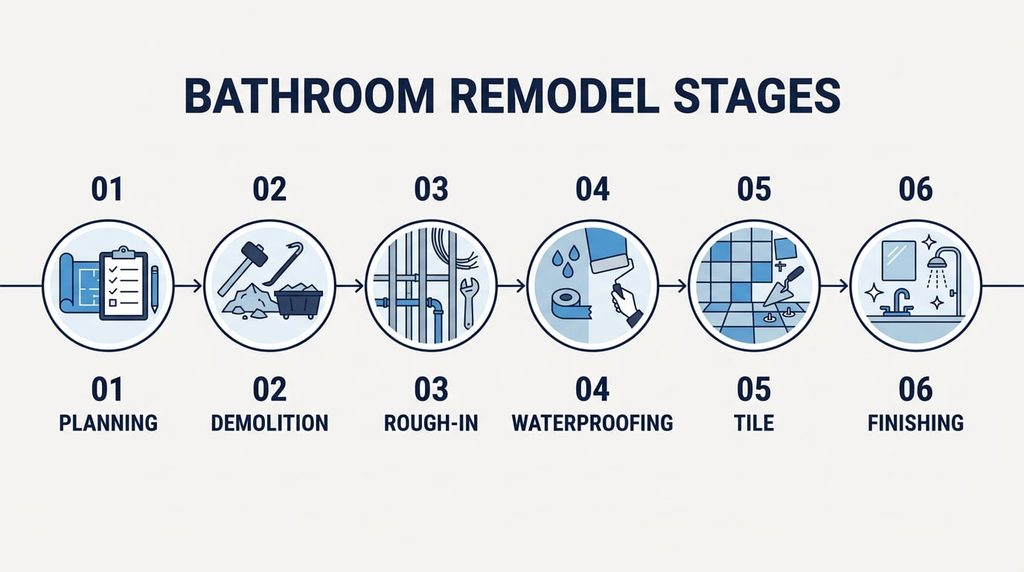
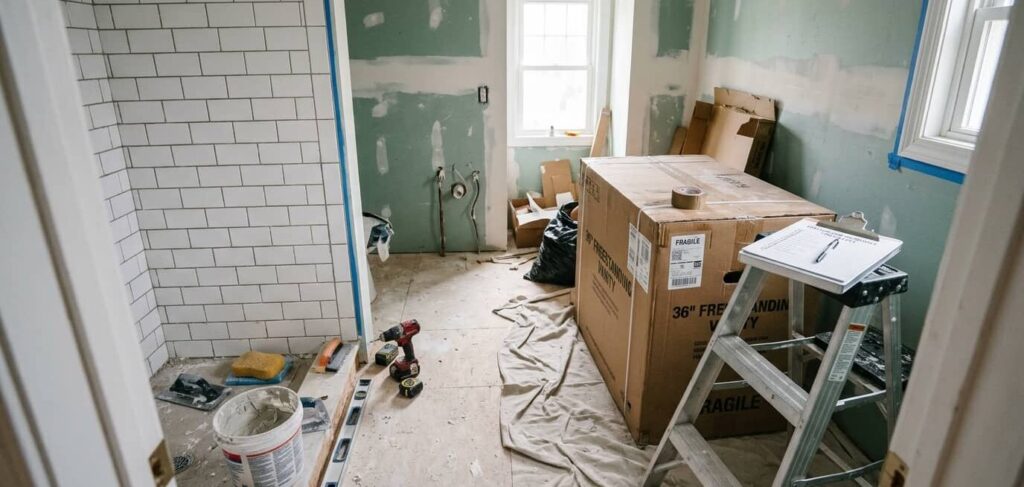
Demolition comes first. Then come repairs, rough plumbing and electrical work, inspections, insulation, waterproofing, wall and floor surfaces, fixtures, paint, and final testing. Each stage depends on the one before it.
Most full projects follow a bathroom remodel timeline of about three to eight weeks, but supply delays and hidden damage can stretch it. Treat these ranges as estimates only. Use this order as the backbone of your bathroom remodel checklist.
| Stage | Typical Work | Rough Duration |
|---|---|---|
| Planning | Budget, design, permits, orders | 1 to 4 weeks |
| Demolition and repairs | Tear-out, framing, subfloor fixes | 2 to 5 days |
| Rough-in | Plumbing, wiring, vent duct, inspection | 3 to 7 days |
| Waterproofing | Membrane or waterproof backer, curing | 2 to 5 days |
| Surfaces | Tile, grout, flooring, paint | 4 to 8 days |
| Finishing | Vanity, toilet, fixtures, final tests | 3 to 5 days |
How Do Weather and Climate Affect a Bathroom Remodel?
Humidity, temperature, and season change drying times, mold risk, and delivery schedules. In humid regions like Maryland, ventilation and waterproofing matter even more. Cold snaps also affect work near exterior walls and pipes.
Maryland summers are hot and humid. High humidity slows the curing of thinset, grout, and paint, and it makes mold easier to grow in an open wall. Winters bring a different risk. If supply pipes in an exterior wall are exposed during a freeze, they can burst, so keep the house heated. Storms can also delay delivery of tubs, vanities, and tile.
Follow each product maker’s guidance for temperature and humidity during curing. Add weather buffer days to your bathroom remodel checklist, especially if you plan the project for peak summer or deep winter.
How Do You Waterproof and Ventilate a Bathroom Properly?
Use a waterproofing system made for showers and install it exactly as the manufacturer directs. Add an exhaust fan sized for the room that vents outdoors. Controlling moisture is the best protection against mold and rot.
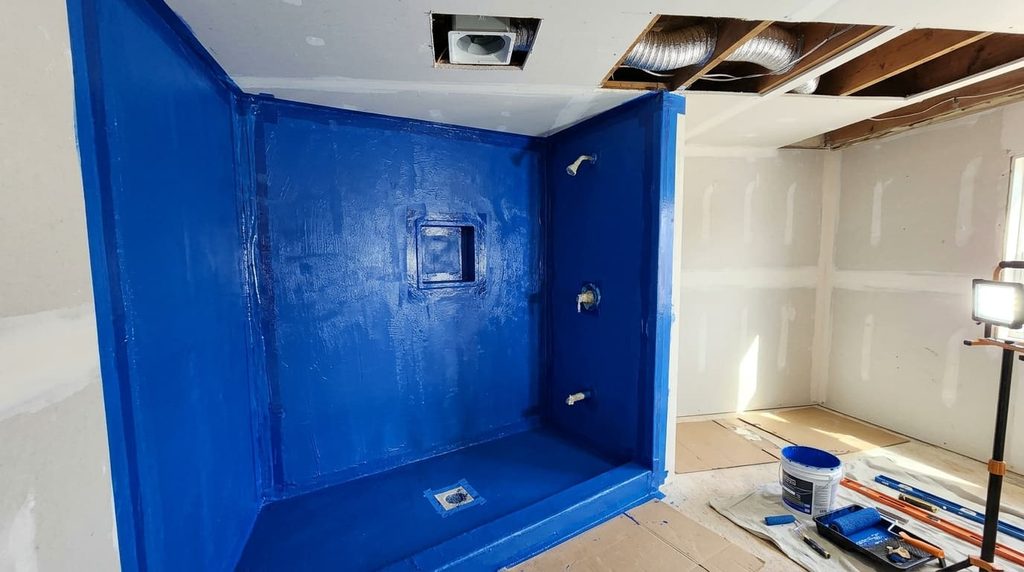
Good bathroom waterproofing relies on a continuous layer with sealed seams, corners, and the shower niche. Many installers run a flood test on a shower pan before tile goes on. Ask whether your installer does this. No product is magic. Careful installation matters as much as the brand.
For airflow, a common rule of thumb is about one cubic foot per minute for each square foot of floor in small bathrooms. Check the fan’s noise rating too, because a loud fan often gets turned off. The duct must reach the outdoors, not the attic. A timer or humidity sensor helps the fan run long enough. Make ventilation a fixed line on your bathroom remodel checklist.
What Are the Most Costly Bathroom Remodel Mistakes?
The costliest mistakes are skipping a budget buffer, ignoring hidden damage, weak ventilation, poor waterproofing, hiring on price alone, and changing plans after work starts. Most are avoidable with a clear plan and a good bathroom remodel checklist.
- No buffer: One surprise can stop the project if every dollar is already assigned.
- Hidden damage ignored: Covering rot or mold with new tile only hides the problem.
- Weak ventilation: Moisture stays, and mold follows.
- Rushed waterproofing: Leaks often show up months later, inside the wall.
- Lowest bid wins: A very low price may mean skipped prep or unlicensed workers.
- Late changes: Moving a fixture after rough-in costs extra time and money.
The best defense is to decide early and put each choice in writing. A well-kept bathroom remodel checklist makes late surprises much less likely.
How Often Should You Inspect Your Bathroom After a Remodel?
Check it closely after the first month, then every few months, with a full review once a year. Look for cracked caulk, loose tile, drips under the sink, and damp spots. Small repairs are cheap when you catch them early.
Run the fan and clean its cover a few times a year. Re-caulk gaps as soon as you see them. Keep your warranties, permit papers, and product care guides in one folder. If something fails during the warranty period, you will have the proof you need. Finish your bathroom remodel checklist by adding a yearly reminder to inspect.
What Is the Complete Bathroom Remodel Checklist You Can Print?
Here is a simple, printable bathroom remodel checklist that brings all the steps together. Work from top to bottom and tick each item as it is done.
Plan
- Set your goals and total budget
- Add a 10 to 20 percent buffer
- Check for lead, asbestos, rot, and old plumbing or wiring
- Finalize the layout
- Choose fixtures, tile, and fan, and confirm sizes
Prepare
- Verify the contractor’s license and insurance
- Get a written estimate and schedule
- Confirm permits and inspection dates
- Clear the room and protect your home
- Plan a backup bathroom
Build
- Demolish and inspect what is behind the walls
- Repair framing and subfloor
- Finish plumbing, wiring, and duct work
- Pass the rough-in inspection
- Waterproof and let it cure as directed
- Install tile, flooring, fixtures, paint, and trim
Finish
- Test every drain, fixture, light, and the fan
- Write a punch list for fixes
- Collect warranties and permit papers
- Schedule your first inspection after one month
Bathroom Remodel Checklist FAQs
How long does a bathroom remodel take?
Most full remodels take about three to eight weeks. The range depends on room size, how much plumbing moves, hidden damage, and product delivery times. Planning and permits can add time before work begins, so ask your contractor for a written schedule.
What is the most expensive part of a bathroom remodel?
Labor and plumbing are usually the biggest costs, especially when the layout changes. Custom tile, a large shower, or high-end fixtures can also raise the total. Keeping fixtures in place is one of the easiest ways to control cost.
What is the difference between a bathroom remodel and a renovation?
A remodel changes the layout or design of the room. A renovation restores or updates what already exists. People often use both words for the same job, and the same bathroom remodel checklist works for either one.
What should I do first in a bathroom remodel?
Set your goals and budget first, then check the room’s condition. Those two steps shape every later choice. After that, confirm permits and hire a contractor. Starting with demolition before this planning is a common and costly mistake.
Can I stay in my home during a bathroom remodel?
Usually yes, if you have another bathroom. Expect dust, noise, and short water shutoffs. If this is your only bathroom, ask your contractor about a phased plan or a temporary setup, and add it to your bathroom remodel checklist.
Final Thoughts
A bathroom remodel checklist will not build the room for you, but it keeps every choice in order. Plan the budget, check for hidden problems, choose for function, and inspect the hidden work before finishes go on. That is how you get a bathroom that lasts.
Remember that no guide replaces local codes, your product makers’ instructions, or a licensed professional’s advice. Use this bathroom remodel checklist as your base, then adjust it for your home.
Ready to Start Your Bathroom Remodel?
Want a team that follows a clear plan from the first measurement to the final inspection? [Brand Name] helps homeowners across Maryland plan and complete bathroom projects with fewer surprises. Request your free estimate today or explore our bathroom remodeling services, and bring this bathroom remodel checklist to your first meeting.
Have Questions? Call Us Now!
We’re here to help—quick answers, friendly service, anytime you need!



Contact USA Builders and Developers
🌐 Website: www.usabuildersanddevelopers.com
📍 Serving: Baltimore, Betheda, Silver spring, and Montgomery Maryland
📌 Address: 2144 Priest Bridge Court, Suite 8, Crofton, MD 21114, USA