
Sump Pump Installation Maryland: Costs, Benefits & Guide
Sump pump installation Maryland A sump pump can be an effective solution for homeowners to manage groundwater and water accumulation in their basements. Heavy rainfall and poor drainage can cause water to collect in the basement, increasing the risk of moisture problems and water damage.
In this guide, you’ll learn about sump pump types, installation costs, the installation process, maintenance tips, and how to choose the right sump pump for your Maryland home.
How Does a Sump Pump Work?
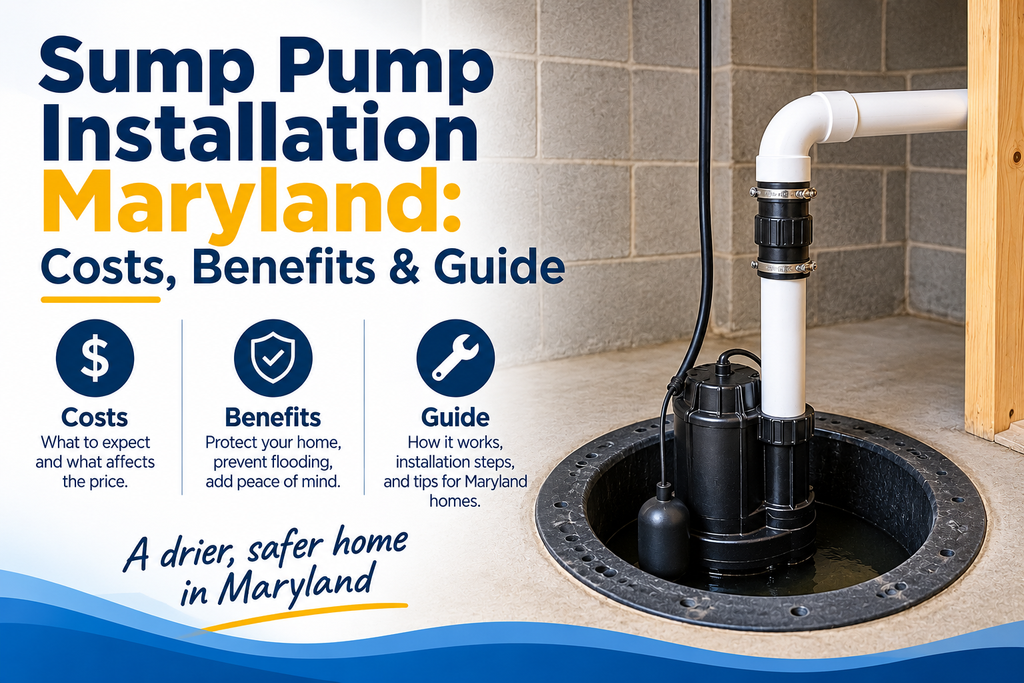
A sump pump works by collecting water in a sump basin and moving it away from the home.
Here is how the process works:
- Water enters the basin: Groundwater or drainage water flows into the sump pit.
- The water level rises: As water collects, it reaches the pump’s activation level.
- The pump turns on: A float switch or another control mechanism activates the pump.
- Water is discharged: The pump pushes water through a discharge pipe to an appropriate location away from the foundation.
- The pump switches off: Once the water level drops, the pump stops until more water collects.
The exact operation depends on the pump model and its control system.
Where Is a Sump Pump Installed?
Sump pumps are commonly installed in basements, crawl spaces, or other suitable low-lying areas where water tends to accumulate.
The sump basin is positioned to collect water effectively, and the discharge system must direct water to an appropriate location without allowing it to flow back toward the foundation.
The best location depends on your home’s foundation, drainage conditions, groundwater levels, and existing waterproofing system.
Why Do Maryland Homes Need Sump Pumps?
Maryland experiences seasonal rainfall and occasional heavy storms that can increase the risk of basement water intrusion. Homes with poor exterior drainage, groundwater pressure, or a history of basement flooding may benefit from a properly designed sump pump system.
However, a sump pump is not the right solution for every moisture problem. Leaking plumbing, roof drainage issues, and water entering through foundation cracks may require additional repairs.
Important: A sump pump helps manage collected water, but it does not replace proper grading, functional gutters, foundation drainage, or necessary waterproofing repairs.
How Does a Sump Pump Work?
A sump pump works by collecting excess water in a sump basin and pumping it away from your home’s foundation. The system helps prevent water from accumulating in basement areas where flooding or moisture problems may occur.
Understanding how a sump pump operates can help Maryland homeowners choose the right system and recognize when maintenance is needed.
1. Water Collects in the Sump Basin
Water from groundwater see page or a suitable drainage system enters the sump basin. The basin is usually installed at a low point where water can collect before reaching the basement floor.
2. A Switch Detects the Water Level
As the water level rises, a float switch or another sensor detects when the pump needs to operate. The switch activates the pump when the water reaches a preset level.
3. The Pump Removes the Water
Once activated, the pump draws water from the basin and pushes it through a discharge pipe. The pipe carries water away from the home to an appropriate discharge location.
4. Water Is Directed Away From the Foundation
The discharge system should move water far enough away from the foundation to prevent it from flowing back toward the basement. The discharge location must also comply with applicable local requirements.
5. The Pump Shuts Off Automatically
When the water level drops, the float switch or control system turns the pump off. The system remains inactive until the water rises again.
What Happens During a Power Outage?
Most standard sump pumps rely on electricity. If a storm causes a power outage, the pump may stop working when it is needed most.
Homeowners concerned about this risk can consider a compatible battery backup system or another suitable backup solution. Regular testing is important to confirm that both the primary pump and backup system operate correctly.
Signs Your Sump Pump May Not Be Working Properly
Watch for these warning signs:
- Unusual grinding or rattling noises
- The pump running continuously
- Water remaining in the basin after pumping
- Frequent on-and-off cycling
- Visible rust, damage, or leaks
- Basement water appearing during rainfall despite the pump operating
If you notice these issues, inspect the system safely and contact a qualified professional when necessary.
Tip for Maryland homeowners: Test your sump pump according to the manufacturer’s instructions, keep the basin free of debris, and check the discharge pipe regularly to help maintain reliable operation.
Signs Your Home Needs a Sump Pump
Water problems in your basement can cause damage to flooring, walls, stored belongings, and other parts of your home. Installing a sump pump may help manage groundwater and reduce the risk of flooding when water regularly collects around your foundation.
For Maryland homeowners, recognizing early warning signs can help prevent small moisture problems from becoming expensive repairs.
1. Water Collects on Your Basement Floor
If you regularly notice standing water in your basement, especially after heavy rainfall, groundwater may be entering through the foundation or floor joints.
A sump pump may help manage this water when it can be collected through a suitable drainage system. However, the source of the water should be identified before installation.
2. Your Basement Walls Feel Damp
Damp basement walls, water stains, and peeling paint may indicate moisture intrusion. These signs can result from groundwater pressure, poor exterior drainage, or cracks in the foundation.
A sump pump may help with groundwater problems, but wall leaks and other sources of moisture may require additional waterproofing or drainage repairs.
3. You Notice a Musty Smell
A persistent musty odor can indicate excess moisture or mold growth in your basement. Check for damp materials, condensation, hidden leaks, and areas with poor ventilation.
Although a sump pump can help manage certain water problems, it will not resolve every cause of basement humidity. Identify and address the source of the moisture.
4. Your Home Has Experienced Basement Flooding
If your basement has flooded during previous storms, consider evaluating your drainage system and foundation conditions.
A sump pump may be useful for homes where groundwater collects around the foundation. A professional assessment can help determine the right pump capacity, basin location, and discharge arrangement.
5. Water Appears After Heavy Rainfall
Maryland storms can produce significant rainfall in a short period. If water repeatedly enters your basement after storms, your home’s drainage system may not be managing the water effectively.
Inspect your gutters, downspouts, yard grading, and foundation drainage. A sump pump may provide additional protection if groundwater is contributing to the problem.
6. Your Property Has Poor Drainage
Homes built in low-lying areas or locations where water naturally collects may face increased drainage challenges.
If water consistently gathers near your foundation, correcting the exterior drainage may be necessary. Depending on the conditions, a sump pump can work along side an appropriate drainage system.
7. You Want Additional Protection for Your Basement
Even if your basement has not flooded, recurring groundwater concerns may justify a professional evaluation. A properly designed sump pump system can help manage water before it accumulates on the basement floor.
Homeowners concerned about power outages can also discuss battery backup options with their installer.
Should You Install a Sump Pump Immediately?
Not every damp basement needs a sump pump. The right solution depends on where the water comes from and how it enters your home.
Before proceeding with sump pump installation in Maryland, consider having a qualified professional inspect your foundation, drainage conditions, and existing waterproofing system.
Identifying the underlying problem first can help you choose a solution that addresses the cause rather than just the symptoms.
Types of Sump Pumps
Choosing the right sump pump is an important part of protecting your basement from excess water. Different pump designs offer different advantages depending on your basement layout, water levels, available space, and installation requirements.
For Maryland homeowners, the right choice depends on the property’s drainage conditions, the likelihood of basement flooding, and whether backup protection is needed.
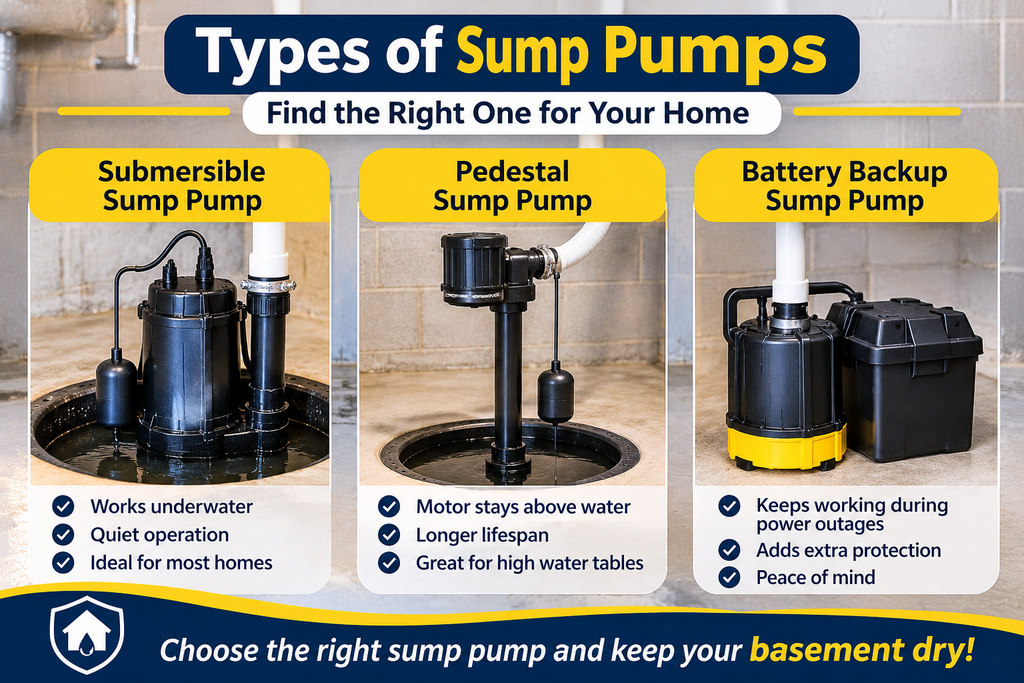
1. Submersible Sump Pumps
A submersible sump pump sits inside the sump basin and operates underwater. Its motor and pump components are designed for submerged operation.
Benefits:
- Generally quieter because the pump operates inside the basin.
- Compact design saves space in the basement.
- Suitable for many residential basement drainage systems.
- Less exposed to accidental contact than some pedestal designs.
Potential drawbacks:
- Repairs may require removing the pump from the basin.
- The pump must be suitable for the basin’s dimensions and water conditions.
- Installation and replacement costs vary by model and project.
Submersible pumps are a common option for homeowners who want a compact system that operates inside a sump pit.
2. Pedestal Sump Pumps
A pedestal sump pump has a motor mounted above the sump basin, while the intake extends down into the water.
Benefits:
- The motor remains above the water.
- Maintenance access can be easier for some models.
- The design may suit narrow sump basins.
- Some models can provide a long service life when properly maintained.
Potential drawbacks:
- Usually noisier than submersible pumps.
- The exposed motor takes up space above the basin.
- The installation must protect the motor and electrical components from moisture.
Pedestal pumps may be suitable for certain existing sump pits or situations where access for maintenance is a priority.
3. Battery Backup Sump Pumps
A battery backup sump pump provides additional protection when the primary pump cannot operate because of a power outage or certain equipment failures.
Benefits:
- Can help manage water during an electrical outage.
- Provides an additional layer of protection during storms.
- Some systems include alarms or monitoring features.
- Can work alongside a compatible primary sump pump.
Potential drawbacks:
- The battery requires regular inspection and replacement according to the manufacturer’s instructions.
- Backup runtime depends on battery capacity, pump demand, and water conditions.
- The system adds equipment and maintenance costs.
Because storms can cause power outages, Maryland homeowners who rely on a sump pump should consider whether backup protection is appropriate for their property.
4. Water-Powered Backup Sump Pumps
Water-powered backup pumps use municipal water pressure to remove water from a sump basin. They do not rely on a battery or household electricity to operate the backup mechanism.
Benefits:
- Can operate during a power outage if the required water supply and pressure remain available.
- Do not require a backup battery.
- May provide an alternative for homes with suitable plumbing arrangements.
Potential drawbacks:
- Require an appropriate water supply and sufficient pressure.
- Use additional municipal water while operating.
- May be unsuitable where local plumbing rules or water conditions prevent installation.
- Must be installed according to applicable plumbing requirements and manufacturer instructions.
A qualified professional can determine whether this type of backup system is permitted and practical for your home.
Which Sump Pump Is Best for Maryland Homes?
There is no single best sump pump for every property. A submersible pump may suit a homeowner who wants quieter operation, while a pedestal pump may work better in some existing sump pits.
If your basement is at risk during storms or power outages, a compatible backup system may also be worth considering.
Before choosing a pump, evaluate these factors:
- Water volume: How much water typically enters the sump basin?
- Pumping capacity: Can the pump handle the expected flow and required discharge height?
- Basin size: Will the pump fit properly in the available space?
- Power supply: Is backup protection necessary?
- Maintenance: Are replacement parts and servicing readily available?
- Installation requirements: Does the system meet applicable local requirements?
Selecting the correct pump and installing it properly can help manage groundwater and reduce the risk of basement flooding.
Tip: Ask a qualified sump pump installer to assess your basement and recommend a system suited to your home’s drainage conditions.
Benefits of Sump Pump Installation
Installing a sump pump can help Maryland homeowners manage groundwater and reduce the risk of basement flooding. When properly selected and installed, a sump pump can support your home’s drainage system and help protect areas below ground level.
Here are some important benefits of sump pump installation.
1. Helps Prevent Basement Flooding
One of the main benefits of a sump pump is its ability to remove collected water before it overflows onto the basement floor.
During periods of heavy rainfall, groundwater may accumulate around your foundation. A properly installed sump pump can help manage this water when it enters a suitable drainage system.
However, the pump’s effectiveness depends on correct sizing, installation, and discharge arrangements.
2. Protects Your Belongings
Basements often contain furniture, appliances, storage boxes, electronics, and other valuable items. Water intrusion can damage these belongings and lead to expensive replacements.
A sump pump can help reduce the risk of water accumulating in your basement. For additional protection, avoid storing valuable items directly on the floor in areas with a history of flooding.
3. Helps Manage Basement Moisture
Excess groundwater can contribute to damp conditions in basement areas. By removing collected water, a sump pump can help control one potential source of moisture.
However, it does not eliminate every cause of basement dampness. Condensation, plumbing leaks, and water entering through walls may require separate solutions.
4. Reduces the Risk of Mold-Related Problems
Persistent moisture can create conditions that support mold growth on drywall, wood, carpeting, and other materials.
By helping manage groundwater, a sump pump may reduce one source of moisture that contributes to these problems.
If mold is already present, you must address the moisture source and properly clean or remove affected materials. A sump pump alone will not remove existing mold.
5. Supports Foundation Protection
Water collecting around a foundation can contribute to water intrusion and, under certain conditions, increase hydrostatic pressure against basement walls.
A properly designed drainage system that includes a sump pump may help manage groundwater around the foundation. Nevertheless, foundation cracks, structural damage, and other drainage issues may require additional repairs.
6. Provides Greater Peace of Mind During Storms
Maryland homeowners may worry about basement flooding during periods of heavy rain.
A properly maintained sump pump can provide additional protection by automatically removing water from its basin. Homeowners can also consider a compatible backup system to help maintain protection during power outages.
Regular testing is important because a failed pump or blocked discharge pipe may prevent the system from working when needed.
7. May Support Your Home’s Resale Appeal
A well-maintained basement drainage system can be a useful feature for prospective buyers, particularly in homes where groundwater management is important.
Although a sump pump does not guarantee a higher property value, evidence of proper installation, maintenance, and basement moisture management may help reassure buyers.
Is Sump Pump Installation Worth It?
Sump pump installation may be worthwhile if your basement regularly experiences groundwater intrusion, standing water, or flooding related to drainage conditions.
Before installing a system, identify the source of the water and determine whether a sump pump is the appropriate solution. Correcting gutter, downspout, grading, or foundation drainage problems may also be necessary.
For Maryland homeowners, combining a properly selected sump pump with appropriate drainage measures can help manage basement water more effectively.
Sump Pump Installation Cost in Maryland
Understanding the cost of sump pump installation in Maryland can help homeowners plan their basement waterproofing budget. The total price depends on the type of pump, labor, sump pit requirements, drainage conditions, and whether additional equipment is needed.
According to 2026 cost estimates, sump pump installation in Maryland can range from approximately $700 to $3,200 for many projects, while more complex drainage systems may cost significantly more. In Baltimore, reported installation costs vary widely depending on the project. These figures are estimates, not guaranteed contractor quotes.
Average Sump Pump Installation Costs
The following table provides general budgeting estimates for different sump pump projects.
| Installation Type | Estimated Cost |
|---|---|
| Replacing a pump in an existing sump pit | $375–$750 |
| New installation with a sump pit and discharge line | $1,275–$3,200 |
| Complete system with drainage and backup equipment | $3,200–$6,400 |
| Battery backup system | Additional cost may apply |
These estimates are based on published cost guides and can vary according to the property, equipment, and work required.
Factors That Affect Sump Pump Installation Costs
Several factors can influence the final price of your project.
1. Type of Sump Pump
Submersible pumps sit inside the sump basin and are generally quieter. Pedestal pumps have their motors above the basin and may be easier to access for maintenance. Equipment prices and installation requirements vary by model.
2. Sump Pit Installation
If your home already has a suitable sump pit, replacing the pump may be relatively straightforward. Installing a new pit can require cutting concrete, excavating the floor, fitting a basin, and restoring the surrounding surface.
3. Labor Costs
The installation price depends on the time and skill required. Difficult access, extensive drainage work, and complicated discharge arrangements can increase labor costs.
4. Discharge Pipe and Drainage
The discharge pipe must carry water to an appropriate location away from the foundation. New piping, check valves, and drainage improvements may increase the project cost.
5. Battery Backup System
A battery backup can help operate a sump pump during a power outage. However, the additional equipment, installation, and future battery replacement add to the overall cost.
6. Electrical Work and Permits
Some projects require electrical upgrades, permits, or inspections. Requirements and fees depend on the work involved and the local jurisdiction, so confirm these details before installation begins.
How to Save Money on Sump Pump Installation
Maryland homeowners can make informed decisions and manage costs by following these tips:
- Request written estimates from multiple qualified contractors.
- Compare the pump capacity and equipment included in each quote.
- Ask whether the price includes the sump pit, discharge piping, and cleanup.
- Address existing drainage problems before they cause more damage.
- Consider backup protection if your home is vulnerable to flooding during power outages.
- Follow the manufacturer’s maintenance recommendations to help reduce avoidable repairs.
Avoid selecting a pump based on price alone. A system that is incorrectly sized or installed may not manage your home’s water problems effectively.
Is Professional Sump Pump Installation Worth the Cost?
Professional installation can help ensure that the pump is appropriately sized, the basin is correctly positioned, and the discharge system works as intended.
For homes with recurring basement water problems, a professional assessment can also identify whether additional drainage or waterproofing work is needed.
Step-by-Step Sump Pump Installation Process
Proper sump pump installation is important for managing groundwater and helping protect your basement from flooding. The process involves choosing a suitable location, preparing a sump basin, installing the pump, and directing water away from your home’s foundation.
Although the exact steps depend on your property and pump model, here is how a typical installation works.
Step 1: Inspect the Basement and Drainage Conditions
Before installation begins, inspect the basement to determine where water enters and where it collects. Check for standing water, foundation cracks, damp walls, and signs of previous flooding.
A professional can help determine whether a sump pump is appropriate or whether the problem requires foundation repairs, plumbing repairs, or exterior drainage improvements.
Step 2: Choose the Right Location
The sump basin should be positioned where it can collect water effectively. The ideal location depends on the basement layout, foundation design, existing drainage system, and groundwater conditions.
Before excavating, check for underground utilities, plumbing, electrical wiring, and other potential obstructions.
Step 3: Prepare the Sump Pit
If the home does not already have a suitable sump pit, installation may require cutting through the concrete basement floor and excavating space for the basin.
The basin is placed and secured according to the pump manufacturer’s instructions and the project’s requirements. This step requires care to avoid damaging utilities or compromising the foundation.
Step 4: Install the Sump Pump
Once the basin is ready, the pump is positioned according to the manufacturer’s instructions.
The installer checks that the pump sits securely, the intake remains unobstructed, and the float switch can move freely. The pump must also be compatible with the basin dimensions and expected water volume.
Step 5: Connect the Discharge Pipe
The discharge pipe carries water from the sump basin to an appropriate location outside the home.
The installer should ensure that the piping is properly connected and supported. A suitable check valve may be installed to help prevent discharged water from flowing back into the basin.
The discharge location must comply with applicable local requirements and should not direct water toward the foundation or a neighboring property.
Step 6: Connect the Power Supply
The sump pump needs an appropriate electrical supply that meets the manufacturer’s requirements and applicable electrical codes.
Because basement areas can become wet, electrical safety is particularly important. Electrical work should be completed by a qualified professional when required.
If a backup system is included, the installer should also verify its connections and operating requirements.
Step 7: Test the Pump
After installation, the system should be tested according to the manufacturer’s instructions.
The installer checks that:
- The pump activates at the appropriate water level.
- Water flows through the discharge pipe.
- The float switch operates without obstruction.
- The pump shuts off when the water level drops.
- The discharge system does not leak or send water back toward the foundation.
Any unusual noise, vibration, or cycling should be investigated before the installation is considered complete.
Step 8: Complete the Installation and Review Maintenance
After testing, the installer completes the surrounding work and explains how to maintain the system.
Ask for information about routine testing, cleaning the basin, inspecting the discharge pipe, and maintaining any battery backup.
Keep the manufacturer’s instructions and warranty information in a safe place for future reference.
Should You Install a Sump Pump Yourself?
Some homeowners may be comfortable replacing an existing pump when the basin and plumbing are already suitable. However, installing a new sump pit can involve concrete cutting, excavation, drainage planning, and electrical considerations.
For a new installation, a qualified professional can help reduce the risk of incorrect sizing, drainage problems, and installation mistakes.
Important: Never enter a flooded basement if electrical hazards may be present. Have the area assessed safely before inspecting or servicing equipment.
Where Should a Sump Pump Be Installed?
Choosing the right location is an important part of sump pump installation. The pump needs to collect water effectively and discharge it safely away from your home’s foundation.
For Maryland homeowners, the ideal location depends on the basement layout, groundwater conditions, existing drainage system, and areas where water tends to accumulate.
1. In the Lowest Suitable Area of the Basement
Sump pumps are often installed at a low point in the basement where water naturally collects. This allows water to flow toward the sump basin instead of spreading across the floor.
However, the lowest point is not always the best location. The installer must also consider the foundation structure, underground utilities, and drainage design.
2. Near an Existing Drainage System
Some homes have interior drainage channels that direct groundwater toward a sump basin. Installing the pump where these channels collect water can help the system work efficiently.
If your home already has a sump pit, a professional can inspect its condition and determine whether it is suitable for a new pump.
3. In a Basement With Recurring Water Problems
If water repeatedly enters a particular basement area, a professional may recommend a sump basin in a suitable location to collect that water.
Before installation, identify the source of the moisture. Plumbing leaks, surface water, and groundwater intrusion can require different solutions.
4. In a Suitable Crawl Space
Some homes have crawl spaces where groundwater accumulates. Depending on the design and conditions, a sump pump may be installed to help manage collected water.
The installation must be suitable for the available space and provide safe access for inspection and maintenance. A vapor barrier and other moisture-control measures may also be necessary.
5. Where Discharge Water Can Be Safely Directed
The location of the pump is only part of the installation. The discharge pipe must carry water to an appropriate outlet away from the foundation.
The discharge arrangement should prevent water from flowing back toward the house and must comply with applicable local requirements. Avoid directing water onto neighboring properties or areas where it could create drainage problems.
What Should You Check Before Choosing a Location?
Before installing a sump pump, consider these factors:
- Water collection: Does water naturally collect in this area?
- Foundation safety: Could excavation affect the foundation or underground structures?
- Utility locations: Are plumbing lines, electrical wiring, or other utilities present?
- Access: Can the pump be inspected and serviced easily?
- Power supply: Is a suitable electrical supply available?
- Discharge route: Can water be directed safely away from the home?
- Local requirements: Are permits or inspections necessary for the proposed work?
Can a Sump Pump Be Installed Anywhere in the Basement?
No. The pump must be positioned where it can collect water effectively without interfering with the foundation or utilities.
A poorly chosen location may leave some areas unprotected or make maintenance difficult. A professional assessment can help identify the most suitable location for your home’s drainage conditions.
Tip for Maryland homeowners: Before installing a sump pump, have the basement and drainage system inspected. Proper placement and discharge planning are essential for reliable operation.
Common Sump Pump Installation Mistakes
A sump pump can help protect your basement from water damage, but improper installation may reduce its effectiveness. Homeowners in Maryland should understand common installation mistakes to help keep their basements dry and their drainage systems working properly.
1. Choosing the Wrong Pump Size
A sump pump that is too small may struggle to remove water during heavy rainfall, while an unnecessarily large pump may cycle on and off too frequently. Choose a pump based on your home’s water conditions, sump basin size, and drainage requirements.
2. Installing the Pump in the Wrong Location
The sump pit should be positioned where groundwater naturally collects, often at a low point in the basement. Installing it in an unsuitable location may prevent the pump from collecting water effectively. A professional can help determine the best location for your home.
3. Directing Water Too Close to the Foundation
The discharge pipe carries water away from your home. If water is released too close to the foundation, it may seep back into the basement and cause recurring moisture problems. Make sure the discharge location follows local requirements and directs water away from the foundation without creating drainage problems for neighboring properties.
4. Ignoring the Check Value
Many sump pump systems use a check valve to prevent discharged water from flowing back into the sump pit. Without a properly installed valve where required, the pump may need to work harder and cycle more frequently. Follow the pump manufacturer’s installation instructions.
5. Overlooking Electrical Safety
Sump pumps require a reliable power supply, particularly during storms when flooding risks may increase. Improper wiring or unsafe electrical connections can create serious hazards. Use a properly installed electrical outlet and follow applicable electrical codes. Consult a qualified electrician when necessary.
6. Forgetting About Backup Protection
Heavy rain and severe storms can sometimes cause power outages. If the sump pump loses power, water may continue collecting in the basement. Depending on your home’s needs, a battery backup system or another suitable backup solution can provide additional protection.
7. Skipping Testing and Maintenance
Even a correctly installed sump pump may fail if it is not maintained. Test the system according to the manufacturer’s instructions, check the discharge pipe for blockages, and listen for unusual noises. Regular maintenance can help identify potential problems before they become serious.
The key takeaway: Proper sump pump installation involves more than placing a pump in a pit. Correct sizing, drainage, electrical safety, and regular maintenance all help improve system reliability and reduce the risk of basement water damage.
Sump Pump Maintenance Tips
Regular maintenance helps keep your sump pump working properly and may reduce the risk of unexpected basement water problems. Maryland homeowners should pay particular attention to their sump pump before periods of heavy rain and during seasons when groundwater levels may rise.
1. Test Your Sump Pump Regularly
Follow the manufacturer’s instructions to test whether your sump pump starts and removes water correctly. For many systems, you can carefully pour water into the sump pit until the float activates the pump. Make sure the water drains properly and the pump switches off afterward.
2. Keep the Sump Pit Clean
Dirt, gravel, and other debris can interfere with the pump’s operation. Inspect the sump pit periodically and remove debris according to the manufacturer’s guidance. Before cleaning, disconnect power safely and never reach into a pit while the pump is connected to electricity.
3. Check the Discharge Pipe
Inspect the discharge pipe for visible blockages, leaks, or damage. Make sure the outlet is not obstructed and that water can flow away from your home’s foundation. During cold Maryland winters, check for freezing or ice buildup that could restrict water flow.
4. Inspect the Float Switch
The float switch tells the pump when to turn on and off. If it becomes stuck against the pit wall or surrounding objects, the pump may not operate correctly. Check that the float can move freely without obstruction.
5. Listen for Unusual Noises
Grinding, rattling, or other unusual sounds may indicate a blockage, worn component, or mechanical issue. If your pump runs continuously, fails to start, or makes unfamiliar noises, investigate the problem promptly and contact a professional when necessary.
6. Consider a Backup Power System
Power outages can happen during severe storms. A compatible battery backup sump pump or another suitable backup system can provide additional protection when the primary pump cannot operate because of a power failure.
Check the backup system regularly, including its battery condition and charging status, according to the manufacturer’s recommendations.
7. Schedule Professional Inspections
A professional inspection can help identify problems that may not be obvious during a routine visual check. An installer can examine the pump, discharge line, check valve, electrical connections, and overall system operation.
Maintenance tip: Keep a record of testing, repairs, and battery replacements. Regular checks can help Maryland homeowners identify potential problems early and maintain a more reliable basement drainage system.
When to Hire a Professional Sump Pump Installer
Installing a sump pump requires proper planning, drainage knowledge, and attention to electrical safety. Although some homeowners may be comfortable with basic maintenance, professional installation can help ensure the system is suitable for the property’s water conditions.
If you live in Maryland and want to protect your basement from water damage, consider hiring a professional sump pump installer in the following situations.
1. Your Basement Has Frequent Water Problems
If water regularly collects in your basement after heavy rain, you may need more than a sump pump. A professional can assess the source of the water and determine whether you need a sump pump, foundation drainage improvements, or additional waterproofing measures.
2. You Need a New Sump Pit
Installing a sump pit may involve cutting into a concrete basement floor, excavating soil, and managing drainage. Professional assistance can help ensure the pit is installed in a suitable location and that the surrounding area is handled correctly.
3. Your Existing Pump Keeps Failing
A sump pump that repeatedly stops working, runs continuously, or struggles to remove water may have a mechanical problem or an incorrectly sized system. A professional can identify the cause and recommend repair or replacement.
4. You Need Electrical or Backup Power Work
Sump pumps depend on a reliable power supply. If you need a new electrical connection, wiring changes, or a backup power system, consult a qualified professional who can follow applicable electrical codes and manufacturer requirements.
5. You Are Experiencing Foundation or Drainage Issues
Cracks in basement walls, persistent dampness, and water entering through floor joints may indicate broader drainage or foundation problems. A sump pump can help manage collected groundwater, but it may not resolve every source of water intrusion.
A professional assessment can help determine the appropriate solution for your property.
6. You Want a Reliable, Long-Term Solution
Professional installation can help ensure that the pump, sump basin, discharge piping, and other components work together correctly. It can also help you understand the maintenance your system requires.
Choosing a Sump Pump Installation Company in Maryland
Before hiring an installer, consider the following:
- Experience: Ask about experience with basement drainage and sump pump systems.
- Written estimate: Request a detailed estimate covering equipment, labor, and any additional work.
- Proper licensing: Verify applicable contractor and electrical licensing requirements for your location.
- Warranty: Ask about equipment warranties and workmanship coverage.
- Maintenance guidance: Choose a professional who explains how to test and maintain your system.
The bottom line: A properly selected and installed sump pump can help manage groundwater and reduce the risk of basement water damage. Working with a qualified professional can help you choose a solution that suits your Maryland home’s specific needs.
Frequently Asked Questions About Sump Pump Installation in Maryland
1. How much does sump pump installation cost in Maryland?
The cost depends on the pump type, installation complexity, labor, and whether a new sump pit or drainage system is required. Additional expenses may include a battery backup system or electrical work. Request a detailed estimate to understand the total cost for your home.
2. Is a sump pump necessary for every Maryland home?
No. Not every home needs a sump pump. However, it may be beneficial for homes with recurring basement water, high groundwater levels, poor drainage, or a history of flooding.
3. How long does sump pump installation take?
A straightforward replacement may take a few hours, while a new installation requiring concrete cutting, excavation, or additional drainage work may take longer. The exact timeline depends on the property’s conditions and the installation requirements.
4. How long does a sump pump last?
A sump pump’s lifespan depends on its quality, usage, maintenance, and operating conditions. Pumps that operate frequently may wear out sooner than those used occasionally. Regular inspections can help identify signs of wear before the pump fails.
5. Does a sump pump prevent basement flooding?
A sump pump can reduce the risk of basement flooding caused by groundwater collecting around or beneath the foundation. However, it cannot prevent every type of flooding, such as water entering through damaged walls, plumbing leaks, or severe surface-water intrusion.
6. Should I install a battery backup sump pump?
A battery backup can be useful if your home is vulnerable to basement flooding during storms or power outages. It provides an additional layer of protection when the primary pump cannot operate because electricity is unavailable.
7. Where should a sump pump be installed?
A sump pump is generally installed in a sump basin at a low point where groundwater naturally collects. The best location depends on your basement layout, drainage conditions, and foundation.
8. How often should I maintain my sump pump?
Follow the manufacturer’s maintenance recommendations and test the system periodically, especially before seasons with heavy rainfall. Inspect the sump pit, float switch, discharge pipe, and backup system for potential problems.
9. Can I install a sump pump myself?
Some experienced homeowners may be able to handle a simple replacement, but a new installation can involve concrete cutting, excavation, drainage planning, and electrical considerations. Professional installation may be the safer and more practical option for complex projects.
10. How can I tell if my sump pump needs replacement?
Common warning signs include unusual noises, frequent cycling, continuous operation, visible damage, failure to remove water, or repeated breakdowns. A professional can determine whether repair or replacement is the better option.
Final Thoughts on Sump Pump Installation in Maryland
Protecting your basement from water damage starts with understanding your home’s drainage needs. Sump pump installation in Maryland can be an effective way to manage groundwater, particularly for homes that experience basement moisture or water accumulation after heavy rainfall.
Choosing the right pump, installing it in the correct location, directing discharge water away from the foundation, and performing regular maintenance can help improve your system’s reliability.
However, a sump pump is not a complete solution for every water problem. If your basement has persistent leaks, foundation cracks, or recurring flooding, consider a professional assessment to identify the underlying cause.
Whether you need a new sump pump, a replacement, or help addressing basement water concerns, choosing the right solution can help protect your home’s foundation and interior.
Need Help Protecting Your Basement?
USA Builders & Developers can help you explore solutions for your home’s construction and water management needs. Contact the team to discuss your project and request an estimate.
Get your free estimate today!
Call: +1 443 551 0006
Request an Estimate: Visit the USA Builders & Developers Get a Free Estimate page.
Take the next step toward a drier, better-protected basement with a solution suited to your property.
Have Questions? Call Us Now!
We’re here to help—quick answers, friendly service, anytime you need!