A roof does more than protect your home from rain and weather. It also affects your home appearance, energy performance, and long-term value.
Over time, Maryland roofs can develop black streaks, algae, moss, lichen, dirt, and other organic buildup. These stains are especially common in shaded or damp areas.
Soft wash roof cleaning is a low-pressure cleaning method designed to remove this buildup without using the aggressive force of traditional pressure washing.
For Maryland homeowners, it can be a safer way to restore a dirty roof while protecting delicate roofing materials.
What Is Soft Wash Roof Cleaning?
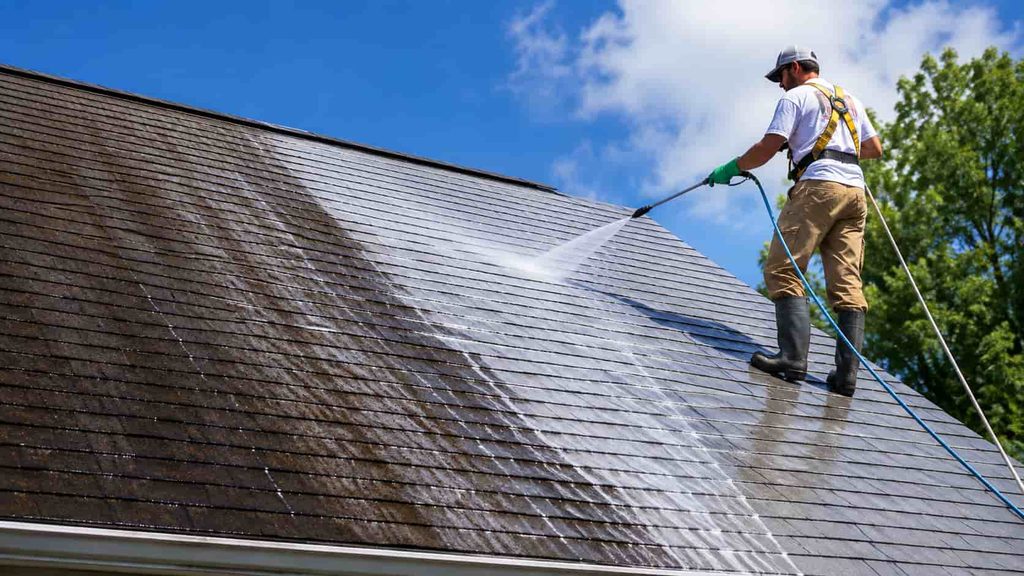
Soft wash roof cleaning is a roof-cleaning method that combines low water pressure with a specialized cleaning solution.
Instead of relying on high-pressure water to blast stains away, the cleaning solution does most of the work. It breaks down algae, moss, mold, mildew, and other organic contaminants. A controlled low-pressure rinse then removes the loosened material.
This approach is particularly useful for roofing materials that can be damaged by aggressive pressure.
A professional soft wash service should begin with an inspection. The roof material, age, condition, slope, surrounding landscaping, and type of buildup should all be considered before cleaning begins.
Why Do Maryland Roofs Get Black Streaks and Algae?
Maryland has a humid climate with plenty of seasonal moisture. Roofs that receive limited sunlight can stay damp for longer periods. Trees can make the problem worse by creating shade and dropping leaves, pollen, and other organic debris onto the roof.
The dark streaks commonly found on asphalt shingles are often associated with algae growth. Moss and lichen can also develop when moisture remains on the roof for extended periods.
These problems are not only cosmetic. Heavy organic growth can hold moisture against roofing materials and make the roof appear older and more worn than it actually is.
Is Soft Wash Roof Cleaning Safe for Your Roof?
When performed correctly, soft washing is generally much gentler on roofing materials than high-pressure washing.
Asphalt shingles contain protective granules that help shield the underlying material from weather and sunlight. Aggressive pressure can loosen or remove these granules.
Soft washing reduces that mechanical force. However, “soft wash” does not automatically mean every roof can be cleaned the same way. Different roofing materials require different cleaning approaches.
The contractor should consider:
- Roof material
- Roof age
- Existing damage
- Roof pitch
- Algae, moss, or lichen growth
- Nearby landscaping
- Gutters and drainage
- Manufacturer recommendations
A professional inspection is therefore an important part of the cleaning process.
Soft Wash vs Pressure Washing
One of the biggest questions homeowners have is whether they should pressure wash their roof.
In most cases, aggressive pressure is not the right approach for delicate roofing surfaces.
| Feature | Soft Wash Roof Cleaning | Pressure Washing |
|---|---|---|
| Cleaning method | Cleaning solution + low pressure | High-pressure water |
| Best use | Roofs and delicate surfaces | Hard surfaces |
| Effect on shingles | Lower mechanical stress | Can damage granules |
| Organic growth | Treated at the source | Mainly blasted away |
| Water pressure | Low | High |
| Suitable for asphalt shingles | Generally preferred | Usually not recommended |
| Long-term maintenance | Designed for controlled cleaning | Can create surface damage if misused |
Pressure washing has useful applications on hard surfaces such as concrete and some masonry.
A roof is different. Using the same high-pressure method on shingles that is used on a driveway can create unnecessary damage.
How Does Soft Wash Roof Cleaning Work?
A professional roof cleaning service usually follows several controlled steps.
1. Roof Inspection
The process starts with an inspection. The technician checks the roof for algae, moss, lichen, stains, debris, damaged shingles, exposed areas, flashing problems, and other visible concerns.
This helps determine whether cleaning is appropriate and which method is safest.
2. Protecting the Property
Roof cleaning involves more than the roof itself. Plants, landscaping, siding, windows, doors, gutters, outdoor furniture, and other nearby surfaces should be protected before treatment begins.
Technicians should also consider where runoff will travel.
3. Applying the Cleaning Solution
A suitable roof-cleaning solution is applied at low pressure. The solution is selected according to the roofing material and type of buildup.
Its purpose is to break down organic growth instead of forcing contaminants off the roof with excessive water pressure.
4. Allowing the Solution to Work
The solution needs adequate contact time. This allows it to work on algae, moss, mildew, and other organic buildup.
The exact treatment time can vary depending on the roof, weather conditions, product being used, and severity of contamination.
5. Low-Pressure Rinsing
Once the treatment has done its job, the roof can be rinsed using controlled pressure.
The objective is to remove loosened contaminants while minimizing stress on the roofing surface.
6. Final Inspection
The roof is inspected again after cleaning. The technician checks the surface for remaining stains, debris, visible damage, and areas that may need additional treatment.
A final inspection also provides an opportunity to identify maintenance issues that homeowners may not have noticed from the ground.
What Does Soft Wash Roof Cleaning Remove?
A properly performed soft wash treatment can help remove or control several common roof contaminants, including:
- Black algae streaks
- Moss
- Lichen
- Mildew
- Organic stains
- Dirt
- Surface grime
- Pollen
- Environmental buildup
The exact results depend on the roof condition and the type and severity of the growth.
Heavy moss may require additional preparation before treatment. Older roofs may also show permanent staining even after organic growth has been removed.
Benefits of Soft Wash Roof Cleaning
Soft wash roof cleaning offers several benefits that help protect your roof, improve its appearance, and support its long-term performance.
1. Protects Delicate Roofing Materials
Low-pressure cleaning reduces the mechanical force placed on shingles and other roofing surfaces.
This is especially important for asphalt shingles, which can lose protective granules when exposed to excessive pressure.
2. Removes Organic Growth
Soft washing is designed to treat the organisms responsible for many roof stains rather than simply blasting away their visible surface.
3. Improves Curb Appeal
Black streaks, green moss, and dark patches can make a home look neglected.
A clean roof can significantly improve the appearance of the entire property.
4. Supports Longer Roof Life
Regular roof maintenance can help prevent organic buildup from becoming a larger maintenance problem.
Cleaning does not make an old roof new, but it can be an important part of responsible roof care.
5. Helps Prepare a Roof for Inspection
A heavily stained roof can make it difficult to evaluate the visible condition of the surface.
Cleaning can provide a clearer view of shingles and other roofing components.
6. Avoids Aggressive Pressure
The main advantage is controlled cleaning.
The goal is to use chemistry and low pressure instead of excessive mechanical force.
What Types of Roofs Can Be Soft Washed?
Soft washing is not a one-size-fits-all process.
1. Asphalt Shingles
Asphalt shingles are one of the most common applications for soft washing.
The low-pressure approach helps reduce the risk of disturbing protective granules while treating algae and other organic staining.
The cleaning method should still follow appropriate roofing and manufacturer recommendations.
2. Metal Roofs
Metal roofs can collect dirt, pollen, algae, and environmental staining.
The cleaning approach should account for the roof coating, finish, fasteners, and metal type.
A contractor should use a solution and rinse method appropriate for the specific metal roofing system.
3. Tile Roofs
Tile roofs require care because individual tiles can crack or break.
Walking on tiles and using excessive pressure can create unnecessary damage.
A controlled cleaning method can help reduce those risks.
4. Slate Roofs
Natural slate can be durable, but individual pieces can crack under improper handling.
A professional should inspect the slate and determine whether cleaning is appropriate before beginning work.
5. Flat Roofs
Flat roofing systems have different drainage and material considerations.
Standing water, blocked drains, debris, and surface contamination should be assessed before cleaning.
The cleaning method must be compatible with the specific flat-roof membrane.
How Often Should You Soft Wash a Roof in Maryland?
There is no single schedule that works for every Maryland home. A roof surrounded by mature trees may develop organic growth faster than a roof exposed to direct sunlight.
Your cleaning schedule can depend on:
- Amount of shade
- Nearby trees
- Roof orientation
- Local moisture conditions
- Roofing material
- Existing algae or moss
- Previous cleaning
- Roof age
For many homeowners, inspecting the roof annually is a sensible maintenance habit. Professional cleaning may be needed every few years, while heavily shaded properties may require more frequent attention.
The important point is not to wait until moss or algae becomes severe.
When Should You Clean Your Roof?
Look for these warning signs:
- Black streaks on shingles
- Green moss patches
- Gray or dark discoloration
- Lichen growth
- Accumulated leaves
- Heavy debris
- Blocked gutters
- Stains spreading across multiple roof sections
- Areas that remain damp or shaded
If organic growth is visible from the ground, it is worth having the roof evaluated. Early maintenance can be easier and less expensive than dealing with damage after prolonged neglect.
How Much Does Soft Wash Roof Cleaning Cost in Maryland?
The cost of soft wash roof cleaning varies from one property to another. There is no reliable single price for every Maryland home.
A professional estimate may consider:
- Roof size
- Roof pitch
- Number of roof sections
- Building height
- Roofing material
- Amount of algae or moss
- Roof accessibility
- Landscaping around the home
- Required property protection
- Additional treatment needs
Some online estimates place residential roof cleaning projects in the several-hundred-dollar range, but actual pricing can vary significantly by property and service provider.
For this reason, homeowners should compare written estimates instead of choosing a contractor based only on the lowest advertised price.
Does Soft Washing Damage Shingles?
Properly performed soft washing is intended to minimize damage to roofing materials. The biggest concern with roof cleaning is excessive mechanical force.
High-pressure water can disturb asphalt-shingle granules and may cause other problems when used incorrectly.
However, a cleaning solution can also cause problems if it is improperly selected, mixed, applied, or allowed to contact surrounding property.
That is why professional soft wash roof cleaning should include:
- Roof inspection
- Correct solution selection
- Controlled application
- Plant and property protection
- Appropriate dwell time
- Controlled rinsing
- Final inspection
The method matters, but the technician experience matters too.
Is DIY Soft Wash Roof Cleaning a Good Idea?
DIY roof cleaning may look simple from the ground.
It is not. Roof work involves fall hazards, chemical exposure, runoff control, and the possibility of damaging expensive roofing materials.
A homeowner can also accidentally use the wrong product or apply excessive pressure.
Professional cleaning is especially worth considering when the roof is:
- Steep
- High
- Difficult to access
- Older
- Heavily covered with moss
- Made from delicate materials
- Surrounded by sensitive landscaping
If you cannot safely access the roof, do not climb onto it simply to clean a stain.
How to Prepare for Professional Roof Cleaning
You can make the process easier by preparing your property before the crew arrives.
Move Outdoor Items
Move patio furniture, decorations, toys, and other movable objects away from the cleaning area.
Clear Access Points
Make sure technicians can safely access the areas around the house.
Close Windows
Keep windows closed during the cleaning process.
Tell the Contractor About Sensitive Plants
Point out valuable plants, garden beds, or landscaping that require special attention.
Share Roofing Information
If you know the roof age, material, previous treatments, or manufacturer, provide that information to the contractor.
What Happens After Soft Wash Roof Cleaning?
A clean roof still needs maintenance.
After the service:
- Inspect the roof periodically from the ground.
- Keep gutters and downspouts clear.
- Trim branches that create excessive shade.
- Remove heavy debris before it accumulates.
- Watch for returning algae or moss.
- Schedule professional inspections when needed.
- Avoid using high-pressure equipment on the roof.
Good maintenance can help keep the roof cleaner between professional treatments.
Soft Wash Roof Cleaning vs Roof Replacement
Not every stained roof needs replacement. Black streaks or algae growth can make a roof look much older than it actually is. Cleaning may improve the appearance of a roof when the underlying roofing system is still in good condition.
However, cleaning cannot repair:
- Extensive leaks
- Rotten decking
- Missing shingles
- Major storm damage
- Severe structural problems
- Advanced roof deterioration
A professional roof inspection should determine whether cleaning or repair is appropriate.
If the roof is nearing the end of its service life, cleaning should not be used as a substitute for necessary replacement.
Common Roof Cleaning Mistakes to Avoid
Avoiding these common mistakes can help protect your roof and prevent unnecessary damage during cleaning.
- Choosing Only by Price: The cheapest service may not provide the best protection or workmanship.
- Using Too Much Pressure: High pressure can damage roofing materials.
- Ignoring the Roof Material: Different roof materials need different cleaning methods.
- Skipping Property Protection: Cleaning solutions can affect plants, siding, and windows.
- Cleaning Without an Inspection: Existing roof damage should be checked first.
- Expecting Every Old Stain to Disappear Immediately: Some discoloration may remain after treatment. Results depend on the roof’s age, material, condition, and severity of the stains.
Choosing a Soft Wash Roof Cleaning Company in Maryland
Before hiring a roof cleaning company, ask a few important questions.
- Do you use low-pressure cleaning for roofs?
The contractor should clearly explain the cleaning method. - How will you protect my landscaping?
Ask how they will protect plants, siding, windows, gutters, and control runoff. - What type of cleaning solution do you use?
Make sure the solution is suitable for your specific roofing material. - Will you inspect the roof first?
A pre-cleaning inspection helps identify existing damage and determine the right cleaning method. - Are you insured and properly qualified?
Always verify appropriate insurance and qualifications before hiring a roof cleaning company.
Why Choose USA Builders and Developers for Roof Cleaning in Maryland?
USA Builders and Developers provides professional roofing services for Maryland homeowners. Our approach focuses on safe roof care, careful preparation, and appropriate cleaning methods.
Before cleaning, the roof should be evaluated to determine its condition and the most suitable approach.
The goal is simple:
Remove unwanted buildup without treating your roof like a concrete driveway.
Our roofing team can help Maryland homeowners address algae, moss, staining, and other roof-maintenance concerns while also identifying visible issues that may require repair.
For homeowners who need broader roof maintenance or repair, our roofing services provide additional support beyond cleaning.
Frequently Asked Questions
What is soft wash roof cleaning?
Soft wash roof cleaning uses a specialized cleaning solution and low-pressure application to treat algae, moss, mildew, and other organic buildup on roofing surfaces.
Is soft wash roof cleaning safe for asphalt shingles?
When performed correctly and according to appropriate roofing guidance, soft washing is generally much gentler on asphalt shingles than aggressive pressure washing.
How often should I have my roof soft washed in Maryland?
There is no universal schedule. Many homes benefit from periodic professional cleaning, while shaded or tree-covered properties may need attention more frequently.
How much does soft wash roof cleaning cost?
Pricing depends on roof size, material, pitch, condition, access, and the amount of buildup. A professional inspection is the best way to receive an accurate estimate.
Can soft washing remove black streaks from my roof?
Soft washing can treat the algae commonly associated with black roof streaks. The final appearance depends on the age and condition of the roofing material.
Can I soft wash my roof myself?
Roof cleaning involves fall hazards, chemical handling, runoff, and potential material damage. Professional service is generally safer, especially for steep, high, old, or heavily contaminated roofs.
Final Thoughts
A dirty roof does not always mean you need a new roof.
Black streaks, algae, moss, and environmental buildup can often be addressed through proper maintenance. Soft wash roof cleaning provides a low-pressure alternative to aggressive roof washing and is designed to clean delicate roofing surfaces with less mechanical force.
For Maryland homeowners, the right cleaning schedule depends on the roof material, surrounding trees, shade, moisture, age, and existing buildup.
The best approach is to inspect the roof first, use a method appropriate for the material, protect the surrounding property, and avoid unnecessary pressure.
With proper maintenance and professional care, your roof can stay cleaner, look better, and remain better protected for years to come.
Need Help with Your Next Project? Call USA Builders Today!
We’re here to help—quick answers, friendly service, anytime you need!