That brown stain on your ceiling is only the tip of the problem. By the time water shows up inside, it has often traveled across the roof deck, soaked the insulation, and started weakening the layers above. Many owners patch the stain, then watch the leak return after the next storm.
Why? Because the real damage is rarely where the water drips. The good news is that the cause is one of a few well-known failures, and each has a proven fix. Keep reading to learn where leaks start, how TPO roof repair works, which quick fixes make things worse, and what affects the price.
TPO Roofing in Plain Words
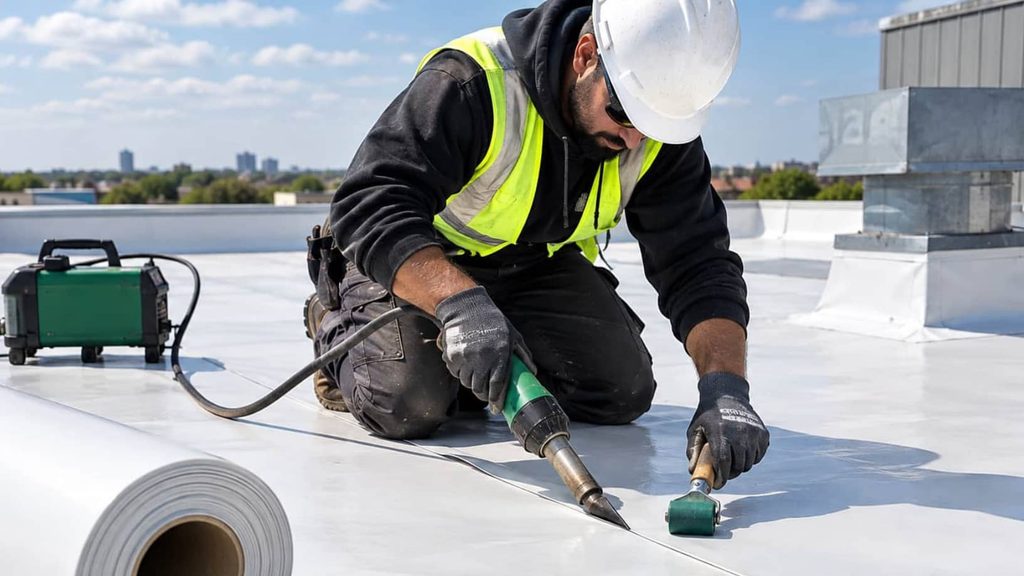
TPO stands for Thermoplastic Polyolefin. It is a single layer of flexible plastic sheet, usually white, used on flat and low-slope commercial roofs. The white color reflects sunlight, which helps keep the building cooler.
The sheets are joined with hot-air welds, so the whole roof acts like one waterproof surface. Under the sheet there is usually insulation and a support layer. Around pipes, vents, and edges, a material called flashing seals the gaps.
TPO is strong and popular, but it is not damage-proof. When one weld, one patch of sheet, or one flashing detail fails, water finds a way in.
Why Small Leaks Grow Fast
Many owners wait because the leak looks small. But roof water does not stay in one place. It slips under the sheet, soaks the insulation, and travels along the roof deck. It may drip inside many feet away from the real damage.
Wet insulation is the real danger. It stops protecting your building, adds weight, and can cause mold. Fixing a hole costs little. Replacing a large area of soaked insulation does not.
Spots worth checking
- Seams where two sheets meet
- Pipes, vents, curbs, and HVAC units
- Roof edges and corners
- Drains, scuppers, and nearby spots
- Any area where water stays after rain
Leak Causes and Their Cures
Cuts, holes, and punctures
Foot traffic, dropped tools, hail, and fallen branches can cut the sheet. Small holes are simple. The roofer cleans the spot, dries it, and welds a TPO patch over the hole with a hot-air tool. This is the easiest kind of TPO roof repair, as long as the insulation below is still dry. Large tears need a professional.
Weld lines coming apart
Look for loose edges, thin gaps, or small wrinkles along a weld. Seams fail because of age, poor welding, or movement in the roof. The fix is to clean the area and weld the seam again with the right machine. Tar and caulk may look like a cheap shortcut, but they peel off and make later work harder.
Worn-out edge and pipe seals
Flashing protects the weak spots around pipes, curbs, vents, and roof edges. If a leak keeps returning to the same place, flashing is a top suspect. The damaged part should be replaced or properly resealed, not just covered.
Puddles that stay
A puddle that stays for more than a day or two is a warning. It adds stress to the roof and can hide damage. Clear drains and scuppers first. If water still collects, the roof may have a slope problem or crushed insulation below.
Membrane shrinking back
Roofs move with heat and cold. Over time, the sheet can pull away from edges or pipes. Never try to stretch it back by hand. A roofer must find the cause, then fix the detail so it stays in place.
Ripples and raised spots
A few wrinkles are normal. A bubble or wrinkle that is new or growing may mean trapped moisture or movement under the sheet. Take photos and have it checked.
Clogged gutters and drains
Leaves, dirt, and trash stop water from leaving the roof. Clean drains are the cheapest way to protect your roof, and many leaks begin with a clogged drain.
Warning Signs You Can Spot Yourself
- Brown stains on ceilings or walls
- Dripping after rain
- A musty smell or visible mold
- Open seams, holes, or torn areas
- Puddles that do not dry
- The same leak coming back again and again
Quick Fixes That Backfire
Avoid these
- Covering a leak with tar or caulk
- Patching a dirty or wet surface
- Leaving wet insulation in place
- Walking on the roof without safe paths
- Waiting for the next storm to see what happens
A rushed patch can trap water inside the roof. Later, proper TPO roof repair becomes harder and more expensive, because the crew must remove the bad fix first.
Inside a Professional Repair Visit
- Inspect the whole roof. The crew checks seams, flashing, drains, and edges, and may scan for hidden moisture.
- Clean and dry the area. Dirt and water stop a repair from bonding.
- Repair the damage. This may mean a welded patch, a re-welded seam, or new flashing.
- Check the insulation. Wet sections are removed and replaced.
- Test the result. The crew checks that the fix is watertight and that nearby areas are sound.
Do It Yourself or Hire Help?
You can do simple, safe jobs: clear leaves from drains, look for damage from a safe spot, and take photos after storms. That is a smart habit.
The TPO roof repair itself is different. TPO needs special cleaners, matching materials, and welding tools. A wrong patch can look fine and still leak. For seams, flashing, large tears, and anything near wet insulation, hire a professional. Roof work is also a fall risk, so safety matters.
What Decides the Price Tag
No honest contractor can give an exact price without seeing the roof. Every building is different, and the damage under the sheet matters most. These are the main things that change the bill:
| Factor | Why it matters |
|---|---|
| Size of the damage | Bigger areas need more material and labor |
| Number of spots | Many small repairs add up |
| Seams or flashing | These need detailed hand work |
| Roof access | Hard-to-reach roofs take more time |
| Wet insulation | Removing and replacing it raises the cost |
| Drainage problems | Causes must be fixed, not just symptoms |
As a rough idea, a small spot fix often costs a few hundred dollars, while a large job with wet insulation can reach thousands. These numbers are only a guide. The price of TPO roof repair depends on what is hiding under the sheet, so an inspection is the only way to get a real quote. Early action almost always costs less.
Patch It or Start Over?
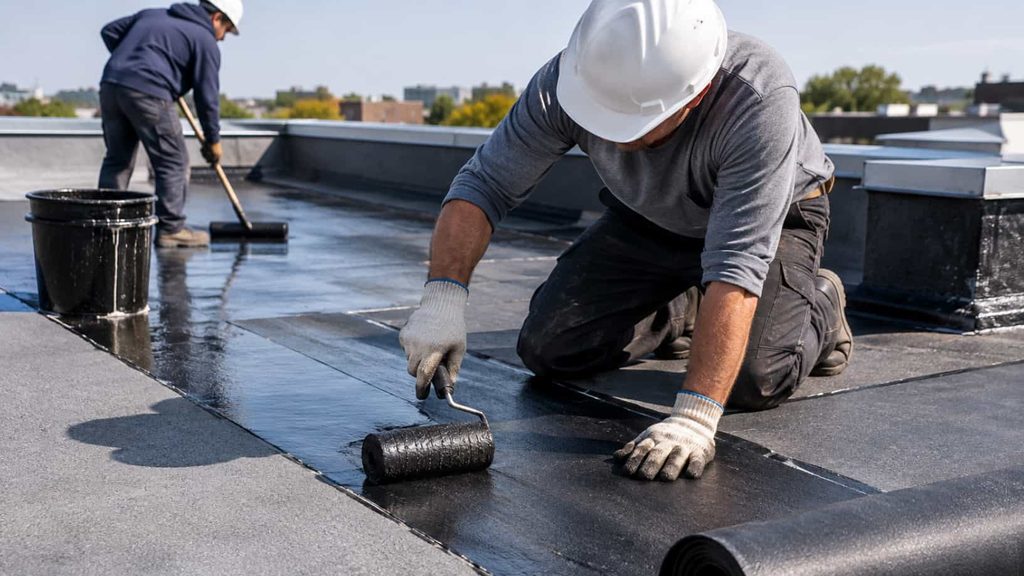
TPO roof repair makes sense when the damage is small and the rest of the roof looks healthy. Replacement may be smarter if you see:
- Leaks in many different places
- Wide areas of worn, cracked, or thin sheet
- Large areas of wet insulation
- A roof that is very old
If leaks keep appearing, paying for TPO roof repair again and again can add up to more than a new roof. Ask your contractor for an honest comparison of both options.
How Many Years Can You Expect?
There is no exact number. Life span depends on the quality of the material, how well it was installed, the weather, foot traffic, drainage, and care. A well-kept roof can serve a building for many years. A neglected one can fail early. Regular checks and quick TPO roof repair are the best way to get more years from your roof.
Your Year-Round Roof Checklist
- Twice a year: inspect the roof, and check again after big storms
- Every season: clear drains, scuppers, and downspouts
- Always: use walk pads where people must walk
- After service visits: check around HVAC units and pipes for damage
- Once a year: trim branches that hang over the roof
- Any time: fix small damage right away
These habits cost little and mean less TPO roof repair in the long run.
How Local Seasons Wear Down Your Roof
Maryland buildings face heavy rain, snow, strong wind, humid summers, and big temperature swings. Rain tests your drains. Winter cold shows weak spots in seams. Summer sun and heat slowly age the sheet. Fast TPO roof repair after a storm keeps small problems from turning into inside leaks and business downtime. This is true for buildings in Baltimore, Bethesda, Silver Spring, and Montgomery County.
Questions to Ask Before You Hire
- Ask if they have worked on TPO systems before
- Ask how they find the source of a leak
- Ask for a written scope of work and a clear price
- Confirm they carry proper license and insurance
- Ask about their warranty on repair work
Be careful with anyone who promises TPO roof repair without going on the roof. A good contractor explains the problem, shows you photos, and tells you when repair is enough.
Get a Roof Check Across Maryland
USA Builders and Developers provides TPO roof repair for commercial buildings across Baltimore, Bethesda, Silver Spring, Montgomery County, and other parts of Maryland. We check the sheet, seams, flashing, and drainage, then give you a clear plan to fix the problem.
Reach out today for a roof inspection before the next storm.
Questions Owners Often Ask
How fast should I fix a leaking TPO roof?
As soon as you can. Water keeps spreading under the sheet, and early TPO roof repair costs much less than replacing soaked insulation.
Will a patch last?
Yes, if the surface is clean and the patch is welded on correctly. A proper repair can last for years.
Can I walk on my roof to look for damage?
Only if it is safe, and only on walk paths. A professional can inspect it without causing more harm.
Does a wrinkle mean I need a new roof?
Not always. Watch it, and call a pro if it grows or if you see leaks.
Is a leak always where the stain is?
No. Water often travels far under the sheet before it drips inside.
Final Thoughts
A leaking TPO roof will not fix itself. Holes, open seams, and loose flashing only get worse with time, and every rainy day lets more water into your building. The earlier you act, the smaller and cheaper the fix will be.
- Find the true source of the leak first
- Do not cover damage with tar or caulk
- Keep drains clear and check your roof twice a year
- Call a professional for seams, flashing, and large tears
Quick action protects your building, your stock, and your budget. If you see a leak or damage, get your roof checked today. For trusted TPO roof repair in Maryland, call USA Builders and Developers.
Leaking Roof? Get It Checked Today.
USA Builders and Developers will find the source of the leak and give you a clear repair plan.
[Request a Free Roof Inspection]
Have Questions? Call Us Now!
We’re here to help—quick answers, friendly service, anytime you need!


Contact USA Builders and Developers
🌐 Website: www.usabuildersanddevelopers.com
📍 Serving: Baltimore, Betheda, Silver spring, and Montgomery Maryland
📌 Address: 2144 Priest Bridge Court, Suite 8, Crofton, MD 21114, USA