Finding reliable commercial painting contractors near me can feel difficult when several companies offer similar services. A commercial painting project is not just about choosing a color and putting paint on the walls. Proper preparation, suitable materials, skilled application, scheduling, and cleanup all affect the final result.
A fresh coat of paint can make an office, retail store, apartment building, restaurant, or other commercial property look cleaner and more professional. It can also help protect surfaces from everyday wear and weather exposure.
If you are planning a commercial painting project in Maryland, this guide explains what to look for, which services you may need, how the process works, and what can affect the cost.
What Are Commercial Painting Contractors?
Commercial painting contractors are professionals who handle painting projects for business and commercial properties.
Their work can include much more than applying paint. Depending on the property and project, commercial painters may prepare surfaces, repair minor imperfections, apply primer, paint interior or exterior areas, and complete final touch-ups.
Commercial painting projects may include:
- Office buildings
- Retail stores
- Restaurants
- Apartment buildings
- Commercial facilities
- Warehouses
- Property management buildings
- Common areas
- Other business properties
The size and condition of each property are different, so a professional contractor should evaluate the project before recommending a painting solution.
Why Does Commercial Painting Matter?
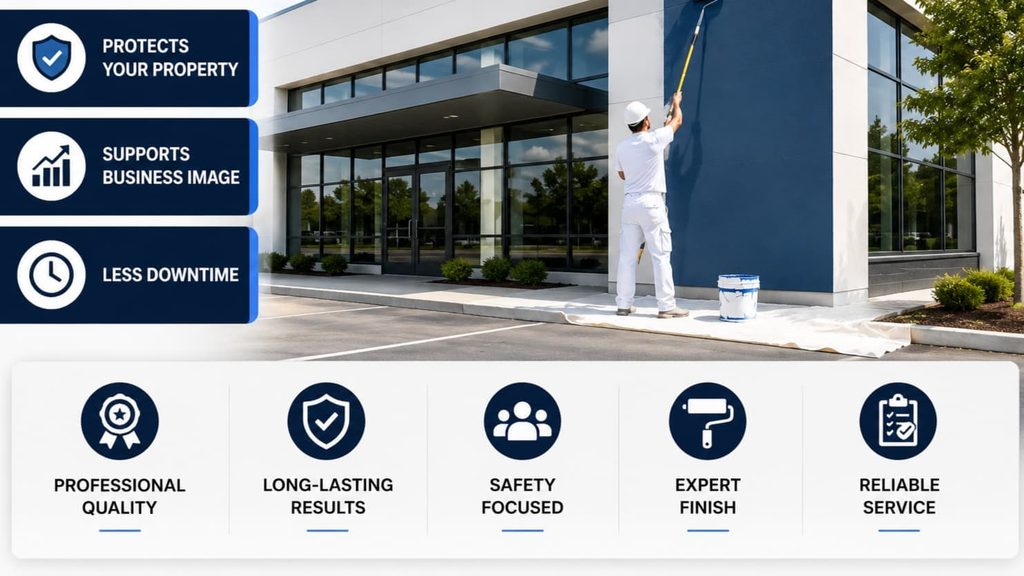
Your building is part of your business’s image. Customers, employees, tenants, and visitors notice the condition of the property as soon as they arrive.
Faded colors, peeling paint, stains, scuffed walls, and damaged surfaces can make a property look neglected.
Professional painting can help create a cleaner and more welcoming appearance while giving worn surfaces a fresh finish.
For exterior areas, the right preparation and coating can also help surfaces handle normal exposure to Maryland weather.
Commercial Painting Services You May Need
A professional commercial painting company can provide different services depending on your property’s condition and goals.
Commercial Interior Painting
Interior painting can refresh offices, hallways, lobbies, common areas, retail spaces, and other business interiors.
Before painting, surfaces may need cleaning, patching, sanding, caulking, or priming. Proper preparation helps create a smoother finish and reduces problems such as uneven coverage or premature peeling.
Interior commercial painting can be useful when:
- Walls look worn or outdated
- Paint is peeling or damaged
- A business is changing its branding
- A property is being renovated
- New tenants are moving into a space
- Common areas need to be refreshed
Commercial Exterior Painting
Exterior surfaces deal with rain, sunlight, humidity, temperature changes, and everyday environmental exposure.
Commercial exterior painting can refresh the appearance of a building while helping maintain exposed surfaces.
Depending on the property, exterior painting may involve:
- Surface cleaning
- Scraping loose paint
- Sanding
- Minor surface preparation
- Priming
- Exterior coating application
- Final inspection and touch-ups
The condition of the existing surface should be considered before selecting a coating or starting the project.
Surface Preparation
Surface preparation is one of the most important parts of a commercial painting project.
Painting over dirt, loose paint, cracks, or poorly prepared surfaces can affect adhesion and the appearance of the finished coating.
Preparation may include cleaning the surface, removing loose material, sanding rough areas, filling minor imperfections, and applying primer where needed.
A contractor should explain what preparation is included in your estimate before work begins.
How to Choose the Right Commercial Painting Contractors
Choosing a contractor based only on the lowest price can create problems later. Instead, compare the company, project scope, preparation, materials, schedule, and overall value.
1. Look for Commercial Experience
Ask whether the contractor has experience working on commercial properties similar to yours.
Commercial projects can involve larger areas, business schedules, occupied spaces, and coordination with other work. Experience with these conditions can make project planning easier.
2. Check the Scope of Work
A detailed scope should explain what the contractor plans to do.
Look for information about:
- Areas being painted
- Surface preparation
- Primer
- Number of coats
- Paint or coating type
- Repairs
- Cleanup
- Final touch-ups
A clear scope helps you compare estimates more accurately.
3. Ask About Materials
Different surfaces and locations may require different types of paint or coatings.
Ask your contractor which products are recommended and why. The right choice may depend on whether the surface is interior or exterior, how much traffic it receives, and its existing condition.
4. Review Previous Projects
Ask to see examples of previous commercial painting work when available.
Look closely at the finish, edges, coverage, preparation, and overall appearance. A contractor’s previous projects can help you understand the quality you can expect.
5. Discuss Your Business Schedule
A commercial property may need to remain operational during painting.
Before hiring a contractor, discuss:
- Working hours
- Access to the property
- Areas that must remain open
- Customer or employee traffic
- Phased work
- Expected completion date
Good scheduling can help reduce unnecessary disruption.
6. Request a Detailed Estimate
Do not compare contractors based only on the final price.
A lower estimate may have a different scope of work, fewer preparation steps, different materials, or fewer coats.
Ask each company to explain exactly what is included.
How Does the Commercial Painting Process Work?
While every project is different, most professional commercial painting projects follow a similar process.
Step 1: Project Consultation
The contractor reviews your property and discusses your goals.
This is the time to explain which areas need painting, your preferred colors, business requirements, and scheduling needs.
Step 2: Property Assessment
The surfaces are evaluated for condition, damage, peeling paint, stains, cracks, and other issues that may affect the project.
This assessment helps determine the preparation and materials required.
Step 3: Surface Preparation
The work area is prepared before painting begins.
Depending on the surface, preparation can include cleaning, scraping, sanding, patching, caulking, and priming.
Step 4: Painting and Coating
Once the surface is ready, the selected paint or coating is applied according to the project requirements.
The number of coats can vary depending on the existing surface, color, product, and desired finish.
Step 5: Inspection and Touch-Ups
After the main painting work is complete, the finished areas should be reviewed for coverage, edges, missed areas, and other visible issues.
Any necessary touch-ups can then be completed.
Step 6: Cleanup and Completion
The work area is cleaned, materials are removed, and the completed project is reviewed with the property owner or designated representative.
How Much Does Commercial Painting Cost?
The cost of commercial painting varies from one project to another. There is no single price that applies to every commercial property.
Several factors can influence your final estimate.
Property Size
A larger building generally requires more paint, preparation, equipment, and labor than a smaller space.
Surface Condition
Walls and exterior surfaces that are peeling, damaged, dirty, or heavily worn may require additional preparation before painting.
Type of Paint
Different paints and coatings have different characteristics and price points. Your contractor can recommend an option based on the surface and project requirements.
Number of Coats
Some projects require primer and multiple finish coats to achieve the desired coverage and appearance.
Accessibility
High walls, difficult-to-reach areas, and large exterior surfaces may require additional equipment and labor.
Project Complexity
Multiple colors, detailed areas, extensive preparation, repairs, and tight scheduling requirements can all affect the total project cost.
The best way to get an accurate price is to have a contractor evaluate the property and provide a detailed estimate.
When Should a Commercial Building Be Repainted?
There is no universal repainting schedule for every commercial property. The right time depends on the type of surface, previous paint job, exposure, traffic, and overall condition.
Look for visible warning signs such as:
- Fading or discoloration
- Peeling paint
- Cracking
- Chipped surfaces
- Stains
- Scuffed interior walls
- Worn common areas
- An outdated appearance
If you notice these problems, a professional assessment can help determine whether repainting or additional surface repairs are needed.
Commercial Painting Contractors in Maryland
Maryland businesses have different property needs, from office spaces and retail buildings to larger commercial facilities.
USA Builders and Developers provides painting services for residential and commercial properties across Maryland, with service areas including Baltimore, Bethesda, and Silver Spring. The company’s painting services include interior and exterior painting, surface preparation, wall repairs, sanding, and priming.
If your property is located in Baltimore, Bethesda, Silver Spring, or another Maryland community, contact the team to confirm service availability for your project.
Why Choose USA Builders and Developers?
Choosing a commercial painting company means trusting a team with an important part of your property.
USA Builders and Developers provides residential and commercial construction services throughout Maryland, including painting, roofing, masonry, waterproofing, siding, and general construction. The company states that it is MHIC licensed and insured and offers free estimates.
For painting projects, the team focuses on surface preparation, quality materials, professional workmanship, and clean work areas.
This broader construction experience can also be useful when a painting project involves other property improvements or repairs.
Commercial Painting vs. DIY Painting

Painting a small room may be manageable as a DIY project, but commercial properties are different.
Large areas require more preparation, equipment, materials, labor, and time. A business also has to consider employees, customers, tenants, furniture, equipment, and daily operations.
Hiring professional commercial painters can help you avoid managing the entire project yourself and can provide a more organized approach to preparation, application, and cleanup.
For larger properties, professional planning can be especially valuable.
Questions to Ask Commercial Painting Contractors
Before hiring a contractor, ask a few questions to make sure you understand the project.
Do you have experience with commercial painting?
Ask about previous projects similar to yours.
What preparation is included?
Make sure cleaning, scraping, sanding, patching, and priming are clearly explained.
What paint or coating will you use?
Ask why the recommended product is appropriate for your specific surfaces.
How many coats are included?
The estimate should make the expected application clear.
How long will the project take?
Discuss the expected schedule and any factors that could affect completion.
How will you protect the property?
Ask how floors, fixtures, furniture, equipment, and surrounding areas will be protected.
Is cleanup included?
Confirm that cleanup and final touch-ups are part of the project scope.
Benefits of Hiring Local Commercial Painters
Working with a local contractor can make communication and project coordination easier.
A Maryland-based company can also understand the needs of properties in the local area and provide services based on the condition and requirements of your building.
More importantly, choose a contractor based on experience, workmanship, communication, project scope, and value—not simply proximity.
Get a Commercial Painting Estimate in Maryland
Your commercial property deserves a finish that looks professional and lasts.
Whether you need commercial interior painting, commercial exterior painting, surface preparation, or a complete property refresh, choosing an experienced contractor can make the process easier from the first consultation through final cleanup.
If you are searching for commercial painting contractors near me in Maryland, USA Builders and Developers can help you discuss your project and determine the right next steps.
Contact USA Builders and Developers today to request a free estimate for your commercial painting project.
Frequently Asked Questions
What should I look for in commercial painting contractors MD?
Look for commercial experience, a clear project scope, quality materials, proper surface preparation, good communication, appropriate licensing and insurance, and a detailed estimate.
How much does commercial painting cost in Maryland?
Commercial painting costs vary according to property size, surface condition, preparation, materials, number of coats, accessibility, and project complexity. A property assessment is the best way to receive an accurate estimate.
What is included in commercial painting services?
Depending on the contractor and project, services can include surface preparation, cleaning, scraping, sanding, patching, priming, interior painting, exterior painting, touch-ups, and cleanup.
How long does a commercial painting project take?
The timeline depends on the size of the property, surface condition, preparation requirements, number of coats, weather, accessibility, and scheduling. Your contractor should provide an estimated timeline after reviewing the project.
Can commercial painters work around business hours?
Scheduling depends on the contractor and property. Discuss your operating hours, access requirements, and areas that must remain open before the project starts.
Do commercial painters prepare the surface before painting?
Professional painting projects commonly include some level of surface preparation, but the exact work varies. Always ask for preparation details in the written estimate.
Is exterior commercial painting different from interior painting?
Yes. Interior and exterior surfaces have different conditions and requirements. Exterior surfaces are exposed to weather, while interior areas may experience heavy traffic, cleaning, and daily wear.
How often should a commercial building be painted?
There is no fixed schedule for every property. Repainting depends on the surface, previous coating, exposure, traffic, and visible wear. Regular inspections can help determine when maintenance or repainting is needed.
Final Thoughts
The right commercial painting contractor can help you improve the appearance and condition of your property without turning the project into an unnecessary headache.
Before choosing a company, compare experience, preparation, materials, project scope, scheduling, and estimates. A professional approach from the beginning can help you achieve a cleaner and more durable finished result.
If you are looking for commercial painting contractors near you in Maryland, contact USA Builders and Developers to discuss your project and request a free estimate.
Have Questions? Call Us Now!
We’re here to help—quick answers, friendly service, anytime you need!