
A single drip stain on your ceiling can turn into thousands of dollars in repairs, and in most homes, it starts in one hidden spot: the roof valley.
This small channel, where two roof slopes meet, handles more water than any other part of your roof. When it fails, water gets into your attic, walls, and insulation long before you notice. The good news is that most valley problems are easy to prevent if you know what to look for.
In this guide, you’ll learn exactly what a roof valley is, which type is best for your home, how valley flashing protects your roof, why leaks happen, and when to repair or replace. Read on before a small problem becomes an expensive one.
What Is a Roof Valley?
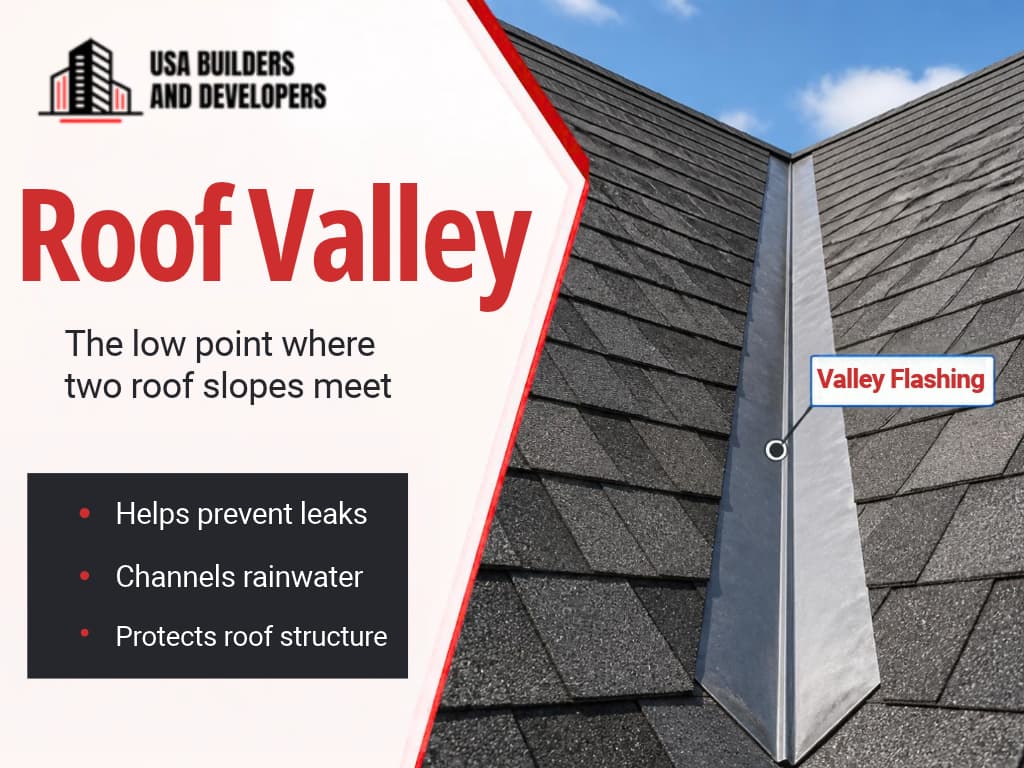
A roof valley is the internal angle formed where two sloping roof planes meet. Think of it as a “V” shaped channel running down your roof. Its main job is to collect rainwater and snowmelt from both slopes and direct it safely into the gutters.
Because a roof valley handles water from two roof sections at once, it carries much more water than any other part of the roof. That’s why proper installation and waterproofing matter so much.
Roof valley vs. roof ridge: A ridge is the highest point where two slopes meet and form an outward peak. A valley is the opposite: an inward angle where water collects and flows down.
Why Is the Roof Valley Important?
- Water drainage: It channels large volumes of water off the roof quickly.
- Structural protection: A well-built valley protects the roof deck, rafters, and insulation from moisture.
- Debris control: Leaves, snow, and ice can build up in valleys, so they need to be designed for smooth flow.
- Long-term durability: Valleys wear out faster than flat roof areas, so quality materials make a big difference.
Types of Roof Valleys
There are three main types of roof valley construction. Each has its own look, cost, and performance.
1. Open Valley
In an open valley, a strip of metal flashing is installed in the valley and left exposed. The shingles on both sides are trimmed back, leaving the metal visible.
Pros:
- Excellent water and debris flow
- Handles heavy rain and snow well
- Easy to inspect and repair
Cons:
- Metal is visible, which some homeowners don’t like
- Slightly higher material cost
2. Closed Valley
In a closed valley, shingles from both slopes extend over the valley and are cut in a straight line, covering the flashing underneath. The closed cut valley is the most common version.
Pros:
- Clean, uniform appearance
- Faster and cheaper to install
Cons:
- Debris can get trapped
- Harder to spot problems early
3. Woven Valley
In a woven valley, shingles from both sides are overlapped (woven) alternately across the valley, with no metal flashing visible.
Pros:
- Strong, seamless look
- No exposed metal
Cons:
- Not recommended for heavy shingle types or very low slopes
- Repairs are more difficult
- Can wear out faster in high-water-flow areas
Which Roof Valley Type Is Best?
For most homes, an open valley with quality metal flashing offers the best water performance, especially in areas with heavy rain or snow. A closed valley is a good budget-friendly choice for moderate climates. A woven valley works best on certain shingle roofs where appearance is a priority.
What Is Roof Valley Flashing?
Roof valley flashing is a thin, waterproof layer installed along the valley to stop water from slipping under your roofing material. It’s the single most important protection in this area, and every brand has its own manufacturer installation guidelines you should follow.
Common Valley Flashing Materials
- Galvanized steel: Affordable and strong
- Aluminum: Lightweight and rust-resistant
- Copper: Premium option with a very long lifespan
- Stainless steel: Excellent durability, higher cost
- Rubberized/self-adhering membrane: Often used as an underlayment layer for extra protection
Types of Valley Flashing Profiles
- W-shaped flashing: Has a raised center rib that keeps water from crossing over to the opposite slope during heavy flow
- V-shaped flashing: A simple, basic profile
- Pre-formed flashing: Factory-made for easier installation
Good valley flashing, installed correctly with a waterproof underlayment, can dramatically extend the life of your roof.
Common Causes of a Roof Valley Leak
A roof valley leak is one of the most frequent roofing problems. Here are the main causes:
- Damaged or corroded flashing: Rust, cracks, or holes let water in.
- Poor installation: Incorrect overlap, wrong nailing, or missing underlayment.
- Debris buildup: Leaves, twigs, and dirt block water flow and push water under shingles.
- Ice dams: In cold climates, ice can force water back under the roofing material.
- Worn shingles: Aging shingles near the valley lose granules and protection.
- Nails in the wrong place: Nails driven too close to the valley centerline can create leak paths.
- Heavy water volume: Large roof areas draining into one valley can overwhelm the system.
Signs You Need Roof Valley Repair
Watch for these warning signs:
- Water stains on ceilings or walls near roof intersections
- Damp or moldy attic insulation
- Rust or visible holes in valley metal
- Cracked, curled, or missing shingles along the valley
- Granules collecting in gutters near the valley
- Visible gaps or lifted edges at the valley
If you notice any of these, get an inspection quickly. Small issues become costly repairs when ignored.
How to Repair a Roof Valley
Roof valley repair depends on how serious the damage is.
Minor repairs:
- Clean debris from the valley
- Apply roofing sealant to small cracks or gaps
- Replace a few damaged shingles
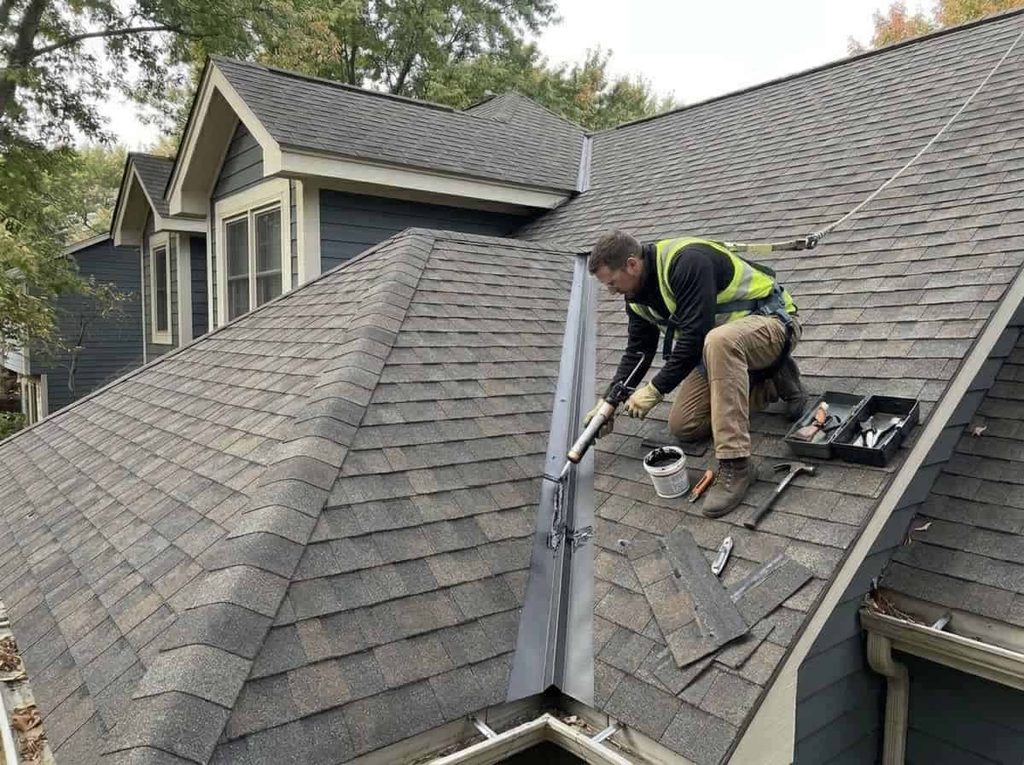
- Patch small holes in flashing with a compatible patch
Major repairs:
- Remove shingles along the valley
- Replace the damaged flashing completely
- Install new waterproof underlayment
- Reinstall shingles with the correct overlap and nailing pattern
Safety note: Roof work is dangerous. For anything beyond basic cleaning, hire a licensed, insured roofing professional.
Roof Valley Installation: Best Practices
For a long-lasting roof valley installation, professionals usually follow these steps:
- Install a self-adhering waterproof membrane in the valley first.
- Place valley flashing centered in the valley, secured at the outer edges only.
- Keep nails away from the valley center.
- Overlap shingles correctly according to the chosen valley type.
- Seal edges where needed, using compatible sealant.
- Inspect the finished valley for gaps, alignment, and proper drainage.
Always follow the manufacturer’s installation instructions and local building codes.
Roof Valley Repair and Installation Cost
Costs vary by location, roof size, materials, and labor rates. As a general idea:
- Minor repair or sealing: Low cost, often a small service call
- Flashing replacement: Moderate cost
- Full valley reconstruction: Higher cost, especially with copper or complex roof designs
Ask for at least two or three written quotes from reputable contractors, and make sure they explain the materials and warranty clearly.
Roof Valley Maintenance Tips
- Inspect valleys at least twice a year (spring and autumn) and after storms
- Keep valleys clear of leaves and debris
- Trim overhanging tree branches
- Check flashing for rust, gaps, or lifting
- Clean gutters regularly so water doesn’t back up
- Fix small problems immediately
Frequently Asked Questions
What is a roof valley?
A roof valley is the inward angle where two roof slopes meet, designed to channel water off the roof.
Which type of roof valley is best?
An open valley with metal flashing is generally best for heavy rain and snow, while closed valleys are popular for their cleaner look and lower cost.
Why does my roof valley leak?
Common causes include damaged flashing, debris buildup, poor installation, ice dams, and worn shingles.
How long does valley flashing last?
It depends on the material and climate. Galvanized steel and aluminum often last for decades, while copper can last even longer with proper care.
Can I repair a roof valley myself?
Minor cleaning and sealing may be DIY, but flashing replacement and valley rebuilding should be done by a professional.
How often should I inspect my roof valley?
At least twice a year and after major storms.
Final Thoughts
The roof valley may be a small part of your roof, but it carries a huge responsibility. Choosing the right valley type, using quality flashing, and keeping up with regular maintenance will protect your home from leaks and costly damage. If you suspect a problem, don’t wait. Early roof valley repair is always cheaper than fixing water damage later.
Need help with your roof valley? Contact a licensed roofing professional for an inspection and a free quote.
Need roof valley repair? Get your free estimate today.
👉 [Get Your Free Estimate]
Have Questions? Call Us Now!
We’re here to help—quick answers, friendly service, anytime you need!