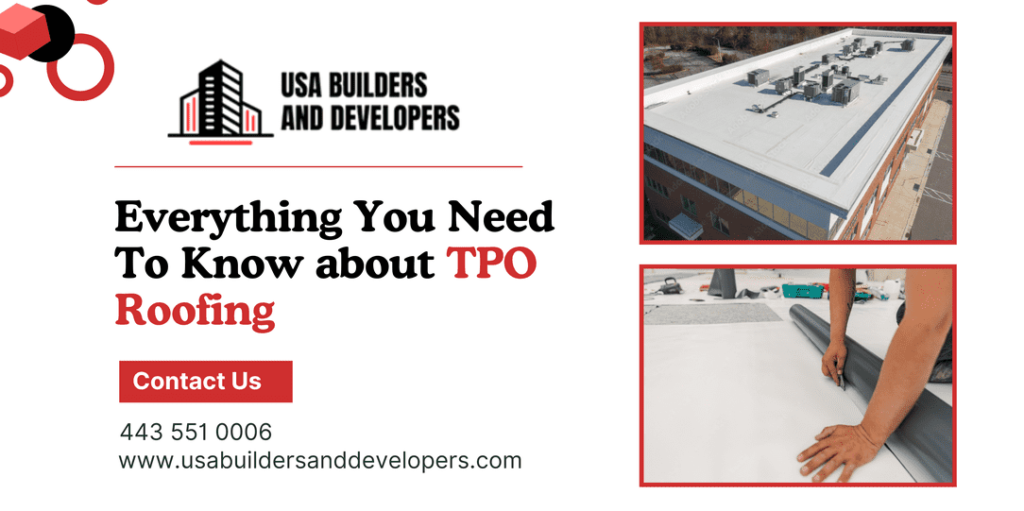
TPO roofing stands for Thermoplastic Polyolefin roofing. It is a single ply membrane made for flat and low-slope roofs. It is made from a blend of polypropylene and rubber. Large sheets are rolled out and heat-welded at the seams. This creates one continuous, waterproof layer.
TPO roofs are common on commercial buildings, warehouses, retail centers, and apartment buildings. More homeowners now use TPO on flat sections of their homes too. A well-installed TPO roof lasts 20 to 30 years.
Maryland roofs deal with hot summers, humid air, snow, and strong storms. TPO roofing has become a top choice here. It saves energy, handles temperature swings, and resists leaks.
How a TPO Roofing System Works
A TPO roof is a full system, not just one layer on top. It usually includes:
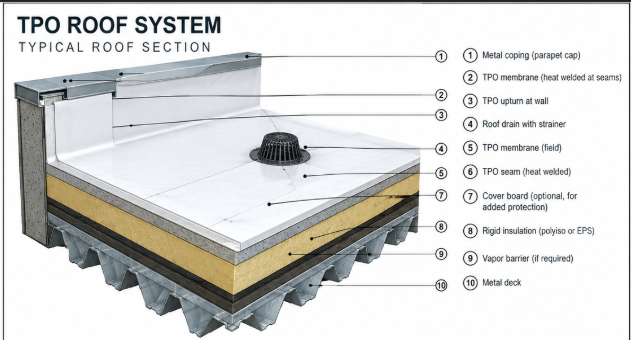
- Roof deck (the structural base)
- Insulation boards
- Cover board (optional, but recommended)
- TPO membrane
- Flashing and edge details
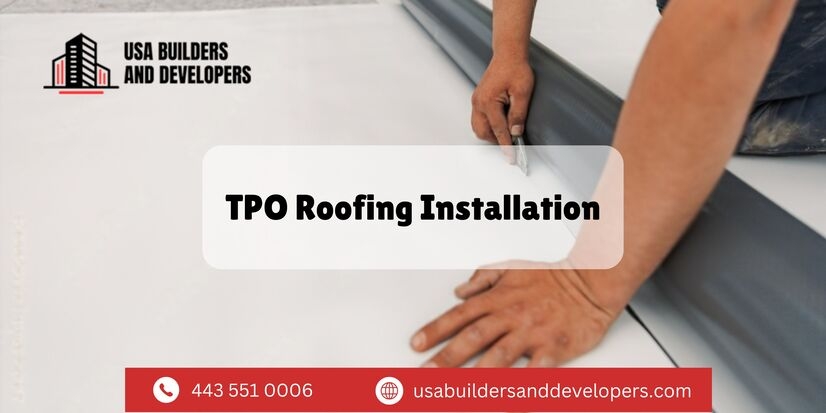
Workers roll out the membrane and fasten or adhere it to the deck. Then they fuse the seams with hot-air welding tools. This creates a bond that is often stronger than the membrane itself. Heat-welded seams are one of the biggest advantages TPO has over glued-seam systems.
How TPO Roofing Is Made
TPO membranes come in large rolls, usually 10 to 20 feet wide. Crews lay these rolls over the roof and join them with heat-welded seams. This makes one strong, watertight barrier.
TPO roofing has three main layers:
| Layer | Purpose |
|---|---|
| Reinforced Base | Polyester adds strength and resists tearing |
| Thermoplastic Core | Gives flexibility and durability |
| UV-Resistant Top Layer | Reflects sunlight and lowers heat absorption |
Most TPO membranes come in white, light gray, or tan. These lighter colors reflect more sunlight and help lower cooling costs.
Benefits of TPO Roofing
TPO is popular because it balances performance and price.
- Energy Efficiency: The reflective top layer lowers heat absorption. This helps cut cooling costs, especially on buildings with rooftop HVAC units.
- Strong Waterproofing: Heat-welded seams leak less than glued seams on other roof types.
- Handles Temperature Swings: TPO expands and contracts without cracking. This matters in a climate like Maryland’s.
- Durability: It resists punctures, tears, algae, and UV damage.
- Good Value: TPO offers seam strength and reflectivity close to PVC, at a lower cost.
Pros and Cons of TPO Roofing
| Pros | Cons |
|---|---|
| High energy efficiency from the reflective surface | Quality varies by manufacturer |
| Heat-welded seams create strong, waterproof bonds | Bad installation can cause seam failure |
| Lower installation cost than PVC | Not ideal for heavy foot traffic without walkway pads |
| Lightweight, so it adds less structural load | Thinner membranes (45 mil) may wear out sooner |
| Resists UV rays and chemical exposure | Needs a skilled contractor for proper welding |
| Long service life (20–30 years with care) | Lifespan depends heavily on maintenance |
How Long Does a TPO Roof Last?
A properly installed TPO roof typically lasts 20 to 30 years.
Lifespan depends on:
- Membrane thickness (45, 60, or 80 mil)
- Installation quality
- Climate exposure
- How often it’s maintained
- Foot traffic
An 80-mil membrane, installed right, can last past 30 years. Routine inspections by an experienced roofer, like USA Builders and Developers, help extend lifespan and keep your warranty valid.
Signs Your TPO Roof Needs Attention
TPO roofs hold up well, but they still show warning signs before a leak starts. Watch for:
- Seam separation. Heat-welded seams can pull apart over time, especially near edges and penetrations.
- Ponding water. Water sitting on the roof for more than 48 hours can weaken the membrane and cause early failure.
- Shrinkage or wrinkling. Lower-quality membranes can shrink, pulling at seams and flashing.
- Punctures or tears. Foot traffic, falling branches, and hail can cause small holes that let water in.
- Chalking or discoloration. A dull, chalky surface means the reflective top layer is breaking down.
- Soft spots on the deck. This usually means moisture has already reached the insulation below.
If you spot any of these, call a roofer before the damage spreads.
Should You Repair or Replace Your TPO Roof?
Not every problem means a full tear-off. Here’s a simple way to think about it.
Repair usually makes sense when:
- The membrane is less than 15 years old
- Damage is limited to one seam, flashing point, or a small puncture
- The roof deck underneath is dry and solid
Replacement usually makes sense when:
- The membrane is near or past its expected lifespan
- Multiple seams are failing across the roof
- There’s widespread ponding water or soft decking
- Past repairs keep failing in the same spots
A roofing inspection is the only reliable way to know for sure. Our roof repair team can assess the damage and tell you which option saves you more money long-term.
TPO Roofing Installation Process
Good installation is what makes TPO perform well. A poor install can cause leaks, ponding, and early failure. Here’s what the process looks like for Maryland properties.
1. Roof Inspection and Preparation
Contractors inspect the roof for structural issues, moisture, and drainage problems. They make repairs first, so the new membrane has a stable base.
2. Installing Insulation
Insulation boards are fastened or adhered to the deck. This improves energy efficiency and protects the membrane from temperature extremes.
3. Laying the TPO Membrane
Crews roll out and position the TPO sheets. Maryland’s changing weather means they must handle the material carefully to avoid stretching or wrinkles.
4. Heat-Welding Seams
Instead of adhesive, TPO uses hot-air welding to fuse seams. This creates a strong, watertight bond, which matters most during heavy rain or snow.
5. Flashing and Detail Work
Edges, vents, drains, and other openings get sealed with TPO and custom flashing. Good detail work keeps the roof leak-free in extreme weather.
6. Final Inspection
Contractors check seam integrity, drainage, and overall quality. Ask for a final walkthrough so you understand your warranty and maintenance plan.
TPO Roofing Cost in Maryland
TPO roofing typically costs $6.50 to $12 per square foot in Maryland. The price depends on:
- Membrane thickness
- Roof size and complexity
- Insulation upgrades
- Removal of the old roof
- Number of penetrations (vents, drains, skylights)
- Local labor rates
The upfront cost can be higher than basic rubber roofing. But energy savings and a longer lifespan often make TPO the better value over time.
TPO Roofing Warranty: What to Expect
Most TPO manufacturers offer two kinds of warranties:
- Material warranty: Usually 15 to 25 years, covering defects in the membrane itself.
- Workmanship warranty: Covers installation errors, often 2 to 10 years depending on the contractor.
Some manufacturers offer extended warranties up to 30 years when the roof is installed by a certified contractor and properly maintained. Ask your roofer to show you the warranty terms in writing before work begins, and confirm what voids it, like skipped inspections or unauthorized repairs.
Maintenance Tips for TPO Roofing
A TPO roof can last 20 to 30 years when installed right, but it still needs regular care. In Maryland, seasonal weather changes make inspections especially important.
Recommended Practices
- Inspect twice a year. Early spring and late fall are ideal.
- Check after storms. Maryland sees heavy rain and snow. Look for damage right after.
- Clear debris. Leaves and branches trap water and damage the membrane over time.
- Watch seams and flashing. Look for separation or cracking.
- Fix small punctures fast. A small tear becomes a major leak if ignored.
Regular maintenance protects your investment and keeps your warranty active.
TPO vs EPDM vs PVC Roofing
| Feature | TPO Roofing | EPDM Roofing | PVC Roofing |
|---|---|---|---|
| Material Type | Thermoplastic Polyolefin | Synthetic Rubber | Polyvinyl Chloride |
| Color Options | Mostly white, reflective | Usually black | White or gray |
| Energy Efficiency | High | Moderate | High |
| Seam Type | Heat-welded | Adhesive | Heat-welded |
| Durability | High | Moderate | High |
| Cost | Moderate | Lower | Higher |
| Chemical Resistance | Good | Moderate | Excellent |
Is TPO Roofing Good for Residential Homes?
TPO isn’t just for warehouses and retail buildings. It works well on home additions, garages, porches, and any flat or low-slope section of a house. Homeowners choose it for the same reasons businesses do: lower cooling costs, strong leak resistance, and a long lifespan without the upkeep that rubber roofing needs.
If you’re adding a flat-roof extension or replacing an aging rubber roof section, TPO is worth comparing against shingles and EPDM for that part of your home.
When Is TPO Roofing Not the Best Choice?
TPO may not be ideal if:
- The roof gets heavy, constant foot traffic without walkway pads
- You expect extreme chemical exposure (PVC may hold up better)
- Your budget is very tight and EPDM fits better
- Your installer lacks real heat-welding experience
Material quality and installer skill both affect the final result.
FAQs About TPO Roofing
Is TPO roofing good for residential homes?
Yes. It works well on flat or low-slope sections of homes, like additions and garages. It offers strong energy savings and a long lifespan.
Can a TPO roof be repaired, or does it need full replacement?
Many problems, like a single failed seam or a small puncture, can be repaired. Full replacement is usually needed when damage is widespread or the membrane is near the end of its lifespan.
Does TPO roofing need a permit in Maryland?
Most roof replacements and large repairs need a permit in Maryland. Your contractor should pull the permit for you as part of the job.
How do I know if my TPO roof is failing?
Watch for ponding water, seam separation, wrinkling, punctures, or a chalky surface. Any of these are signs to call a roofer.
What causes a TPO roof to fail early?
Poor installation, low-quality membrane, skipped maintenance, and ponding water are the most common causes of early failure.
How often should a TPO roof be inspected?
Twice a year is standard, plus an extra check after any major storm.
Final Thoughts
So, what is TPO roofing? It’s a durable, energy-efficient, single-ply membrane built for flat and low-slope roofs. With heat-welded seams, a reflective surface, and a lifespan of up to 30 years, it’s one of the most reliable roofing systems available today.
For Maryland property owners, picking the right membrane thickness, hiring a certified roofing contractor, and keeping up with inspections are the keys to getting the most out of your TPO roof. Done right, it delivers decades of protection, energy savings, and dependable waterproofing.
Have Questions? Call Us Now!
We’re here to help—quick answers, friendly service, anytime you need!