
A brown stain spreading across the ceiling after heavy rain is never a welcome sight. On a flat roof it is even more worrying, because water has no slope to run down. It lingers, finds a weak spot and slips inside. The good news is that flat roof repair is often simpler than working on a pitched roof, since the whole surface is easy to reach and inspect.
This guide explains why low-slope roofs leak, how to trace the real entry point, which repair method suits each membrane, and when patching stops being worth the money. Whether you plan to hire a roofer or just want to understand the quote in front of you, you’ll finish with a clear plan for flat roof leak repair that actually lasts.
Why Flat Roofs Leak
A flat roof is really a waterproof skin stretched over a nearly level deck. When that skin is interrupted or weakened, water gets in. These are the usual culprits:
- Ponding water: Water that stays on the surface for a day or two after rain slowly breaks down the membrane and adds weight to the structure.
- Failed flashing: The metal or membrane strips around vents, pipes, skylights, HVAC units and parapet walls move with temperature changes and eventually pull loose.
- Open seams: Seams on single-ply membranes can lift after years of sun, and overlaps on bitumen roofs can open if the original bond was weak.
- Blisters and cracks: Trapped moisture or air forms bubbles that later split, while aging surfaces develop a cracked, “alligator skin” look.
- Sun and temperature swings: Constant heating and cooling stiffens materials, and freezing water widens small cracks each winter.
- Foot traffic and debris: Technicians, tools and fallen branches cause punctures that go unnoticed until the next storm.
- Blocked drains and scuppers: Leaves and dirt stop water from leaving, which feeds the ponding problem above.
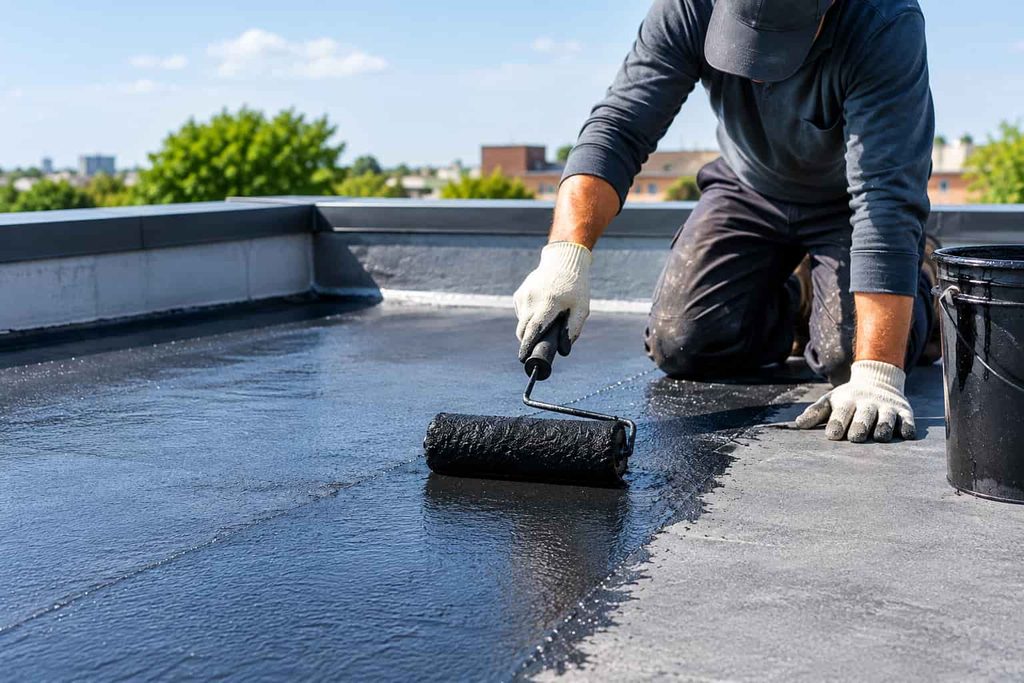
Step 1: Find the Real Source Before Any Flat Roof leak Repair
Water rarely drops straight down from the hole it entered through. It can run along the deck or insulation for several feet before it shows up inside. If you patch the spot above the stain without investigating, you’ll probably patch the wrong place.
Start indoors and note exactly where the stain is. Then go to the roof (only in dry weather) and search a wide area around that point, roughly a few feet in every direction. Check in this order:
- Flashing around anything that pokes through the roof
- Seams, laps and old patches
- Blisters, splits and punctures
- Low spots where water sits
- Drains and scuppers
If you find several problem areas, deal with all of them in the same visit. Fixing only the most obvious one often just moves the leak to the next weak point.
Step 2: Identify Your Roof Membrane
Every repair product has to match the roof beneath it. The wrong adhesive can fail within weeks, so identify your membrane first. A manufacturer label near the edge or an old installation document will usually tell you. If not, use appearance as a guide:
| Membrane | How It Usually Looks |
|---|---|
| TPO | White or light grey, smooth, with visible welded seams |
| PVC | Similar to TPO but often glossier and more flexible |
| EPDM | Black rubber sheet, sometimes with taped seams |
| Modified bitumen | Dark, layered, often with a mineral granule surface |
| Built-up roof (BUR) | Many layers of felt and asphalt, frequently topped with gravel |
If you’re still unsure, photograph it and send the pictures to a roofer before buying anything.
Step 3: Stop the Water First
If rain is still coming down, a permanent fix isn’t realistic. Most adhesives won’t bond to a wet surface, and wet membranes are dangerously slippery. Focus on limiting the damage from inside:
- Put buckets under active drips and move furniture and electronics out of the way.
- Switch off power to any light fixture or outlet near the leak.
- If the ceiling is bulging with trapped water, release it carefully at the lowest point into a bucket so it doesn’t collapse unpredictably.
Once the roof is dry, you can buy time with a temporary measure. For a small opening on a bitumen roof, press a piece of mesh or felt into a layer of roofing cement and cover it with another coat. For larger damage, spread a heavy-duty tarp well past the damaged zone and hold it down with weights. Avoid nails and screws, because they create new holes. Treat all of this as a short-term bridge, not the real fix.
Step 4: Flat Roof leak Repair Methods by Material
Always clean and dry the area first, cut away loose or soaked material, and let the surface dry completely.
Modified bitumen and built-up roofs. Spread mastic over the clean area, press in reinforcing mesh or a patch, then add a second coat on top. Feather the edges so water can’t catch on a raised lip. Make the patch noticeably larger than the damage so it overlaps sound material on every side.
TPO and PVC. These membranes are repaired by heat welding. Clean the surface with a compatible cleaner, cut a rounded-corner patch from the same material, and weld it with a hot-air tool, rolling firmly as you go. After it cools, test the edges with a blunt probe. Because too much heat can damage the membrane, this is best left to experienced installers.
EPDM. EPDM is repaired with primer and cold-applied adhesive rather than heat. Prime both the patch and the roof, wait until the primer turns tacky, then press the patch down and roll it from the center outward. Use EPDM-specific products, not general-purpose caulk.
After any patch, check that every edge is fully bonded with no lifted corners, and allow it to cure for about a day before expecting it to resist water.
Choosing the Right Sealant
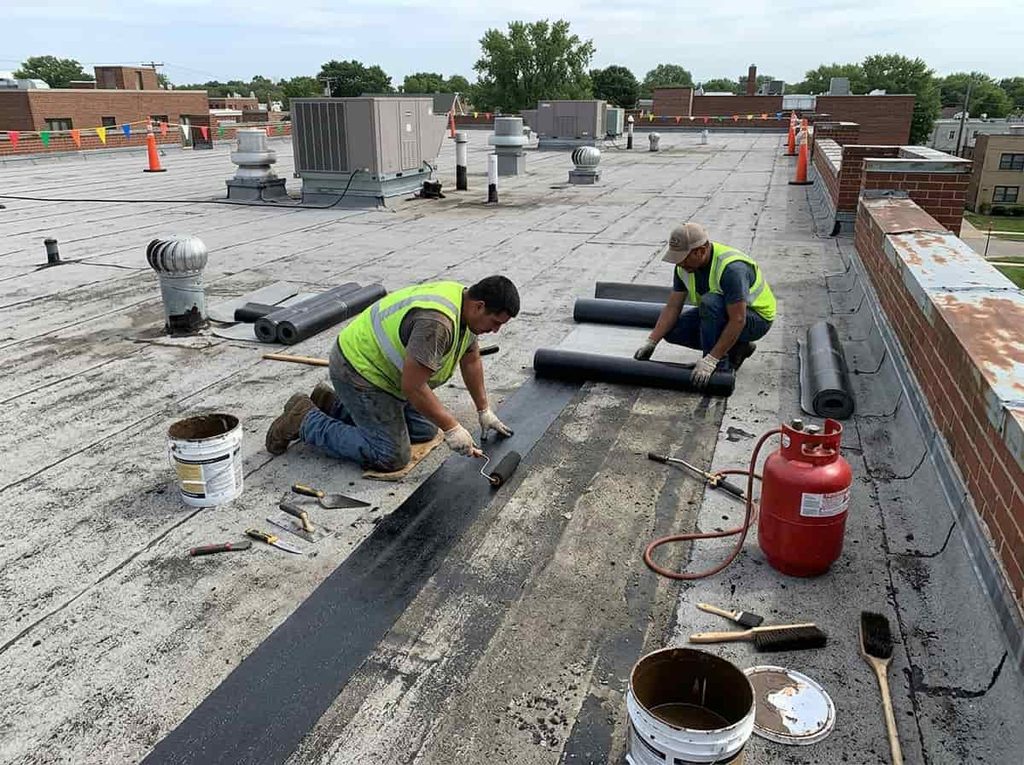
The best flat roof leak repair sealant depends entirely on your membrane and conditions:
- Silicone: Excellent UV resistance and stays flexible in cold weather. It copes well with areas that hold water.
- Asphalt-based mastic: A natural match for bitumen and built-up roofs, but a poor choice for single-ply membranes.
- Polyurethane: Strong adhesion and works well on bitumen and metal flashing.
- Acrylic elastomeric coating: Budget-friendly and reflective, but not suited to areas where water pools.
Lifespans vary by product and climate, so check the manufacturer’s data sheet rather than assuming one product suits every roof.
Repair or Replace? When Flat Roof leak Repair Stops Making Sense
Patches are cost-effective for isolated damage. They are a poor investment when the whole roof is failing. Consider replacement if:
- Damage covers a large share of the roof (a quarter or more is a common rule of thumb)
- The membrane is shrinking, brittle or splitting in many places
- Insulation beneath the membrane is soaked
- The deck feels soft or spongy in more than one area
- The roof is near or past its expected lifespan, often 15 to 20 years for many systems
- Leaks keep returning after repairs
| Situation | Usually Best Choice |
|---|---|
| One puncture or a small open seam | Local patch |
| Failed flashing at one penetration | Re-flash that area |
| Several blisters and recurring leaks | Professional evaluation |
| Wet insulation or soft deck | Section or full replacement |
| Old, widely worn membrane | Replacement |
Costs vary widely by country, roof size, material and access, so get written quotes locally. As a general pattern, a small patch costs a fraction of re-roofing, but repeated patches on a dying roof can add up to more than a new membrane.
How to Make Your Flat Roof leak Repair Last
A repair only holds if the cause of the leak is dealt with too. Build these habits:
- Keep water moving. Clear drains, gutters and scuppers regularly, and fix low spots with tapered insulation or regrading.
- Inspect twice a year. A spring and autumn check, plus one after severe storms, catches problems early. Look at flashing, seams, old patches and drain areas.
- Protect the surface. Install walk pads where people regularly step, and keep sharp objects off the roof.
- Use compatible materials only. Mixing products is the fastest way to a failed patch.
- Watch after the fix. Check the ceiling and the repaired area after the next few rainfalls.
- Keep records. Photos and dates help with warranty claims and future decisions.
DIY or Professional?
Small, simple flat roof leak repair, such as sealing a minor crack on a bitumen roof or applying a manufacturer’s patch kit to EPDM, can be manageable if the roof is dry, solid and safe to walk on. Work slowly, wear grippy shoes, and have someone nearby.
Call a professional when you see soft decking, widespread shrinkage, flashing that has detached from walls, wet insulation, or leaks that return after you’ve already repaired them. In these cases, flat roof leak repair needs an expert, and heat-welded membranes also deserve specialist hands. A roofer can also match the right flat roof sealant to your membrane, so the fix holds.
How to Choose a Contractor for Flat Roof leak Repair
A good roofer should be able to explain what’s wrong and why, not just quote a number. Before hiring, ask:
- Do you have experience with my specific membrane type?
- How will you find the true leak source (moisture scanning, test cuts, flood testing)?
- What materials and method will you use?
- Is the work covered by a written workmanship warranty?
- Can you show proof of insurance and licensing?
- Will you provide photos before and after?
Be cautious of anyone who recommends a full replacement without inspecting thoroughly, or who offers a cheap “cover-all” coating without addressing drainage.
Frequently Asked Questions
How long does flat roof leak repair take?
A small patch is often finished in a few hours, plus curing time. Larger jobs involving flashing, drainage or several sections can take a day or more.
How much does flat roof leak repair cost?
It depends on material, damage, access and location. Small localized repairs are generally affordable compared with replacement, but extensive damage raises the price sharply. Always compare at least two written quotes.
Can I do flat roof leak repair in the rain?
No. Wet surfaces prevent proper bonding and are unsafe. Use indoor containment and a temporary cover, then complete the permanent fix once the roof is dry.
How long does a flat roof leak repair last?
A correct repair using compatible materials can last for years. A hasty patch on a wet or dirty surface may fail in a single season.
What causes a flat roof to leak again after repair?
Usually the underlying cause wasn’t fixed: ponding water, failed flashing nearby, wet insulation, or an incompatible patch material.
Final Thoughts
Good flat roof leak repair comes down to four things: finding the true source of the leak, matching materials to your membrane, repairing on a clean and dry surface, and fixing drainage so the problem doesn’t return. Patch early, inspect regularly, and be honest about when the roof has reached the end of its life. That approach protects your building and your budget.
Need Help With Your Roof? Talk to the Experts
Don’t wait for a small leak to turn into a costly repair. The team at USA Builders and Developers can inspect your roof, find the real source of the problem, and recommend the right fix for your budget.
Call us today at [Your Phone Number] or request a free estimate and get a clear, no-pressure quote.