Choosing the best siding for a house is essential for protecting your home, improving its appearance, and increasing its long-term value. House siding acts as a protective exterior layer against rain, wind, sunlight, and changing weather conditions. The right siding material can also reduce maintenance needs and improve your home’s energy efficiency when combined with proper insulation.
Homeowners in the United States homeowners can choose from several siding materials, including vinyl, fiber cement, wood, metal, brick, stucco, and engineered wood. Each option offers different benefits in terms of durability, appearance, maintenance, and cost.
In this guide, we will compare seven popular house siding options, explore their advantages and disadvantages, and explain how to choose the right material for your home’s style, climate, and budget.
1. Vinyl Siding: An Affordable and Low-Maintenance Option
Vinyl siding is one of the most popular choices for homeowners in the United States because it is affordable, versatile, and easy to maintain. Made from durable PVC plastic, it comes in a wide range of colors, textures, and styles to complement different home designs.
For homeowners searching for the best siding for house projects on a budget, vinyl siding offers an attractive balance between cost and performance. It does not require regular painting and can be cleaned with soap and water.
Advantages of Vinyl Siding
- Affordable: Generally costs less than many other siding materials.
- Low maintenance: Does not require routine painting or staining.
- Multiple styles: Available in various colors, textures, and profiles.
- Moisture resistance: Resists water damage when correctly installed.
Disadvantages of Vinyl Siding
- Can crack in very cold weather or after strong impacts.
- May fade or warp after prolonged heat exposure.
- Offers limited insulation on its own unless an insulated product is selected.
2. Fiber Cement Siding: Durable and Weather-Resistant
Fiber cement siding is an excellent choice for homeowners who prioritize durability and long-term performance. It is typically made from a mixture of cement, sand, water, and cellulose fibers. This combination creates a strong exterior material that can resemble natural wood without requiring the same level of maintenance.
For homeowners comparing the best siding for house renovations, fiber cement stands out because it can resist moisture, pests, and fire when properly installed and maintained. It is also available in different colors, textures, and styles.
Advantages of Fiber Cement Siding
- High durability: Can last for decades with proper installation and maintenance.
- Fire resistance: Offers better fire resistance than many combustible siding materials.
- Pest resistance: Does not attract termites like natural wood.
- Versatile appearance: Can imitate wood grain, shingles, and smooth finishes.
Disadvantages of Fiber Cement Siding
- Usually costs more than vinyl siding.
- Is heavy and requires skilled installation.
- May need periodic painting and maintenance.
- Cutting it can produce hazardous silica dust, so installers need appropriate safety controls.
3. Wood Siding: A Classic and Natural Appearance
Wood siding is a timeless option that gives homes a warm, natural, and elegant appearance. It is available in several styles, including clapboard, shingles, shakes, and board-and-batten. Homeowners can choose different wood species, stains, and paint colors to match their preferred architectural style.
When considering the best siding for house exteriors, wood is an attractive choice for people who value traditional craftsmanship and natural beauty. However, it requires regular maintenance to protect it from moisture, insects, and weather damage.
Advantages of Wood Siding
- Natural beauty: Creates a warm and classic exterior appearance.
- Customizable: Can be painted or stained in many colors.
- Repairable: Individual damaged boards can often be replaced.
- Eco-conscious option: Responsibly sourced wood is a renewable building material.
Disadvantages of Wood Siding
- Requires regular painting, staining, or sealing.
- Can rot or develop mold if moisture is not properly managed.
- May attract termites and other wood-boring insects.
- Can cost more to maintain over time.
4. Metal Siding: Strong and Modern Protection
Metal siding is a durable exterior option that gives homes a clean, modern appearance. Common materials include steel and aluminum, both of which offer different benefits in terms of strength, weight, and corrosion resistance.
For homeowners comparing the best siding for house exteriors, metal siding can be an excellent choice because it is long-lasting, resistant to insects, and relatively low-maintenance. It is available in different colors, finishes, and panel designs to suit modern and traditional homes.
Advantages of Metal Siding
- Durability: Steel siding can withstand many types of physical impacts, depending on its thickness and finish.
- Low maintenance: Requires less upkeep than many traditional wood siding products.
- Pest resistance: Does not attract termites or other wood-damaging insects.
- Fire resistance: Steel and aluminum siding are noncombustible.
- Modern appearance: Offers sleek finishes and a variety of design options.
Disadvantages of Metal Siding
- Can dent or scratch, depending on the material and thickness.
- May corrode if its protective coating becomes damaged.
- Can become noisy during heavy rain or hail without appropriate installation.
- May cost more upfront than some vinyl siding products.
5. Brick Siding: Timeless Style and Lasting Durability
Brick siding is a popular exterior option for homeowners who want a classic appearance and long-lasting performance. Traditional brick walls and brick veneer can give a home a strong, attractive finish that complements many architectural styles.
When comparing the best siding for house exteriors, brick stands out for its durability, resistance to insects, and relatively low maintenance requirements. Although the initial installation cost can be higher than some other siding materials, brick can remain attractive for many years when properly installed and maintained.
Advantages of Brick Siding
- Long-lasting: Brick can last for decades with proper construction and maintenance.
- Low maintenance: Generally does not require painting or frequent cleaning.
- Fire resistance: Brick is noncombustible.
- Pest resistance: Does not attract termites or other wood-damaging insects.
- Classic appearance: Adds texture and character to a home’s exterior.
Disadvantages of Brick Siding
- Higher initial cost: Materials and installation can be more expensive than vinyl siding.
- Heavy material: Traditional brick construction may require appropriate structural support.
- Limited color changes: Changing its appearance can be more difficult than repainting other siding materials.
- Mortar maintenance: Mortar joints may eventually need repair or repointing.
6. Stucco Siding: A Smooth and Energy-Efficient Exterior
Stucco siding is a popular exterior finish, particularly in warmer regions of the United States. It is commonly made from cement, sand, lime, and water, although modern stucco systems may use different formulations. It creates a smooth or textured surface that complements Mediterranean, Southwestern, and contemporary home designs.
For homeowners comparing the best siding for house exteriors, stucco offers a durable finish when properly installed. Its performance depends on the climate, drainage system, installation method, and ongoing maintenance.
Advantages of Stucco Siding
- Attractive appearance: Available in smooth, rough, and textured finishes.
- Fire resistance: Traditional cement-based stucco is noncombustible.
- Low routine maintenance: Usually does not require frequent repainting when properly finished.
- Long-lasting finish: Can provide many years of service with correct installation.
- Design flexibility: Can complement a variety of architectural styles.
Disadvantages of Stucco Siding
- Can crack due to building movement or improper installation.
- Requires careful moisture management to prevent water intrusion.
- May need specialized repairs if cracks or damage develop.
- Can be less suitable for persistently wet climates without a properly designed drainage system.
7. Engineered Wood Siding: Beauty with Improved Durability
Engineered wood siding is designed to provide the natural appearance of traditional wood while offering improved consistency and resistance to certain common problems. It is typically manufactured from wood fibers or strands combined with resins, binders, and protective treatments.
For homeowners comparing the best siding for house renovations, engineered wood can be an appealing alternative to natural wood. It comes in various styles, including lap siding, panels, and board-and-batten designs, making it suitable for many home exteriors.
Advantages of Engineered Wood Siding
- Natural appearance: Recreates the texture and warmth of real wood.
- Consistent finish: Manufactured boards offer uniform shapes and dimensions.
- Design flexibility: Available in different profiles, colors, and finishes.
- Potentially lower cost: May cost less than some premium natural wood options.
- Pest protection: Certain products include treatments designed to resist termites and other pests.
Disadvantages of Engineered Wood Siding
- Requires proper sealing, painting, and maintenance according to the manufacturer’s instructions.
- Can suffer moisture damage if incorrectly installed or inadequately protected.
- Product quality and warranties vary by manufacturer.
- Installation must follow specific requirements to maintain durability and warranty coverage.
Comparing the Best Siding Options for a House
Choosing the right siding material depends on your budget, local climate, maintenance preferences, and the appearance you want for your home. Each material offers different advantages, so comparing their features can help you make an informed decision.
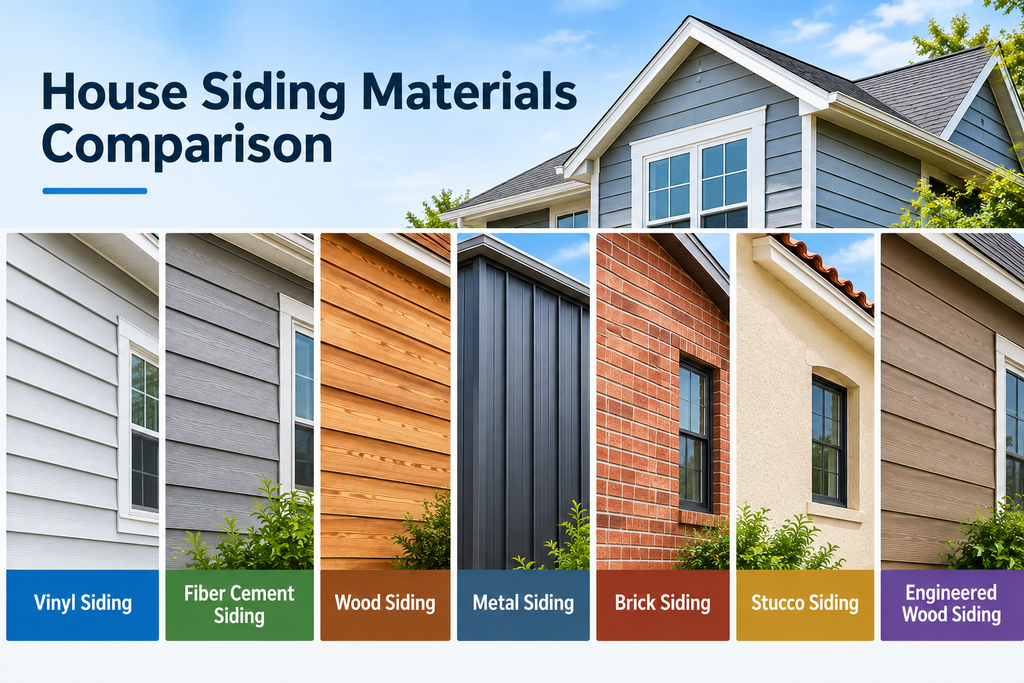
| Siding Material | Maintenance | Durability | Relative Cost |
|---|---|---|---|
| Vinyl | Low | Good | Low |
| Fiber Cement | Moderate | Very Good | Medium to High |
| Natural Wood | High | Good with proper care | Medium to High |
| Metal | Low to Moderate | Very Good | Medium to High |
| Brick | Low | Excellent | High |
| Stucco | Low to Moderate | Very Good in suitable climates | Medium to High |
| Engineered Wood | Moderate | Good with proper installation | Medium |
Note: These are general comparisons. Actual costs and performance depend on product quality, installation, location, and climate.
How to Choose the Best Siding for Your House
Selecting the best siding for house exteriors involves more than choosing an attractive color. Homeowners should consider several important factors to ensure their siding provides reliable protection and long-term value.
1. Consider Your Budget
Compare both material and installation costs before making a decision. Vinyl siding is generally an affordable option, while brick and fiber cement can require a larger initial investment. Remember to consider future maintenance and repair expenses as well.
2. Evaluate Your Local Climate
Your local weather conditions can affect siding performance. Fiber cement and properly installed metal siding can offer excellent durability, while stucco may perform particularly well in suitable dry climates. Choose a product designed to withstand the rain, humidity, heat, cold, and wind common in your area.
3. Compare Maintenance Requirements
Some siding materials require more attention than others. Vinyl and brick generally need relatively little routine maintenance, while natural wood typically requires regular painting or staining. Review the manufacturer’s maintenance recommendations before purchasing.
4. Match Your Home’s Architectural Style
Choose siding that complements your home’s design. Natural wood can create a traditional appearance, metal siding can suit contemporary homes, and brick or stucco can enhance classic architectural styles.
5. Check Energy Efficiency
Siding alone does not determine your home’s energy efficiency. Proper insulation, air sealing, and installation are also important. Insulated vinyl siding and exterior insulation systems may help improve thermal performance when correctly installed.
6. Hire a Qualified Contractor
Professional installation can help prevent moisture intrusion, premature damage, and costly repairs. Ask contractors for detailed estimates, product warranties, references, and proof of appropriate licensing or insurance where required.
Conclusion: Which Siding Is Best for Your House?
Choosing the best siding for house exteriors depends on your budget, climate, design preferences, and maintenance expectations. Vinyl siding is a practical option for homeowners seeking affordability and easy maintenance. Fiber cement offers excellent durability, while natural wood provides a timeless appearance. Metal, brick, stucco, and engineered wood each offer distinct benefits for different homes and environments.
Before making a final decision, compare installation costs, long-term maintenance requirements, product warranties, and local weather conditions. Working with an experienced siding contractor can also help you choose suitable materials and ensure proper installation.
By carefully evaluating your options, you can select siding that protects your home, enhances its curb appeal, and provides lasting value for years to come.
Frequently Asked Questions
What is the best siding for a house?
The best siding depends on your budget, climate, and maintenance preferences. Vinyl is a popular affordable option, while fiber cement, brick, and metal offer different benefits in durability and appearance.
Which house siding lasts the longest?
Brick and properly installed fiber cement siding can last for decades. Actual lifespan depends on installation quality, climate, maintenance, and the specific product.
Which house siding lasts the longest?
Brick and properly installed fiber cement siding can last for decades. Actual lifespan depends on installation quality, climate, maintenance, and the specific product.
What is the most affordable siding option?
Vinyl siding is generally one of the most affordable siding materials for residential properties. Total costs vary by region, product quality, and installation requirements.
Which siding requires the least maintenance?
Vinyl and brick siding generally require relatively little routine maintenance. However, all siding materials need periodic.
Have Questions? Call Us Now!
We’re here to help—quick answers, friendly service, anytime you need!