
Exterior house painting does more than change how your home looks. Paint also shields your siding, trim, and wood from rain, sun, and moisture. When it fails, water can get behind it and cause damage.
This guide covers when to paint, what it costs, and how to do the job step by step. The tips suit Maryland’s weather, and they work in most other places too.
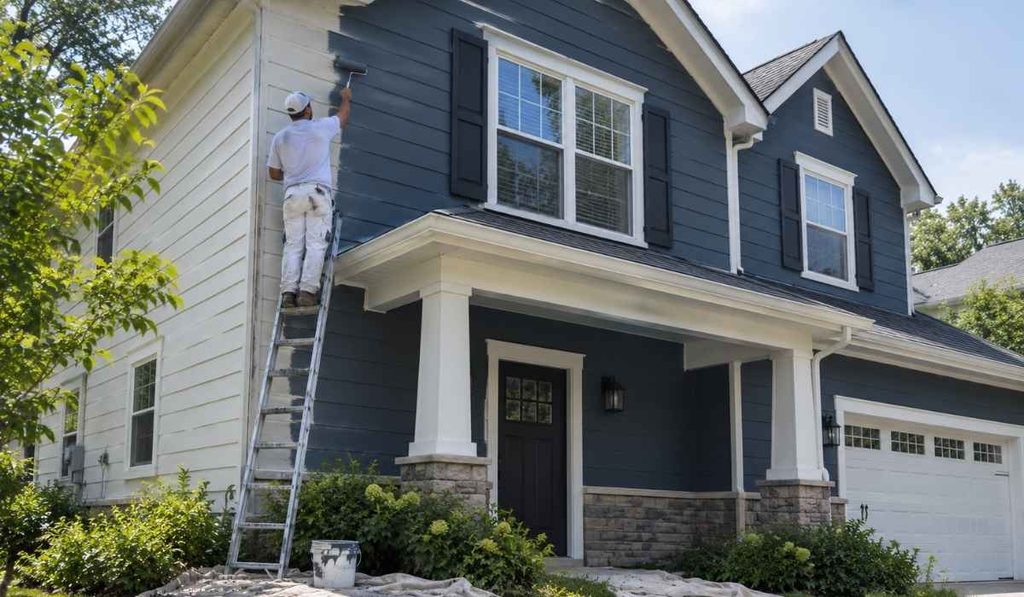
Signs Your Home Needs Exterior House Painting
Look at your walls in bright daylight. These are the most common signs of worn paint:
- Alligatoring: Cracks that look like alligator skin.
- Blistering: Bubbles in the paint, often on trim.
- Chalking: A fine powder that rubs off on your hand.
- Peeling: Paint lifts off in flakes, usually from moisture.
- Mildew: Dark or rust-colored stains on the surface.
Also check for cracked caulk around windows and doors, and for bare or soft wood. If you see several of these signs, plan your paint job soon.
Best Month for Exterior House Painting in Maryland
The best months for exterior house painting in Maryland are May and September. Early June and early October also work well.
Most exterior paints need temperatures between about 50°F and 85°F. May and September usually stay in that range. Days are mild, nights are warm enough, and humidity is lower than in midsummer.
| Months | Typical Maryland weather | Good for painting? |
|---|---|---|
| March to April | Cool nights, frequent rain | Not ideal |
| May to early June | Mild days, warm nights | Best |
| July to August | Hot, humid, with storms | Avoid |
| September to early October | Warm days, cooler nights | Best |
| November to February | Cold and damp | No |
These are typical patterns. Weather changes each year, so always check the forecast.
Why Not Summer?
Above 85°F, paint dries too fast and can leave brush marks and streaks. Humid days can make paint bubble or stay tacky. If you must paint in summer, work on the shaded side and start early, after the dew dries.
Why Not Winter?
Cold air stops paint from curing. Frost and damp walls also stop paint from sticking, so it can crack or peel within a year.
Tips for Picking Your Day
- Look for two to three dry days in a row.
- Keep nights above 50°F for the first day or two.
- Wait 24 to 48 hours after rain.
- Skip windy days, since wind blows dust onto wet paint.
- Check your paint can. Some products work at lower temperatures.
Location also matters. Western Maryland is cooler, so the season starts later and ends sooner. The Eastern Shore and areas near the Bay are more humid, so paint dries more slowly there.
How Much Does Exterior House Painting Cost?
Most exterior paint jobs cost $1.50 to $4.00 per square foot of paintable surface. A full repaint often runs from about $1,800 to $8,500 across the U.S. Prices in Maryland tend to run higher. A 2,000 sq. ft. home there often costs about $4,000 to $9,000.
The price changes with:
- Home size and height
- Siding type, such as wood, vinyl, brick, or stucco
- Amount of prep and repair work
- Paint quality
- Number of coats and color changes
If you paint it yourself, paint and supplies often cost $400 to $1,200. That does not include your time or the risk of ladder work.
How Much Paint Do You Need for Exterior House Painting?
One gallon covers about 250 to 400 square feet. Use this formula:
Wall area ÷ coverage per gallon × number of coats = gallons needed
For example, 2,000 sq. ft. of wall area, two coats, and 300 sq. ft. per gallon gives about 13 gallons. Rough siding and big color changes use more. Buy a little extra for touch-ups.
Tools for Exterior House Painting
- Ladder and drop cloths
- Pressure washer, or a hose and scrub brush
- Scraper and sandpaper
- Exterior caulk and a caulk gun
- Primer
- Brushes, rollers, or a paint sprayer
- Painter’s tape
How to Choose Paint and Color
Use 100% acrylic latex paint. It is flexible, holds color well, and handles weather changes.
Flat or satin works well on walls. Semi-gloss is easier to clean, so it suits trim and doors.
For color, match things you cannot change, such as the roof, brick, or stone. Test a sample on the wall and check it in the morning and evening. If you live in an HOA community, read its color rules first.
How to Do Exterior House Painting, Step by Step
1. Wash the Walls
Remove dirt, chalk, and mildew. Use low pressure and aim the spray down along the siding. Let the walls dry for 24 to 48 hours.
2. Scrape and Sand
Remove loose paint and smooth rough edges. You do not need to strip to bare wood if the old paint is firmly attached.
3. Repair and Caulk
Fix cracks and replace rotten wood. Seal gaps around windows, doors, and trim.
4. Prime
Cover bare wood, repaired spots, and stains with primer.
5. Paint from the Top Down
Do gutters and eaves first if they match the siding. Then paint the trim, and then the walls. Working top to bottom catches drips as you go.
6. Apply Two Coats
Let the first coat dry as the label says before you add the second.
A sprayer is fast, but it needs careful masking to stop overspray. Rolling over sprayed paint helps it bond.
DIY or Hire a Pro?
A small, one-story home in good shape is a fair DIY project. Tall homes, heavy repairs, and lots of trim take more skill and time. Ladder work at height is also risky.
Check your home’s age first. Homes built before 1978 may have lead paint, so test the paint before you sand or scrape. Federal rules also require certified contractors for paid work on these homes.
Many homeowners choose professional painting services when the job needs heavy prep, work at height, or a lot of trim. A pro also brings the right equipment, which saves time.
Common Exterior House Painting Mistakes
- Painting over dirty, wet, or peeling surfaces
- Painting in the wrong weather
- Skipping primer on bare wood
- Using cheap paint to save money now
- Painting in direct midday sun
How long does exterior house painting take?
A typical home takes about 3 to 7 days. Repairs and rain can add time.
How long does exterior paint last?
It often lasts 5 to 10 years. Sun exposure, siding type, and prep quality all affect this.
How long should I wait to paint after rain?
Wait at least 24 to 48 hours. Wood siding and humid days may need longer.
Can I paint over old paint?
Yes, if the old paint is firmly attached. Scrape off loose paint, sand the edges, and prime bare spots.
Can I paint brick?
Yes. Use a breathable masonry paint so moisture does not get trapped behind it.
Final Thoughts
Spring provides the perfect conditions for exterior house painting in Maryland. From ideal temperatures and low humidity to cost savings and the availability of contractors, spring is the best season to refresh your home with a new coat of paint. Whether you choose to paint your home yourself or hire a professional, spring ensures your exterior house painting will last longer and look better.
For expert exterior house painting services in Maryland, consider reaching out to USA Builders and Developers, where our team can help bring your vision to life with a professional touch and attention to detail.
Have Questions? Call Us Now!
We’re here to help—quick answers, friendly service, anytime you need!


Contact USA Builders and Developers
🌐 Website: www.usabuildersanddevelopers.com
📍 Serving: Baltimore, Betheda, Silver spring, and Montgomery Maryland
📌 Address: 2144 Priest Bridge Court, Suite 8, Crofton, MD 21114, USA