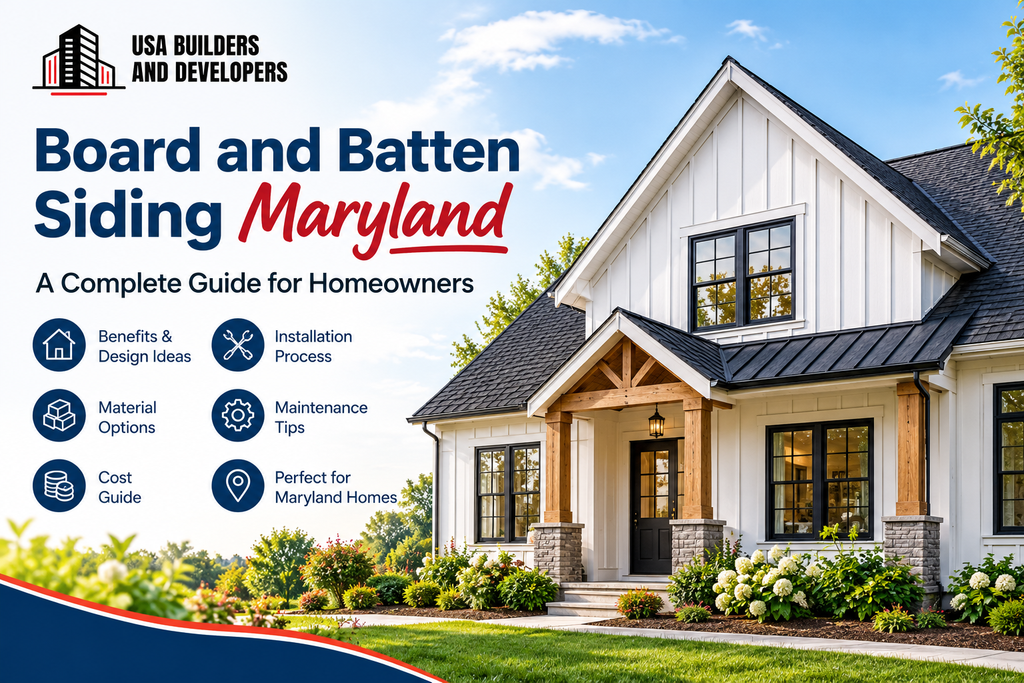
Board and batten siding Maryland homeowners choose can make a big difference in their home’s appearance, durability, and weather protection. Maryland experiences humid summers, regular rainfall, and cold winters, so choosing the right siding material is important. Board and batten siding offers a distinctive vertical design that works well with farmhouse, modern, and traditional home styles.
This siding style is available in several materials, including wood, vinyl, and fiber cement. Each option has different benefits, maintenance requirements, moisture resistance, and installation costs. The best choice depends on your home’s design, budget, and local weather conditions.
In this guide, we’ll explore the benefits and drawbacks of board and batten siding, compare popular materials, discuss design ideas and installation costs, and share maintenance tips to help you make the right choice for your Maryland home.
What Is Board and Batten Siding?
Board and batten siding is a type of exterior wall covering made with wide vertical boards and narrow strips called battens. The wide boards are installed side by side, while the narrow battens cover the seams between them.
This creates a distinctive vertical pattern that gives homes a clean, attractive, and slightly rustic appearance.
Board and batten siding is popular on modern farmhouse designs, cottages, barns, and traditional residential properties. Maryland homeowners can also use it to give older homes a fresh exterior look.
How Does Board and Batten Siding Work?
The installation typically includes:
- Wide boards: These form the main vertical siding surface.
- Narrow battens: These cover the joints between the boards.
- Fasteners: Nails or approved fastening systems secure the siding.
- Weather-resistant barrier: A protective layer beneath the siding helps manage water and moisture.
Where Is Board and Batten Siding Used?
Homeowners can use this siding style in several ways:
- Entire exterior walls for a consistent vertical appearance.
- Front-facing walls to create an attractive entrance.
- Gables and upper-story sections as decorative accents.
- Porches and additions to complement the home’s design.
For Maryland homes, choosing suitable materials and proper installation details is important because rain, humidity, and seasonal temperature changes can affect exterior siding.
Types of Board and Batten Siding for Maryland Homes
Choosing the right material is an important part of planning board and batten siding in Maryland. Different materials offer different levels of durability, maintenance, appearance, and cost.
Maryland homeowners should consider moisture resistance, seasonal temperature changes, and long-term maintenance before selecting a siding material.
Here are some popular options:
1. Wood Board and Batten Siding
<AsyncImage query=”natural wood vertical board and batten siding American farmhouse exterior” aspectRatio=”16:9″ width=”100%”/>
Wood is a traditional choice that gives homes a natural and warm appearance. Cedar and other suitable exterior wood species are commonly used for this siding style.
Benefits:
- Natural and attractive appearance.
- Can be painted or stained in different colors.
- Works well with farmhouse and traditional designs.
Considerations:
- Requires regular painting or staining.
- Needs protection against moisture and insects.
- Can warp or rot if poorly maintained.
2. Vinyl Board and Batten Siding
<AsyncImage query=”white vinyl board and batten vertical siding modern farmhouse home exterior” aspectRatio=”16:9″ width=”100%”/>
Vinyl is a popular option for homeowners looking for a relatively low-maintenance exterior. It comes in different colors and finishes and does not require regular painting.
Benefits:
- Low maintenance.
- Resists moisture and insect damage.
- Available in various colors.
- Generally more affordable than some premium materials.
Considerations:
- Can crack in very cold weather or after impact.
- May fade over time.
- Must be installed with room for thermal expansion and contraction.
3. Fiber Cement Board and Batten Siding
<AsyncImage query=”fiber cement board and batten siding gray modern American residential home” aspectRatio=”16:9″ width=”100%”/>
Fiber cement siding is made from a mixture of cement, sand, and cellulose fibers. It can provide the appearance of traditional wood while offering strong resistance to many common exterior problems.
Benefits:
- Resists moisture-related damage when properly installed and maintained.
- Does not attract termites.
- Durable and suitable for different architectural styles.
- Can be painted in different colors.
Considerations:
- Heavier than vinyl and wood.
- Usually requires professional installation.
- Paint and caulking need periodic maintenance.
4. Engineered Wood Board and Batten Siding
<AsyncImage query=”engineered wood vertical board and batten siding farmhouse exterior home” aspectRatio=”16:9″ width=”100%”/>
Engineered wood is manufactured using wood fibers and bonding materials to create siding products designed for exterior use. It offers a wood-like appearance with different product options and finishes.
Benefits:
- Natural wood appearance.
- Available in different colors and textures.
- Often easier to handle than some traditional wood products.
- Can complement modern and farmhouse homes.
Considerations:
- Requires proper sealing and installation.
- Exposed edges and damaged areas need attention.
- Moisture protection depends on the product and installation quality.
Which Type Is Best for Maryland Homes?
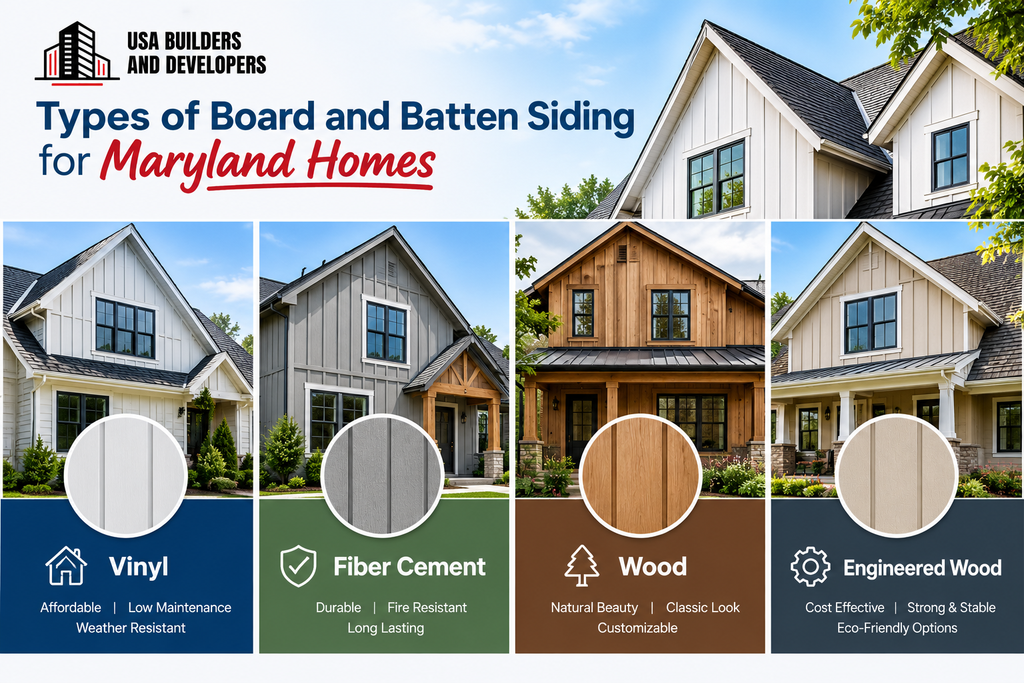
There is no single best material for every Maryland property. Vinyl may suit homeowners looking for lower maintenance, while fiber cement can be a good option for those prioritizing durability. Wood and engineered wood offer attractive natural-looking finishes but require careful moisture protection.
Before making a decision, compare product warranties, installation requirements, maintenance needs, and total project costs.
Best Board and Batten Siding Materials for Maryland Weather
Maryland experiences different weather conditions throughout the year. Summers can be hot and humid, while winters bring cold temperatures, rain, and occasional snow. These conditions can affect the appearance and performance of exterior siding.
When choosing board and batten siding in Maryland, homeowners should consider materials that can handle moisture, temperature changes, and seasonal weather.
1. Moisture Resistance
Rain and humidity can create problems for exterior siding, especially when water enters through damaged joints or poorly sealed areas.
Consider materials such as vinyl and fiber cement that offer good moisture resistance when correctly installed. Wood siding can also work well, but it needs suitable sealing, painting, and regular maintenance.
2. Resistance to Temperature Changes
Maryland experiences seasonal temperature changes. Some siding materials expand and contract as temperatures rise and fall.
Vinyl siding needs proper installation space to accommodate expansion and contraction. Other materials also require manufacturer-approved installation methods to prevent movement-related damage.
3. Protection Against Insects and Rot
Wood siding can be vulnerable to termites, insects, and rot when exposed to moisture or inadequate maintenance.
Fiber cement and vinyl are not food sources for termites and do not rot like natural wood. However, moisture can still damage the wall system behind any siding if drainage and installation details are poor.
4. Durability and Maintenance
Homeowners should consider how much time and money they want to spend maintaining their siding.
- Vinyl: Usually requires occasional cleaning and inspection.
- Fiber cement: Requires periodic painting, caulking, and inspections.
- Wood: Needs regular painting or staining and moisture checks.
- Engineered wood: Requires proper sealing and maintenance according to the manufacturer’s instructions.
5. Proper Installation and Ventilation
Even high-quality siding can develop problems when installed incorrectly. A suitable weather-resistant barrier, flashing around windows and doors, and proper drainage details help protect the home from water intrusion.
Professional installation is especially important around corners, roof intersections, windows, and other areas where water can enter.
What Should Maryland Homeowners Choose?
For many Maryland homes, vinyl and fiber cement are worth comparing because of their maintenance and moisture-resistance characteristics. Wood and engineered wood may also be suitable when homeowners prefer a natural appearance and are prepared for regular maintenance.
Always check the manufacturer’s installation instructions and warranty before selecting a material. The right choice depends on your home’s design, budget, exposure to weather, and maintenance preferences.
Pros and Cons of Board and Batten Siding
Before choosing board and batten siding in Maryland, homeowners should understand both its advantages and disadvantages. This siding style can improve curb appeal, but material selection, installation quality, and maintenance all affect its long-term performance.
Pros of Board and Batten Siding
1. Attractive Exterior Appearance
Board and batten siding creates a distinctive vertical pattern that gives homes a clean and stylish look. It works especially well with modern farmhouse, cottage, and traditional architectural designs.
2. Different Material Options
Homeowners can choose from vinyl, wood, fiber cement, and engineered wood. Each material offers different colors, textures, maintenance requirements, and price ranges.
3. Improved Curb Appeal
The vertical lines add visual interest to exterior walls. Homeowners can also combine board and batten with traditional horizontal siding for a more customized appearance.
4. Flexible Design Choices
This siding style can be used across the entire exterior or as an accent on gables, entryways, and upper sections of a house.
5. Long-Term Performance with Proper Installation
Quality materials, correct installation, and regular maintenance can help siding remain attractive and functional for many years.
Cons of Board and Batten Siding
1. Installation Can Be More Complex
The vertical layout requires accurate spacing, alignment, and fastening. Poor installation can affect the appearance and performance of the siding.
2. Maintenance Depends on the Material
Wood may need regular painting or staining, while fiber cement requires periodic paint and caulking maintenance. Vinyl generally needs less maintenance but still requires inspection.
3. Moisture Problems Can Occur
Incorrect flashing, damaged joints, and poor drainage can allow water to reach the wall structure behind the siding.
4. Costs Can Vary
The total project price depends on the material, house size, labor, wall condition, and installation complexity. Premium materials may increase the overall budget.
5. Repairs May Require Matching Existing Materials
Finding the exact color, texture, or profile for older siding can sometimes be difficult, especially if the original product has been discontinued.
Is Board and Batten Siding Worth It?
Board and batten siding can be a good investment for Maryland homeowners who want a distinctive exterior design and are willing to choose suitable materials and maintain them properly.
Compare the initial installation cost with long-term maintenance requirements before making your final decision.
Board and Batten Siding Cost in Maryland
The cost of board and batten siding in Maryland depends on the material, exterior wall area, labor, home design, and condition of the existing siding. Homeowners should compare the complete installation cost rather than looking at material prices alone.
How Much Does Board and Batten Siding Cost?
For initial budgeting, board and batten siding can cost approximately $4–$16 per square foot installed, depending on the material and project requirements. This is a broad planning range, not a guaranteed Maryland contractor quote.
Estimated Cost by Siding Material
| Siding material | Cost considerations |
|---|---|
| Vinyl | Often a more budget-friendly option |
| Engineered wood | Mid-range option with a wood-like appearance |
| Natural wood | Cost varies by wood species and finish |
| Fiber cement | Can cost more because of material weight and installation labor |
| Metal | Depends on panel type, finish, and installation details |
Actual prices vary by product, supplier, and contractor.
What Factors Affect Installation Costs?
Several factors can change the total price of a siding project in Maryland.
1. Home Size and Wall Area
Larger exterior wall areas require more siding materials and installation time. Remember that the square footage of your home’s floor area is not the same as its exterior wall area.
2. Material Selection
Vinyl, wood, engineered wood, and fiber cement have different material and installation costs. Premium finishes can increase the overall budget.
3. Labor and Installation Complexity
Board and batten siding requires careful measurements, vertical alignment, cutting, and fastening. Multi-story homes, steep gables, and complicated exterior designs may require additional labor.
4. Removing Old Siding
If your home has existing siding that needs to be removed, you may have additional expenses for labor, disposal, and surface preparation.
5. Repairs and Additional Materials
Damaged wall sheathing, moisture barriers, flashing, trim, and window surrounds can increase project costs. Ask your contractor whether these items are included in the estimate.
Example: Calculating Your Siding Budget
Suppose your home has approximately 1,500 square feet of exterior wall area.
Using the broad planning range of $4–$16 per square foot:
- Lower estimate: 1,500 × $4 = $6,000
- Higher estimate: 1,500 × $16 = $24,000
Illustrative calculation only. Actual Maryland project prices may fall outside this range depending on materials, labor, repairs, and project scope.
How to Save Money on Board and Batten Siding
Maryland homeowners can manage their siding budgets with a few practical steps:
- Compare at least three written contractor estimates.
- Choose a material that matches your budget and maintenance preferences.
- Measure the exterior wall area before planning your budget.
- Ask whether removal and disposal are included.
- Check for hidden damage before installation begins.
- Compare product warranties and installation guarantees.
Get a Siding Estimate for Your Maryland Home
Every home has different exterior dimensions, materials, and installation requirements. A professional assessment can help you understand the expected cost and avoid unexpected expenses.
Contact USA Builders & Developers to discuss your exterior renovation project and request a free estimate.
Popular Board and Batten Siding Design Ideas in Maryland
Choosing the right exterior design can make your home more attractive and improve its curb appeal. Board and batten siding in Maryland offers several design possibilities, whether you own a traditional home, a modern property, or a farmhouse-style house.
Here are some popular design ideas to consider.
1. White Board and Batten Siding
White board and batten siding creates a bright, clean appearance. It is especially popular on modern farmhouse homes and looks attractive with black window frames, dark roofing, and natural wood accents.
This design works well for homeowners who want a timeless exterior that complements different architectural styles.
2. Gray Board and Batten Siding
Gray siding provides a balanced look that works with both traditional and contemporary homes. Light gray creates a subtle appearance, while darker gray can give the exterior a more modern feel.
Consider pairing gray siding with white trim, dark gutters, and neutral landscaping.
3. Blue Board and Batten Siding
Blue board and batten siding can give a home a distinctive yet welcoming appearance. Navy blue creates a bold exterior, while lighter blue shades offer a softer look.
White trim and a contrasting front door can complete this design.
4. Modern Farmhouse Siding
Modern farmhouse designs often combine vertical board and batten siding with horizontal lap siding, dark window frames, and simple exterior details.
Homeowners can use board and batten siding on the entire house or limit it to the front-facing gables for added visual interest.
5. Board and Batten with Stone Accents
Combining board and batten siding with stone veneer can create an attractive exterior with contrasting textures.
Stone accents may work well around the entrance, porch columns, or lower exterior walls. Choose complementary colors so the materials create a consistent overall design.
6. Two-Tone Board and Batten Siding
A two-tone exterior combines two siding colors to create contrast and highlight architectural features.
For example, a homeowner might choose white siding for the main exterior and dark gray for the gables. Another option is to combine vertical siding with horizontal siding in complementary colors.
Tips for Choosing the Right Design in Maryland
Before selecting a siding style, consider these factors:
- Home architecture: Choose colors and patterns that complement your home’s original design.
- Roof color: Coordinate siding with your existing roof and gutters.
- Climate and maintenance: Select a suitable material and finish for Maryland’s changing weather conditions.
- Neighborhood appearance: Consider nearby homes and any applicable community guidelines.
- Long-term appeal: Neutral colors and balanced designs may remain attractive as trends change.
The best design is one that suits your home, budget, and personal preferences. Before starting your project, request material samples and compare them in natural daylight.
How to Install Board and Batten Siding
Installing board and batten siding requires accurate measurements, proper preparation, and attention to moisture protection. For Maryland homeowners, correct installation is especially important because rain, humidity, and seasonal temperature changes can affect exterior walls.
Here is an overview of the typical installation process.
Step 1: Inspect and Prepare the Exterior Walls
Before installation begins, inspect the existing exterior for damaged siding, rot, moisture problems, and uneven surfaces.
Remove old siding if necessary and repair damaged sheathing before proceeding. The wall surface should be suitable for the selected siding product.
Step 2: Install a Weather-Resistant Barrier
A suitable weather-resistant barrier helps protect the wall structure from water that gets behind the siding.
Install the barrier according to the manufacturer’s instructions and applicable building codes. Proper integration with windows, doors, and other openings is important for effective moisture management.
Step 3: Measure and Plan the Layout
Measure the exterior walls and decide how the vertical boards will be spaced.
Plan the layout around corners, windows, doors, and other architectural features. Accurate planning helps create consistent spacing and reduces unnecessary material waste.
Step 4: Install Flashing and Trim
Install the required flashing around windows, doors, corners, and other areas where water may enter.
Proper flashing directs water away from vulnerable parts of the building. Follow the siding manufacturer’s instructions for trim, clearances, and drainage details.
Step 5: Install the Vertical Boards
Position the main boards according to the planned layout. Secure them using the approved fasteners and fastening pattern for the selected material.
Maintain consistent alignment and follow the manufacturer’s requirements for spacing, joints, and movement.
Step 6: Install the Battens
Attach the narrow battens over the joints between the wider boards when using a traditional board-and-batten system.
Make sure the battens are aligned consistently and installed according to the product specifications. Some manufactured siding products use integrated profiles or different joint details, so the installation method may vary.
Step 7: Finish and Inspect the Siding
Complete the installation by finishing the trim, checking joints, and applying paint or sealant where required by the product instructions.
Inspect the exterior for uneven boards, exposed fasteners, damaged material, and incomplete flashing details.
Should You Install Board and Batten Siding Yourself?
DIY installation may be possible for homeowners with suitable construction skills and the correct tools. However, mistakes involving flashing, moisture barriers, fastening, or material clearances can lead to costly repairs.
Professional installation may be the better choice for multi-story homes, complex exterior designs, or projects involving damaged wall structures.
Important: Always follow the manufacturer’s installation instructions and applicable Maryland building requirements. This overview is educational and does not replace product-specific instructions or professional assessment.
How to Maintain Board and Batten Siding in Maryland
Regular maintenance helps keep your home’s exterior attractive and can extend the service life of your siding. For homeowners in Maryland, seasonal rain, humidity, winter weather, and temperature changes make exterior inspections particularly important.
The maintenance required for board and batten siding in Maryland depends on the material you choose. Vinyl generally requires less upkeep than natural wood, while fiber cement and engineered wood need care according to their product specifications.
1. Clean Your Siding Regularly
Dirt, pollen, and other outdoor debris can accumulate on exterior walls over time.
Wash siding using a method approved by the manufacturer. Mild soap and water may be suitable for many products, but avoid excessive water pressure that could damage the finish or force moisture behind the siding.
2. Inspect for Moisture Damage
After periods of heavy rain, inspect your siding for signs of moisture problems.
Look for:
- Soft or deteriorating wood.
- Peeling paint or damaged finishes.
- Loose or separated boards.
- Stains that may indicate water intrusion.
- Damaged caulking or flashing.
Address problems promptly to reduce the risk of more extensive repairs.
3. Check for Cracks and Loose Sections
Strong winds, impacts, and seasonal movement can damage exterior siding.
Inspect the boards, battens, corners, and trim for cracks, loose fasteners, or other visible damage. Repair issues using the methods recommended for your siding material.
4. Maintain Paint and Protective Finishes
Wood siding generally requires periodic painting or staining to protect it from moisture and weather exposure.
Fiber cement and engineered wood may also require repainting and attention to caulking. Follow the manufacturer’s recommendations rather than relying on a fixed maintenance schedule for every product.
5. Keep Gutters and Downspouts Clear
Blocked gutters can cause water to overflow onto exterior walls and collect near the foundation.
Clean gutters regularly and ensure downspouts direct water away from the house. Proper drainage helps protect siding and other exterior building components.
6. Inspect Your Siding Seasonally
Consider inspecting your home’s exterior in spring and fall, as well as after severe storms.
Check vulnerable areas around windows, doors, roof edges, and exterior corners. If you notice persistent moisture, widespread damage, or signs of rot, consider having a qualified contractor inspect the affected area.
How Long Does Board and Batten Siding Last?
The lifespan of board and batten siding depends on its material, product quality, installation, maintenance, and exposure to weather.
Vinyl, fiber cement, wood, and engineered wood have different service-life expectations. Rather than assuming every product will last the same number of years, review the manufacturer’s documentation and warranty.
Maintenance tip for Maryland homeowners: Keeping water away from exterior walls and addressing small problems early can help protect your siding and reduce the likelihood of expensive repairs.
Is Board and Batten Siding a Good Choice for Maryland Homes?
Yes, board and batten siding can be a good choice for Maryland homes when homeowners select suitable materials and ensure proper installation. Its vertical design works well with modern farmhouse, traditional, and contemporary properties.
However, Maryland’s changing weather conditions make material selection and moisture protection important considerations.
Benefits for Maryland Homeowners
1. Suitable for Different Home Styles
Board and batten siding complements many architectural styles found throughout Maryland. Homeowners can use it on entire exterior walls or as an accent on gables and entryways.
2. Multiple Material Choices
Vinyl, fiber cement, wood, and engineered wood allow homeowners to compare appearance, maintenance requirements, and installation costs.
3. Options for Different Budgets
The total cost depends on the chosen material, exterior wall area, labor, and preparation work. Comparing several options can help homeowners find a solution that meets their budget.
4. Flexible Color and Design Options
White, gray, blue, and earth-tone finishes can create different exterior looks. Board and batten siding can also be combined with horizontal siding or stone accents.
What Maryland Homeowners Should Consider
Before choosing this siding style, consider the following factors.
- Humidity and rainfall: Proper flashing, drainage, and moisture protection help prevent water-related damage.
- Winter temperatures: Select materials suitable for local temperature changes and follow the manufacturer’s installation instructions.
- Maintenance: Wood and painted siding may require more upkeep than some other materials.
- Installation quality: Incorrect fastening, poor flashing, or inadequate clearances can cause problems regardless of material quality.
- Budget: Include labor, old siding removal, trim, and any necessary wall repairs in your estimate.
Which Board and Batten Material Is Best for Maryland?
The right material depends on your priorities.
- Vinyl: Worth considering if you prefer relatively low maintenance.
- Fiber cement: A good option to compare if you want a durable, wood-like appearance.
- Natural wood: Suitable if you prefer an authentic appearance and can maintain its protective finish.
- Engineered wood: Worth considering if you want a wood-style finish with product-specific performance features.
No material is maintenance-free, and performance depends on the product and installation details.
Final Recommendation
Board and batten siding can improve curb appeal and provide a distinctive exterior for Maryland homes. Before making a decision, compare material samples, warranties, maintenance requirements, and written installation estimates.
For the best result, choose a siding system designed for your home’s conditions and have it installed according to the manufacturer’s instructions and applicable building codes.
Board and Batten vs. Traditional Lap Siding
When choosing siding for your Maryland home, two popular options are board and batten siding and traditional lap siding. Both can protect your home and improve its curb appeal, but they offer different appearances, maintenance needs, and design possibilities.
Understanding these differences can help you choose the right siding for your home, budget, and personal style.
1. Appearance and Style
Board and batten siding features wide vertical boards with narrow strips called battens covering the seams. This creates a distinctive vertical pattern that works well with modern farmhouse, cottage, and contemporary home designs.
Traditional lap siding uses horizontal boards or panels that overlap each other. It offers a classic appearance that suits traditional, colonial, and many other Maryland home styles.
2. Installation Differences
Board and batten siding requires careful measurements and alignment to maintain consistent spacing between the vertical boards and battens. Proper flashing, moisture protection, and installation details are especially important.
Lap siding is installed in horizontal rows, with each course overlapping the one below it. Correct alignment and proper water management are also essential to help prevent moisture from entering the wall.
Both options require careful installation, and the complexity depends on the material, home design, and condition of the existing exterior.
3. Maintenance Requirements
Maintenance depends largely on the siding material rather than its orientation.
- Board and batten siding: Inspect the battens, seams, joints, and finish for cracks, loose sections, or signs of moisture damage.
- Lap siding: Check overlapping joints, caulking where appropriate, painted surfaces, and areas around windows and doors.
- Both options: Clean the surface as recommended by the manufacturer and address water drainage problems promptly.
Wood siding generally requires more ongoing care than many vinyl products. Fiber cement and engineered wood also require maintenance according to their manufacturers’ instructions.
4. Cost Comparison
The cost of either siding style depends on the material, labor rates, wall area, existing siding removal, and any repairs needed before installation.
Board and batten siding may require additional labor because of its vertical layout, battens, trim details, and finishing work. However, the final price depends on the specific product and project.
Traditional lap siding may be more economical for some homes because of its familiar installation process and wide range of available products. It is not always cheaper, though, especially when premium materials or detailed trim work are involved.
Tip for Maryland homeowners: Request itemized estimates for both styles. Compare material quality, labor, moisture protection, trim, removal, and cleanup rather than choosing based on the lowest price alone.
5. Which Siding Is Better for Maryland Homes?
Both siding styles can work well in Maryland when the materials are appropriate for the local climate and installed correctly.
Board and batten siding is a strong choice if you want a distinctive vertical design, a modern farmhouse appearance, or a combination of vertical siding and traditional materials.
Traditional lap siding may be a better fit if you prefer a timeless horizontal appearance or want to maintain the architectural style of an older home.
Maryland experiences humid summers, rainfall, cold winters, and seasonal temperature changes. For either siding style, proper flashing, a suitable weather-resistant barrier, appropriate drainage details, and manufacturer-approved installation are essential.
Board and Batten vs. Lap Siding: Quick Comparison
| Feature | Board and Batten Siding | Traditional Lap Siding |
|---|---|---|
| Design | Vertical lines and a distinctive appearance | Horizontal lines and a classic appearance |
| Best suited for | Modern farmhouse, cottage, and contemporary styles | Traditional, colonial, and versatile home styles |
| Installation | Requires careful vertical alignment and batten placement | Requires accurate horizontal alignment and overlapping |
| Maintenance | Depends on material; inspect battens and seams | Depends on material; inspect overlaps and joints |
| Cost | Varies by material, labor, and design details | Varies by material, labor, and design details |
| Design flexibility | Works well for full exteriors or accent walls | Works well for full exteriors and many architectural styles |
| Maryland suitability | Suitable with proper materials and installation | Suitable with proper materials and installation |
Final recommendation: Choose board and batten siding if you want strong vertical lines and a more distinctive exterior. Choose traditional lap siding if you prefer a classic, horizontal look. For either option, compare materials and installation estimates before making your decision.
When to Hire a Professional Siding Contractor in Maryland
Installing board and batten siding can improve your home’s appearance and help protect its exterior. However, successful installation requires proper measurements, moisture protection, flashing, and attention to detail. Hiring a professional siding contractor can help you avoid costly mistakes and achieve a durable finish.
1. When Installing New Siding
If you are installing board and batten siding for the first time, a professional can help you choose the right material, plan the layout, and prepare the exterior properly.
A contractor can also identify potential problems with the existing wall before installation begins.
2. When Replacing Old or Damaged Siding
Consider hiring a contractor if your existing siding has:
- Cracked, warped, or loose panels
- Peeling paint or deteriorating wood
- Signs of moisture damage or rot
- Mold or mildew that keeps returning
- Gaps around windows, doors, or exterior trim
These problems may indicate that repairs are needed beneath the siding. Covering damaged materials without addressing the underlying issue can lead to further problems.
3. When Your Home Has Moisture Problems
Maryland’s humid summers and rainy periods make proper water management important for exterior siding.
A professional can inspect areas around windows, doors, roof edges, and other openings where water may enter. They can also assess flashing, the weather-resistant barrier, and drainage details to help protect the wall assembly.
If you notice persistent dampness, water stains, or rotting materials, address the cause before installing new siding.
4. When You Want a Complex Design
Some board and batten projects include multiple siding materials, contrasting colors, decorative trim, or different patterns across the exterior.
Professional installation can help maintain consistent spacing, straight vertical lines, clean corners, and a polished finish. It can be particularly helpful for multi-story homes or exterior walls that are difficult to access safely.
5. How to Choose the Right Siding Contractor
Before hiring a siding contractor in Maryland, consider these factors:
- Experience: Ask about previous board and batten siding projects.
- References and reviews: Check customer feedback and request examples of completed work.
- Written estimates: Compare material costs, labor, removal, repairs, and cleanup.
- Insurance and licensing: Verify applicable Maryland and local requirements.
- Installation details: Ask how the contractor will handle flashing, moisture protection, and drainage.
- Warranty information: Understand what the product warranty covers and whether the contractor offers a separate workmanship warranty.
Avoid choosing a contractor based only on the lowest price. Clear communication, suitable materials, and correct installation methods are also important.
Get Help With Your Maryland Siding Project
Whether you are replacing old siding or planning a new exterior, choosing the right materials and installation approach can make a significant difference in the final result.
USA Builders & Developers can be contacted to discuss your exterior construction needs and request a project estimate.
Ready to improve your home’s exterior? Get Your Free Estimate or call +1 443 551 0006 to discuss your project.
Frequently Asked Questions About Board and Batten Siding in Maryland
1. What is board and batten siding?
Board and batten siding is an exterior siding style that uses wide vertical boards with narrow strips called battens covering the seams. It creates a distinctive look that works well with modern farmhouse, cottage, and contemporary homes.
2. Is board and batten siding a good choice for Maryland homes?
Yes, board and batten siding can be a good choice for Maryland homes when you select suitable materials and ensure proper installation. Because Maryland experiences humidity, rainfall, and seasonal temperature changes, moisture protection and correct drainage details are important.
3. How much does board and batten siding cost in Maryland?
The cost depends on the siding material, home size, labor, removal of existing siding, and any repairs required. For an accurate estimate, ask a local contractor to inspect your home and provide a detailed written quote.
4. What is the best material for board and batten siding in Maryland?
Vinyl, fiber cement, wood, and engineered wood are common options. Vinyl is often chosen for its relatively low maintenance, while fiber cement offers durability when properly installed and maintained. The best material depends on your budget, design preferences, and maintenance expectations.
5. Does board and batten siding require a lot of maintenance?
Maintenance requirements depend on the material. Wood siding may need periodic painting, staining, or sealing. Vinyl generally requires less upkeep, while fiber cement and engineered wood need maintenance according to the manufacturer’s recommendations. Regular inspections help identify problems early.
6. How long does board and batten siding last?
Its lifespan depends on the material, product quality, installation, weather exposure, and maintenance. Some products can last for decades when installed and cared for properly. Check the manufacturer’s specifications and warranty for product-specific expectations.
7. Is board and batten siding waterproof?
No siding should be treated as completely waterproof on its own. A properly designed exterior wall system uses suitable flashing, a weather-resistant barrier, and drainage details to help manage water and protect the structure behind the siding.
8. Can board and batten siding be installed over existing siding?
In some situations, installation over existing siding may be possible, but it is not suitable for every home. The existing surface must be evaluated for stability, moisture damage, wall conditions, and applicable building requirements. Removing old siding may be necessary to address hidden problems.
9. Is board and batten siding more expensive than lap siding?
It can be, depending on the material, installation labor, trim details, and complexity of the project. Neither style is always more expensive. Comparing itemized estimates for both options is the best way to understand the cost difference for your home.
10. Can I use board and batten siding on only part of my house?
Yes. Many homeowners use it on front-facing walls, gables, porches, entryways, or other accent areas while using a different siding style elsewhere. This approach can add visual interest without covering the entire exterior in one pattern.
11. What colors work best for board and batten siding?
Popular choices include white, gray, navy blue, beige, and earthy green. White and neutral shades complement many architectural styles, while darker colors create a bold appearance. Consider your roof color, brickwork, trim, and surrounding homes before choosing a final color.
12. Should I hire a professional to install board and batten siding?
Professional installation is worth considering, especially for multi-story homes, complex designs, or projects involving damaged siding and moisture concerns. An experienced contractor can help ensure proper preparation, flashing, alignment, and installation according to the product instructions.
Final Thoughts on Board and Batten Siding in Maryland
Board and batten siding is an attractive option for homeowners who want to improve their property’s curb appeal with a distinctive vertical design. It works well with modern farmhouse, cottage, and contemporary architectural styles and can be installed across an entire exterior or used as an accent.
When considering board and batten siding in Maryland, it is important to choose a material that suits your budget, maintenance preferences, and local weather conditions. Vinyl, fiber cement, wood, and engineered wood each offer different benefits.
Proper installation is equally important. Appropriate flashing, moisture protection, drainage details, and regular maintenance can help protect your home’s exterior and support the siding’s long-term performance.
Before making a decision, compare materials, review your design options, and request a detailed estimate from a qualified contractor. The right siding solution can enhance your home’s appearance while meeting your practical needs.
Ready to Upgrade Your Home’s Exterior?
USA Builders & Developers can help you explore options for your exterior construction project.
Need help planning your siding project? Get your free estimate today!
Have questions? Call us today at +1 443 551 0006.
Choose the right siding solution to bring your home’s exterior vision to life.
Have Questions? Call Us Now!
We’re here to help—quick answers, friendly service, anytime you need!