
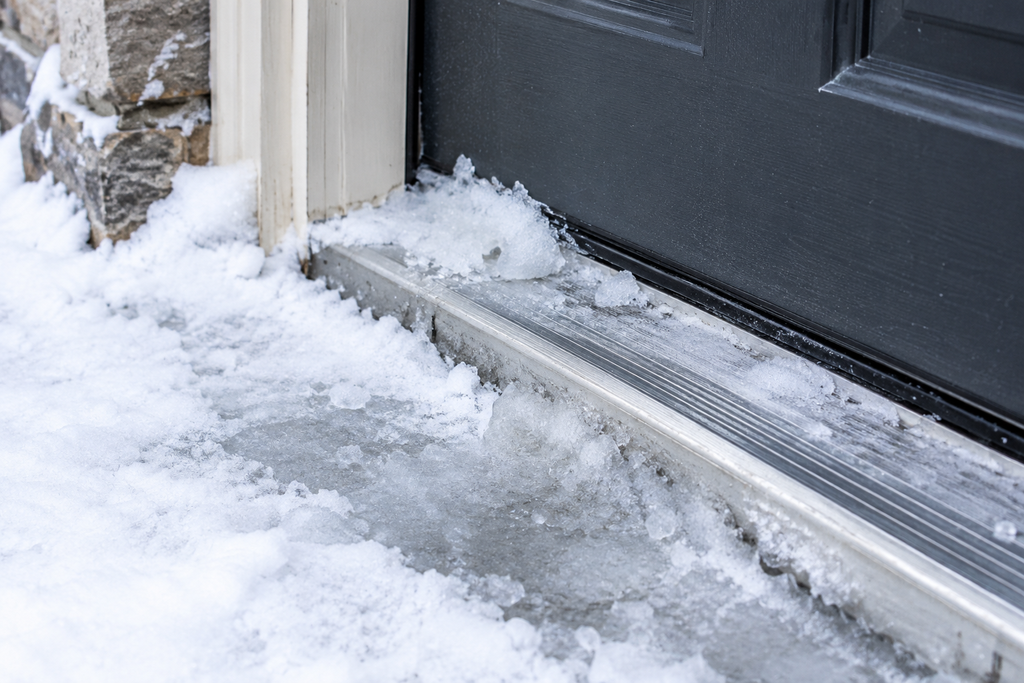
Snow can create problems around doors, entryways, garages, and other low areas of a property. One common issue is snow buildup on the ground at a threshold. When snow collects near a doorway, it can block the entrance, trap moisture, create slippery surfaces, and allow water to enter the building when the snow melts.
This problem may look minor at first. However, repeated snow accumulation can contribute to water damage, damaged door frames, frozen drainage areas, and other winter maintenance issues.
Understanding why collecting snow buildup on the ground at a threshold can help you prevent larger problems. Simple steps such as clearing snow early, improving drainage, sealing gaps, and checking the surrounding surface can make a major difference.
What Does snow buildup on the ground at a threshold?
A threshold is the area where a door meets the floor or ground. It creates a transition between the inside and outside of a building.
Snow buildup on the ground at a threshold happens when snow collects directly outside or around this transition point. It may form because of snowfall, wind, poor grading, blocked drainage, or snow pushed toward the doorway during shoveling.
The problem becomes more serious when snow remains against the door for several hours or days. As temperatures change, the snow can melt and refreeze. Meltwater may then move toward the threshold instead of away from the building.
This can create several risks, especially during repeated freeze-and-thaw cycles.
Why Does Snow Build Up Near a Door Threshold?
Several factors can cause snow buildup on the ground at a threshold to collect around an entrance. Identifying the cause is important because simply removing the snow may not solve the problem permanently.
1. Heavy Snowfall
The most obvious cause is a large amount of snow falling within a short period.
When snowfall is heavy, snow buildup on the ground at a threshold can quickly cover walkways and entry areas. If the area is not cleared soon, additional snow can build on top of the existing layer.
The problem can become worse near doors because wind may push loose snow toward the entrance.
2. Wind-Driven Snow
Strong winter winds can move snow from open areas toward walls and doors.
This is especially common around buildings with exposed entrances. Snow buildup on the ground at a threshold can drift against the side of a building and form a deep pile near the threshold.
Even if the rest of the walkway is relatively clear, wind can create a concentrated snowdrift at one doorway.
3. Poor Surface Grading
The ground around a building should generally direct water away from the structure.
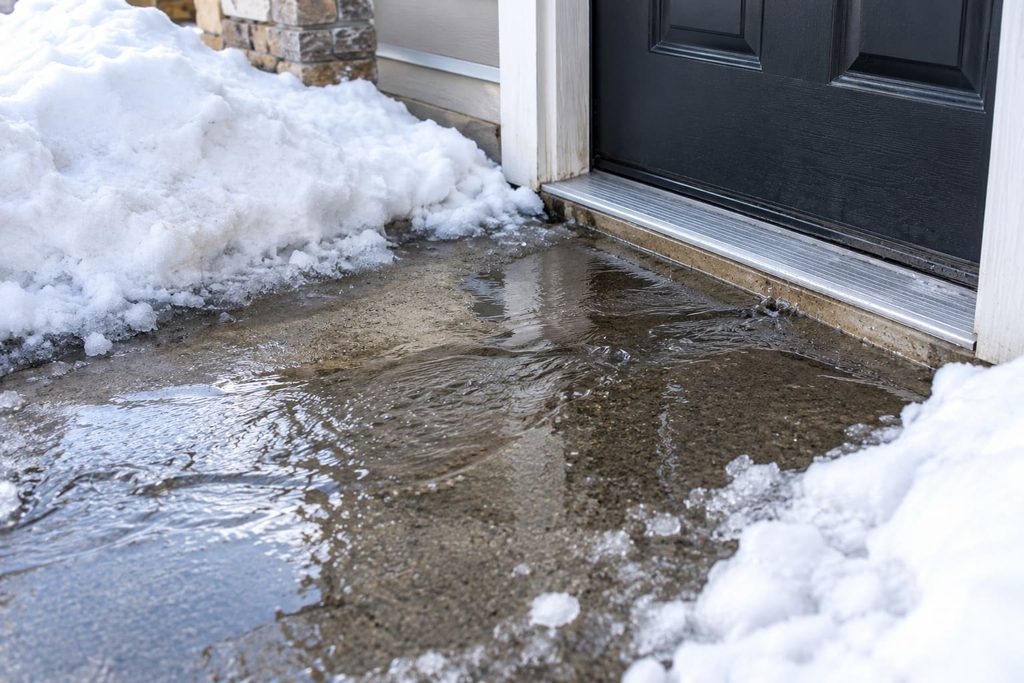
If the surface slopes toward the doorway, melting snow can move toward the threshold. During cold weather, this water may freeze and create ice.
Poor grading can therefore turn a simple snow problem into a drainage and water intrusion issue.
4. Blocked Drains and Gutters
A nearby drain can help carry melting snow and rainwater away from an entrance. However, leaves, dirt, ice, or debris can block the drainage path.
Blocked gutters can also release water near a doorway instead of directing it away from the building.
Before winter, inspect nearby drains, downspouts, and gutters to make sure water has a clear path away from the entrance.
5. Snow Piled Too Close to the Door
Shoveling snow buildup on the ground at a threshold away from a walkway is important, but where you place the snow also matters.
Pushing large amounts of snow directly beside a doorway can create a tall pile near the threshold. When temperatures rise, that pile can produce a large amount of meltwater.
Whenever possible, move cleared snow to a location where melting water can drain away from the building.
Is snow buildup on the ground at a threshold Dangerous?
Yes, Snow buildup on the ground at a threshold depends on the amount of snow and the surrounding conditions.
The most immediate concern is usually slipping and falling. Snow can hide ice, uneven surfaces, steps, or other hazards.
A second concern is water intrusion. When snow melts, water may collect against the threshold. If the door seal, foundation, or surrounding materials are damaged, water can enter the building.
There can also be structural and maintenance concerns if the same area repeatedly freezes and thaws.
How Can Snow Damage a Door Threshold?
Snow itself is not usually the main problem. The repeated cycle of melting and freezing can cause more trouble.
When snow melts, water may reach small gaps around the door. If temperatures drop again, that moisture can freeze and expand.
Over time, repeated freezing and thawing can contribute to:
- Cracked sealants
- Damaged door sweeps
- Deteriorated threshold materials
- Ice formation around the entrance
- Moisture damage
- Water stains
- Damaged flooring near the door
- Mold growth when moisture remains indoors
Wooden components can be especially vulnerable when they stay wet for long periods.
What Should You Do When snow buildup on the ground at a threshold?
The first step is to remove the snow safely.
Use a shovel to clear the entrance, walkway, and area directly around the door. Avoid striking the door, threshold, siding, or other building materials with the shovel.
If ice has formed, use an appropriate ice-melting product or another safe method suitable for the surface.
Do not pour hot water over a heavily iced threshold. The water can quickly refreeze when it reaches cold surfaces, creating an even more dangerous layer of ice.
After clearing the snow buildup on the ground at a threshold, inspect the area for signs of water accumulation or damage.
How to Prevent snow buildup on the ground at a threshold Near a Door
Preventing snow accumulation is easier than dealing with repeated water and ice problems.
Keep the Entrance Clear
Clear snow after major snowfall instead of allowing several layers to build up.
Pay special attention to door swings, steps, ramps, and narrow walkways. A clear entrance is safer and allows meltwater to move away from the building.
Maintain Proper Drainage
Make sure water has a clear path away from the threshold.
Check nearby drains and remove debris before winter. Downspouts should also discharge water far enough away from the foundation and entrance.
Good drainage is important because melting snow behaves like any other source of surface water.
Check the Door Sweep
A door sweep helps close the gap between the bottom of the door and the threshold.
If the sweep is cracked, loose, or worn out, cold air and moisture may enter through the opening.
Replacing a damaged sweep is a simple maintenance task that can improve protection around the doorway.
Inspect the Threshold Seal
Look for cracks or gaps around the threshold.
Sealant can deteriorate because of age, weather, movement, and temperature changes. Repairing small gaps before winter can help prevent moisture from entering.
Move Snow Away From the Building
When clearing snow, avoid creating large piles directly against exterior walls and doors.
Place snow where it can melt safely without sending water toward the foundation or entrance.
What Happens When Snow Melts Near a Threshold?
Melting snow can produce more water than many property owners expect.
If snow has accumulated several inches deep around an entrance, warmer weather can quickly turn that snow into surface water.
If the surrounding ground slopes away from the building, the water can drain safely. But if the area slopes toward the threshold, water may collect beside the door.
This can increase the chance of:
- Water entering under the door
- Ice forming overnight
- Wet flooring
- Damaged flooring materials
- Moisture around the foundation
- Mold or mildew
- Erosion around the entrance
For this reason, snow removal and drainage should be considered together.
Can Snow Cause Foundation Problems?
Snow buildup on the ground at a threshold alone does not normally damage a properly maintained foundation. However, repeated moisture exposure can contribute to problems around a building.
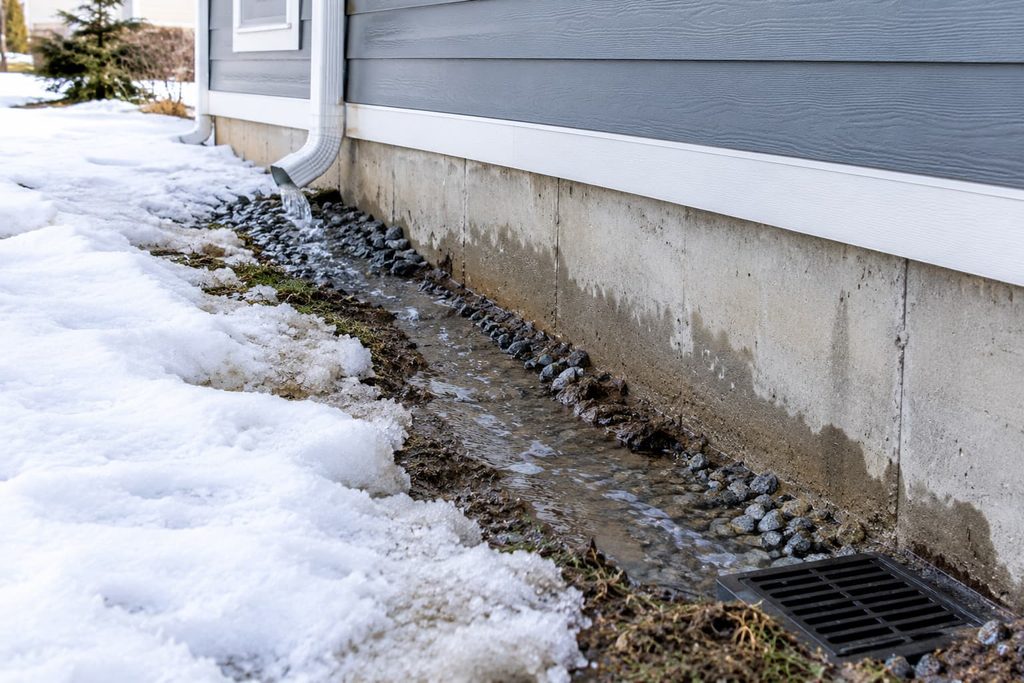
When large amounts of snow melt near the foundation, the resulting water can enter cracks or poorly sealed areas.
If the property already has drainage problems, foundation cracks, or waterproofing weaknesses, melting snow may make those issues more noticeable.
Signs of a possible moisture problem include:
- Damp basement walls
- Water stains
- Musty odors
- Cracks that appear wet
- Efflorescence on masonry
- Water pooling near the foundation
- Peeling paint or damaged finishes
If these signs appear after snow melts, inspect the drainage and waterproofing around theproperty.
Snow Buildup vs. Ice Buildup at a Threshold
Snow and ice create different hazards.
Snow buildup on the ground at a threshold is usually easier to remove with a shovel. Ice can be harder to see and much more difficult to remove safely.
Ice commonly forms when snow melts during the day and freezes again at night.
This creates a repeating cycle:
Snow falls → snow melts → water reaches the threshold → temperatures drop → water freezes → more snow falls.
Over several days, a small entrance problem can become a thick layer of compacted snow and ice.
Clearing the area early can help prevent this cycle.
Should You Use Salt on a Door Threshold?
Ice-melting products can help reduce slippery conditions, but they should be used carefully.
Some deicing products can damage certain concrete, masonry, metal, wood, or landscaping materials. They can also affect nearby plants and may be tracked indoors.
Always choose a product that is appropriate for the surface and follow its application instructions.
For sensitive areas, physical snow and ice removal may be a better option.
When Should You Call a Professional?
You may be able to handle normal snowfall with regular shoveling and maintenance. Professional help may be useful when snow and melting water reveal a larger property problem.
Consider an inspection if you notice:
- Water repeatedly entering through the doorway
- Standing water near the threshold
- Foundation moisture
- Cracks around the entrance
- Damaged masonry
- Poor drainage
- Repeated ice formation in the same location
- A doorway that no longer closes properly
- Damaged waterproofing or sealant
If the same area develops snow, ice, and water problems every winter, there may be an underlying drainage or grading issue.
Fixing that issue can be more effective than repeatedly clearing the snow.
How Property Owners Can Prepare for Winter
Winter preparation should start before the first major snowfall.
Walk around the property and inspect doors, walkways, drainage areas, gutters, downspouts, and foundation walls.
Look for places where water may collect.
You should also:
- Clean gutters and downspouts.
- Check exterior drains.
- Inspect door sweeps and seals.
- Repair visible cracks.
- Check the slope around entrances.
- Remove debris from drainage paths.
- Keep shoveling equipment available.
- Identify safe locations for snow piles.
- Inspect basement and foundation areas for moisture.
- Address drainage problems before winter weather becomes severe.
These steps can reduce the chance of winter water problems.
Why Drainage Matters During Snowy Weather
Many people think of drainage as a rainy-season concern. It is also important during winter.
Snow buildup on the ground at a threshold eventually becomes water. Where that water goes depends on the slope, drainage system, soil, paving, and condition of the surrounding property.
A properly designed drainage system should move water away from doors, foundations, and other vulnerable areas.
If water repeatedly collects near a threshold, the solution may involve more than snow removal. The property may need improved grading, a drain, a channel system, or other drainage work.
What Are the Signs of a Larger Problem?
A one-time snowdrift after a major storm is usually not a serious building problem.
Repeated issues deserve more attention.
Watch for a pattern where snow consistently collects in the same location and melting water also remains there.
Other warning signs include damaged concrete, cracked masonry, deteriorated sealant, wet foundation walls, and water entering the building.
These conditions suggest that the problem may involve drainage, waterproofing, or surface grading.
Addressing these issues early can help prevent more expensive repairs later.
Frequently Asked Questions
What causes snow buildup on the ground at a threshold?
Heavy snowfall, wind, poor grading, blocked drainage, and improper snow removal can cause snow to collect around a threshold. Building design and the location of the entrance can also affect how snow moves.
How do I stop snow from building up near my door?
Clear snow regularly, move snow away from the entrance, maintain proper drainage, and make sure the door sweep and threshold seals are in good condition. If snow repeatedly collects in the same area, inspect the surrounding grading and drainage.
Can melting snow cause water to enter under a door?
Yes. If water collects near the threshold, it can enter through damaged seals, gaps, cracks, or an improperly installed door. Good drainage and a properly sealed threshold can reduce this risk.
Why does ice keep forming near my doorway?
Ice often forms when snow melts during warmer daytime temperatures and freezes again at night. Poor drainage can make the problem worse by allowing water to remain near the doorway.
Should snow be piled against the house?
It is better to avoid large snow piles directly against exterior walls and doors. When the snow melts, the water can collect near the foundation or entrance.
Can snow damage a foundation?
Snow itself usually does not damage a sound foundation. However, large amounts of melting snow can increase moisture around a foundation. Existing cracks, poor drainage, or weak waterproofing can make water intrusion more likely.
How often should I clear snow near a doorway?
Clear the entrance after significant snowfall and before snow becomes compacted. During long storms, you may need to clear it more than once.
What should I check after the snow melts?
Look for standing water, wet flooring, foundation moisture, damaged seals, cracks, and areas where water does not drain away from the building. These signs can point to a drainage or waterproofing problem.
Final Thoughts
If you are dealing with snow buildup on the ground at a threshold, USA Builders and Developers can help identify the cause and find the right solution. Our team can inspect drainage, waterproofing, exterior surfaces, and other areas that may be allowing water to collect near your property.
From waterproofing and drainage solutions to masonry and exterior work, we help protect your home or commercial property from moisture-related problems. Instead of dealing with the same snow buildup on the ground at a threshold, ice, and water issues every winter, let our professionals help you address the underlying problem.
Contact USA Builders and Developers today to discuss your property and learn how we can help keep your entrance, foundation, and surrounding areas protected throughout the winter season.
Need Help with Your Next Project? Call USA Builders Today!
We’re here to help—quick answers, friendly service, anytime you need!