Your roof protects your home from rain, wind, sunlight, and other weather conditions. However, even a well-built roof needs proper care over time. Understanding the types of roofing services can help you identify problems early, choose the right solution, and keep your property safe for years.
Roofing services include roof installation, repairs, replacement, inspections, maintenance, leak detection, and storm damage restoration. Some contractors also specialize in flat roofing, metal roofing, shingle installation, and commercial roofing systems.
The right service depends on your roof’s condition, age, material, and the type of building you own. This guide explains the most common roofing services, their benefits, and how to decide which option best fits your needs.
What Are Roofing Services?
Roofing services are professional solutions that help install, protect, repair, and maintain the roof of a home or commercial building. These services cover everything from fixing a small leak to installing a completely new roofing system.
A roofing contractor can inspect the roof, identify damaged areas, recommend suitable materials, and carry out the necessary work.
Common roofing services include:
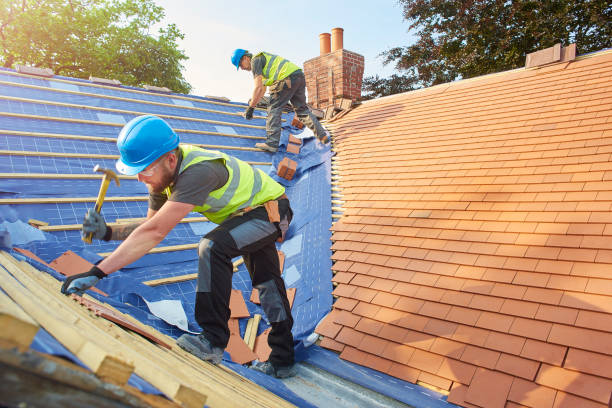
- Roof installation for new buildings and extensions.
- Roof repair to fix leaks, cracks, and damaged materials.
- Roof replacement when the existing roof reaches the end of its useful life.
- Roof inspections to identify problems before they become serious.
- Roof maintenance to keep roofing materials in good condition.
- Emergency roofing services after storms or unexpected damage.
- Commercial roofing for offices, shops, warehouses, and other business properties.
Not every property needs all these services. Regular inspections and timely repairs can help you understand what your roof needs and avoid unnecessary work.
1. Roof Installation Services
Roof installation is the process of building a new roofing system or adding a roof to a new section of a property. This service is commonly required for new homes, commercial buildings, home additions, and major renovation projects.
A professional roofer begins by checking the roof structure and preparing the surface. The contractor then installs the necessary protective layers, roofing materials, flashing, and drainage components.
Proper installation matters because mistakes can lead to leaks, poor ventilation, and early material damage.
Types of Roofing Services&Installation
Roof installation can involve different types of Roofing Services, including:
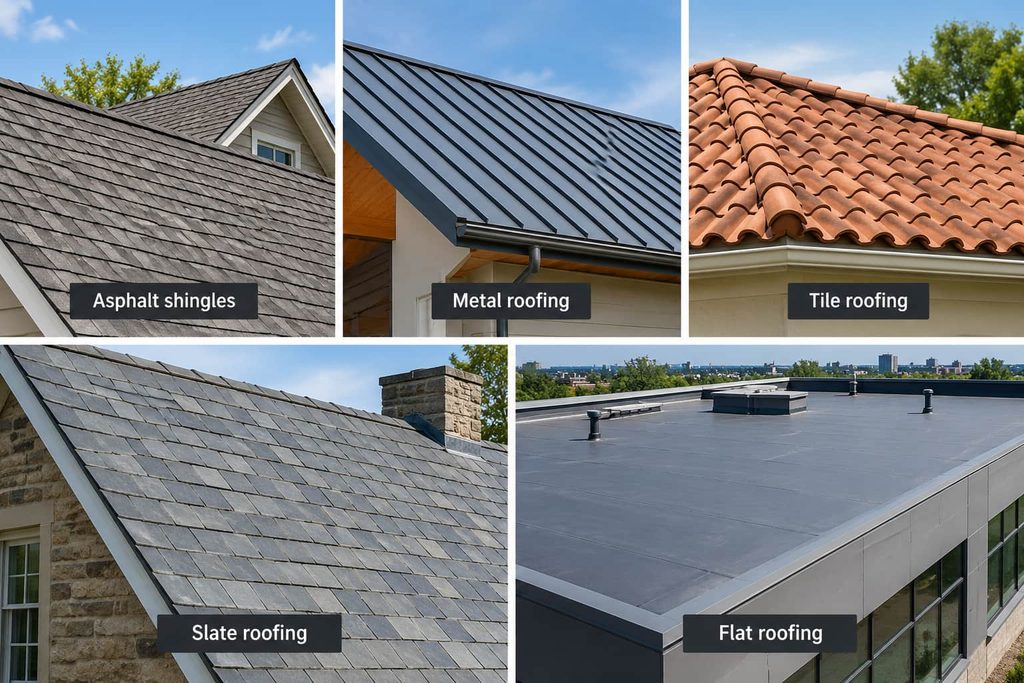
- Asphalt shingles: A popular option for homes because they are available in different colors and styles.
- Metal roofing: A durable choice for residential and commercial properties.
- Tile roofing: Clay and concrete tiles offer a distinctive appearance and can last for many years when properly installed.
- Slate roofing: Natural stone roofing known for its classic look and long service life.
- Flat roofing: A common choice for commercial buildings and properties with low-slope roofs.
The best option depends on your budget, building structure, local climate, and maintenance preferences.
When Do You Need New Roof Installation?
You may need a new roof installation when building a house, adding a room, constructing a garage, or developing a commercial property. A qualified contractor can help you select materials that suit the structure and meet applicable building requirements.
2. Roof Repair Services
Roof repair is one of the most common services homeowners need. It involves fixing damaged sections of an existing roof rather than replacing the entire system.
Small roofing problems may seem harmless at first, but water can enter through openings and damage insulation, ceilings, walls, and wooden structures.
Common roof repairs include:
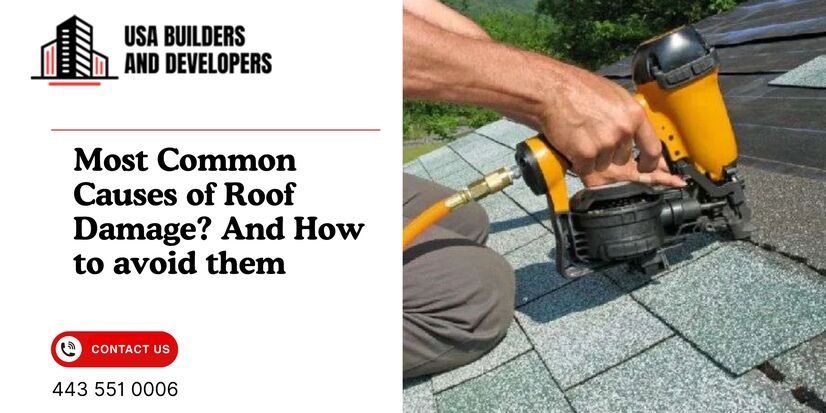
- Replacing missing or broken shingles.
- Repairing damaged flashing around chimneys and vents.
- Sealing small openings where water enters.
- Fixing loose roofing materials.
- Repairing minor damage to flat roofing membranes.
- Addressing damaged roof edges and other vulnerable areas.
Signs Your Roof Needs Repair
Look for warning signs such as water stains on ceilings, damp attic insulation, loose shingles, visible cracks, or pieces of roofing material in the yard.
You might also notice moldy smells in the attic or water entering around skylights and chimneys.
If you discover a leak, arrange an inspection promptly. The visible water stain may not be directly beneath the damaged area, so a roofer needs to identify the actual source.
Why timely repairs matter: Fixing a small problem early can reduce the risk of more extensive water damage and help preserve the existing roofing system.
3. Roof Replacement Services
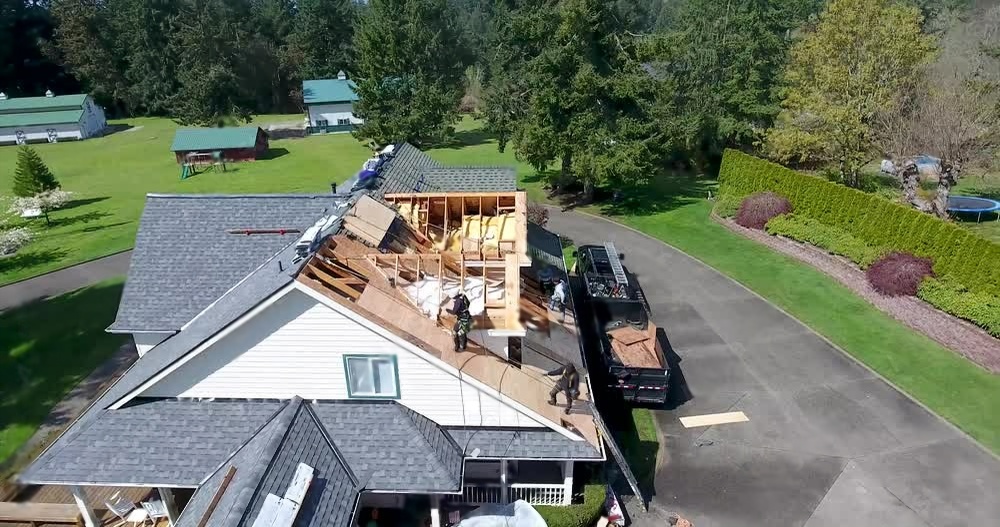
Roof replacement involves choosing types of Roofing Services, removing some or all of an existing roofing system, and installing new materials. This service may be necessary when a roof is badly damaged, has reached the end of its expected life, or requires repeated repairs.
During a typical replacement project, the contractor removes the old roofing materials as needed, checks the underlying roof deck, replaces damaged sections, and installs the new system.
When Should You Replace Your Roof?
Several signs may indicate that replacement is worth considering:
- Widespread shingle damage or missing roofing materials.
- Repeated leaks in different areas.
- Soft or damaged sections of the roof deck.
- Extensive water damage or deterioration.
- Roofing materials that have reached the end of their useful life.
- Repair needs that continue to return.
Age alone does not always mean you need a new roof. Material quality, installation, weather exposure, and maintenance all affect how long a roof lasts.
Roof Repair vs. Roof Replacement
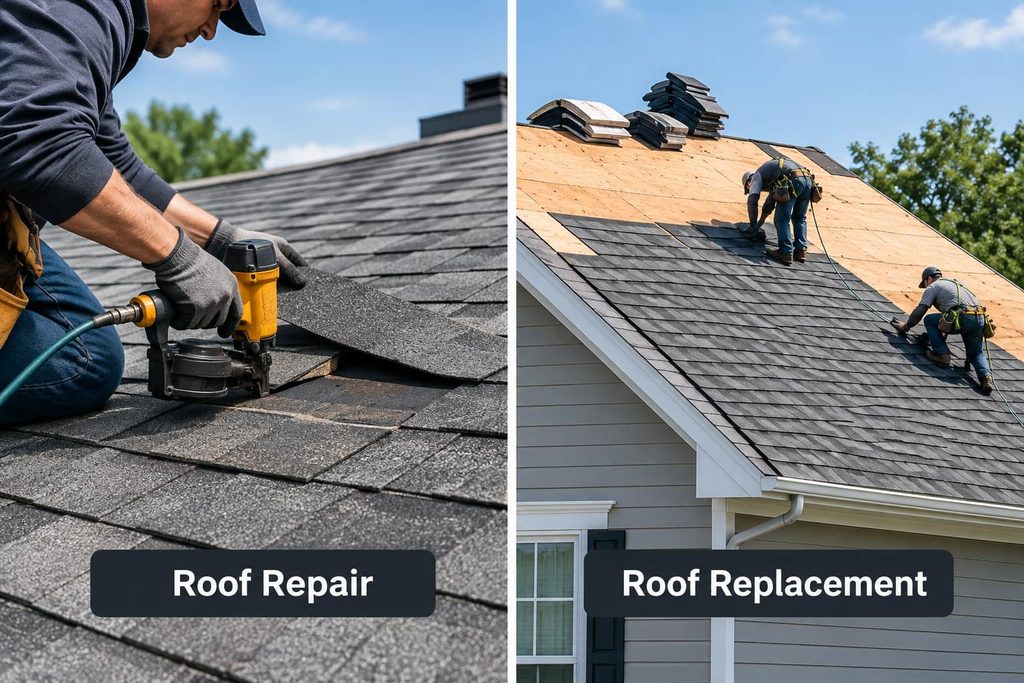
Roof repair is generally suitable when the damage is limited to a small area and the rest of the roof remains in good condition.
Replacement may be more practical when damage is widespread, the roof structure has serious problems, or repairs no longer provide a reliable solution.
A professional inspection can help you compare the condition of the roof, types of Roofing Services, the cost of continued repairs, and the long-term value of replacement.
4. Roof Inspection Services
A roof inspection is a detailed assessment of the roofing system to identify visible damage, signs of wear, and possible areas of concern.
Homeowners often arrange inspections when buying or selling a property, after severe weather, before major renovations, or when they notice signs of a leak.
During an inspection, a roofing professional may check:
- Shingles, tiles, or metal panels.
- Flashing around chimneys, vents, and skylights.
- Roof valleys, edges, and drainage points.
- Gutters and downspouts.
- Signs of moisture or damage in the attic.
- Ventilation and other accessible roof components.
The contractor may also provide photographs and recommendations for types of Roofing Services, repairs, or maintenance.
How Often Should You Schedule an Inspection?
The ideal schedule depends on your roofing material, climate, roof age, and previous problems. Many property owners arrange a professional inspection about once a year and after significant storms when conditions allow.
Regular inspections do not guarantee that every problem will be prevented. However, they can help identify damage before it becomes more expensive to address.
5. Roof Maintenance Services
In types of Roofing Services, roof maintenance involves routine work that helps keep roofing materials, drainage systems, and other roof components in good condition.
Unlike repairs, which address existing damage, maintenance focuses on checking the roof and dealing with smaller issues before they develop into larger problems.
Typical maintenance tasks include:
- Removing leaves and debris from appropriate roof areas.
- Checking gutters and downspouts for blockages.
- Inspecting flashing and roof penetrations.
- Looking for loose or damaged materials.
- Checking visible drainage problems.
- Monitoring areas that have previously leaked.
Tree branches, standing water, blocked drains, and poor ventilation can contribute to roofing problems over time.
The maintenance plan should match the roof type and the types of Roofing Services. Flat roofs may need particular attention to drainage, while shingle roofs require checks for damaged or missing shingles.
Avoid climbing onto a roof without suitable training and safety equipment. A professional roofing contractor can carry out checks safely and recommend any necessary work.
6. Emergency Roofing Services
Emergency roofing services address urgent problems that threaten the safety of a building or allow water to enter the property.
Severe storms, falling branches, sudden leaks, and loose roofing materials can create situations that need prompt attention.
Emergency roofers may provide temporary protection, such as installing a suitable tarp, securing exposed areas, or carrying out limited repairs to reduce further damage.
When Should You Call an Emergency Roofer?
Contact a professional promptly if you notice:
- Water entering through the ceiling during heavy rain.
- Large sections of roofing material missing after a storm.
- A tree branch damaging the roof.
- Sudden damage that leaves the roof structure exposed.
- Loose materials that may fall and create a safety hazard.
If the ceiling is sagging or water is near electrical fixtures, keep people away from the affected area. Do not climb onto a damaged roof or attempt repairs during dangerous weather.
Temporary protection is not always a permanent solution. Once conditions are safe, arrange a full inspection to determine the extent of the damage.
7. Roof Leak Detection and Repair
Roof leak detection focuses on finding where water enters a building. This can be more difficult than it sounds because water may travel along roof materials, beams, or insulation before appearing on an interior ceiling.
Common sources of roof leaks include damaged shingles, cracked flashing, failed seals, blocked drainage, and deteriorated roofing membranes.
A roofer may inspect the roof surface, examine vulnerable joints, check the attic for moisture, investigate areas around vents or skylights, and choose the types of Roofing Services most suited.
Once the source is identified, the contractor can recommend the appropriate repair.
Why Finding the Source Matters
Covering an interior water stain or sealing the wrong area will not solve the underlying problem. Water may continue entering the building even when the original stain appears dry.
A proper diagnosis helps ensure that repairs address the source of the leak instead of only its visible effects.
If water damage has affected insulation, wood, or interior finishes, additional knowledge of which types of Roofing Services repairs or drying work may also be needed.
8. Residential Roofing Services
Among the types of Roofing Services, residential roofing services are designed for houses, townhouses, apartments, and other living spaces. They help protect the building, maintain its appearance, and support the comfort of the people inside.
These services can include installation, repair, replacement, inspections, and maintenance.
The right approach depends on the building design and existing roofing system. A steeply pitched house may use shingles or tiles, while a home extension or garage may have a low-slope roof.
Homeowners should also consider ventilation, insulation, drainage, and flashing when planning roofing work. These components work together to help protect the property.
Before starting a project, ask the contractor to explain the proposed materials, project schedule, warranty coverage, and any repairs needed beneath the existing roof.
9. Commercial Roofing Services
Commercial roofing services are intended for offices, retail stores, warehouses, apartment buildings, and other business properties.
in types of Roofing Services, commercial roofs often cover large areas and may have flat or low-slope designs. They can require different materials and installation methods from those used on residential roofs.
Common commercial roofing systems include:
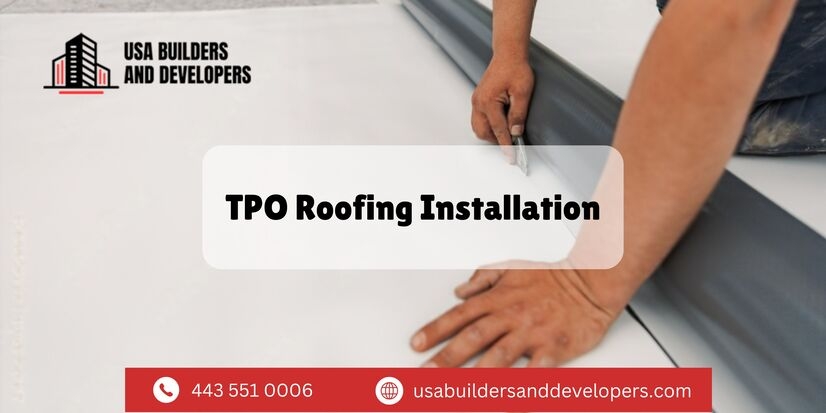
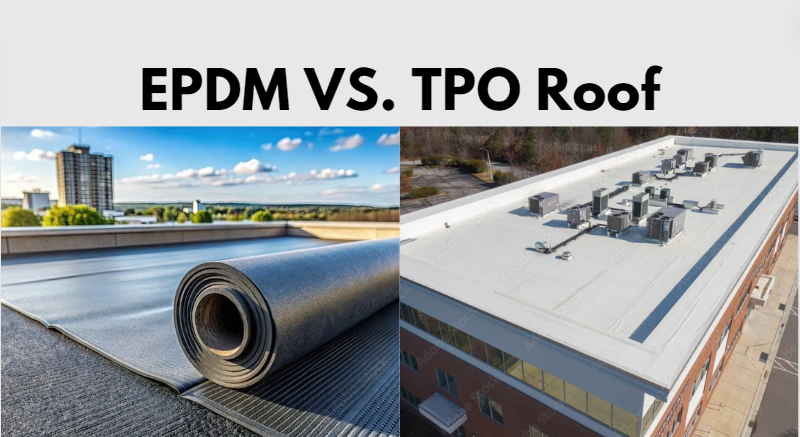
- TPO roofing: A single-ply membrane commonly used on flat and low-slope roofs.
- EPDM roofing: A synthetic rubber membrane valued for flexibility and weather resistance.
- PVC roofing: A single-ply membrane used on some commercial buildings, including properties that require resistance to certain chemicals.
- Modified bitumen roofing: A layered asphalt-based system used on many low-slope roofs.
- Built-up roofing: A system made from multiple layers that form a protective roof surface.
The right system depends on the building, roof structure, drainage needs, expected foot traffic, and project budget.
Commercial roofers may also provide leak repairs, protective coatings, inspections, and planned maintenance.
For business owners, timely roofing work can help reduce water damage, protect equipment and inventory, and limit disruption to daily operations.
10. Flat Roofing Services
Flat roofing services focus on roofs with little slope. Although these roofs may look level, they need a slight slope or a suitable drainage design to move water toward drains and outlets.
Among the types of Roofing Services, flat roofs are common on commercial buildings, garages, extensions, and some modern homes.
Services may include membrane installation, leak detection, drainage repairs, seam repairs, and full roof replacement.
Common Flat Roof Problems in different types of Roofing Services
Standing water is an important warning sign. It may point to blocked drains, poor drainage design, or a sagging section of the roof.
Other problems include cracks, loose seams, damaged membranes, and leaks around vents or other roof openings.
The best repair depends on the roofing material and the cause of the damage. Applying a coating or sealant without addressing the underlying issue may provide only temporary relief.
Regular inspections and proper drainage help keep flat roofing systems in better condition.
11. Roof Flashing and Gutter Services
In types of Roofing Services, flashing and gutters are important parts of a complete roofing system, even though they are not the main roofing surface.
Roof flashing consists of protective materials installed around joints and openings where water could enter. These areas commonly include chimneys, skylights, vents, walls, and roof valleys.
Damaged or poorly installed flashing can cause leaks even when the surrounding shingles or panels appear to be in good condition.
Gutter services focus on collecting and directing rainwater away from the roof and building. They may include gutter cleaning, repairs, replacement, and downspout maintenance.
Blocked or damaged gutters can allow water to overflow near exterior walls or collect in unwanted areas.
Keeping flashing, gutters, and downspouts in good condition supports proper drainage and helps protect the building from moisture damage.
12. Storm Damage Roof Restoration
Storm damage restoration helps repair roofing systems affected by strong winds, heavy rain, hail, falling branches, or other severe weather.
The work may involve replacing missing shingles, repairing flashing, restoring damaged roof edges, or replacing larger sections of roofing material.
A contractor should assess the visible damage and check for less obvious problems that may have developed underneath the surface.
What to Do After Roof Damage
Follow these steps after a storm:
- Keep away from damaged areas and avoid climbing onto the roof.
- Move belongings away from interior leaks when it is safe.
- Take photographs of visible damage from a safe location.
- Arrange a professional roofing inspection.
- Contact your insurer if you plan to make a claim and follow its documentation requirements.
Do not assume that every damaged roof requires full replacement. The correct solution depends on the extent of the damage, the roof’s overall condition, and the findings of the inspection.
13. Roof Coating and Waterproofing Services
Roof coating and waterproofing services help protect suitable roofing systems from moisture and weather exposure.
A roof coating is a protective layer applied over an existing roof when the surface and underlying structure are suitable. Some coatings can improve resistance to sunlight, while others help protect against water exposure.
Waterproofing service work may include repairing joints, sealing vulnerable areas, and installing or restoring protective membranes.
These services are often used on flat and low-slope roofs, although the appropriate product depends on the roofing material and project requirements.
Is Roof Coating Better Than Replacement?
Roof coating may be worth considering when the existing roof is structurally sound and the surface is suitable for treatment.
However, a coating cannot fix serious structural damage, severely deteriorated materials, or every type of persistent leak.
A professional should check the roof before recommending this option. If the underlying system has failed, repair or replacement may provide a more reliable solution.
How to Choose the Right Roofing Service
Choosing the right service begins with understanding the problem. A small leak may need a targeted repair, while widespread damage could require replacement.
Use these factors to guide your decision:
1. Check the roof’s condition. Look for visible damage, water stains, missing materials, and recurring leaks. A professional inspection can help confirm the cause.
2. Consider the roof’s age. Older roofs may need more frequent repairs, but age alone does not determine whether replacement is necessary.
3. Identify your roofing material. Shingles, tiles, metal panels, and flat roof membranes have different repair and maintenance needs.
4. Compare the long-term costs. Consider the cost of the work, expected durability, maintenance requirements, and potential future repairs.
5. Check the contractor’s qualifications. Ask about relevant licensing, insurance, experience, references, and written warranties. Requirements vary by location.
6. Request a detailed estimate. The estimate should explain the scope of work, materials, labor, cleanup, project timeline, and any exclusions.
7. Understand the warranty. Ask what the material and workmanship warranties cover and whether specific maintenance requirements apply.
Taking time to compare these details can help you make a more informed decision and avoid choosing a service based on price alone.
Frequently Asked Questions About Roofing Services
What are the most common types of roofing services?
The most common services include roof installation, repair, replacement, inspections, maintenance, leak detection, and emergency repairs. Some contractors also specialize in commercial roofing, flat roofs, waterproofing, and storm damage restoration.
How do I know whether my roof needs repair or replacement?
Limited damage may be suitable for repair if the rest of the roof is in good condition. Widespread deterioration, repeated leaks, and serious structural problems may indicate that replacement is more practical. A professional inspection can help determine the best option.
How often should a roof be inspected?
Many homeowners arrange a professional roof inspection about once a year and after significant storms when it is safe to do so. The ideal schedule depends on the roofing material, age, climate, and previous damage.
Which roofing materials last the longest?
Natural slate and some metal roofing systems can last for several decades when properly installed and maintained. Actual service life depends on material quality, installation methods, climate, and maintenance.
Are roofing services available for commercial buildings?
Yes. Commercial roofing contractors work on offices, warehouses, retail buildings, and other business properties. Services may include installation, repairs, replacement, inspections, maintenance, and flat roof membrane work.
How much do roofing services cost?
The price depends on the type of service, roof size, materials, labor, accessibility, and the amount of damage. A minor repair generally costs less than a complete replacement, but the exact price requires an assessment of the property.
Can regular roof maintenance prevent leaks?
Maintenance can help identify damaged materials, blocked drainage, and deteriorating flashing before these issues cause larger problems. However, it cannot prevent every leak, particularly after severe weather or unexpected damage.
Final Thoughts
Understanding the different types of Roofing Services helps you make better decisions about protecting your home or commercial property. Whether you need a small repair, a routine inspection, a new roof installation, or a complete replacement, the best solution depends on your roof’s condition and long-term needs.
Do not ignore small signs of damage. Addressing roofing problems early can help reduce the risk of water damage, protect the building structure, and avoid unnecessary expenses.
Before choosing a contractor, compare estimates, ask questions about materials and warranties, and make sure the recommended work addresses the actual problem. With proper installation, regular inspections, and timely maintenance, you can help keep your roof dependable for years to come.
If you are looking for roofing services from one of the reputed companies in USA, feel free to contact us at 443-551-0006 and book an appointment today!
Have Questions? Call Us Now!
We’re here to help—quick answers, friendly service, anytime you need!