Masonry gives your home strength, protection, and character. Brick, stone, concrete, and mortar can last for many years when they receive proper care. However, even strong masonry can develop problems over time.
Weather, moisture, age, poor drainage, and natural movement can all affect masonry. Small problems may seem harmless at first. If you ignore them, they can grow into larger and more expensive repairs.
Knowing the warning signs can help you act before serious damage occurs.
So, how can you tell when your masonry needs repair?
Look for cracks, loose bricks, damaged mortar, water stains, and sections that begin to shift or lean. These signs often mean that the masonry needs repair.
This guide explains five common signs of masonry needs repair, what causes them, and when you should consider repairs.
1. Cracks in Brick, Stone, or Concrete
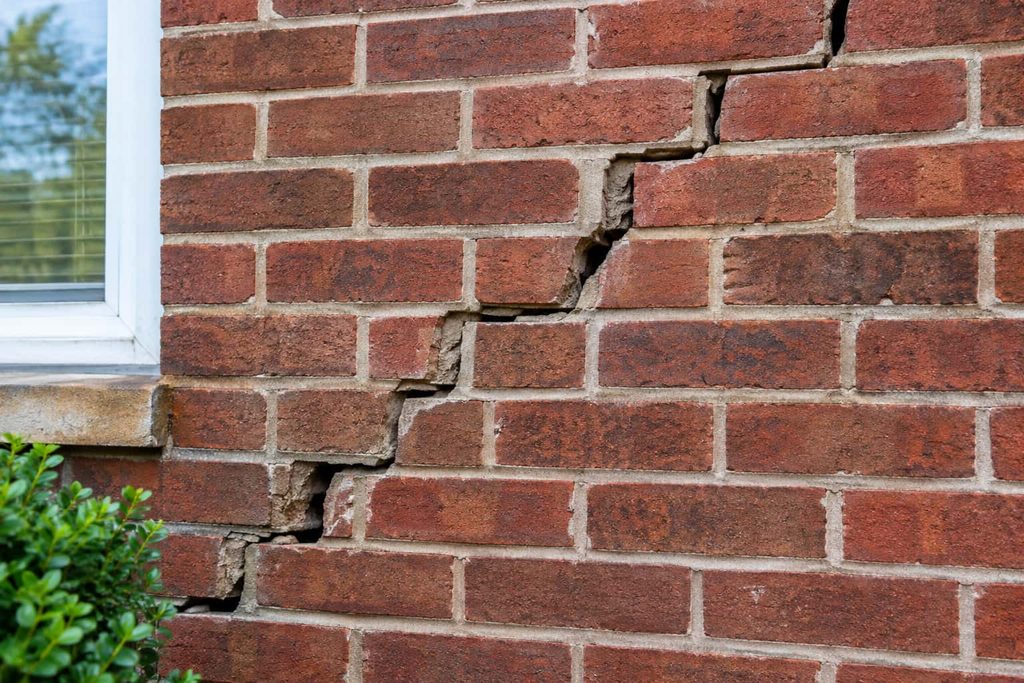
Cracks are one of the easiest signs to notice that masonry needs repair. However, not every crack means the same thing.
Small hairline cracks may happen because masonry expands and contracts with temperature changes. Some minor cracks may not cause an immediate structural concern. Still, they should not be ignored.
Larger or growing cracks need more attention.
You may notice cracks running through bricks, stones, concrete blocks, or mortar joints. Horizontal cracks can be especially concerning when they become wider over time. Stair-step cracks in brick walls can also point to movement in the wall or foundation.
A crack around a window or door may have a different cause than one near the foundation. Cracks that appear in several areas may indicate a larger problem.
What causes masonry cracks?
Several issues can lead to cracks, including:
- Normal settling of a building
- Temperature changes
- Water damage
- Poor drainage
- Soil movement
- Foundation movement
- Weak or aging mortar
- Improper construction
- Heavy loads or structural stress
Water is one of the most common concerns. Moisture can enter small cracks and freeze during cold weather. When water freezes, it expands. This pressure can make existing cracks worse.
If you notice a crack getting longer, wider, or deeper, have it inspected.
When should you worry about a crack?
Pay close attention if the crack:
- Continues to grow
- Becomes wider
- Runs through several bricks
- Appears on both sides of a wall
- Comes with bulging or leaning
- Allows water into the building
- Appears with doors or windows becoming difficult to open
These signs may indicate that the problem is more than surface damage.
A professional masonry contractor can inspect the area and determine the likely cause. Repairing the source of the problem is usually more important than simply filling the visible crack.
2. Damaged, Crumbling, or Missing Mortar
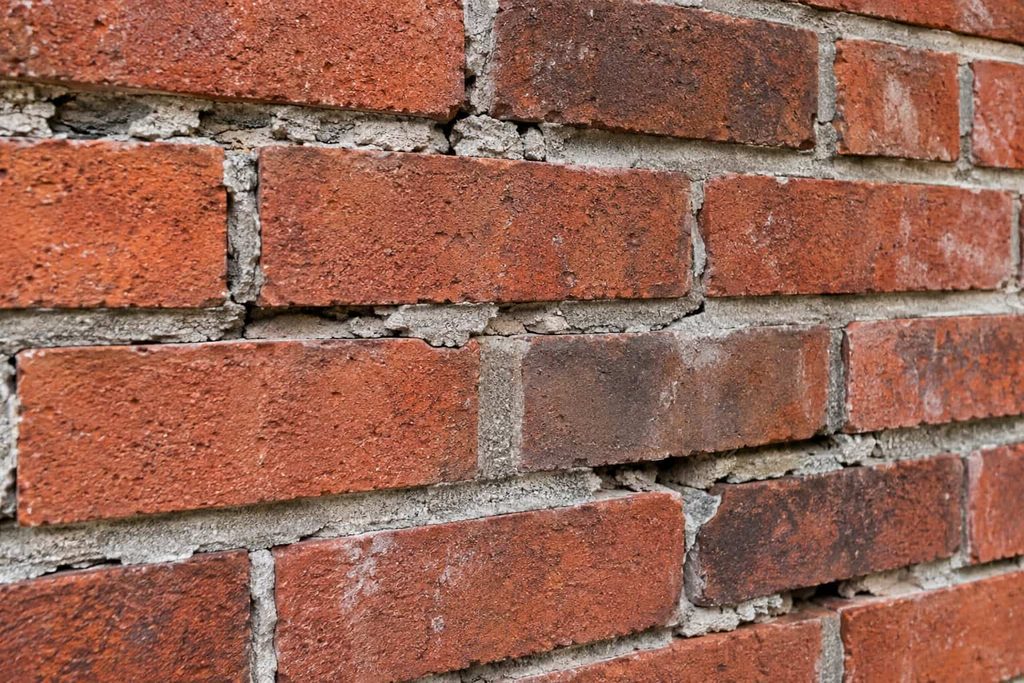
Mortar holds masonry units together. It fills the joints between bricks, blocks, or stones and helps protect the wall from moisture.
Over time, mortar can become weak.
You may see mortar that is cracked, loose, powdery, or missing from joints. Some areas may look darker after rain because water is entering through damaged joints.
This type of deterioration is common in older masonry.
Constant exposure to rain, snow, ice, sunlight, and changing temperatures can slowly wear mortar down. Poor drainage can speed up the process.
What is mortar joint deterioration?
Mortar joint deterioration happens when the material between masonry units loses its strength, and it means the masonry needs repair.
In mild cases, the outer layer may simply become weak. In more serious cases, the joint may become deep enough to allow water into the wall.
That can create additional problems behind the masonry.
Water may reach wall cavities, insulation, wood framing, or other building materials. Once moisture gets inside, damage can spread beyond the original mortar joint.
Tuckpointing and repointing
Two common masonry services methods are tuckpointing and repointing.
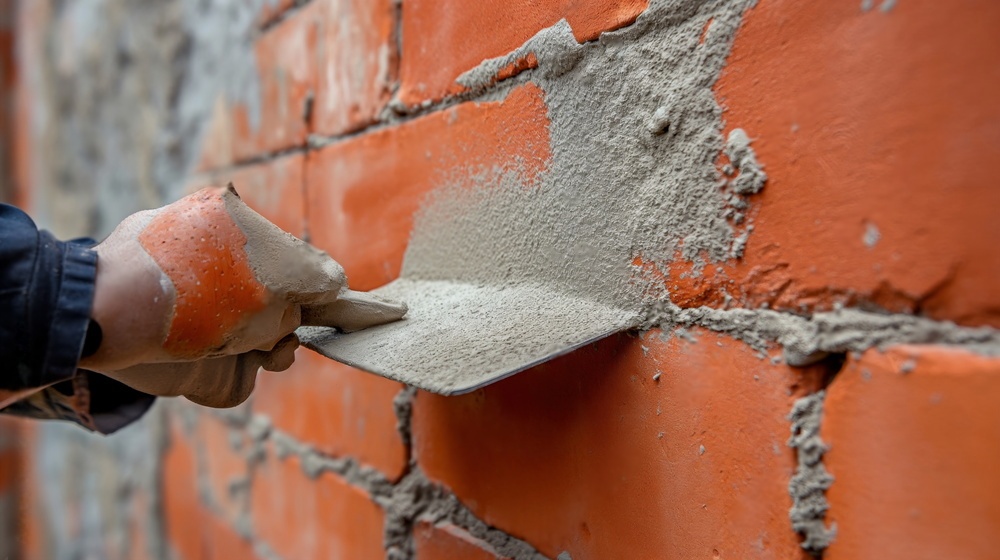
Repointing involves removing damaged mortar and replacing it with new mortar. This helps restore the joints and protect the masonry.
Tuckpointing is a more decorative process that can also improve the appearance of mortar joints. It uses carefully placed mortar lines to create clean and defined joints.
The right way to tell that masonry needs repair depends on the condition of the existing masonry.
Do not simply cover deteriorated mortar with a new layer. The damaged material may need to be removed first. A professional can determine how deep the deterioration goes and select a suitable repair method.
3. Loose, Broken, or Spalling Bricks
Another clear warning sign is masonry that begins to break apart.
Bricks and stones can become damaged because of moisture, freezing temperatures, impact, age, or other environmental conditions.
You may notice chipped corners, broken surfaces, or pieces of masonry falling from the wall.
One common problem is called spalling.
Spalling occurs when the surface of brick, concrete, or stone begins to crack, chip, or flake away. Moisture often plays an important role.
Water enters the masonry through cracks or porous surfaces. During freezing weather, that water expands. Repeated freeze-and-thaw cycles can put pressure on the material.
Over time, the surface can begin to break apart.
What does spalling look like?
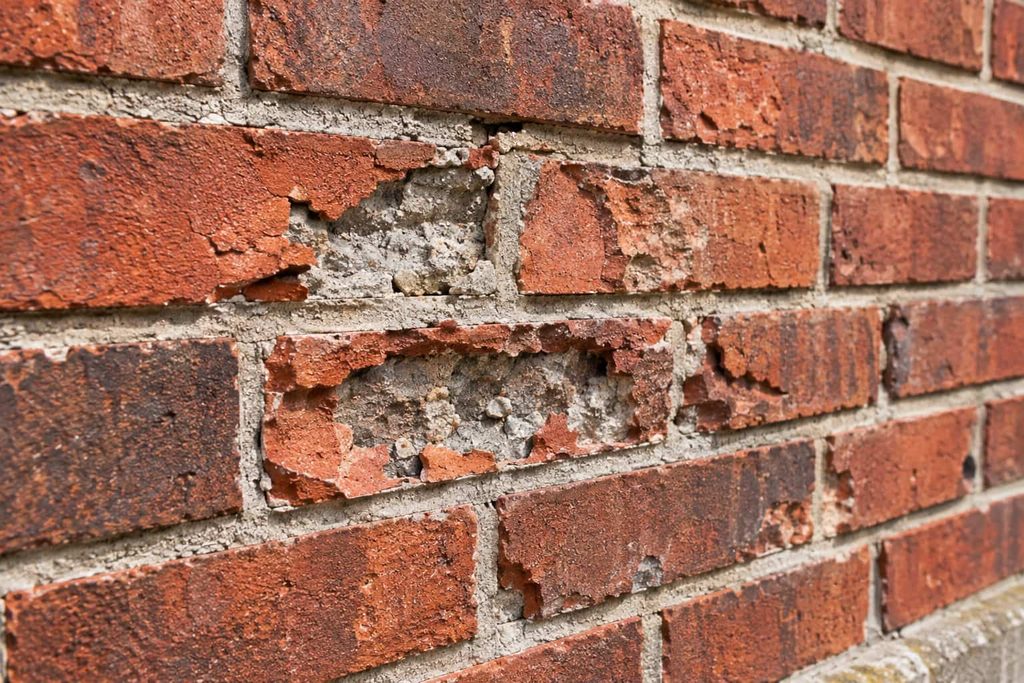
Common signs include:
- Flaking brick surfaces
- Chipped stone
- Pieces breaking away
- Exposed inner material
- Crumbling concrete
- Damaged corners
- Loose masonry pieces
Spalling should not be treated as only a cosmetic problem; it means masonry needs repair.
Once the outer surface breaks away, the material underneath becomes more exposed to weather. The damage can then spread.
In some cases, damaged bricks or stones may need to be removed and replaced. Other areas may require surface repairs or moisture control.
The correct solution depends on the material and the extent of the damage.
Why should loose masonry needs repair quickly?
Loose masonry can create a safety risk.
Pieces may fall from walls, chimneys, retaining walls, or other structures. This can damage property or injure people below.
If you see loose pieces around your home, avoid disturbing them yourself. Have the area inspected by a qualified masonry professional.
4. Water Stains, Efflorescence, or Moisture Damage
Masonry is designed to protect your property from the elements. However, brick and stone are not completely waterproof.
Water can enter through damaged mortar, cracks, porous masonry, poor flashing, or drainage problems.
One visible sign is efflorescence.
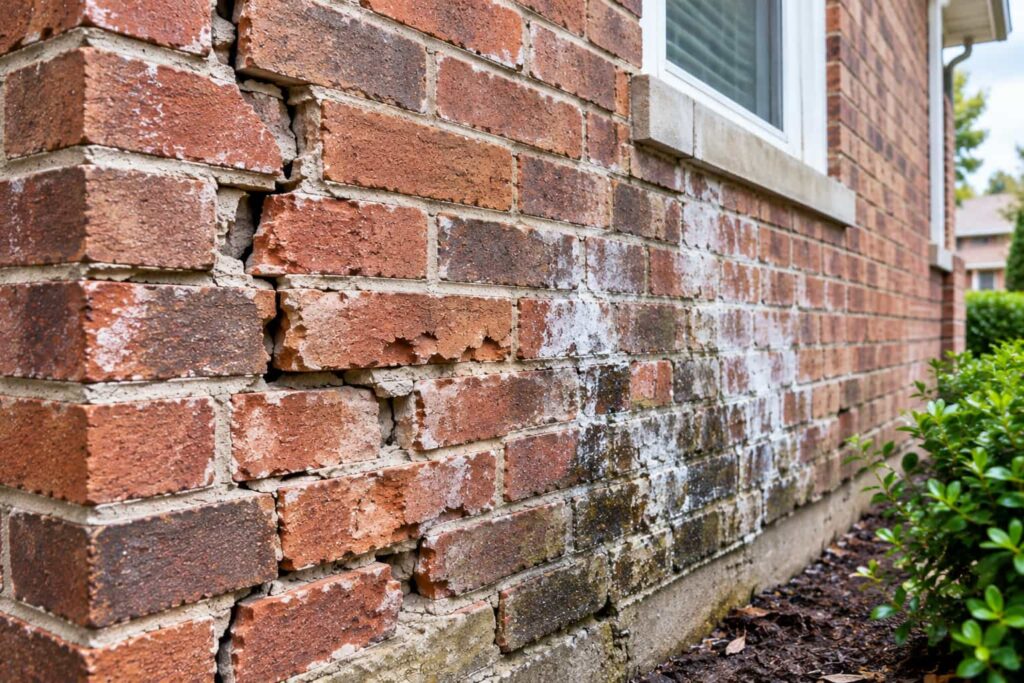
Efflorescence appears as a white, powdery substance on brick, stone, or concrete surfaces. It happens when water moves through masonry and carries dissolved salts to the surface.
After the water evaporates, the salts remain behind.
Efflorescence does not always mean serious structural damage. However, it does show that moisture is moving through the masonry.
That makes it worth investigating whether the masonry needs repair.
Other signs of moisture problems
Look for:
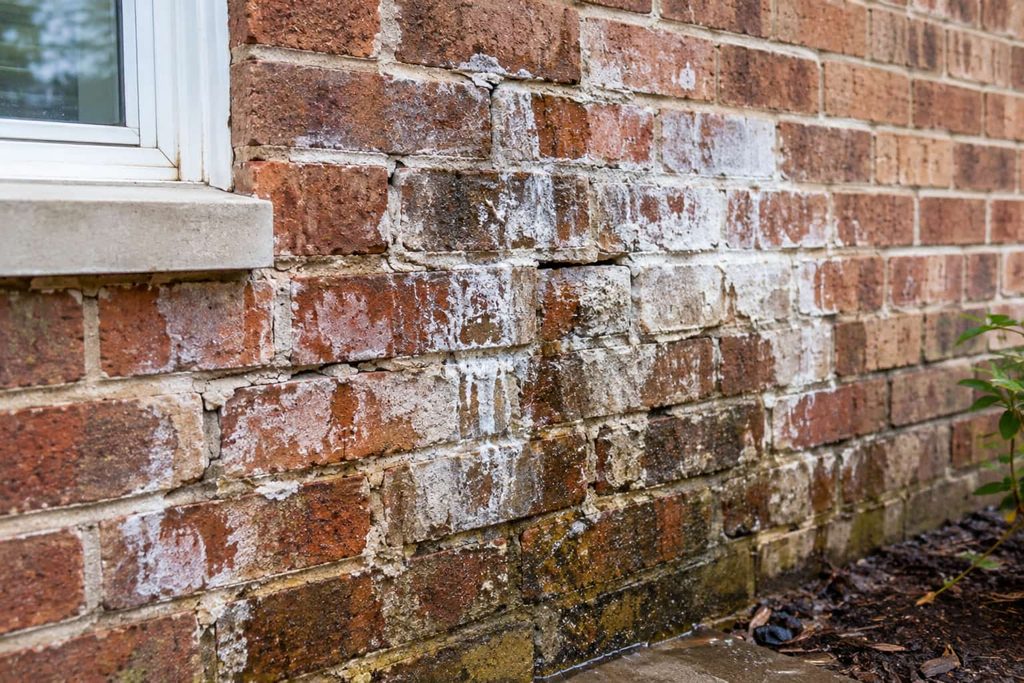
- White powdery deposits
- Dark water stains
- Damp masonry
- Peeling paint near masonry
- Mold or mildew
- Musty smells
- Interior water marks
- Damaged mortar
- Rust around metal components
Water damage may begin outside but eventually affect interior spaces.
For example, damaged masonry needs repair around a basement wall can allow moisture to reach the interior. Water can then cause damp walls, mold growth, or damage to finishes.
The best repair is not always removing the stain.
The real goal is to find where the water is coming from.
Common sources of masonry moisture
Moisture may enter through:
- Cracked mortar joints
- Damaged flashing
- Poor gutters
- Blocked downspouts
- Improper grading
- Foundation cracks
- Porous masonry
- Damaged sealants
- Poor drainage
Masonry needs repair may to be combined with waterproofing or drainage improvements.
For example, repairing a wall without fixing a nearby drainage problem may only provide a temporary solution.
5. Bulging, Leaning, or Shifting Walls
A wall that appears to move out of its original position should receive professional attention.
Bulging or leaning masonry needs repair can indicate movement behind or within the wall. The problem may be related to foundation movement, water pressure, poor construction, damaged wall ties, or other structural issues.
You may notice that part of the wall looks curved instead of straight.
You might also see:
- Bowing
- Leaning
- Uneven brick courses
- Large horizontal cracks
- Separation around windows
- Gaps between masonry and other materials
- Sections pulling away from the building
These signs should not be treated as normal aging.
A masonry wall is designed to remain stable. When it begins to shift, the cause needs to be identified.
Why do masonry walls move?
Several factors can cause movement.
Foundation movement: Changes in soil or foundation conditions can affect the masonry above.
Water pressure: Saturated soil can place pressure against basement or retaining walls.
Poor drainage: Water that remains near a structure can contribute to soil movement and masonry deterioration.
Structural problems: Damaged supports or wall connections can cause masonry to shift.
Freeze-thaw damage: Repeated freezing and thawing can weaken masonry and mortar.
Because many causes can look similar, professional inspection is important.
Other Warning Signs to Watch For
The five signs above are among the most common. However, other changes can also indicate that masonry needs repair.
Gaps Around Windows and Doors
Masonry around windows and doors should remain properly connected to the surrounding wall.
Gaps, cracks, or separation may allow water and air to enter. They can also indicate movement.
Damaged Chimney Masonry
Chimneys receive constant exposure to weather.
Look for cracked bricks, deteriorated mortar, leaning sections, damaged chimney caps, and loose materials.
Chimney damage should be addressed promptly because falling masonry can create a serious safety concern.
Deteriorating Retaining Walls
Retaining walls hold back soil and deal with significant pressure.
A wall that leans, bulges, develops large cracks, or shows drainage problems may need repair.
Drainage is especially important for retaining walls. Water pressure behind the wall can increase stress on the structure.
Uneven Brickwork
Brick courses should generally remain straight and consistent.
If sections begin to shift, sink, or separate, the change may indicate movement beneath the masonry.
What Causes Masonry Damage?
Understanding the cause can help prevent future problems.
Weather
Masonry is exposed to rain, snow, heat, cold, and wind throughout the year.
Repeated temperature changes can cause materials to expand and contract. Over time, this movement can contribute to cracking.
Moisture
Water is one of the biggest threats to masonry.
It can weaken mortar, enter cracks, cause staining, and contribute to freeze-thaw damage.
Good drainage and regular maintenance can reduce moisture-related problems.
Age
Masonry can last for decades, but no material lasts forever without maintenance.
Older buildings may have mortar that has become weak or brittle. Some older masonry systems may also require repair methods that match their original materials.
Poor Drainage
Water should move away from your home.
Blocked gutters, damaged downspouts, poor grading, and standing water can keep masonry exposed to excess moisture.
Foundation Movement
Changes below a building can affect walls above it.
Soil movement, settlement, drainage issues, or other foundation concerns can lead to cracks and shifting masonry.
If you suspect foundation movement, repairing only the visible masonry may not solve the problem.
Can You Repair Masonry Yourself?
Small cosmetic issues may seem easy to fix. However, masonry repairs can be more complicated than they appear.
The visible damage may only be one part of the problem.
For example, filling a crack does not necessarily stop the movement that caused it. Replacing mortar without addressing water intrusion may also lead to repeated deterioration.
DIY repairs may be suitable for minor maintenance when you understand the material and the cause. Larger cracks, loose bricks, leaning walls, structural damage, and widespread deterioration should be evaluated by a professional.
A qualified contractor can inspect the masonry and determine whether you need:
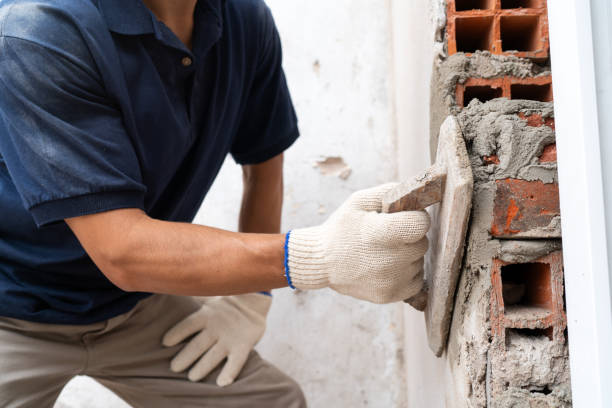
- Brick repair
- Stone repair
- Mortar replacement
- Tuckpointing
- Repointing
- Concrete repair
- Masonry replacement
- Waterproofing
- Drainage improvements
- Foundation-related repairs
How Professional Masonry Repair Works
The repair process depends on the type and severity of damage.
Step 1: Inspection
The contractor examines the masonry and looks for cracks, moisture, movement, loose materials, and deteriorated joints.
Step 2: Identify the Cause
The goal is to understand why the damage occurred.
This may involve checking drainage, surrounding soil, gutters, foundation conditions, and other nearby components.
Step 3: Create a Repair Plan
The contractor determines which areas need repair or replacement.
The repair materials should be suitable for the existing masonry.
Step 4: Remove Damaged Material
Loose bricks, deteriorated mortar, or damaged sections may need to be removed carefully.
Step 5: Complete the Repair
New materials are installed, damaged joints are repointed, and other required repairs are completed.
Step 6: Address Moisture and Drainage
If water caused the problem, the contractor should also consider how to reduce future moisture exposure.
Step 7: Final Inspection
The completed work should be checked to make sure the repaired area is stable and properly finished.
How to Prevent Masonry Problems
You cannot prevent when masonry needs repair. However, regular maintenance can help reduce damage.
Inspect your exterior walls at least once or twice a year. Look for new cracks, missing mortar, loose bricks, stains, and other changes.
Keep gutters and downspouts clear. Make sure downspouts move water away from the foundation.
Pay attention to standing water around your home. Poor drainage can affect both masonry and the foundation.
Do not ignore small changes.
A small mortar problem may be easier and less expensive to address than widespread deterioration.
You should also avoid pressure washing old or damaged that masonry needs repair without knowing whether the material can handle it. Excessive pressure can damage weak mortar and porous surfaces.
If you notice a problem, document it with photos. Take another photo after a few weeks or months. This can help you determine whether the damage is changing.
When Should You Call a Masonry Contractor?
You should consider professional masonry repair when damage is large, growing, or affecting the stability of a structure.
Contact a professional if you notice:
- Large or spreading cracks
- Bulging or leaning walls
- Loose bricks or stones
- Missing mortar
- Severe spalling
- Repeated water intrusion
- Damaged chimney masonry
- Shifting retaining walls
- Signs of foundation movement
- Masonry pieces falling from the structure
Do not wait for a small issue to become an emergency.
An inspection can help you understand the problem and determine the right next step.
Why Early Masonry needs Repair Matters
Masonry problems rarely improve on their own.
A small crack can allow water inside. Damaged mortar can expose deeper parts of a wall. Moisture can make bricks and concrete deteriorate faster. A shifting wall can become more unstable over time.
Early repairs can help protect your property and reduce the chance of more extensive damage.
The key is to repair the cause, not just hide the visible symptom.
For homeowners, regular inspections are one of the simplest ways to protect masonry. You do not need to be a masonry expert. You only need to notice changes and act when something looks wrong.
Frequently Asked Questions About Masonry Repair
How do I know if my masonry needs repair?
Common warning signs that masonry needs repair include cracks, loose bricks, damaged mortar, spalling, water stains, and walls that begin to lean or bulge. Growing cracks and loose masonry should be inspected by a professional.
What causes masonry to crack?
Masonry can crack because of foundation movement, moisture, temperature changes, soil movement, aging mortar, poor drainage, or construction problems. The location and size of the crack can help identify the possible cause.
Can damaged mortar be repaired?
Yes. Damaged mortar can often be repaired through repointing or tuckpointing. The damaged material is removed and replaced with suitable mortar. The correct method depends on the age and condition of the masonry.
What is the difference between tuckpointing and repointing?
Repointing involves removing damaged mortar and replacing it with new mortar. Tuckpointing is a related technique that uses carefully formed mortar lines to create clean, defined joints. A professional can recommend the right method for your masonry.
Is spalling brick a serious problem?
Spalling can become serious if it continues to spread. Moisture and freeze-thaw cycles are common causes. Damaged bricks may need repair or replacement to prevent further deterioration.
Can water damage masonry?
Yes. Water can enter through cracks, damaged mortar, poor drainage, and other openings. Repeated moisture exposure can weaken mortar and contribute to staining, spalling, and other masonry damage.
When should I call a masonry contractor?
Call a professional when you notice large or growing cracks, loose bricks, missing mortar, bulging walls, severe spalling, water intrusion, or other signs of structural movement.
How can I prevent masonry damage?
Regular inspections can help you find problems early. Keep gutters and downspouts clear, direct water away from the foundation, maintain mortar joints, and address cracks before they become larger.
How long does masonry repair take?
The timeline depends on the size and type of damage. A small mortar repair may take much less time than extensive brick replacement or structural masonry work. A contractor can provide a more accurate timeline after inspecting the property.
Does masonry repair include waterproofing?
It can, depending on the cause of the damage. If moisture is responsible for deteriorating masonry, repairs may need to be combined with waterproofing or drainage improvements.
Final Thoughts
Your home’s masonry does more than improve its appearance. It helps protect the building from weather, moisture, and everyday wear.
Cracks, damaged mortar, spalling, moisture stains, and shifting walls are signs that should not be ignored.
If your masonry needs repair, start by finding the cause of the damage. A professional inspection can help determine whether you need repointing, brick replacement, stone repair, waterproofing, drainage work, or another solution.
Regular maintenance can also help you catch problems early.
If you notice changes in your brick, stone, concrete, chimney, or retaining walls, consider having the area inspected before the damage becomes more serious.
Need Professional Masonry Services in Maryland?
USA Builders and Developers provides masonry services for residential and commercial properties throughout Maryland. Our services can include brick work, concrete repairs, tuckpointing and repointing, masonry restoration, and other repair solutions.
If you have noticed cracks, damaged mortar, loose masonry, or moisture problems, contact USA Builders and Developers to discuss your project and find the right repair approach.
Contact us
For expert masonry services, contact USA Builders and Developers at 443 551 0006. Our experienced team is here to help you protect and enhance your property’s value.
Stay updated with our latest news and tips by following us on social media: