
Gutter sealant can stop small leaks at seams, corners, and end caps, and it usually costs far less than new gutters. Even a slow drip can soak your siding, rot the fascia board, and wash soil away from your foundation over time. Using gutter sealant early helps you avoid those bigger repair bills.
It works best on minor damage, not on rusted or sagging gutters, so it is important to know its limits. This guide shows you when to use gutter sealant, which type to pick, how weather affects the repair, and how to apply it the right way.
What Is Gutter Sealant and How Does It Work?
Gutter sealant is a waterproof, flexible compound that fills gaps in seams, joints, and small cracks. After it cures, it forms a rubbery seal that blocks water and moves a little as the gutter expands and shrinks. It works well for small leaks, but it cannot fix badly damaged metal.
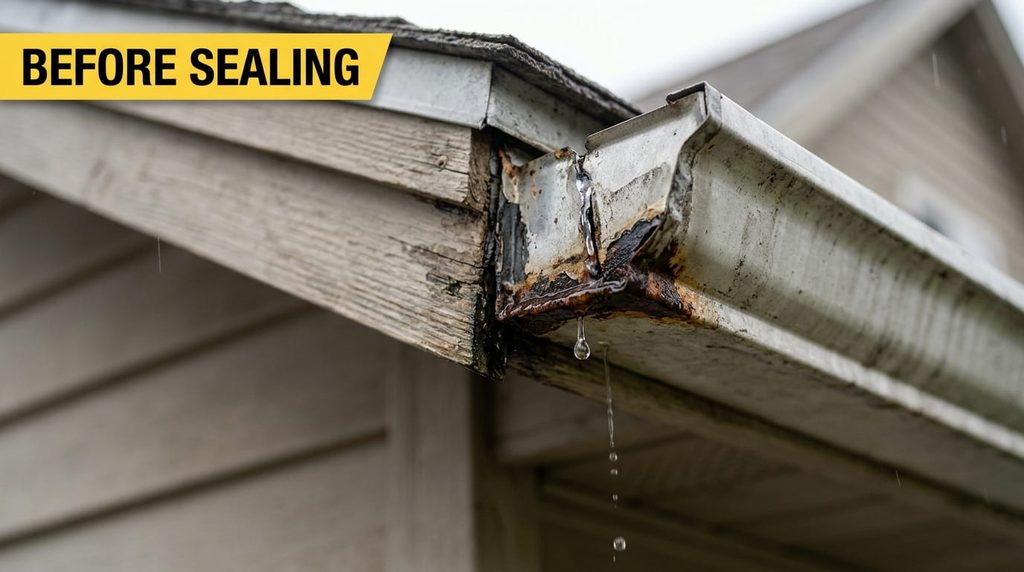
Most products are made for outdoor use. They handle sun, rain, and freezing weather better than standard household caulk. Many bond well to aluminum, galvanized steel, vinyl, and copper. Read the label first, because every product lists the materials it sticks to and the temperatures it can handle.
Think of it as a repair tool, not a cure-all. A good seal can add years to a gutter system, but it cannot save a gutter that is pulling away from the house or is full of rust holes.
When Should You Use Gutter Sealant Instead of Replacing Gutters?
Use gutter sealant when the leaks are small and the gutters are still straight, firm, and mostly free of rust. Replace the gutters when you see large holes, heavy rust, sagging sections, or leaks that keep coming back after repairs. The table below makes the choice easier.
| Gutter condition | Best action | Why |
|---|---|---|
| Small drip at a seam | Reseal the seam | Fast and low cost |
| Loose end cap | Clean and reseal | Water escapes through the gap |
| Tiny rust spots | Clean, patch, and seal, then watch closely | Rust can spread |
| Large holes or heavy rust | Replace the section | The metal is too weak to hold a seal |
| Sagging gutters | Rehang or replace | Sealing will not fix the slope |
| Leaks keep returning | Plan for replacement | The system may be worn out |
Here is a simple rule. If you must reseal the same spot every year, the gutter is telling you something. At that point, more repairs give you less value. If you are not sure, ask a pro for a second opinion. Our gutter repair and replacement services page explains what an inspection includes.
What Are the Most Common Causes of Gutter Leaks?
Gutters usually leak because of old seams, clogs, rust, loose fasteners, or movement from weather changes. Water finds the weakest spot first, which is often a corner, a joint, or an end cap. Fixing the cause matters as much as sealing the drip.
Here are the causes we see most often:
- Old seams: Seals dry out, crack, and pull away over time.
- Clogs: Leaves and dirt hold water, and the extra weight stresses joints.
- Rust: Steel gutters rust where water sits for too long.
- Loose screws and hangers: Gaps open and water drips through.
- Ice and snow: Freezing water expands and pushes seams apart.
- Poor slope: Standing water speeds up wear and rust.
If the leak comes from a clog or a bad slope, new gutter sealant will only be a short-term fix. Clean the gutters and check the slope first. Then seal the leak.
Where Do Gutters Usually Leak?
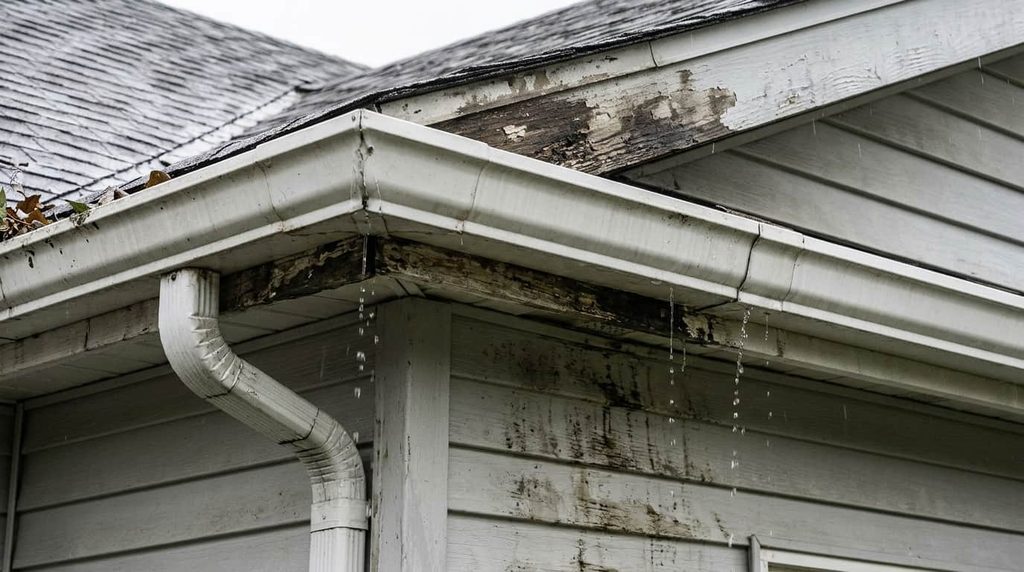
Gutters most often leak at corner joints, seams between sections, end caps, downspout outlets, and around screws or hangers. These spots handle the most water and movement. Checking each one makes gutter leak repair faster and helps you fix leaking gutters for good.
Run a hose from the high end toward the downspout and watch each joint. Wet stains under a joint, or drip marks on the siding, point to the leak. Mark each spot before you seal gutter seams, so nothing gets missed.
Also check the back edge where the gutter meets the fascia board. Water can sneak behind the gutter and rot the wood without dripping in an obvious place.
What Types of Gutter Sealant Are Available?
Common types include silicone, polyurethane, butyl rubber, acrylic latex, and sealant tape. Silicone and polyurethane are the top picks for lasting repairs. Acrylic suits small cracks on painted gutters, and tape is mostly a short-term patch.
| Type | Best for | Typical life* | Main limit |
|---|---|---|---|
| Silicone | Seams and joints on most gutters | Many years | Paint does not stick well |
| Polyurethane | Metal gutters and strong bonding | Many years | Needs careful prep |
| Butyl rubber | Seams and end caps | Several years | Can be messy to apply |
| Acrylic latex | Small cracks and paintable spots | A few years | Less flexible |
| Sealant tape | Quick emergency fixes | Short term | Not a lasting repair |
*Life depends on the product, your weather, and how well you prepare the surface. Always check the manufacturer’s guidance.
Is Silicone Better Than Polyurethane for Gutters?
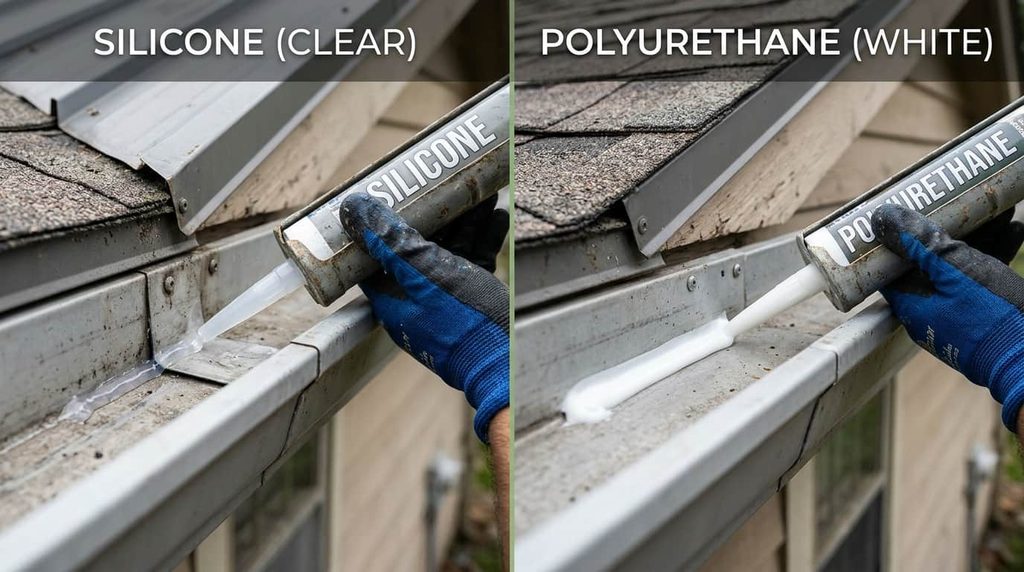
Neither one is best for everyone. Silicone gutter sealant stays very flexible and handles sun well, but paint will not stick to it. Polyurethane bonds strongly to metal and can be painted, but it can be harder to work with. Match the product to your gutter material and the label.
If you want the best sealant for gutters made of aluminum, many pros pick silicone or polyurethane. Vinyl gutters often need a product that says it is safe for vinyl, so read the fine print.
Can You Use Regular Caulk on Gutters?
You can, but it is not a good choice. Regular indoor caulk dries out and cracks outside. Choose a product labeled for gutters or exterior use, and make sure it says waterproof and UV-resistant. The right gutter sealant costs a little more but lasts much longer.
How Do You Prepare Gutters Before Applying Gutter Sealant?
Remove all debris, scrub the spot, rinse it, and let it dry fully. Sealant sticks only to clean, dry, bare surfaces. Scrape away old sealant and loose rust with a wire brush or putty knife. Skipping prep is the top reason repairs fail.
Gather these items before you climb the ladder:
- A sturdy ladder with a stabilizer
- Work gloves and safety glasses
- A wire brush and putty knife
- A cleaner approved on the product label
- A caulk gun and your sealant
- Clean rags
Safety matters here. Place the ladder on firm, level ground, and ask someone to hold it if you can. If your gutters are on a second story or a steep roof, hire a pro instead of risking a fall.
How Do You Apply Gutter Sealant Step by Step?
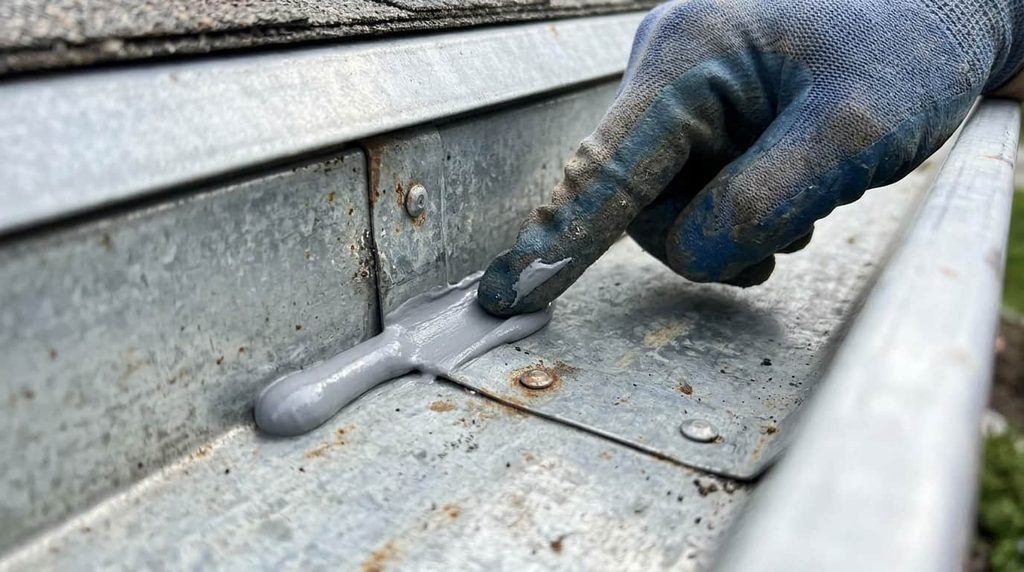
Clean the area, dry it, cut the tube tip, and run a steady bead over the leak. Press the sealant into the gap, smooth it, and let it cure fully before water runs through. Follow the label for cure time, since it changes by product.
- Find every leak. Run water through the gutter with a hose and mark each drip with tape or chalk.
- Clean and dry. Scrub each spot, rinse it, and wait until it is fully dry.
- Remove old sealant. Scrape away anything cracked or peeling.
- Cut the tip. Cut the nozzle at a small angle so you can control the bead.
- Apply the gutter sealant. Run one steady line along the seam, covering the gap and a little of the metal around it.
- Smooth it. Press the bead into the gap with a putty knife or a gloved finger.
- Let it cure. Do not run water through until the gutter sealant has cured as the label directs.
- Test again. Run water through and check for drips. Fix any missed spots.
What Weather Is Best for Applying Gutter Sealant?
Mild, dry days work best, often between about 40°F and 80°F, but check the label for the exact range. Cold, damp, or very hot weather can weaken the bond. In Maryland, late spring and early fall often give the best windows for gutter work.
Maryland weather is tough on gutters. Humid summers, heavy thunderstorms, freeze and thaw cycles in winter, and the occasional nor’easter all stress seams. Water that freezes inside a joint expands and can crack the seal. Because of this, many homeowners check their gutters in spring after winter and again in fall after the leaves drop.
Avoid sealing right before rain. Even a product that dries to the touch can need a full day or more before it handles water well.
What Mistakes Should You Avoid With Gutter Sealant?
The biggest mistakes are skipping cleaning, sealing wet metal, picking the wrong product, and covering rust. Each one weakens the bond and leads to repeat leaks. Slow down on prep, read the label, and fix the cause of the leak, not only the drip.
- Sealing over dirt or old sealant: The new layer will not bond well.
- Working on wet metal: Moisture blocks adhesion.
- Using too little gutter sealant: A thin or broken line leaves gaps.
- Ignoring rust: Sealant over active rust hides the problem for a short time only.
- Choosing the wrong product: Not every sealant works on every gutter material.
- Rushing the cure time: Water too soon can wash out the seal.
- Skipping the cause: Clogs, bad slope, and loose hangers will bring the leak back.
How Long Does Gutter Sealant Last?
Lifespan depends on the product, the prep, and the weather. Quality silicone and polyurethane often last several years, while acrylic and tape wear out sooner. No product lasts forever. Check the manufacturer’s guidance and inspect your gutters every year or two.
Heat, sunlight, ice, and moving metal wear down any seal over time. Dark gutters get hotter in summer and may stress the seal more. A product warranty usually covers the tube itself, not your labor or the condition of the gutter underneath.
How Often Should You Inspect Your Gutters for Leaks?
Inspect your gutters at least twice a year, in spring and fall, and after major storms. Look for drips, peeling sealant, rust, and sagging sections. Catching small problems early keeps repairs cheap and protects your siding, fascia, and foundation.
Gutter leak checklist
- Remove leaves and debris from the gutters and downspouts
- Run water through and watch every seam, corner, and end cap
- Look for cracked or peeling gutter sealant
- Check for rust spots and small holes
- Make sure screws and hangers are tight
- Confirm that water flows toward the downspout
- Look for water stains on siding, fascia, or the ground below
- Take photos so you can compare next season
Is Gutter Sealant a Permanent Fix?
Not usually. Gutter sealant is a long-term repair for small leaks, but it is not permanent. Seals age and metal keeps moving. If the gutter is in good shape, a proper seal can last for years. If the gutter is worn out, replacement is the better choice.
Be honest with yourself about the condition of your system. A fresh seal on weak, rusty metal is like a new bandage on a deep cut. It may hold for a while, but it will not solve the real problem.
How Much Does Gutter Sealant Cost?
A single tube is usually a small expense compared with replacing gutters. Professional repair costs more because it includes labor, equipment, and a full check of the system. Prices change by home size, gutter type, and height. Our gutter repair cost guide shows current ranges.
For a small DIY job, the main costs are the tube, a caulk gun, and basic supplies. For tall homes or long gutter runs, hiring a pro often saves time and lowers the risk of a fall.
What Should You Ask a Gutter Contractor Before Hiring?
Ask about licensing, insurance, experience with your gutter type, the products used, and warranty terms. Also ask whether they will fix the cause of the leak or only seal it. A good contractor explains your options clearly and shows you why replacement is needed before suggesting it.
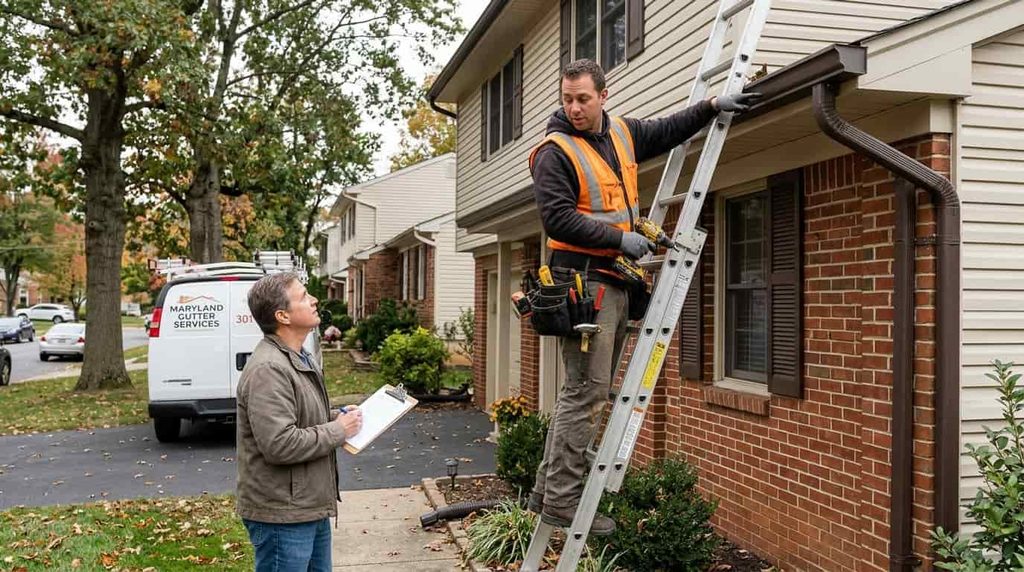
Here are good questions to ask:
- Are you licensed and insured in Maryland?
- Which gutter sealant will you use, and does it match my gutter material?
- Will you fix the slope, hangers, or clogs that caused the leak?
- What does your warranty cover, and for how long?
- Can you show photos of similar repairs you have done?
- What is the full price, and what is included?
Frequently Asked Questions About Gutter Sealant
Can I Apply Gutter Sealant in the Rain?
No. Moisture stops the sealant from bonding. Wait for a dry day and let the metal dry fully. Check the label for rules about rain after application, since some products need several hours or a full day to cure before they can handle water.
How Long Does Sealant Take to Dry on a Gutter?
A surface skin may form in under an hour, but full cure often takes 24 to 48 hours. Some products are faster and some are slower. Follow the manufacturer’s directions before you run water through the gutter or paint over the seal.
Can You Fix a Hole in a Gutter With Sealant?
It can seal very small holes, but not large ones. For bigger holes, use a metal patch with sealant, or replace the damaged section. Sealing over heavy rust rarely lasts, so judge the metal before you start.
Is a Waterproof Sealant Always a Permanent Repair?
No. Most products are waterproof once fully cured, but waterproof does not mean permanent. Sunlight, ice, and gutter movement can break the seal over time, so regular checks still matter.
Should I Hire a Pro or Do It Myself?
Small leaks on low, easy-to-reach gutters are good DIY jobs. Hire a pro for tall homes, steep roofs, widespread leaks, or rusted gutters. A pro can also find hidden causes like poor slope or loose hangers.
Need Help With Leaking Gutters? Talk to a Local Pro
If your gutters keep leaking, USA Builders and Developers can inspect them, repair what can be saved, and tell you honestly when replacement makes more sense. Request a gutter inspection today and protect your home from water damage before the next storm..
Need Help with Your Next Project? Call USA Builders Today!
We’re here to help—quick answers, friendly service, anytime you need!