Choosing the right driveway material is important for every homeowner. A driveway must handle daily traffic while improving curb appeal and property value.
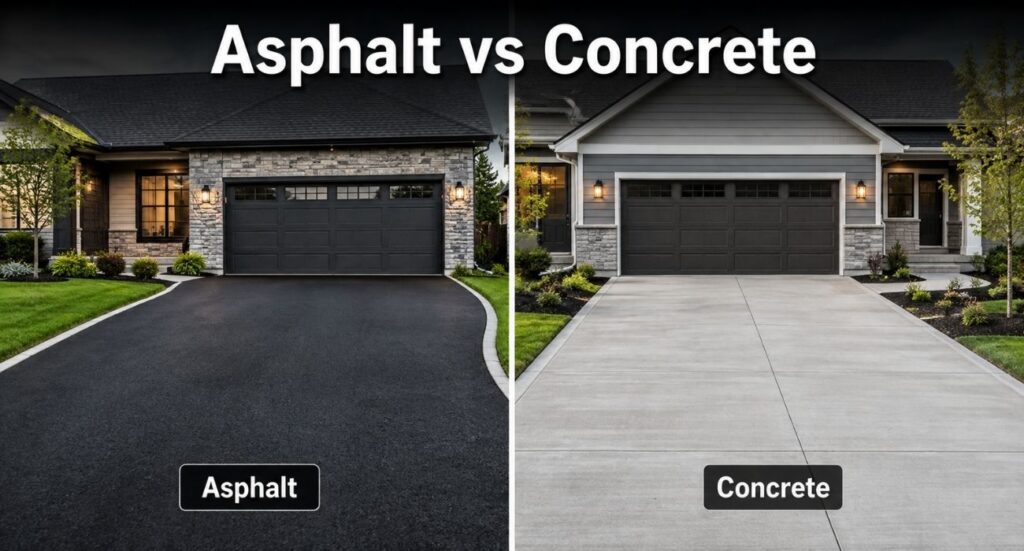
When comparing asphalt vs concrete, homeowners should consider cost, appearance, lifespan, installation, and maintenance. Asphalt is usually more affordable and quicker to install. Concrete often lasts longer and offers more design choices.
This asphalt vs concrete guide explains the main differences between both driveway materials. It will help you compare asphalt vs concrete and choose the best option for your home.
What Is Asphalt?
Asphalt is a flexible paving material made from crushed stone, sand, gravel, and bitumen. Bitumen acts as a binder and gives asphalt its dark color and smooth finish.
Key features of asphalt include:
- Quick installation
- Lower upfront cost
- Flexible surface
- Easy repairs
- Good cold weather performance
Asphalt usually needs regular sealing to protect it from water, sunlight, cracks, and surface wear.
What Is Concrete?
Concrete is a strong paving material made from cement, sand, gravel, and water. The mixture is poured into place and becomes hard as it cures.
Key features of concrete include:
- Long lifespan
- Strong surface
- Low routine maintenance
- Multiple colors and finishes
- Good heat resistance
Concrete takes longer to install and cure. However, it often provides better long-term durability and more design options.
What Are the Characteristics of an Asphalt Driveway?
An asphalt driveway is a popular choice because it is affordable, smooth, and quick to install. The flexible asphalt surface can handle temperature changes and slight ground movement better than rigid materials.
Important characteristics of an asphalt driveway include:
- Lower installation cost than concrete
- Smooth and clean black appearance
- Fast installation and shorter curing time
- Flexible surface for changing weather
- Simple and affordable asphalt repairs
- Lifespan of around 20 to 30 years
- Resealing needed every three to five years
- Fewer design options than concrete
An asphalt driveway is softer than concrete, so it may develop cracks, dents, or faded areas over time. Heavy traffic and extreme heat can also weaken the asphalt surface. Regular sealing and quick repairs help prevent major damage. Asphalt is a practical choice for homeowners who want a smooth finish at a lower cost.
What Are the Characteristics of a Concrete Driveway?
A concrete driveway is known for its strength, long lifespan, and clean appearance. When comparing asphalt vs concrete, concrete offers a harder surface and more design choices.
Important characteristics of a concrete driveway include:
- Lifespan of 30 to 40 years or more
- Strong surface for heavy vehicle traffic
- Lower routine maintenance
- Good performance in hot weather
- Multiple colors, patterns, and finishes
- Higher upfront cost than asphalt
- Longer installation and curing time
- More difficult concrete driveway repairs
A concrete driveway may crack because of ground movement, freezing weather, or poor installation. Oil and chemical stains can also affect its appearance. For homeowners comparing an asphalt vs concrete driveway, concrete is a durable option that offers long-term value and a more customized finish.
What Are the Differences Between Concrete and Asphalt Driveways?
When comparing asphalt vs concrete driveways, homeowners should consider cost, maintenance, lifespan, appearance, and weather performance. Each material has different benefits.
1. Cost Differences Between Asphalt and Concrete Driveways
- Asphalt usually costs less to install because the materials and labor are more affordable. It is a practical choice for homeowners with a smaller budget.
- Concrete has a higher upfront cost. Decorative colors, patterns, and finishes can increase the total price.
2. Maintenance and Repairs on Asphalt and Concrete Driveways
- Asphalt needs more regular maintenance. Resealing every three to five years helps prevent cracks, fading, and water damage.
- Concrete requires less routine care, but repairs can be more expensive. Cracks and stains may also be harder to hide.
3. Asphalt vs Concrete Differences in Lifespan and Durability
- A properly maintained asphalt driveway can last around 20 to 30 years. Its flexible surface handles small ground movements well.
- Concrete often lasts 30 to 40 years or longer. It is stronger, but freezing temperatures and ground movement can cause cracks.
4. Aesthetic and Design of Asphalt vs Concrete Driveways
- Asphalt offers a smooth, dark, and simple appearance. Its design options are more limited.
- Concrete provides more colors, textures, and stamped patterns. It can also imitate brick, stone, or pavers.
Asphalt vs Concrete Differences in Climate and Weather
- Asphalt performs well in cold weather because it can expand and contract. However, strong heat may soften the surface.
- Concrete handles hot weather better. However, repeated freezing and thawing may lead to cracks over time.
Advantages of Asphalt Driveways
Lower Installation Cost
One of the main reasons homeowners choose asphalt is affordability. Asphalt driveway installation typically costs less than concrete, making it a cost-effective option for larger driveways.
Faster Installation Process
Asphalt driveways can often be installed within one to two days, depending on the size of the project. The material also cures faster, allowing homeowners to use the driveway sooner.
Better Performance in Cold Climates
Asphalt performs well in colder climates because its flexible structure allows it to expand and contract with temperature changes. This reduces the risk of cracking during freezing and thawing cycles.
Easy Repairs and Maintenance
Small cracks and surface damage in asphalt can be repaired easily with sealcoating or patching. Routine maintenance helps extend the life of the driveway.
Limitations of Asphalt Driveways
Although asphalt offers several advantages, it also has some drawbacks.
- Limited design and color options
- Requires periodic seal coating every few years
- Can soften in extremely hot temperatures
- Typically has a shorter lifespan than concrete
Advantages of Concrete Driveways
Longer Lifespan
Concrete driveways typically last 30 to 40 years when properly installed and maintained, which is significantly longer than most asphalt driveways.
Greater Durability
Concrete surfaces are strong and resistant to heavy loads, making them suitable for areas with frequent vehicle traffic.
Low Maintenance Requirements
Concrete requires less routine maintenance compared to asphalt. While occasional sealing may help protect the surface, concrete does not need frequent resurfacing.
Decorative Options
Concrete offers more design flexibility. Homeowners can choose decorative finishes such as stamped concrete, colored concrete, or exposed aggregate to enhance curb appeal.
Limitations of Concrete Driveways
Despite its durability, concrete also has some disadvantages.
- Higher installation cost
- Can crack due to ground movement or freeze-thaw cycles
- Repairs may be more noticeable
- Concrete takes longer to cure before it can be used
Asphalt vs Concrete Driveway Cost
| Cost Factor | Asphalt Driveway | Concrete Driveway |
|---|---|---|
| Cost per square foot | $7 to $15 | $8 to $20 |
| Average project cost | Around $5,300 | Around $6,400 |
| Typical project range | $3,100 to $7,500 | $2,700 to $14,500 |
| Upfront cost | Lower | Higher |
| Maintenance needs | Regular sealing | Less frequent maintenance |
| Repair cost | Usually lower | Often higher |
| Long-term value | Good | Better due to longer lifespan |
An asphalt driveway generally costs $7 to $15 per square foot, including labor. A new asphalt installation usually costs $7 to $13 per square foot, while replacing an old driveway may cost $8 to $15 per square foot.
A concrete driveway typically costs $8 to $20 per square foot, including labor. Plain concrete is more affordable, while stamped, colored, or decorative finishes can significantly increase the total cost.
When comparing asphalt vs concrete driveway cost, asphalt usually has a lower upfront price. Concrete costs more initially but may provide better long-term value because it lasts longer and requires less frequent maintenance.
Asphalt vs Concrete Durability
Durability is an important factor when comparing asphalt vs concrete driveway materials. Both can handle daily vehicle traffic, but They differ in lifespan and weather performance.
Asphalt Durability
An asphalt driveway usually lasts 15 to 25 years with proper maintenance. Regular seal coating protects the surface from water, sunlight, oxidation, and cracks.
Asphalt is flexible, so it can expand and contract during temperature changes. This makes it a good option for areas with cold winters and frequent freeze-thaw cycles.
Concrete Durability
A concrete driveway can last 30 years or more when installed correctly. Its hard surface can support heavy vehicles and resist daily wear.
However, concrete may crack if the soil moves, drainage is poor, or expansion joints are not installed properly. Timely sealing and crack repairs can help protect its long-term durability.
Installation Process for Asphalt and Concrete Driveways
Although both driveway types involve excavation and base preparation, their installation processes differ.
Asphalt Driveway Installation
The asphalt driveway installation process typically includes:
- Excavating the existing surface
- Preparing and compacting the gravel base
- Installing asphalt layers
- Compacting the asphalt surface with heavy rollers
Asphalt surfaces usually cure within 24 to 48 hours, allowing homeowners to use the driveway quickly.
Concrete Driveway Installation
Concrete driveway installation involves:
- Excavating and grading the area
- Installing a compacted gravel base
- Building forms to shape the driveway
- Pouring and leveling the concrete
- Finishing the surface and creating expansion joints
Concrete requires several days to cure, and full strength may take up to 28 days.
Which Driveway Material Is Best for Your Home?
The choice between asphalt vs concrete depends on your budget, local climate, maintenance needs, and design goals. Both materials can provide a strong and reliable driveway when installed correctly.
Asphalt may be better for homeowners who want:
- Lower installation costs
- Faster installation
- Easier and cheaper repairs
- Better performance in cold climates
Concrete may be the better choice for homeowners who prefer:
- A longer lifespan
- Greater strength and durability
- More colors and decorative finishes
- Lower long-term maintenance
When comparing asphalt vs concrete, asphalt is ideal for affordability and flexibility. Concrete is often better for long-term value and design options. Both are dependable choices when installed by experienced paving contractors.
Choosing the Right Driveway Solution
A professionally installed driveway improves property functionality, enhances curb appeal, and increases home value. Whether you choose asphalt or concrete, proper site preparation and expert installation play a critical role in long-term performance.
Working with experienced paving contractors ensures that the driveway base, drainage, and materials are installed correctly for lasting durability.
Asphalt vs Concrete: Detailed Comparison Table
| Feature | Asphalt | Concrete |
|---|---|---|
| Initial Cost | Lower | Higher |
| Installation and initial curing | 1–2 days | Several days |
| Lifespan | 20–30 years | 30–40+ years |
| Maintenance | Frequent, low-cost | Less frequent, high-cost |
| Climate Suitability | Cold climates | Warm climates |
| Noise Levels | Quieter | Louder |
| Aesthetic Options | Limited | Highly customizable |
| Environmental Impact | Highly recyclable | High CO₂ footprint |
| Repair Cost | Affordable | Expensive |
| Snow & Ice Behavior | Melts faster | Stays colder |
| Ride Quality | Smoother | Harder |
| Color Options | Black only | Many options |
FAQs
What is poor man’s concrete?
Poor man’s concrete is an informal term for an affordable surface made from compacted gravel, crushed stone, sand, or reclaimed asphalt. It is often used for driveways and pathways when poured concrete is too expensive. Although it is quick to install and budget-friendly, it is less durable and may require regular grading or added material.
What are the disadvantages of asphalt?
Asphalt has a shorter lifespan than concrete and needs regular sealing to prevent cracks, fading, and water damage. It can soften in extreme heat, develop potholes under heavy traffic, and lose its dark color over time. Asphalt also offers fewer decorative colors and finishes than concrete.
Why does Texas use concrete instead of asphalt?
Texas uses concrete on many major highways and heavy-duty roads because it handles extreme heat and heavy truck traffic better than asphalt. It resists softening and rutting, lasts longer, and often requires less long-term maintenance.
How long do 2 inches of asphalt last?
A two-inch asphalt surface can last around 15 to 20 years if it has a strong base and proper drainage. Regular sealing and quick crack repairs can help it last longer, while heavy traffic or poor installation may shorten its lifespan.
Final Thoughts on Asphalt vs Concrete Driveways
Comparing asphalt vs concrete helps homeowners choose the right driveway material. Asphalt is affordable, flexible, and easier to repair. Concrete is stronger, lasts longer, and offers more design options.
The best choice depends on cost, climate, maintenance, and appearance. Reviewing asphalt vs concrete driveway durability and long-term value can make the decision easier.
USA Builders and Developers provides professional asphalt and concrete driveway installation in Maryland. Our team helps homeowners choose a durable surface that improves function, curb appeal, and property value.
Have Questions? Call Us Now!
We’re here to help—quick answers, friendly service, anytime you need!