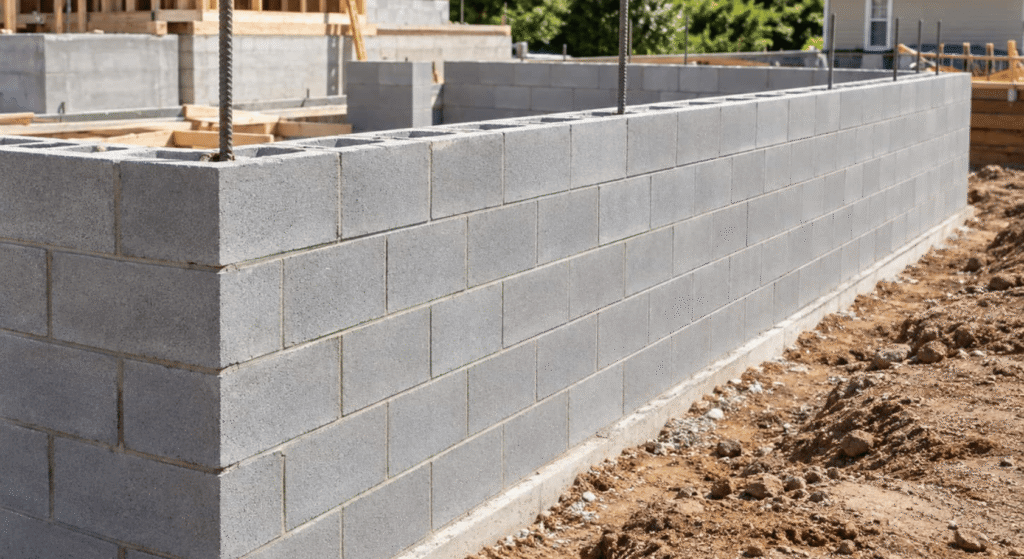
Concrete blocks are widely used in residential and commercial construction. They are strong, durable, and suitable for many types of building projects. You can find them in foundation walls, exterior walls, retaining walls, garages, basements, and other structures.
But not all concrete blocks are the same.
Different blocks have different sizes, shapes, weights, and uses. Some are designed for load-bearing walls, while others work better for partitions or decorative projects.
If you are planning a construction or masonry project, understanding the different types can help you choose the right material.
What Are Concrete Blocks?
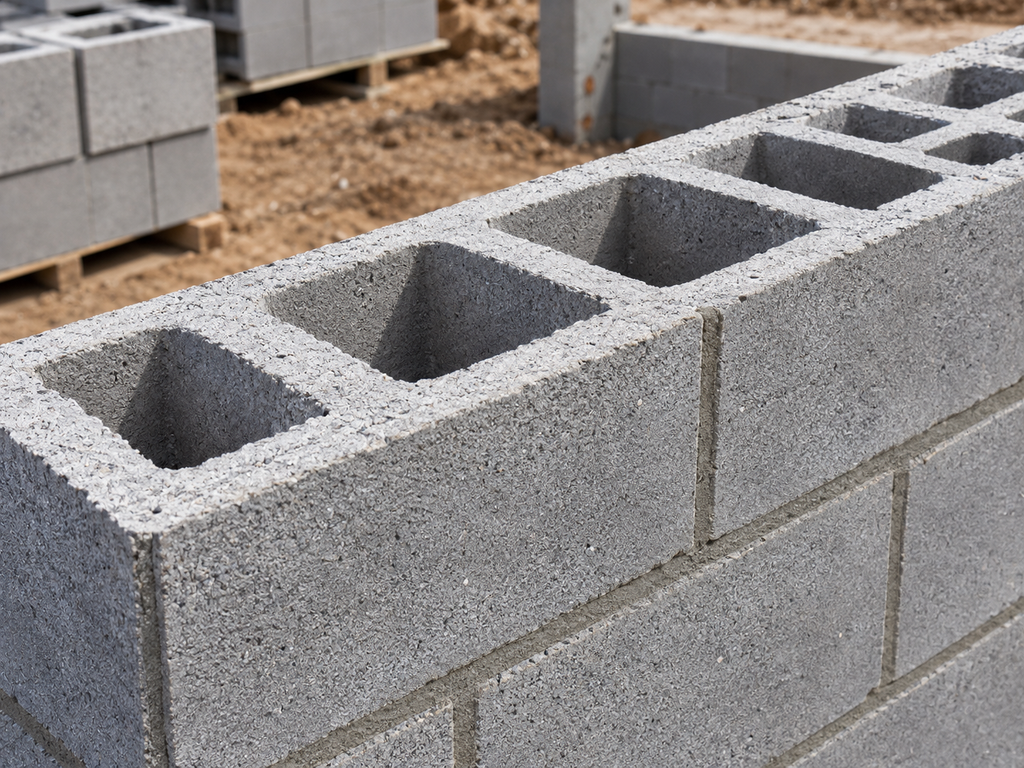
Concrete blocks are building units made from a mixture of cement, sand, water, and other materials. The mixture is shaped into blocks and allowed to harden.
Most blocks have hollow spaces inside. These openings make the blocks lighter than solid concrete while still providing good strength.
Concrete blocks are also commonly called concrete masonry units (CMUs) or cinder blocks. However, these terms do not always mean exactly the same thing.
Modern concrete masonry units are generally made with Portland cement and aggregates. Older cinder blocks were often made with coal cinders as an aggregate.
Today, concrete blocks are available in many forms to meet different construction needs.
What Are Concrete Blocks Used For?
Concrete blocks have many applications in construction.
They are often used for:
- Foundation walls
- Basement walls
- Exterior walls
- Interior partition walls
- Retaining walls
- Garage walls
- Garden walls
- Utility buildings
- Commercial structures
- Fire-resistant walls
- Structural masonry
Their strength makes them useful when a project needs a durable masonry material.
For example, concrete blocks can create a strong foundation wall that supports the structure above. They can also be used for walls that need to resist weather and everyday wear.
The correct block depends on the project.
A contractor considers factors such as wall height, structural load, moisture exposure, local building requirements, and the location of the wall before selecting materials.
Types of Concrete Blocks
There are several types of concrete blocks available for construction. Each has specific characteristics and uses.
1. Hollow Concrete Blocks
Hollow blocks have open spaces inside them.
These blocks are popular because they weigh less than solid units. Their hollow design also makes them easier to handle during construction.
The spaces may sometimes be filled with concrete or reinforced with steel when additional strength is required.
Hollow blocks are commonly used for:
- Exterior walls
- Partition walls
- Foundation construction
- Commercial buildings
- Residential construction
The exact design and strength rating can vary by manufacturer.
2. Solid Concrete Blocks
Solid blocks have little or no hollow space.
They are heavier than hollow units and can provide substantial strength. Their weight can also make them harder to move and install.
Solid blocks are useful for projects where durability and mass are important.
Common applications include:
- Retaining walls
- Heavy-duty walls
- Foundations
- Security walls
- Landscaping structures
A contractor should determine whether solid blocks are appropriate for the intended application.
3. Lightweight Concrete Blocks
Lightweight blocks are made with lighter aggregates.
They are easier to handle than standard heavy blocks. This can make construction work more efficient.
Lightweight units can also provide useful insulation properties, depending on their composition and design.
They are often used in walls where reducing the overall weight of the structure is helpful.
4. Decorative Concrete Blocks
Decorative blocks are designed to provide both structure and visual appeal.
They may have patterns, textures, or special shapes.
These blocks can be used for:
- Garden walls
- Privacy walls
- Exterior features
- Screens
- Landscape projects
- Architectural details
They allow builders to create attractive masonry without relying only on standard flat blocks.
5. Concrete Partition Blocks
Partition blocks are commonly used for interior walls that separate rooms or spaces.
They may not need to support the same loads as structural walls. Their main purpose is to divide an area.
They can be useful in commercial buildings, offices, warehouses, and some residential projects.
The correct block still depends on the building design and local requirements.
What Are the Benefits of Concrete Blocks?
Concrete blocks remain popular because they offer several practical advantages.
Strength
One of their biggest benefits is strength.
Properly selected and installed masonry blocks can create durable walls that withstand significant loads and everyday exposure.
For structural projects, the block itself is only one part of the system. Mortar, reinforcement, grout, wall design, and installation methods also affect the final strength.
Durability
Concrete masonry can last for many years when it is installed correctly and maintained properly.
It can handle rain, wind, temperature changes, and normal wear.
However, durability depends on proper construction. Poor drainage, water intrusion, improper installation, and freezing conditions can still damage masonry over time.
Fire Resistance
Concrete masonry is naturally resistant to fire.
This makes it useful in buildings where fire protection is an important design concern.
The actual fire rating of a wall depends on several factors, including block type, wall thickness, construction method, and other materials used in the assembly.
Low Maintenance
Concrete block walls generally require less routine maintenance than many other exterior materials.
That does not mean they can be ignored.
Cracks, damaged mortar, water stains, and other problems should be repaired when they appear.
Regular inspections can help prevent minor issues from becoming larger repairs.
Versatility
Concrete masonry can be used for many types of projects.
Builders can select different sizes, shapes, textures, and finishes based on the needs of the structure.
This flexibility makes the material useful for both practical and architectural applications.
Are Concrete Blocks Waterproof?
Concrete blocks are not completely waterproof.
This is an important point for homeowners.
Concrete is porous. Water can move through small pores and openings in the material. Mortar joints can also allow water to enter when they become cracked or damaged.
This does not mean concrete block walls are poor building materials.
It means proper moisture protection is important.
A well-designed wall may use several methods to control water, including:
- Proper drainage
- Waterproof coatings
- Flashing
- Sealants
- Drainage systems
- Proper grading
- Foundation waterproofing
Basement walls require particular attention because they are exposed to moisture from surrounding soil.
If water keeps entering a concrete block wall, simply painting over the surface may not solve the problem. The source of the moisture should be identified first.
Concrete Blocks for Foundation Walls
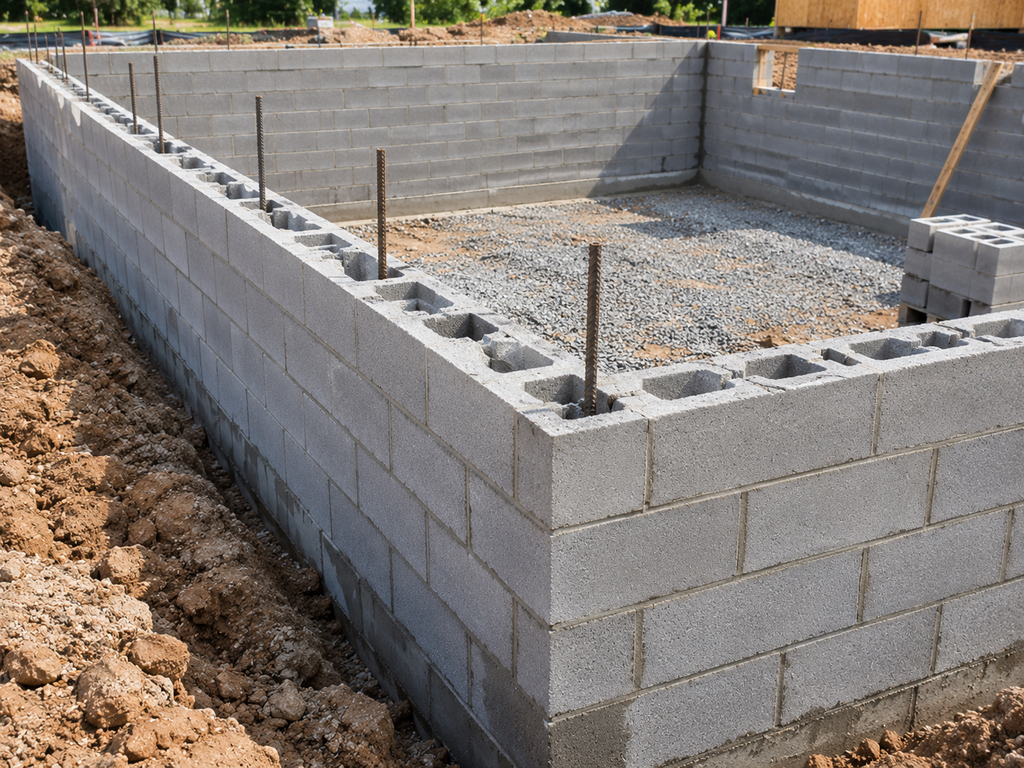
Concrete masonry units are commonly used for foundation construction.
A foundation wall needs to support the building above while resisting pressure from the surrounding soil.
Concrete block foundations can be reinforced when the design requires additional strength.
They also need proper drainage and waterproofing.
Water that collects around a foundation can increase pressure against the wall. Over time, this may contribute to cracks, leaks, or other problems.
Properly installed footing drains, exterior waterproofing, grading, and other drainage measures can help protect foundation walls.
The exact foundation design should follow local building requirements and project-specific engineering needs.
Concrete Blocks vs. Poured Concrete
Both concrete blocks and poured concrete can be used for foundation and structural walls.
The better option depends on the project.
Concrete Blocks
Concrete masonry units are individual pieces installed with mortar. They can be easier to handle in certain projects and are widely available.
They can also be reinforced with steel and filled with grout when required by the design.
Poured Concrete
Poured concrete walls are formed and filled with concrete on site.
They create a continuous wall rather than a wall made from individual units.
Poured concrete can provide strong resistance to soil pressure when properly designed and reinforced.
Which Is Better?
There is no single answer.
The best material depends on the building design, site conditions, local requirements, budget, wall height, soil conditions, and contractor experience.
A qualified contractor can help determine which construction method is suitable for your project.
Concrete Blocks vs. Bricks
Bricks and concrete masonry units are both common masonry materials, but they have different characteristics.
Bricks are usually smaller and may offer a traditional appearance. Concrete blocks are generally larger, allowing a wall to be built with fewer individual units.
Concrete blocks are often selected for foundations, structural walls, and utility buildings. Bricks are frequently chosen for exterior finishes and architectural designs.
Some buildings use both.
For example, a concrete block wall may provide the structural base while brick is installed as an exterior veneer.
The right choice depends on the appearance, performance, and structural requirements of the project.
Common Problems With Concrete Block Walls
Concrete masonry is durable, but it can still develop problems.
Cracks
Cracks can appear because of settlement, foundation movement, moisture, temperature changes, or structural stress.
Small surface cracks may not always indicate a serious problem. However, large or growing cracks should be inspected.
Water Leaks
Basement block walls can develop water problems when exterior drainage or waterproofing fails.
Water may enter through cracks, mortar joints, or porous sections.
Repeated moisture exposure can cause additional damage.
Efflorescence
Efflorescence appears as a white, powdery deposit on masonry.
It occurs when moisture moves through the material and carries dissolved salts to the surface.
It is usually a sign that water is moving through the wall.
Damaged Mortar
Mortar joints can deteriorate due to age, moisture, freezing, and weather exposure.
Damaged joints may need repointing or another masonry repair method.
Spalling
Spalling happens when the surface of masonry begins to chip, flake, or break away.
Moisture and repeated freeze-thaw cycles can contribute to this problem.
Damaged areas should be inspected before the condition becomes worse.
How to Maintain Concrete Block Walls
Regular maintenance can extend the useful life of masonry.
Start by inspecting walls for visible changes.
Look for cracks, damaged mortar, water stains, loose material, and signs of moisture.
Keep Water Away From the Wall
Make sure gutters and downspouts work properly.
Downspouts should direct water away from the foundation rather than allowing it to collect beside the wall.
The ground around the building should also be properly graded so water flows away from the structure.
Repair Cracks Early
Do not ignore new cracks.
Track their size and location. If a crack continues to grow or appears with other signs of movement, contact a professional for an inspection.
Maintain Mortar Joints
Damaged mortar can allow moisture into the wall.
Repointing may be needed when joints become weak or deteriorated.
Check for Moisture
Look for damp areas, white deposits, mold, or water stains.
If moisture keeps returning, identify the source rather than simply covering the affected area.
How Are Concrete Block Walls Repaired?
The repair method depends on the type and severity of damage.
A professional may begin with a visual inspection.
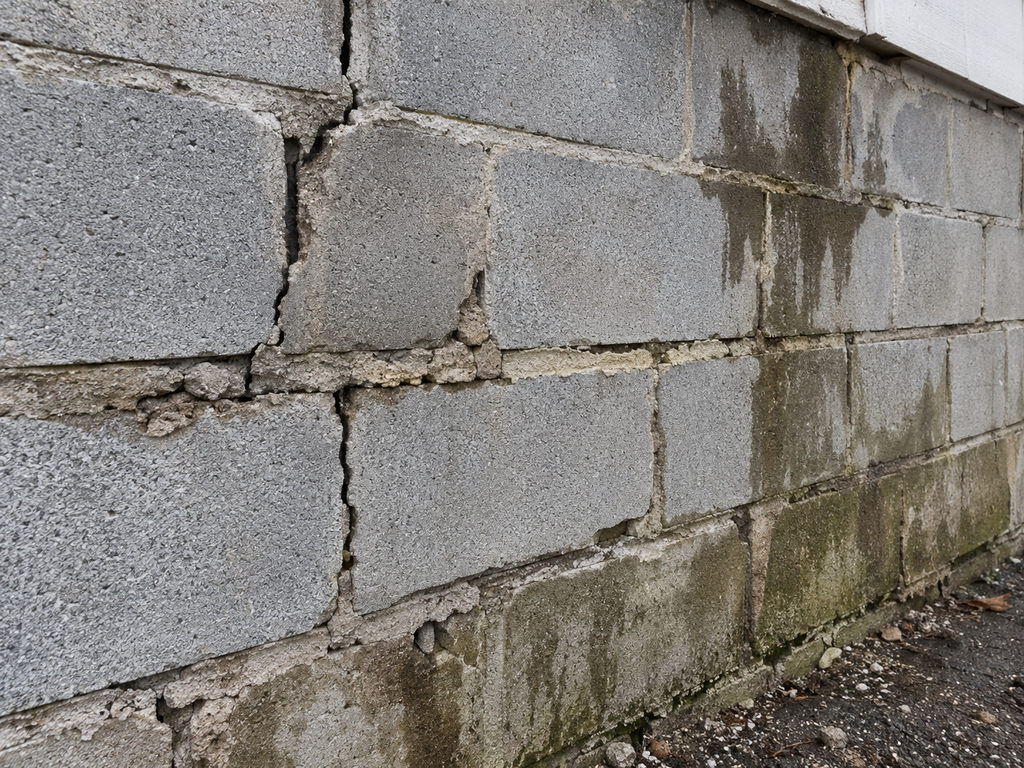
They may check:
- Cracks
- Mortar joints
- Wall movement
- Drainage
- Water intrusion
- Foundation conditions
- Soil around the structure
- Previous repairs
Once the cause is identified, the contractor can recommend a repair method.
Minor mortar damage may require repointing. Individual damaged blocks may need replacement.
More serious structural movement may require reinforcement or additional repairs.
Water-related problems may require waterproofing or drainage improvements.
The important point is to address the cause.
Repairing only the visible damage may not provide a long-term solution if the underlying issue remains.
Are Concrete Blocks a Good Choice for Homes?
Yes, concrete masonry can be a good choice for homes when it is properly designed and installed.
It is especially useful for foundations, basements, garages, utility structures, and other areas where strength and durability matter.
However, material selection should always consider the entire building system.
A good wall needs more than strong blocks.
It also needs proper footings, mortar, reinforcement when required, drainage, moisture protection, and correct installation.
Local building codes should also be followed.
How Much Do Concrete Blocks Cost?
The cost of a concrete block project can vary widely.
The price depends on factors such as:
- Block type
- Block size
- Quantity
- Delivery
- Labor
- Wall height
- Reinforcement
- Mortar
- Grout
- Site conditions
- Excavation
- Waterproofing
- Project location
The block itself is only one part of the total project cost.
For example, building a foundation wall involves more than purchasing masonry units. Labor, excavation, footings, reinforcement, drainage, waterproofing, and finishing can all affect the final price.
For this reason, it is better to request a project-specific estimate instead of relying on a general price per block.
Choosing the Right Concrete Block
Choosing a block should begin with the purpose of the wall.
Ask these questions:
Is the wall structural?
If it supports significant loads, the block and wall system must meet the required structural standards.
Will the wall be exposed to moisture?
Basements and exterior walls need proper moisture management.
Does the wall need reinforcement?
Some projects require steel reinforcement and grout-filled cores.
Does appearance matter?
Decorative or architectural blocks may be better for visible walls.
What do local codes require?
Building requirements can vary based on location and project type.
A professional contractor can help you make the right choice.
When Should You Hire a Masonry Contractor?
You may need professional masonry services if you are building a new block wall or dealing with existing masonry damage.
Consider professional help when you notice:
- Large cracks
- Bowing walls
- Water leaks
- Damaged mortar
- Spalling blocks
- Foundation movement
- Loose masonry
- Repeated moisture problems
- Structural concerns
Masonry work requires proper materials, tools, and installation techniques.
An experienced contractor can also identify problems that may not be obvious to a homeowner.
Final Thoughts
Concrete blocks are a practical and durable material for many construction projects. They can be used for foundations, basement walls, exterior walls, retaining walls, garages, and other structures.
Their strength and versatility make them a popular choice, but proper installation is essential.
The best results come from choosing the right block for the project and protecting the finished wall from moisture and drainage problems.
If you already have a concrete block wall, regular inspections can help you catch damage early. Cracks, water stains, damaged mortar, and spalling should not be ignored.
For larger construction or repair projects, a professional masonry contractor can inspect the wall and recommend the right solution.
Need Professional Masonry Services?
USA Builders and Developers provides masonry services for residential and commercial properties in Maryland. Our services include brick work, concrete sidewalks and driveways, tuckpointing and repointing, masonry restoration, and repairs.
If you are planning a new masonry project or need help with an existing wall, contact USA Builders and Developers to discuss your project and find a suitable solution.
Contact Us
Contact USA Builders and Developers today at 443 551 0006 for expert concrete blocks installation services. Our team ensures quality, durability, and precision for every project. Reach out now to get start.