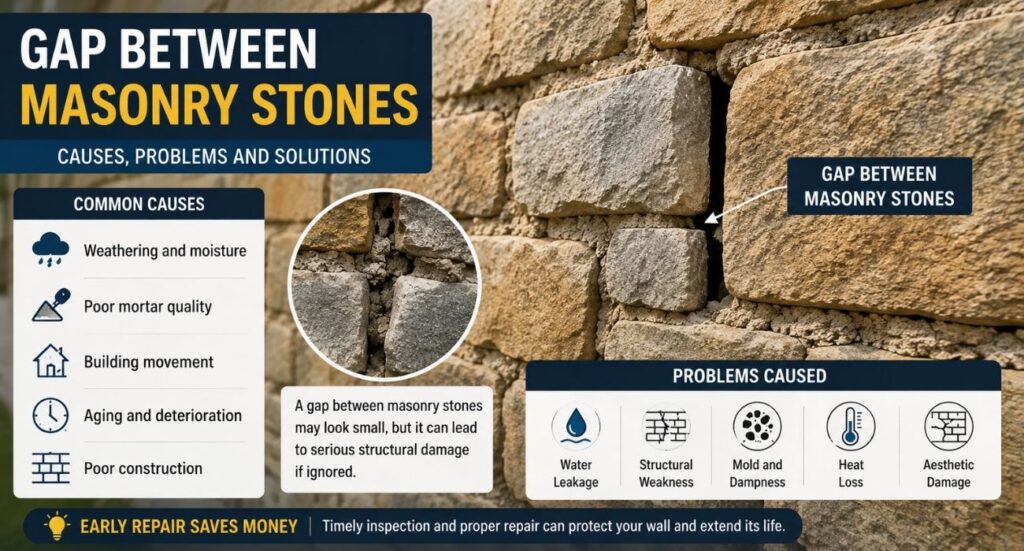
A gap between masonry stones may look like a small problem, but it can allow water and moisture into the wall. Over time, this can weaken mortar joints, damage the stones, and lead to more expensive repairs.
These gaps can happen in old and new stone walls. Weather, poor mortar, building movement, and lack of maintenance are common causes.
The good news is that many masonry problems can be repaired when they are found early.
In this guide, you will learn why gaps form between masonry stones, what problems they can cause, how they are repaired, and how to prevent them.
What Causes a Gap Between Masonry Stones?
A gap can develop when the mortar holding the stones together becomes weak or damaged. The opening may start small and become larger over time.
Here are the most common causes.
1. Weather and Moisture
Rain and moisture can slowly wear away mortar joints. Repeated wet and dry cycles can make the damage worse.
Freezing temperatures can also cause water inside small cracks to expand. This puts pressure on the mortar and may create larger openings.
2. Old or Deteriorated Mortar
Mortar does not last forever. As a masonry wall ages, the mortar can become soft, cracked, or powdery.
Once the mortar loses its strength, stones may begin to move or separate.
3. Poor Mortar Installation
Incorrect mortar mixing can create weak joints.
Poor workmanship can also leave empty spaces around the stones. These weak areas are more likely to develop gaps later.
4. Building Movement
Buildings naturally move slightly over time.
Foundation settlement, vibration, and structural movement can put stress on masonry walls. This pressure may cause cracks and separation between stones.
5. Poor Drainage
Water should always drain away from a masonry wall.
Blocked gutters, damaged downspouts, and poor grading can leave water against the wall. Constant moisture can weaken mortar and increase the risk of stone wall damage.
What Problems Can Masonry Gaps Cause?
A small opening does not always mean there is serious structural damage. However, it should not be ignored.
Open joints can allow water and air to enter the wall.
Common problems include:
- Water infiltration
- Damp spots
- Cracked mortar
- Loose stones
- Mold and mildew
- Interior wall damage
- Heat loss
- Further masonry deterioration
The longer moisture stays inside the wall, the greater the chance of more serious damage.
How to Tell If a Stone Wall Needs Repair
Some masonry problems are easy to see. Others develop behind the surface.
Look for these warning signs:
1. Visible Gaps
Small openings between stones are one of the clearest signs.
Check the entire wall instead of looking at only one damaged area.
2. Crumbling Mortar
If the mortar can easily be scraped or breaks apart, it may need repair.
Healthy mortar should hold the stones securely.
3. Loose Stones
A stone that moves when touched may indicate a serious problem with the surrounding mortar.
Do not try to remove or reposition large stones yourself.
4. Water Stains
Brown or dark stains on interior walls can indicate moisture entering through exterior masonry.
5. White Powder or Staining
White deposits on masonry are often called efflorescence. They can appear when water moves through masonry and leaves mineral deposits behind.
6. Cracks Around the Wall
New or growing cracks may indicate movement or other structural problems.
If cracks continue to expand, a professional masonry inspection is recommended.
How Is a Gap Between Masonry Stones Repaired?
The correct repair method depends on the size and cause of the gap.
For damaged mortar joints, repointing is one of the most common solutions.
The process usually includes the following steps.
1. Inspect the Masonry
The wall should first be inspected to determine why the gap developed.
A contractor should check the stones, mortar, drainage, and surrounding areas.
2. Remove Loose Mortar
Damaged mortar is carefully removed from the joint.
The goal is to remove weak material without damaging the surrounding stones.
3. Clean the Joint
Dust and loose debris are removed before new mortar is installed.
A clean surface helps the new mortar bond properly.
4. Prepare the Mortar
The mortar should be suitable for the existing masonry.
Using mortar that is too hard can sometimes damage older stone or brick. The correct mix depends on the type and age of the masonry.
5. Repoint the Joint
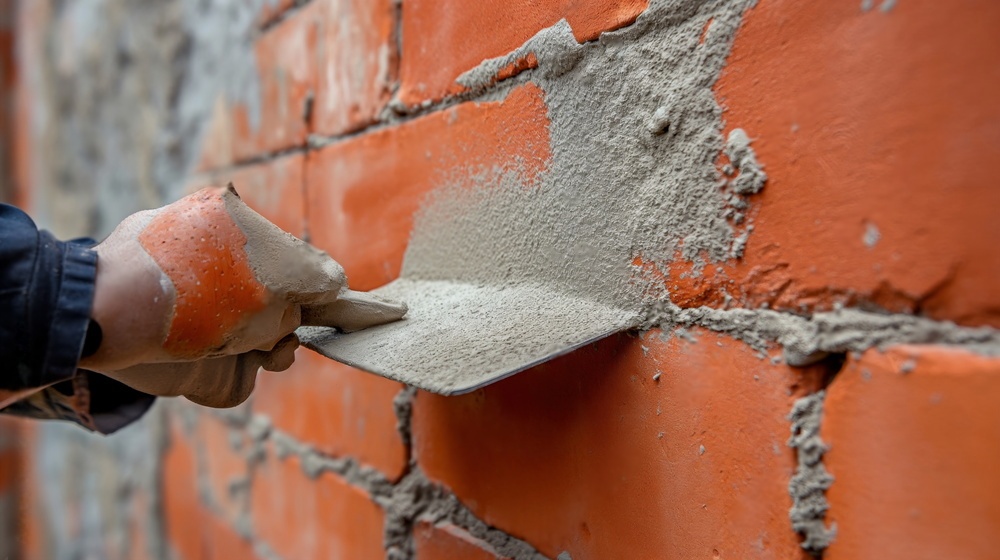
Fresh mortar is pressed into the open joint.
The joint is filled completely to reduce spaces where water can enter.
6. Finish the Joint
The surface is shaped to match the existing masonry.
A proper finish helps protect the joint from rain and improves the appearance of the wall.
When Does a Gap Need More Than Repointing?
Not every masonry gap can be fixed with new mortar.
More extensive work may be needed when:
- Stones are loose or displaced
- Large cracks are visible
- The wall is leaning
- Several stones have fallen out
- The foundation has moved
- Water damage is extensive
- Large sections of mortar have failed
In these situations, a professional should inspect the wall before repairs begin.
The main problem may be structural movement rather than simple mortar deterioration.
Repointing vs Rebuilding a Stone Wall
These two repairs are not the same.
| Repair Method | Best For | What It Involves |
|---|---|---|
| Repointing | Damaged mortar joints | Removing old mortar and adding new mortar |
| Stone Replacement | Broken or badly damaged stones | Removing and replacing individual stones |
| Partial Rebuilding | Heavily damaged sections | Taking down and rebuilding part of the wall |
| Full Rebuilding | Severe structural failure | Rebuilding the entire masonry section |
A professional inspection can help determine which option is appropriate.
Can You Repair Small Masonry Gaps Yourself?
Small, non-structural mortar gaps may be suitable for minor DIY maintenance.
However, masonry repair requires more than simply filling a hole with cement.
The new mortar needs to be compatible with the existing stone. The joint must also be cleaned and prepared correctly.
Professional help is a better choice when the wall has:
- Large gaps
- Loose stones
- Major cracks
- Water infiltration
- Bulging areas
- Leaning sections
- Signs of structural movement
Working on a damaged masonry wall without understanding the cause can make the problem worse.
How to Prevent Gaps Between Masonry Stones
Regular maintenance can help prevent small masonry problems from becoming major repairs.
1. Inspect Masonry Regularly
Check stone walls at least once or twice a year.
Look for cracks, loose mortar, open joints, and damaged stones.
2. Keep Gutters Clean
Blocked gutters can send large amounts of water down masonry walls.
Clean gutters and properly working downspouts help keep excess water away from the wall.
3. Fix Cracks Early
Small cracks are easier to repair than large ones.
Do not wait until stones become loose or sections of mortar fall out.
4. Improve Drainage
Make sure water drains away from the foundation and masonry walls.
Poor drainage can keep the lower part of a wall constantly wet.
5. Repair Damaged Mortar
Repointing damaged joints can stop moisture from entering the wall.
Early maintenance can also help extend the life of the masonry.
Common Mistakes to Avoid
Some repair methods can create more problems when they are done incorrectly.
- Using the Wrong Mortar: Very hard mortar may not be suitable for older stone walls. The mortar should be compatible with the existing masonry.
- Filling Gaps Without Cleaning Them: New mortar will not bond properly if loose material remains inside the joint.
- Ignoring the Cause: Simply filling a gap does not solve the problem if water or building movement caused it.
- Using Too Much Sealant: Sealant may provide a temporary barrier, but it is not always the correct solution for deteriorated mortar joints.
- Ignoring Large Cracks: Large or growing cracks can indicate movement or structural problems. These should be professionally assessed.
How Much Does Masonry Gap Repair Cost?
The cost of masonry repair depends on several factors.
These include:
- Size of the damaged area
- Number of gaps
- Type of stone
- Mortar condition
- Wall height
- Accessibility
- Amount of labor
- Whether structural repairs are needed
Small repointing jobs usually cost less than rebuilding damaged sections.
Because every wall is different, getting an on-site inspection and written estimate is the best way to determine the actual repair cost.
Why Professional Masonry Repair Matters
A professional masonry contractor does more than fill visible gaps.
They can identify the reason the damage occurred and determine whether the wall has hidden problems.
Professional repair can help:
- Restore weak mortar joints
- Secure loose stones
- Reduce water infiltration
- Improve wall appearance
- Protect the structure
- Prevent recurring damage
This is especially important when the wall is old or shows signs of movement.
Frequently Asked Questions
What causes a gap between masonry stones?
Common causes include deteriorated mortar, moisture, freezing temperatures, building movement, poor drainage, and improper construction.
How do you fix gaps between masonry stones?
Small mortar gaps are often repaired through repointing. Damaged mortar is removed, the joint is cleaned, and compatible new mortar is installed.
Are gaps between stone walls dangerous?
Small gaps are not always dangerous, but they can allow water to enter the wall. Large gaps, loose stones, leaning walls, or major cracks may indicate a more serious problem.
Can I repair a small gap in a stone wall myself?
Small, non-structural mortar joints may be repairable as a DIY project. Larger gaps or walls with loose stones and cracks should be inspected by a professional.
How can I prevent gaps from forming in masonry?
Regular inspections, proper drainage, clean gutters, timely repointing, and quick repairs can help prevent masonry gaps from becoming larger problems.
Final Thoughts
A gap between masonry stones should not be ignored simply because it looks small.
The opening may allow water to enter the wall and weaken the surrounding mortar. Over time, this can lead to loose stones, cracks, dampness, and more expensive repairs.
The best approach is simple: find the cause, repair the damaged joints, and prevent moisture from returning.
Regular masonry inspections can help catch problems early. If you notice large gaps, loose stones, major cracks, or signs of water damage, have the wall inspected by a qualified masonry professional.
Proper maintenance can keep stone walls strong, attractive, and protected for many years.
Have Questions? Call Us Now!
We’re here to help—quick answers, friendly service, anytime you need!


Contact USA Builders and Developers
🌐 Website: www.usabuildersanddevelopers.com
📍 Serving: Baltimore, Bethesda, Silver spring, and Montgomery Maryland
📌 Address: 2144 Priest Bridge Court, Suite 8, Crofton, MD 21114, USA