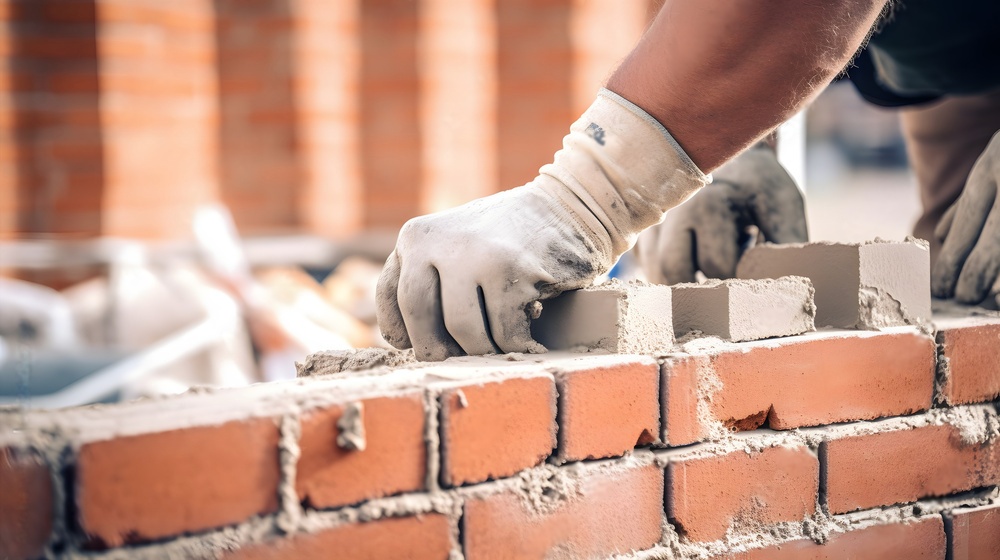
Masonry tools make brick, block, stone, and concrete work easier and more accurate. The right tools help masons build strong walls, create clean joints, and complete repairs properly.
Different masonry jobs need different tools. A small repair may need only a few basic tools. A large wall or construction project may require professional equipment.
Knowing the purpose of each tool can help you choose the right equipment for the job.
In this guide, we will explain the most useful masonry tools, what they do, and when they are used.
What Are Masonry Tools?
Masonry tools are tools used for building, repairing, cutting, shaping, and finishing masonry materials.
These materials include:
- Brick
- Concrete blocks
- Natural stone
- Mortar
- Concrete
- Pavers
Some tools are used to apply mortar. Others are used to cut materials or create smooth finishes.
Using the right tool can also improve safety and reduce unnecessary work.
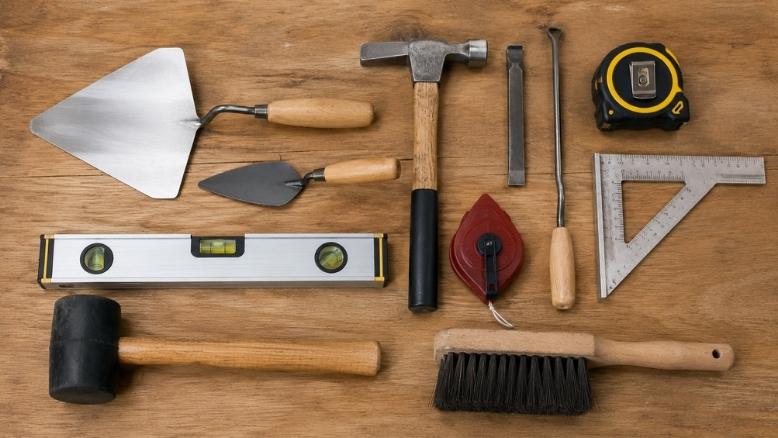
Essential Masonry Tools
There are many types of masonry tools available. Some are basic hand tools. Others are power tools used for larger projects.
Here are some of the most common tools used by masons.
Masonry Trowel
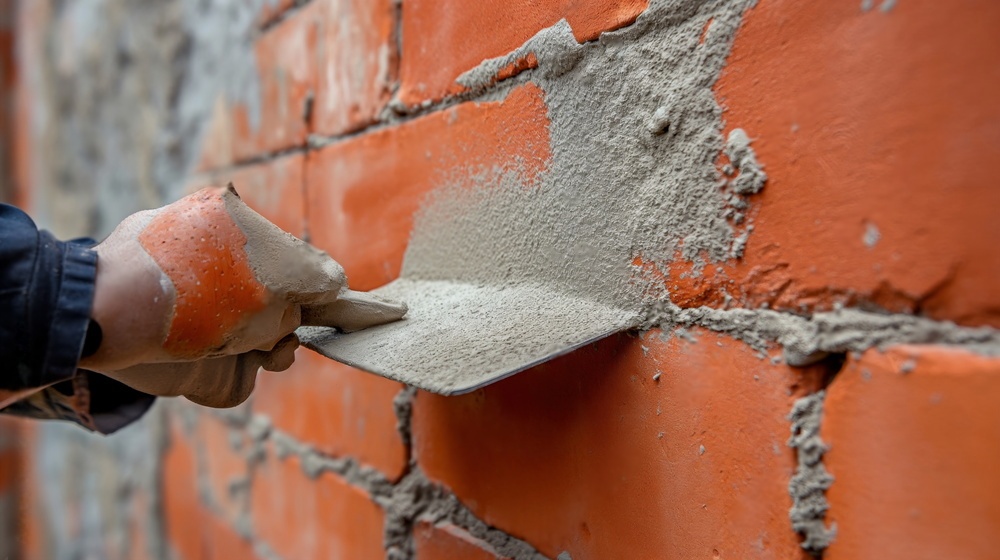
A masonry trowel is one of the most important tools for masonry work.
It is used to spread and shape mortar. Masons also use it to place mortar between bricks and blocks.
Different trowel shapes are available for different jobs.
A good trowel should feel comfortable in your hand. It should also be strong enough for regular use.
Brick Hammer
A brick hammer is designed for cutting and shaping bricks.
One side has a flat surface. The other side has a sharp edge.
The flat side can be used for general hammering. The sharp edge helps break or shape bricks.
A brick hammer gives better control than a regular hammer when working with masonry.
Masonry Chisel
A masonry chisel is used to cut or remove brick, concrete, and stone.
It can also help remove old mortar during repair work.
Chisels are often used with a hammer. The chisel is placed against the material, and the hammer is used to create controlled force.
Spirit Level
A spirit level helps check whether masonry work is straight and level.
This tool is important when building:
- Brick walls
- Block walls
- Stone walls
- Steps
- Pavers
Without a level, a wall can slowly become uneven.
Even a small mistake can become noticeable as the wall gets higher.
Mason’s Line
A mason’s line helps keep bricks and blocks in a straight line.
The line is stretched between two points. The mason then uses it as a guide while placing each brick.
This simple tool helps create cleaner and more consistent walls.
Tape Measure
A tape measure is used to check distances and dimensions.
Accurate measurements are important in every masonry project.
A tape measure can help determine:
- Wall length
- Wall height
- Opening sizes
- Brick spacing
- Material quantities
Measuring twice before cutting or building can help prevent mistakes.
Mortar Pan
A mortar pan is used to hold small amounts of mortar while working.
It is useful for repair jobs and smaller masonry projects.
A mortar pan allows the mason to keep mortar close to the work area.
For larger projects, a mortar mixer may be more practical.
Mortar Hoe
A mortar hoe is used to mix mortar and other masonry materials.
It has a long handle and a wide blade.
The long handle makes mixing easier and reduces the need to bend over repeatedly.
Jointers
Jointers are used to finish mortar joints between bricks or blocks.
They help create a smooth and even joint.
Different joint profiles can create different appearances.
Proper joint finishing also helps keep water away from weak areas of the wall.
Masonry Brush
A masonry brush helps remove dust, loose mortar, and debris from masonry surfaces.
It can be used during preparation and cleanup.
A clean surface is important before applying new mortar or other masonry materials.
Rubber Mallet
A rubber mallet provides controlled force without damaging the surface as easily as a steel hammer.
It can be useful when working with:
- Pavers
- Bricks
- Tiles
- Stone
The softer head helps reduce surface damage.
Masonry Saw
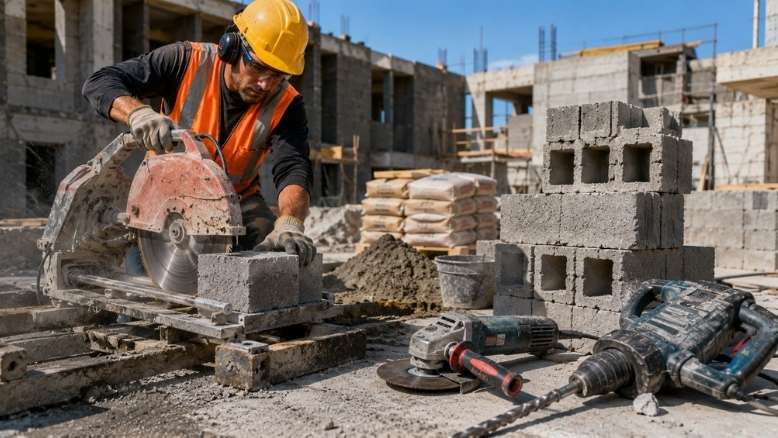
A masonry saw is used to make precise cuts in masonry materials.
It can cut materials such as brick, block, concrete, and stone.
Masonry saws are especially useful when many accurate cuts are required.
Because power saws can create dust and debris, proper safety equipment is important.
Angle Grinder
An angle grinder can be used for cutting, grinding, and shaping masonry materials.
With the correct masonry blade, it can cut brick, concrete, and stone.
It is useful for repair work where precise cuts are needed.
Always follow the manufacturer safety instructions when using power tools.
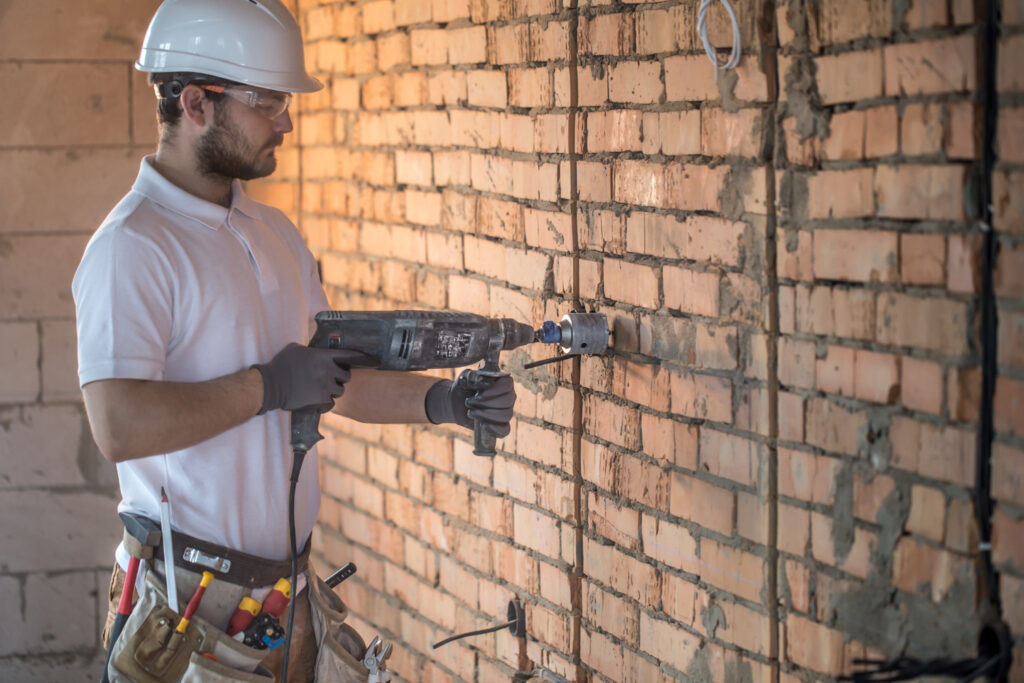
Masonry Drill
A masonry drill is designed for drilling into hard materials.
It can be used to make holes in:
- Brick
- Concrete
- Block
- Stone
Masonry drill bits are designed specifically for these hard surfaces.
Using the correct bit helps produce cleaner holes and reduces tool damage.
Wheelbarrow
A wheelbarrow makes it easier to move materials around a job site.
Masons may use it to transport:
- Mortar
- Sand
- Cement
- Bricks
- Stone
- Debris
A strong wheelbarrow can save time on larger projects.
Masonry Tools and Their Uses
Choosing the right tool becomes easier when you understand its main purpose.
| Masonry Tool | Main Use |
|---|---|
| Masonry trowel | Applying mortar |
| Brick hammer | Cutting and shaping brick |
| Masonry chisel | Removing or cutting masonry |
| Spirit level | Checking level and alignment |
| Mason’s line | Keeping brick courses straight |
| Tape measure | Taking measurements |
| Mortar pan | Holding mortar |
| Mortar hoe | Mixing mortar |
| Jointer | Finishing mortar joints |
| Masonry brush | Cleaning masonry |
| Rubber mallet | Adjusting pavers and bricks |
| Masonry saw | Making precise cuts |
| Angle grinder | Cutting and grinding |
| Masonry drill | Drilling into masonry |
| Wheelbarrow | Moving materials |
Hand Tools vs Power Masonry Tools
Masonry tools can generally be divided into two groups: hand tools and power tools.
Hand Masonry Tools
Hand tools are simple and easy to control.
Common examples include:
- Trowels
- Hammers
- Chisels
- Levels
- Jointers
- Brushes
- Tape measures
They are useful for small repairs and general masonry work.
Power Masonry Tools
Power tools make difficult jobs faster.
Common examples include:
- Masonry saws
- Angle grinders
- Rotary hammers
- Masonry drills
Power tools are useful for large projects and jobs that require repeated cutting or drilling.
They also require more care and safety precautions.
How to Choose the Right Masonry Tools
You do not need every tool for every project.
Start by understanding the work you need to complete.
Consider the Material
Brick, concrete, and stone may require different tools.
For example, a masonry saw may be useful for cutting concrete blocks. A brick hammer may be better for small brick adjustments.
Consider the Project Size
A small repair may only require basic hand tools.
A large construction project may need power tools and specialized equipment.
Check Tool Quality
Good-quality tools can last longer and perform better.
Look for strong handles, durable materials, and comfortable designs.
Think About Safety
Safety should always be considered when selecting masonry tools.
Gloves, safety glasses, dust protection, and proper footwear can help reduce common job-site risks.
Common Mistakes When Using Masonry Tools
Using the wrong tool can make masonry work harder.
It can also damage the material.
Avoid these common mistakes:
- Using a regular hammer instead of a masonry hammer
- Cutting masonry without proper protection
- Using worn-out tools
- Skipping measurements
- Using the wrong drill bit
- Applying too much force
- Ignoring manufacturer instructions
- Working without proper safety equipment
Choosing the correct tool can make the work safer and more efficient.
How to Maintain Masonry Tools
Proper maintenance can extend the life of your tools.
Clean tools after each project. Remove mortar before it becomes hard.
Keep metal tools dry to reduce rust.
Check handles for cracks or damage.
Store power tools in a dry and secure location.
Replace damaged tools instead of continuing to use them.
Simple maintenance can help your masonry tools perform better for longer.
When Should You Hire a Mason?
Some masonry projects are suitable for homeowners. Small repairs may only require basic tools and materials.
Larger projects are different.
Consider hiring a professional for:
- Large wall construction
- Structural masonry repairs
- Foundation masonry work
- Major brick replacement
- Stone wall construction
- Chimney masonry repairs
- Large cracks
- Loose or unstable masonry
Professional masons have the tools, experience, and techniques needed for complex work.
For larger repairs and construction projects, professional masonry services can provide the right equipment, materials, and experience for a safe and durable result.
Masonry Tools for Different Projects
The best tools depend on the type of masonry project.
Brick Repair
Brick repair commonly requires a trowel, chisel, jointer, hammer, brush, and level.
Stone Masonry
Stone work may require chisels, hammers, levels, grinders, and specialized cutting equipment.
Block Work
Concrete block projects often require a trowel, level, mason’s line, tape measure, and masonry saw.
Mortar Repointing
Repointing usually requires a pointing trowel, jointing tool, chisel, brush, and mortar mixing equipment.
Using the correct masonry tools for each job helps improve the final result.
Frequently Asked Questions
What are the best tools for masonry?
The best masonry tools include a masonry trowel, brick hammer, chisel, spirit level, mason’s line, jointer, tape measure, masonry saw, and mortar mixer. Each tool helps with accurate, strong, and efficient masonry work.
What tools are commonly used in masonry?
Common masonry tools include trowels, brick hammers, masonry chisels, spirit levels, mason’s lines, jointers, tape measures, masonry saws, grinders, and mortar mixers.
Which tool is commonly used by masons?
A masonry trowel is one of the most commonly used tools by masons. It is mainly used to spread, shape, and apply mortar between bricks and blocks.
What tools do I need for masonry?
For basic masonry work, you need a masonry trowel, brick hammer, chisel, spirit level, mason’s line, tape measure, jointer, and mortar mixer.
How to choose the right masonry tools?
Choose masonry tools based on the type of work, material, project size, tool quality, and safety needs. For example, use a trowel for mortar, a chisel for cutting masonry, and a masonry saw for precise cuts.
Final Thoughts
The right masonry tools can make construction and repair work easier, faster, and more accurate.
Basic tools such as trowels, hammers, chisels, levels, and jointers are useful for many projects. Larger jobs may require masonry saws, grinders, and drills.
You do not need to buy every tool at once. Choose tools based on the material, project size, and type of work.
For complex masonry repairs or structural problems, professional help is usually the safest choice.
Have Questions? Call Us Now!
We’re here to help—quick answers, friendly service, anytime you need!