A chimney can look strong from the outside while water slowly gets into the roof around it. One of the most common reasons is damaged or poorly installed flashing.
Chimney flashing repair helps seal the area where the chimney meets the roof. It keeps rain, melting snow, and moisture from getting under the roofing materials. When flashing fails, a small leak can lead to damaged shingles, rotten roof decking, stained ceilings, and deteriorating masonry.
The good news is that many Chimney flashing repair can be fixed when they are found early. This guide explains what chimney flashing does, what causes it to fail, how to spot problems, and when repair or replacement makes more sense.
What Is Chimney Flashing?
Chimney flashing is a group of metal pieces installed around the base of a chimney where it meets the roof. Its main purpose is to direct water away from this vulnerable joint.
The flashing works with the roofing materials and chimney masonry to create a water-resistant barrier. A properly installed system usually includes several parts rather than one single piece of metal.
The main components include:
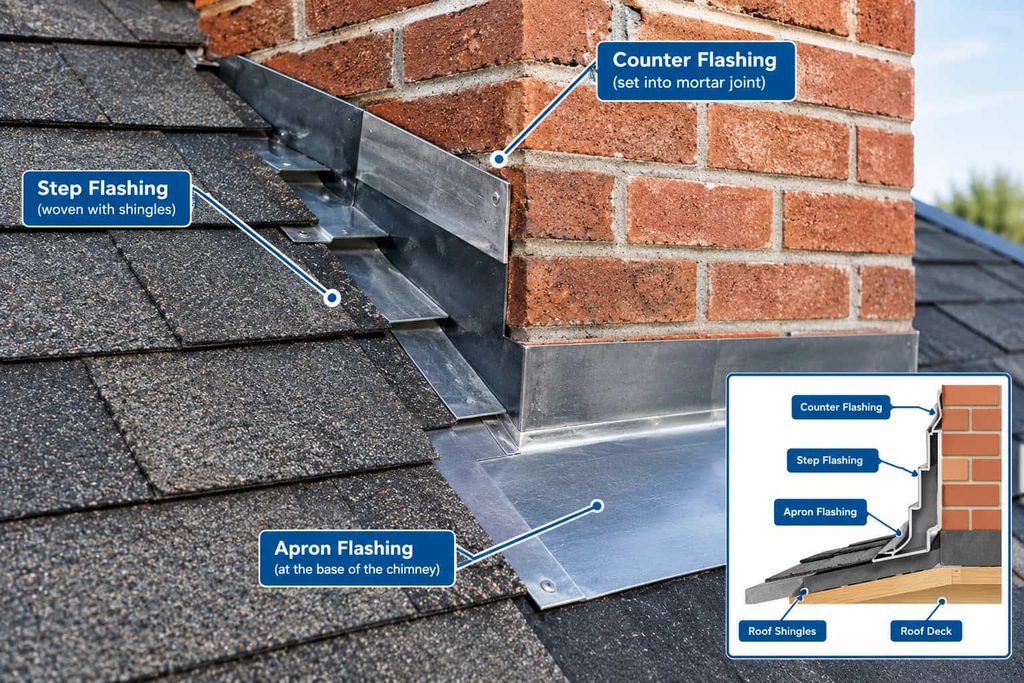
- Step flashing: Small pieces of metal installed along the sides of the chimney and woven into the roofing courses.
- Counter flashing: Metal attached to or set into the chimney masonry. It overlaps the step flashing.
- Base or apron flashing: Protects the lower front section where the roof meets the chimney.
- Back flashing: Protects the upper side of the chimney.
- Cricket or saddle: A raised structure behind a larger chimney that helps direct water around it.
These pieces work together. If one part is missing, loose, rusted, or installed incorrectly, water can find a path into the roof.
Why Is Chimney Flashing Repair Important?
The joint between a roof and chimney is exposed to rain, snow, ice, wind, and repeated temperature changes. Water naturally tries to collect around this area.
Flashing gives that water a controlled path away from the chimney.
Without proper flashing, moisture may move beneath shingles and into the roof assembly. It can also enter the chimney masonry or wall cavity.
Over time, this may cause:
- Roof leaks
- Damaged shingles
- Rotten roof decking
- Wood deterioration
- Ceiling stains
- Damp insulation
- Mold growth
- Cracked or weakened mortar
- Rust and corrosion
- Interior water damage
This is why fixing the Chimney flashing is not simply a cosmetic roof repair. It can protect several parts of the home at once.
What Are the Signs You Need Chimney Flashing Repair?
Some Chimney Flashing Repair problems are easy to see. Others first appear as water damage inside the home.
Here are some common warning signs.
1. Water Stains Near the Chimney
Brown, yellow, or dark stains on a ceiling or wall near the chimney can indicate moisture intrusion.
The stain may not appear directly below the flashing. Water can travel along roof decking or framing before entering the interior.
2. Leaks During Rain
If water appears around the chimney after heavy rain, the flashing should be inspected.
Wind-driven rain can enter through small gaps, loose metal, failed sealant, or poorly overlapped flashing.
3. Rusted or Corroded Metal
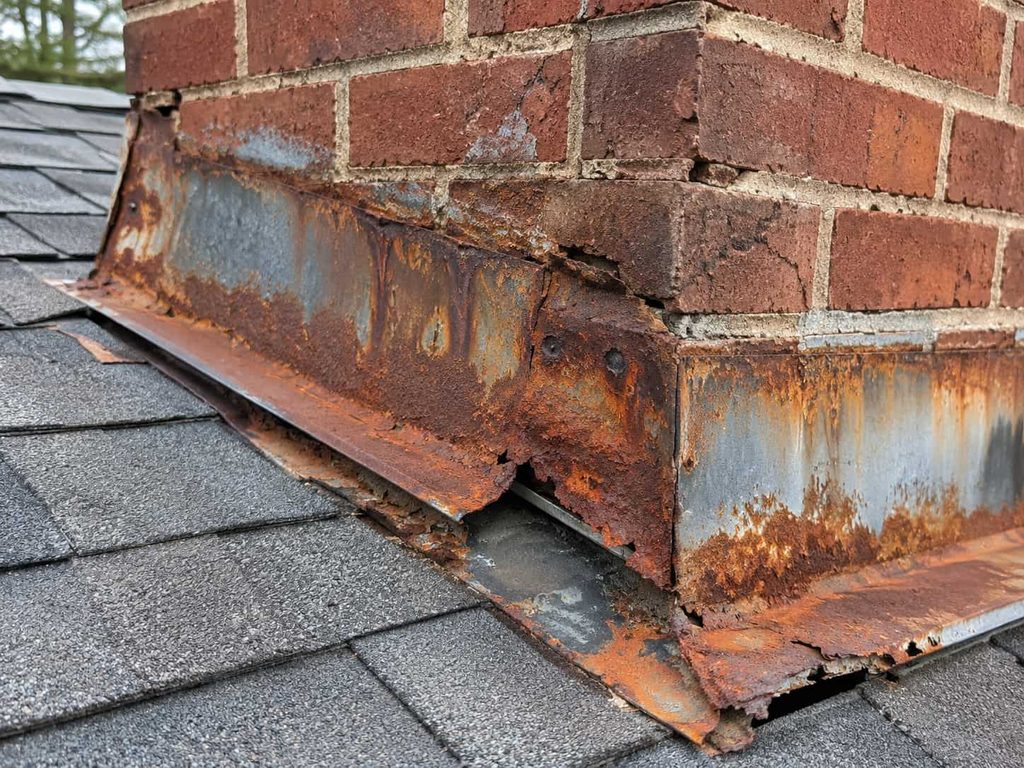
Rust is a warning that metal flashing is deteriorating.
Small surface discoloration does not always mean the entire system needs replacement. However, deep corrosion, holes, or badly weakened metal should not be ignored.
4. Cracked or Missing Sealant
Sealant is often used around flashing joints and masonry connections.
Over time, it can dry out, crack, shrink, or pull away from the surface. This creates openings where water can enter.
Sealant should not be treated as a replacement for a properly designed flashing system. It is one part of the overall water-management system.
5. Loose or Lifted Flashing
Strong winds, roof movement, temperature changes, and poor installation can cause flashing to lift or separate.
Loose metal can allow water underneath the roofing materials.
6. Damaged Shingles Around the Chimney
Curling, cracked, missing, or lifted shingles near the chimney can be connected to flashing problems.
Water may enter around the chimney and damage the shingles or the materials underneath them.
7. Deteriorating Mortar
Water does not only damage roofing materials.
Repeated moisture exposure can weaken mortar joints around the chimney. Crumbling mortar near the flashing may allow additional water into the chimney structure.
8. Damp Attic Areas
If the chimney passes through an attic, check the surrounding roof area for damp wood, dark marks, wet insulation, or musty odors.
These signs can indicate that water is entering above the ceiling.
What Causes Chimney flashing repair to Fail?
Flashing can fail for several reasons. Age is only one of them.
Poor Installation
Incorrect overlaps, exposed fasteners, poor measurements, and improper connections can create leak points.
Flashing must be installed so water moves over the system rather than underneath it.
Weather Exposure
Chimney flashing repair faces constant exposure to sunlight, rain, snow, ice, and wind.
Repeated expansion and contraction can stress joints and sealants.
Corrosion
Some metals eventually corrode, especially when exposed to moisture or incompatible materials.
The choice of flashing material should also match the surrounding roof and masonry system.
Roof Movement
Roofing materials can expand and contract with temperature changes. The chimney and roof may also move differently.
A Chimney flashing repair system needs to account for this movement instead of creating rigid connections that can crack or pull apart.
Damaged Masonry
Cracks in bricks or mortar can allow water to reach areas around the flashing.
In these cases, repairing only the metal may not solve the underlying problem.
Missing Cricket
A chimney can collect water and debris on its uphill side, especially when it is wide.
Building-code requirements can call for a cricket or saddle in certain chimney configurations. Maryland projects also need to follow the applicable state and local code requirements.
What Materials Are Used for Chimney Flashing Repair?
Several metals can be used for flashing.
Aluminum
Aluminum is lightweight and resists rust. It is commonly used for residential flashing.
However, it must be installed correctly around masonry because material compatibility matters.
Copper
Copper is durable, flexible, and easy to shape around complicated chimney designs.
It also develops a natural patina over time. Copper is usually more expensive than many other flashing materials.
Stainless Steel
Stainless steel offers strong corrosion resistance and good durability.
It can be a useful choice for areas exposed to moisture and harsh weather.
Galvanized Steel
Galvanized steel has been widely used for flashing. Its performance depends on the quality and thickness of the protective coating.
Once corrosion gets through the coating, the underlying steel can deteriorate.
The best material depends on the chimney, roof, climate, existing materials, and project requirements.
How Does Chimney Flashing Repair Work?
A proper Chimney Flashing Repair should begin with finding the source of the leak rather than simply covering the visible opening.
Step 1: Inspect the Chimney and Roof
A professional checks the flashing, shingles, chimney masonry, sealants, roof surface, and nearby areas.
They may also inspect the attic for water stains or damaged wood.
Step 2: Find the Actual Leak Source
Water does not always enter where the interior stain appears.
The inspection should trace the likely path of water from the chimney and roof area toward the interior.
Step 3: Remove Damaged Materials
Loose, rusted, badly damaged, or improperly installed flashing may need to be removed.
Old roofing cement and failed sealant may also need to be cleared away.
Step 4: Check for Hidden Damage
Once damaged flashing is removed, the underlying area can be inspected for:
- Rotten wood
- Damaged roof decking
- Wet insulation
- Deteriorated shingles
- Cracked masonry
- Damaged underlayment
Finding these problems early can prevent a small flashing issue from becoming a larger roof repair.
Step 5: Install New Flashing
New flashing is carefully measured and fitted around the chimney.
Step Chimney flashing repair is integrated with the roofing courses. Counter flashing is installed over the upper portion of the system to help keep water out.
Step 6: Seal the Proper Areas
Joints and masonry connections are sealed with suitable materials.
The goal is not to cover the entire flashing system with roofing cement. The flashing itself should be designed to shed water properly.
Step 7: Inspect the Completed Repair
The finished work should be checked for gaps, loose sections, poor overlaps, and exposed openings.
A controlled water test may also be used to help confirm that the repaired area is functioning correctly.
Can Your Chimney Flashing Be Repaired Without Replacing the Roof?
Yes, in many situations.
If the roof shingles are still in good condition and the damage is limited to the flashing, a targeted repair may be possible.
However, the Chimney flashing repair must often be integrated with the surrounding shingles. This means some shingles may need to be carefully removed or replaced during the repair.
If the roof is already near the end of its service life, replacing the flashing at the same time as the roof may be more practical.
The right choice depends on the condition of both systems.
Chimney Flashing Repair vs. Replacement
Not every Chimney flashing repair problem requires a complete replacement.
Repair may be suitable when:
- The metal is generally in good condition.
- Damage is limited to a small area.
- A joint has failed.
- Sealant has deteriorated.
- A small section has become loose.
- Water intrusion has been caught early.
Replacement may be better when:
- The flashing has widespread corrosion.
- Metal is cracked or badly damaged.
- The original system was poorly designed.
- Multiple areas are leaking.
- Flashing is missing.
- The system has been repeatedly patched.
- The chimney or roof has been significantly altered.
A temporary patch may stop water for a short time, but it does not always solve the underlying problem.
How Much Does Chimney Flashing Repair Cost?
There is no single price that applies to every home.
The cost depends on the size of the chimney, roof pitch, flashing material, accessibility, amount of damage, and whether related roof or masonry repairs are needed.
Current cost guides show a wide range for professional work. Angi, for example, reports professional chimney flashing repair costs of roughly $200 to $1,600, while more extensive work can cost more.
Treat online price ranges as general estimates, not guaranteed quotes.
The biggest factors include:
| Cost Factor | Why It Matters |
|---|---|
| Chimney size | Larger chimneys need more material and labor |
| Roof pitch | Steeper roofs require more safety equipment and time |
| Flashing material | Copper generally costs more than aluminum or steel |
| Damage level | Minor repairs cost less than complete replacement |
| Roof access | Difficult access increases labor time |
| Masonry condition | Damaged brick or mortar may need separate work |
| Roof condition | Nearby shingles or decking may also need repair |
| Cricket requirements | Larger or certain chimney configurations may require additional work |
Getting the leak diagnosed first is important. Otherwise, you may pay for a Chimney flashing repair while another source continues to allow water into the home.
Can You do Chimney Flashing Repair by Yourself?
Yourself?
Minor exterior maintenance may be possible for experienced homeowners, but roof flashing work can be risky.
Working around a chimney often requires climbing onto a sloped roof. Falls are a serious concern.
More importantly, incorrectly installed flashing can create hidden leaks.
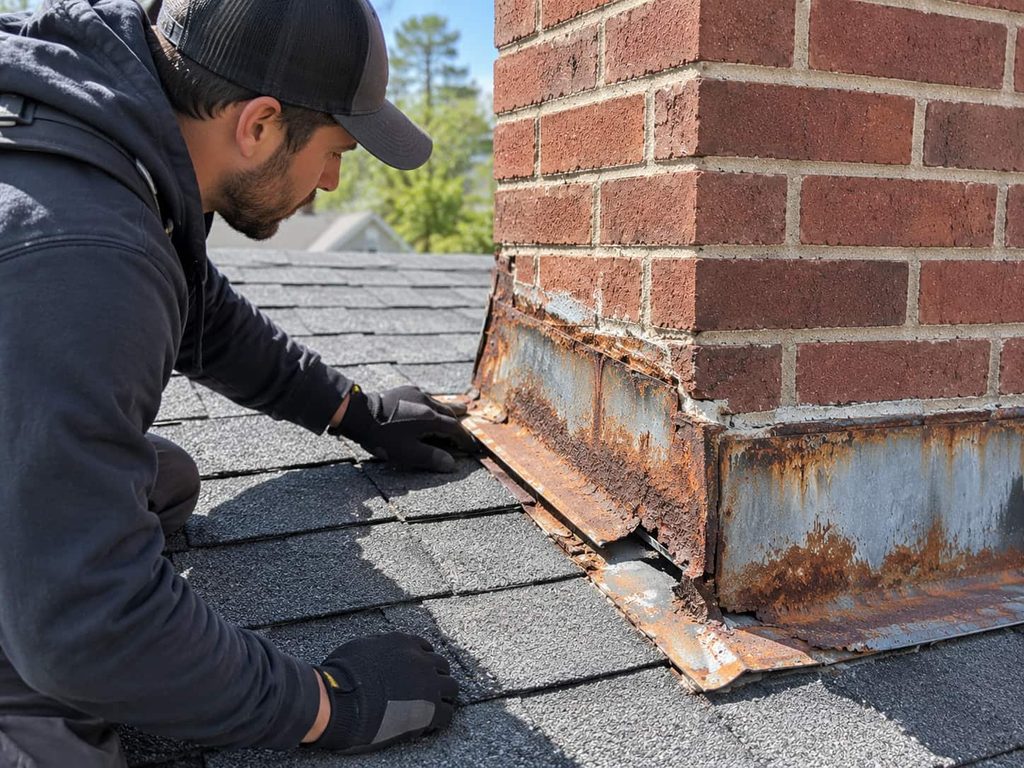
A professional can determine whether the problem is actually the flashing or whether the leak is coming from:
- Chimney masonry
- Chimney cap
- Roof shingles
- Roof valleys
- Underlayment
- Roof decking
- Nearby roof penetrations
For major damage or complete flashing replacement, professional inspection and repair are the safer choice.
How to Prevent Chimney Flashing Repair Problems
You cannot prevent every flashing failure, but regular maintenance can help you catch problems early.
Inspect After Severe Weather
Check the chimney and roof area after major storms, strong winds, or heavy snowfall.
Look for loose metal, damaged shingles, debris, or visible gaps.
Keep the Chimney Area Clear
Leaves, branches, and other debris can collect around the chimney and slow drainage.
Keeping the area clear helps water move away from the structure.
Check Interior Areas
Look at ceilings, walls, and attic spaces near the chimney.
A small stain can be an early warning before a major leak develops.
Maintain the Masonry
Cracked bricks and deteriorating mortar can contribute to water intrusion.
If masonry is damaged, address it instead of relying only on new sealant around the flashing.
Do Not Rely on Tar Patches
Roofing cement can sometimes be useful for specific applications, but spreading tar over damaged flashing is not a substitute for correcting a failed flashing system.
If the metal is damaged or incorrectly installed, the underlying problem should be addressed.
When Should You Call a Professional?
Call a roofing or masonry professional if you notice active water leaking around the chimney, damaged flashing, significant corrosion, deteriorating mortar, or repeated leaks after previous repairs.
You should also consider professional inspection if the chimney is difficult to access or the roof has a steep slope.
Early inspection can help identify whether you need a small repair, flashing replacement, roof repair, or masonry work.
Frequently Asked Questions
What is chimney flashing repair?
It is the process of fixing damaged, loose, corroded, or improperly installed flashing where a chimney meets the roof. The goal is to restore the water-shedding barrier and prevent moisture from entering the roof or home.
How do I know if my chimney flashing is leaking?
Look for water stains, damp attic areas, damaged shingles, rusted metal, cracked sealant, or visible gaps around the chimney. Leaks may become more noticeable during heavy rain.
How long does Chimney Flashing Repair last?
The lifespan depends on the material, installation quality, weather exposure, and maintenance. Properly installed systems can last for many years, but there is no universal lifespan for every chimney.
Can flashing be repaired instead of replaced?
Yes. If the damage is limited, a repair may be enough. Extensive corrosion, missing flashing, repeated leaks, or poor original installation may require replacement.
Does a chimney cricket prevent leaks?
A properly designed cricket helps move water around the uphill side of a chimney. Certain chimney sizes and configurations require crickets under applicable building codes.
Can Chimney Flashing Repair cause roof leaks?
Yes. Failed flashing can allow water beneath shingles and into the roof assembly. However, not every chimney leak is caused by flashing, so the entire area should be inspected.
Should chimney flashing be replaced when replacing the roof?
Often, it is worth evaluating at the same time. If existing flashing is old, damaged, or poorly installed, replacing it during reroofing can help create a more reliable roof-to-chimney connection.
How USA Builders and Developers Can Help
Chimney Flashing Repair protects one of the most vulnerable points on your roof. When it fails, the problem can spread from a small leak to damaged roofing, masonry, insulation, and interior surfaces.
USA Builders and Developers can help homeowners identify and address roofing and masonry problems before they become more costly.
Our related services include roofing, masonry repairs, waterproofing, and restoration work. If a chimney leak is connected to damaged masonry, roof materials, or water intrusion, looking at the complete problem can lead to a better long-term solution.
For Maryland homeowners, a professional assessment can help determine whether the right solution is a localized repair, flashing replacement, masonry repair, or additional waterproofing.
Final Thoughts
Chimney Flashing Repair has a simple job, but it plays an important role in protecting your roof and home.
When Chimney Flashing Repair becomes loose, cracked, corroded, or poorly sealed, water can enter through the roof-to-chimney connection. The damage may remain hidden until it reaches the attic or interior ceiling.
Watch for stains, leaks, rust, damaged shingles, deteriorating mortar, and gaps around the chimney. Do not wait for a major leak before investigating the problem.
Early chimney flashing repair can help protect the roof, chimney, and interior of your home while avoiding more extensive repairs later.
Need Help with Your Next Project? Call USA Builders Today!
We’re here to help—quick answers, friendly service, anytime you need!