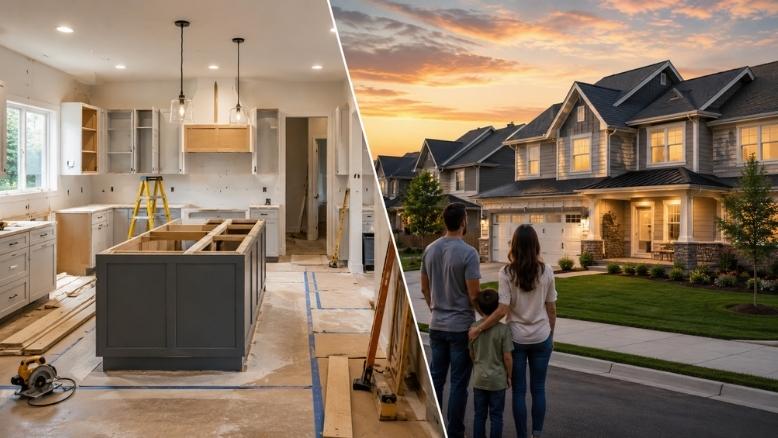
Have you been thinking about moving because your current home no longer meets your family’s needs? Whether it’s a cramped kitchen, limited storage, a growing family, or the need for a dedicated home office, these challenges often leave homeowners wondering if it’s time for a fresh start or if Home Remodeling is the smarter investment.
The answer isn’t always straightforward. In our experience, many Maryland homeowners assume they need a larger home, only to discover that the right remodeling project can completely transform the way they live. Others find that moving is the better option because their property can’t realistically support the changes they need. The key is understanding which choice offers the greatest long-term value for your specific situation.
Table of Contents
In this guide, we’ll compare Home Remodeling and moving from a contractor’s perspective, exploring the costs, benefits, and practical factors that matter most. By the end, you’ll have a clearer understanding of which investment makes the most sense for your home, your budget, and your future.
Why This Decision Is More Important Than Ever
A growing family, changing lifestyles, and rising housing costs have made the decision between moving and Home Remodeling more important than ever. While buying a new home comes with closing costs, moving expenses, and potential upgrades, remodeling allows homeowners to improve their existing space without leaving the neighborhood they love.
For many Maryland homeowners, Home Remodeling offers a practical way to increase comfort, functionality, and long-term value. The right choice ultimately depends on your home’s condition, your future plans, and the improvements you need.
Before Comparing Costs, Start With Your Goals
Many homeowners compare the cost of Home Remodeling with buying a new home, but price shouldn’t be the only deciding factor. The better question is which option will improve your lifestyle and deliver the greatest long-term value.
If your current home simply needs a better layout, more living space, or modern updates, Home Remodeling may be the right solution. However, if structural limitations or zoning restrictions prevent the changes you need, moving could be the better investment.
Ultimately, the best choice is the one that meets your family’s needs today while providing lasting value for the future.
Home Remodeling vs. Moving: A Side-by-Side Comparison
Both options require a significant investment, but they deliver value in different ways. Remodeling focuses on improving the home you already own, while moving gives you an entirely different property, often with additional financial commitments.
| Factor | Home Remodeling | Moving |
|---|---|---|
| Upfront Investment | Focused on improving your existing home | Includes purchase costs, closing fees, and moving expenses |
| Monthly Housing Costs | Usually remain stable | May increase with a new mortgage |
| Customization | Designed around your family’s needs | May still require renovations after purchase |
| Neighborhood | Stay in the community you already know | Adjust to a new location and surroundings |
| Long-Term Value | Can improve functionality and resale value | Depends on market conditions and future appreciation |
| Disruption | Temporary construction | Packing, relocating, and settling into a new home |
While the table offers a helpful overview, it doesn’t tell the whole story. The better investment depends on your property’s condition, your future plans, and the improvements you’re hoping to achieve.
When Is Home Remodeling the Better Investment?
Choosing between Home Remodeling and moving isn’t always about finding a larger home. In many cases, your current house already has the potential to meet your family’s changing needs. The key is understanding whether improving your existing property will deliver better long-term value than buying a new one.
Home remodeling is often the better investment when:
- You like where you live. If you’re happy with your neighborhood, schools, commute, and nearby amenities, remodeling allows you to improve your home without leaving the community you enjoy.
- Your home has a solid structure. A property with a strong foundation, good framing, and sound major systems is usually an excellent candidate for remodeling rather than replacement.
- Your layout no longer fits your lifestyle. Many older homes have closed floor plans, limited storage, or unused spaces that can be redesigned to better suit modern living.
- You want to increase your home’s functionality. Whether it’s adding a home office, finishing a basement, expanding the kitchen, or creating an open-concept living area, remodeling helps your home adapt to your family’s needs.
- You want to add long-term value. Well-planned improvements such as kitchen remodeling, bathroom remodeling, home additions, and energy-efficient upgrades can enhance both comfort and resale appeal.
Your Home Has a Strong Foundation for Remodeling
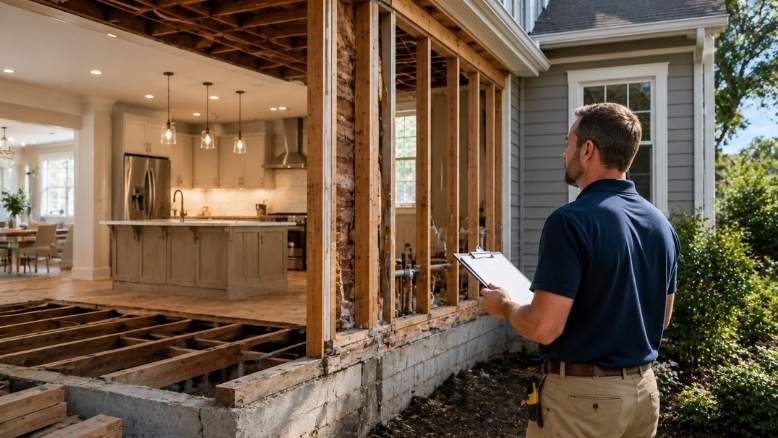
Before recommending any renovation, experienced contractors evaluate the condition of the home—not just its appearance. A house may look outdated, but if its foundation, framing, roof, plumbing, and electrical systems are in good condition, remodeling often becomes a practical and cost-effective investment.
Instead of replacing the entire property, homeowners can focus on improvements that provide the greatest everyday value, including:
- Kitchen remodeling
- Bathroom remodeling
- Basement remodeling
- Home additions
- Open-concept floor plans
- Energy-efficient upgrades
These projects improve how the home functions while making it more enjoyable for years to come.
You’re Solving Lifestyle Challenges
Many homeowners believe they need a bigger house when the real issue is how the existing space is being used.
Common problems that remodeling can solve include:
- A kitchen that’s too small for family gatherings.
- A lack of storage throughout the home.
- An unfinished basement that could become valuable living space.
- The need for a home office or guest room.
- Closed-off rooms that make the home feel smaller than it is.
A well-designed Home Remodeling project focuses on improving functionality rather than simply adding square footage. Often, better space planning creates a home that feels larger without increasing its footprint.
When Moving Is the Better Investment
Although remodeling is an excellent solution for many homeowners, there are situations where moving makes more sense. A reliable contractor should recommend the option that best serves your long-term goals—not simply the one that results in a renovation project.
Moving may be the better choice when:
- Your property can’t accommodate the space you need. Lot size, zoning restrictions, or structural limitations may prevent major additions or expansions.
- The home requires extensive structural repairs. Significant foundation issues, severe water damage, or failing structural components can make remodeling less practical.
- You want a completely different location. If your priorities include a shorter commute, different schools, or another neighborhood, moving may provide benefits that remodeling cannot.
- Your family’s future needs exceed your home’s potential. When even a major renovation won’t provide the space or functionality you’re looking for, purchasing another property may be the better long-term investment.
Your Home Has Reached Its Limits
Every property has physical limitations. Before planning a renovation, contractors evaluate whether the home can realistically support the desired changes.
Factors that may limit remodeling include:
- Small lot sizes.
- Local zoning regulations.
- Setback requirements.
- Structural constraints.
- Limited room for future additions.
If your goals can’t be achieved within these limitations, moving may ultimately provide a more practical solution.
Major Structural Issues Can Change the Decision
Not every home is worth renovating. If inspections uncover serious structural problems, homeowners should carefully compare the cost of repairs with the cost of purchasing another property.
Common concerns include:
- Foundation movement or settlement.
- Extensive water damage.
- Outdated electrical systems.
- Failing plumbing infrastructure.
- Significant structural deterioration.
When these issues require major reconstruction before remodeling can begin, buying another home may provide better long-term value.
The Hidden Costs Most Homeowners Forget to Compare
When people compare remodeling and moving, they usually focus on the obvious numbers. However, some of the biggest expenses are often overlooked.
Hidden Costs of Moving
Moving involves much more than buying another house. Depending on the property, homeowners may also pay for:
- Realtor commissions
- Closing costs
- Home inspections
- Loan fees
- Professional movers
- Utility connection charges
- New furniture or appliances
- Repairs or upgrades after moving in
These costs can add thousands of dollars to the overall investment.
Hidden Costs of Home Remodeling
Remodeling also requires careful planning.
Depending on the scope of work, homeowners should consider:
- Permit fees
- Material selections
- Temporary living arrangements for major renovations
- Unexpected repairs discovered during construction
- Upgrading older electrical, plumbing, or HVAC systems to meet current building codes
An experienced Home Remodeling Contractor Maryland will discuss these possibilities before construction begins so there are fewer surprises during the project.
Questions We Ask Before Recommending Home Remodeling
Every successful Home Remodeling project starts with the right questions—not a design plan or a price estimate. An experienced contractor takes the time to understand your goals, evaluate your home’s condition, and determine whether remodeling is the best long-term investment. This approach helps ensure that every Home Remodeling project is tailored to your family’s needs rather than offering a one-size-fits-all solution.
1. How Long Do You Plan to Stay in Your Home?
Your future plans play a major role in deciding the scope of a remodeling project.
- If you plan to stay in your home for many years, investing in high-quality renovations can improve your daily living experience while increasing your property’s long-term value.
- If you expect to move within the next few years, it may be wiser to focus on upgrades that offer the best return on investment without overspending.
Understanding your timeline allows us to recommend improvements that align with both your lifestyle and your financial goals.
2. What Problems Are You Trying to Solve?
Instead of asking, “What do you want to renovate?” we ask, “What’s no longer working in your home?”
Common challenges homeowners mention include:
- A cramped or outdated kitchen.
- Limited storage space.
- The need for a home office.
- An unfinished basement.
- Too few bathrooms for a growing family.
- A layout that feels closed off or inefficient.
By identifying the real problem first, we can recommend practical solutions that improve how your home functions instead of suggesting unnecessary renovations.
3. Is Your Home Structurally Ready for Remodeling?
Before discussing finishes, flooring, or paint colors, we evaluate the home’s overall condition to determine whether it’s a good candidate for renovation.
Our assessment typically includes:
- Foundation and structural framing.
- Roofing condition.
- Plumbing and electrical systems.
- HVAC performance.
- Insulation and ventilation.
- Any existing damage that could affect the project.
Addressing structural concerns before construction begins helps prevent unexpected issues, protects your investment, and creates a safer, longer-lasting renovation.
Which Remodeling Projects Deliver the Best Long-Term Value?
Not every renovation adds the same value. Some projects improve daily living while also making a property more attractive to future buyers.
Among the most valuable investments are:
- Kitchen remodeling that improves workflow and storage.
- Bathroom remodeling that increases comfort and functionality.
- Basement remodeling that transforms unused space into livable square footage.
- Home additions that provide growing families with extra room.
- Energy-efficient upgrades that can reduce long-term utility costs.
- Layout improvements that create brighter, more open living spaces.
The best remodeling projects aren’t always the most expensive. They’re the ones that solve everyday problems while improving the home’s overall functionality.
Frequently Asked Questions
Is Home Remodeling cheaper than moving?
Not always. The cost of Home Remodeling depends on the scope of the project, local housing prices, and the overall cost of buying a new home. Comparing the total investment for both options—not just the upfront expense—is the best way to make an informed decision.
Does Home Remodeling increase home value?
Many Home Remodeling projects can increase property value, especially kitchen renovations, bathroom updates, basement finishing, and functional layout improvements. The return on your Home Remodeling investment depends on the quality of the work, the upgrades you choose, and local market conditions.
Should I remodel before selling my home?
It depends on your property’s condition and your goals. Some improvements help attract buyers and increase resale value, while others may not provide a strong return. A contractor can help identify upgrades that are worth the investment.
How do I know if my home is suitable for remodeling?
It depends on your property’s condition and your goals. Some improvements help attract buyers and increase resale value, while others may not provide a strong return. A contractor can help identify upgrades that are worth the investment.
Is Home Remodeling worth the investment?
Yes, Home Remodeling is worth it when it improves your home’s functionality, comfort, and long-term value. Well-planned renovations can also increase your property’s resale appeal while allowing you to stay in the home you already love.
Final Thoughts
Choosing between Home Remodeling and moving isn’t simply a financial decision. It’s about finding the option that best supports your family’s future.
For many Maryland homeowners, remodeling provides the opportunity to improve comfort, functionality, and long-term value while staying in a neighborhood they already love. In other situations, moving may offer a better solution when the existing property can no longer meet future needs.
If you’re considering Home Remodeling and want professional guidance, USA Builders & Developers can help you evaluate your home’s potential and recommend practical solutions that align with your goals. Whether you’re planning a kitchen renovation, basement remodel, home addition, or a complete home transformation, our experienced team is here to help you make a confident investment in your Maryland home.
Have Questions? Call Us Now!
We’re here to help—quick answers, friendly service, anytime you need!