How to Remove Moss from Roof safely depends on the roofing material, amount of moss, roof condition, and cleaning method you use. Small patches may be manageable with the right treatment, but aggressive cleaning can damage shingles and create expensive problems.
Moss grows best on roofs that stay damp, cool, and shaded. Over time, thick moss can hold moisture against shingles, lift their edges, and increase the risk of leaks. It can also make the roof slippery and harder to maintain. The safest approach is to inspect the roof first, remove loose debris carefully, and use a roof-safe treatment recommended for your roofing material. Avoid pressure washing and aggressive scrubbing, especially on asphalt shingles.
In this guide, you will learn how to remove roof moss safely, which cleaning methods to avoid, how to prevent moss from returning, and when it is better to hire a professional.
What Causes Moss to Grow on a Roof?
Moss needs moisture to survive. It grows best in areas that stay cool, damp, and shaded for long periods. A roof may develop moss when several conditions occur together:
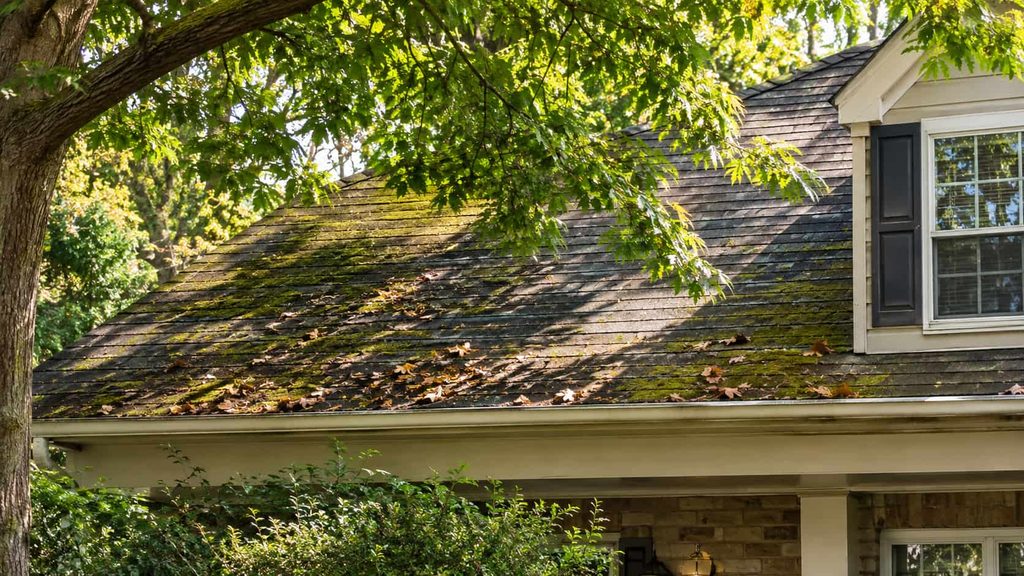
- Heavy shade from nearby trees
- Frequent rain or high humidity
- Poor roof drainage
- Leaves and organic debris collecting on shingles
- Gutters that do not drain properly
- Limited sunlight and airflow
- Roof surfaces that remain damp after storms
North-facing roof sections are often more likely to develop moss because they may receive less direct sunlight. Overhanging branches can make the problem worse by keeping the roof shaded and dropping leaves or needles onto the surface. Moss can also spread from nearby areas because spores can be carried by wind and animals.
Is Moss on a Roof a Serious Problem?
Yes. A small amount of moss may not cause immediate damage, but leaving it untreated can create problems over time. Moss holds moisture against roofing materials. On asphalt shingles, this moisture can contribute to deterioration. Thick growth can also get underneath or between shingle edges and interfere with the way water flows down the roof.
According to the Asphalt Roofing Manufacturers Association, moss can cause shingle edges to lift or curl. Severe growth can contribute to moisture damage and leaks. Common problems associated with heavy roof moss include:
- Lifted or curled shingles
- Trapped moisture
- Damaged roofing materials
- Increased risk of leaks
- Debris buildup
- Poor water shedding
- Possible damage to the roof deck
Moss should therefore be treated as a maintenance issue rather than simply an appearance problem.
Moss vs. Algae: What Is the Difference?
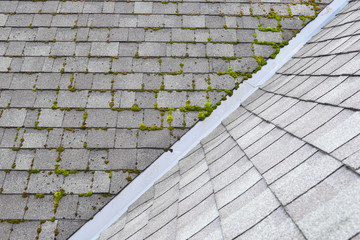
Not every green, brown, or black mark on a roof is moss. Moss is a plant that usually appears as a green, thick, fuzzy growth. It often develops in damp, shaded areas and may form visible patches.
Algae can look very different. It often creates dark streaks or discoloration across shingles. ARMA notes that dark streaks on asphalt roofs are commonly caused by algae rather than moss. Algae mainly affects appearance, while moss can interfere with shingle performance when it becomes established.
This difference matters because the cleaning method may depend on the type of growth and the roofing material. If you are unsure whether you are dealing with moss, algae, lichen, or another type of growth, a roof inspection can help identify the problem before you apply a cleaning product.
How to Remove Moss from Roof Safely
The safest approach depends on your roofing material, the amount of moss, roof slope, roof condition, and the manufacturer’s cleaning instructions. For asphalt shingles, the following process can help guide the work.
1. Inspect the Roof Before Cleaning
D o not immediately start removing the moss.First, inspect the affected area from a safe position. Look for:
- Missing shingles
- Cracked or damaged shingles
- Curling or lifted edges
- Exposed roof deck
- Damaged flashing
- Heavy moss growth
- Signs of water intrusion
- Clogged gutters
Also consider the age and condition of the roof. If the roof is already damaged, cleaning it yourself may make the problem worse. A weak or deteriorated roof can be dangerous to walk on.
2. Put Safety First
Roof cleaning can be dangerous even when the roof appears easy to access. A wet roof becomes slippery, and moss can make the surface even more difficult to walk on. Cleaning solutions can also make shingles slick. Avoid working during:
- Rain
- Snow
- Strong winds
- Icy conditions
- Very wet weather
Use proper fall protection when appropriate. A stable ladder and suitable footwear are important, but basic equipment does not eliminate the risk of falling. If the roof is steep, high, slippery, or difficult to access, hire a professional instead of climbing onto it.
3. Remove Loose Debris
Before treating the moss, remove leaves, branches, pine needles, and other loose debris. Do this without aggressively scraping the shingles. A non-abrasive method can help remove loose debris while reducing the chance of damaging the roofing surface. ARMA recommends directing airflow down the roof slope if a leaf blower is used so debris is not forced underneath shingle edges.
Clean the gutters as well. Blocked gutters can prevent water from draining properly and may contribute to damp conditions around the roof.
4. Apply a Roof-Safe Moss Treatment
The next step is treating the remaining moss. Do not assume that every household cleaner is safe for your roof. Cleaning products can affect shingles, metal components, plants, siding, and other parts of the property. Before applying any product, check:
- The roofing manufacturer’s instructions.
- The cleaner’s label.
- Whether the product is approved for your roofing material.
- Whether additional safety equipment is required.
Some professional roof-cleaning methods use diluted cleaning solutions to treat moss and algae. For that reason, homeowners should not automatically apply a homemade solution without checking the roofing manufacturer’s recommendations first.
5. Let the Treatment Work
A roof treatment usually needs time to loosen or kill the growth. Do not immediately attack the moss with a hard brush. The goal is to allow the treatment to work on the growth while minimizing physical damage to the shingles.
Follow the product label for the correct application time. Do not allow a cleaning solution to dry on the roof unless the product specifically instructs you to do so.
6. Rinse Gently When Required
If the cleaning product requires rinsing, use gentle water pressure and work in the direction of the roof slope. The water should move down toward the gutters rather than underneath the shingles.
Avoid forcing water upward under shingle edges. Water entering beneath shingles can create problems that are much more serious than the original moss growth.
7. Let the Remaining Moss Break Down Naturally
You may not see every piece of moss disappear immediately. After treatment, remaining dead moss may loosen over time and wash away with rain. Depending on the severity of the growth, more than one treatment may sometimes be necessary. Do not keep scrubbing the roof simply because some discoloration remains.
Once the roof is dry, inspect it again from a safe location. Look for remaining moss, damaged shingles, exposed areas, or signs of water intrusion. If the moss returns quickly, the underlying moisture and shade problem may still exist.
Can You Pressure Wash Moss Off a Roof?
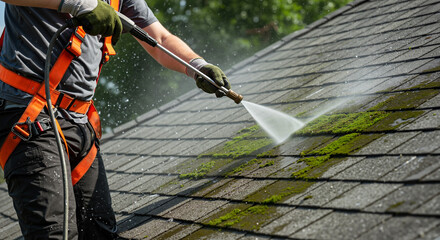
No. Pressure washing is generally not recommended for asphalt shingles. A pressure washer may appear to provide a quick solution, but high-pressure water can remove shingle granules and damage the roofing surface. It can also force water beneath shingles, increasing the risk of leaks.
ARMA specifically warns against using power washers on asphalt roofing because high pressure can damage the roofing system and remove granules. The same warning applies to aggressive scrubbing. Excessive friction can loosen granules and weaken the surface. A clean-looking roof is not worth damaging the shingles.
Can You Remove Moss Without Chemicals?
Light surface growth may sometimes be controlled through careful physical removal and moisture prevention. However, physically pulling or aggressively scrubbing established moss is not a good approach for asphalt shingles. Moss can be attached firmly to the roofing surface. Pulling it away can lift shingle edges or disturb the protective granules.
A roof-safe treatment can help control remaining growth without relying on force. If you want to avoid chemical treatments, talk with a roofing professional about options appropriate for your specific roofing material. The best method is not simply the one that removes the moss fastest. It is the one that controls the growth without damaging the roof.
What Should You Not Use to Remove Roof Moss?
Several common cleaning methods can cause more harm than good.
Pressure Washers
High-pressure water can remove asphalt shingle granules and damage the roofing system.
Aggressive Brushes
Hard scrubbing can loosen granules and damage shingle surfaces.
Unapproved Chemicals
Some cleaners may react with roofing materials or shorten their useful life.
Household Cleaners Without Checking the Roof
A product that works on a driveway, patio, or siding may not be appropriate for shingles.
Excessive Water
Water should not be forced underneath shingles or into roof openings.
Walking on a Wet, Moss-Covered Roof
Moss and cleaning solutions can make the roof extremely slippery. When in doubt, check the roofing manufacturer’s instructions or contact a qualified roofing professional.
How to Prevent Moss from Growing Back
Removing moss solves the immediate problem. Prevention helps address the conditions that caused it.
Trim Overhanging Trees
Cutting back branches can increase sunlight and airflow around the roof. It also reduces the amount of leaves and organic debris collecting on the shingles.
Keep the Roof Clear
Leaves, pine needles, and other debris hold moisture. Remove accumulated debris using a safe, non-abrasive method.
Keep Gutters Clean
Blocked gutters can interfere with drainage. Clean gutters help rainwater move away from the roof properly.
Improve Airflow
Good airflow helps the roof dry after rain. Check that attic ventilation is functioning correctly.
Address Drainage Problems
Water should not continually discharge onto another roof section. ARMA recommends routing upper-story downspouts into appropriate lower-level drainage systems instead of allowing water to pour directly onto a lower roof.
Inspect the Roof Regularly
Regular inspections can identify small patches of moss before they become widespread.
Consider Moss-Resistant Options When Re-Roofing
Some asphalt shingles are manufactured with algae-resistant technology. If moss or algae is a recurring problem, discuss suitable roofing products with your contractor when it is time for replacement.
When Should You Hire a Professional?
DIY roof cleaning is not appropriate for every home. Consider professional roof cleaning or inspection if:
- The roof has a steep slope.
- Moss covers a large section.
- The shingles are old or damaged.
- The roof feels unsafe to access.
- You see missing or lifted shingles.
- You notice leaks or water stains.
- Moss has grown underneath shingle edges.
- You are unsure which cleaning product to use.
- You cannot safely reach the affected area.
Professional roofers can inspect the roof before cleaning and identify problems that may not be visible from the ground. This can prevent a simple moss problem from turning into a larger roofing repair.
How Often Should You Remove Moss From a Roof?
There is no single schedule that works for every home. A roof surrounded by large trees may need more frequent inspections than a roof exposed to full sunlight. Homes in damp or humid conditions may also experience faster growth. Instead of waiting for a fixed cleaning date, inspect the roof regularly.
Look for:
- New green patches
- Dark streaks
- Accumulated leaves
- Shingle lifting
- Blocked gutters
- Damp areas
- Damaged flashing
Early treatment is usually easier than dealing with thick, established moss.
Frequently Asked Questions
What is the fastest way to remove moss from a roof?
The safest effective method depends on the roofing material and the severity of the growth. For asphalt shingles, use a manufacturer-approved cleaning approach rather than pressure washing or aggressive scrubbing.
Can vinegar remove moss from a roof?
Vinegar is sometimes suggested as a homemade moss treatment, but it should not automatically be used on roofing materials. Check the shingle manufacturer’s recommendations before applying any household solution.
Will roof moss damage shingles?
Yes. Heavy moss growth can hold moisture against shingles and may lift or curl their edges. Over time, this can increase the risk of water intrusion and other roof problems.
Should I scrape moss off my shingles?
Avoid aggressive scraping. Pulling or scraping established moss can damage shingle surfaces and remove protective granules.
How do I stop moss from growing back on my roof?
Reduce the conditions that encourage growth. Trim nearby branches, keep the roof free of debris, maintain clean gutters, improve airflow, and inspect the roof regularly.
Can I use a pressure washer to clean roof moss?
No. Pressure washing can damage asphalt shingles, remove granules, and force water beneath the shingles.
Is roof moss a sign that I need a new roof?
Not necessarily. Small amounts of moss do not automatically mean the roof needs replacement. However, extensive moss, damaged shingles, leaks, or an aging roof should be professionally inspected.
How long does it take for moss to disappear after treatment?
The timing depends on the treatment, weather, roofing material, and severity of the growth. Some dead moss may loosen gradually rather than disappearing immediately.
Final Thoughts
Learning how to remove moss from roof surfaces is only part of protecting your roofing system. The bigger goal is to control moisture, avoid damaging the shingles, and prevent the growth from returning. Do not use a pressure washer on asphalt shingles. Avoid aggressive scrubbing and do not apply cleaning products without checking whether they are suitable for your roofing material.
If the roof is steep, slippery, heavily covered with moss, or already showing signs of damage, professional help is the safer option. USA Builders and Developers can help homeowners identify roofing problems, address damage, and determine the right maintenance or repair solution for their property. A roof that is inspected and maintained regularly is easier to protect than one that is already leaking or severely damaged.
Need help with a moss-covered or damaged roof? Contact USA Builders and Developers for professional roofing inspection and service.
Have Questions? Call Us Now!
We’re here to help—quick answers, friendly service, anytime you need!