
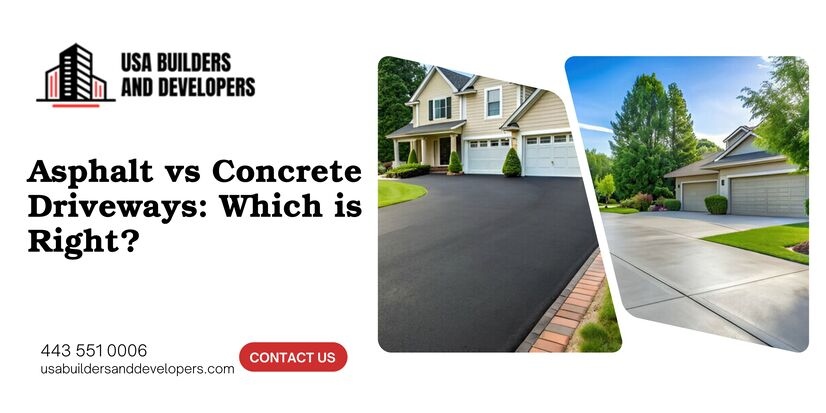
Choosing the right driveway material is an important decision for homeowners. A driveway not only supports daily vehicle traffic but also plays a major role in curb appeal, durability, and long-term maintenance costs. When planning a new driveway installation or replacing an old one, many homeowners compare asphalt vs concrete to determine which material offers the best value.
Both materials are widely used in residential and commercial construction, but they differ in cost, durability, appearance, and maintenance requirements. Understanding the advantages and limitations of each option helps homeowners choose the best driveway solution for their property.
This guide explains the key differences between asphalt vs concrete driveways, including cost, durability, installation, maintenance, and long-term performance.
Understanding Asphalt Driveways
An asphalt driveway is made from a mixture of aggregates such as crushed stone, sand, and gravel combined with asphalt cement. This mixture creates a flexible pavement surface designed to withstand vehicle weight and changing weather conditions.
Asphalt is commonly used for roads, parking lots, and residential driveways because it provides a smooth driving surface and can be installed relatively quickly.
Advantages of Asphalt Driveways
Lower Installation Cost
One of the main reasons homeowners choose asphalt is affordability. Asphalt driveway installation typically costs less than concrete, making it a cost-effective option for larger driveways.
Faster Installation Process
Asphalt driveways can often be installed within one to two days, depending on the size of the project. The material also cures faster, allowing homeowners to use the driveway sooner.
Better Performance in Cold Climates
Asphalt performs well in colder climates because its flexible structure allows it to expand and contract with temperature changes. This reduces the risk of cracking during freezing and thawing cycles.
Easy Repairs and Maintenance
Small cracks and surface damage in asphalt can be repaired easily with seal coating or patching. Routine maintenance helps extend the life of the driveway.
Limitations of Asphalt Driveways
Although asphalt offers several advantages, it also has some drawbacks.
- Limited design and color options
- Requires periodic seal coating every few years
- Can soften in extremely hot temperatures
- Typically has a shorter lifespan than concrete
Understanding Concrete Driveways
A concrete driveway is constructed using cement, sand, gravel, and water to form a strong, rigid surface. Concrete is widely used for driveways, sidewalks, patios, and structural foundations because of its durability and long service life.
Concrete driveways are known for their strength and clean appearance, making them a popular choice for homeowners looking for long-lasting paving solutions.
Advantages of Concrete Driveways
Longer Lifespan
Concrete driveways typically last 30 to 40 years when properly installed and maintained, which is significantly longer than most asphalt driveways.
Greater Durability
Concrete surfaces are strong and resistant to heavy loads, making them suitable for areas with frequent vehicle traffic.
Low Maintenance Requirements
Concrete requires less routine maintenance compared to asphalt. While occasional sealing may help protect the surface, concrete does not need frequent resurfacing.
Decorative Options
Concrete offers more design flexibility. Homeowners can choose decorative finishes such as stamped concrete, colored concrete, or exposed aggregate to enhance curb appeal.
Limitations of Concrete Driveways
Despite its durability, concrete also has some disadvantages.
- Higher installation cost
- Can crack due to ground movement or freeze-thaw cycles
- Repairs may be more noticeable
- Installation takes longer to cure before use
Asphalt vs Concrete Driveway Cost
Cost is one of the most important factors homeowners consider when comparing asphalt vs concrete driveways. The total cost depends on several factors including driveway size, excavation work, drainage preparation, and material quality.
Asphalt Driveway Cost
On average, asphalt driveway installation ranges between $4 and $7 per square foot. Because asphalt materials and labor costs are generally lower, this option is often more affordable for homeowners.
However, asphalt requires periodic maintenance such as seal coating, which adds to long-term costs.
Concrete Driveway Cost
Concrete driveways typically cost between $6 and $12 per square foot, depending on design features and finishing techniques.
While the upfront cost is higher, concrete may offer better long-term value due to its durability and longer lifespan.
Asphalt vs Concrete Durability
Durability is another key factor when comparing asphalt vs concrete driveway materials.
Asphalt Durability
Asphalt driveways usually last 15 to 25 years with proper maintenance. Regular seal coating helps protect the surface from water penetration, oxidation, and cracking. Because asphalt is flexible, it performs well in areas with temperature fluctuations and freeze-thaw cycles.
Concrete Durability
Concrete driveways can last 30 years or more when installed correctly. Its rigid structure makes it highly resistant to heavy loads and surface wear.
However, concrete can crack if the ground shifts or if expansion joints are not properly installed.
Installation Process for Asphalt and Concrete Driveways
Although both driveway types involve excavation and base preparation, their installation processes differ.
Asphalt Driveway Installation
The asphalt driveway installation process typically includes:
- Excavating the existing surface
- Preparing and compacting the gravel base
- Installing asphalt layers
- Compacting the asphalt surface with heavy rollers
Asphalt surfaces usually cure within 24 to 48 hours, allowing homeowners to use the driveway quickly.
Concrete Driveway Installation
Concrete driveway installation involves:
- Excavating and grading the area
- Installing a compacted gravel base
- Building forms to shape the driveway
- Pouring and leveling the concrete
- Finishing the surface and creating expansion joints
Concrete requires several days to cure, and full strength may take up to 28 days.
Asphalt vs Concrete Maintenance
Maintenance requirements vary significantly between asphalt and concrete driveways.
Asphalt Maintenance
Asphalt driveways require regular maintenance to maintain performance.
Common maintenance tasks include:
- Seal coating every 3–5 years
- Filling cracks and potholes
- Cleaning oil stains and debris
These steps help protect the asphalt surface and extend its lifespan.
Concrete Maintenance
Concrete requires less frequent maintenance.
Homeowners should:
- Clean the surface periodically
- Seal the driveway every few years if desired
- Repair cracks early to prevent further damage
Although concrete maintenance is minimal, repairs can sometimes be more noticeable.
Which Driveway Material Is Best for Your Home?
The choice between asphalt vs concrete driveways depends on several factors including budget, climate, maintenance preferences, and design goals.
Asphalt may be the better option for homeowners who want:
- Lower installation costs
- Faster installation
- Easier repairs
- Better performance in cold climates
Concrete may be the better choice for homeowners who prefer:
- Longer lifespan
- Higher durability
- Decorative design options
- Lower long-term maintenance
Both materials provide reliable driveway solutions when installed by experienced paving contractors.
Choosing the Right Driveway Solution
A professionally installed driveway improves property functionality, enhances curb appeal, and increases home value. Whether you choose asphalt or concrete, proper site preparation and expert installation play a critical role in long-term performance.
Working with experienced paving contractors ensures that the driveway base, drainage, and materials are installed correctly for lasting durability.
Asphalt vs Concrete: Detailed Comparison Table
| Feature | Asphalt | Concrete |
|---|---|---|
| Initial Cost | Lower | Higher |
| Installation Time | 1–2 days | Up to 10 days |
| Lifespan | 20–30 years | 30–40+ years |
| Maintenance | Frequent, low-cost | Less frequent, high-cost |
| Climate Suitability | Cold climates | Warm climates |
| Noise Levels | Quieter | Louder |
| Aesthetic Options | Limited | Highly customizable |
| Environmental Impact | Highly recyclable | High CO₂ footprint |
| Repair Cost | Affordable | Expensive |
| Snow & Ice Behavior | Melts faster | Stays colder |
| Ride Quality | Smoother | Harder |
| Color Options | Black only | Many options |
Final Thoughts on Asphalt vs Concrete Driveways
Comparing asphalt vs concrete helps homeowners understand the strengths and limitations of each material before starting a driveway project. Asphalt offers affordability and flexibility, while concrete provides durability and long-term performance.
The best choice ultimately depends on your budget, climate conditions, and desired appearance. By evaluating cost, maintenance, lifespan, and installation requirements, homeowners can select the driveway material that best suits their property and long-term needs.
For homeowners planning a new driveway project, working with experienced professionals ensures the best results. USA Builders and Developers provides reliable paving and driveway installation services in Maryland, helping homeowners choose durable solutions that improve both functionality and curb appeal.
Have Questions? Call Us Now!
We’re here to help—quick answers, friendly service, anytime you need!


