
Modern bathroom design has shifted toward functionality, accessibility, and long-term usability. One of the most practical and increasingly requested features in residential remodeling is the roll in shower.
While many homeowners associate accessibility upgrades strictly with medical necessity, the reality is that a properly designed roll-in shower enhances safety, improves mobility, increases property value, and supports aging-in-place planning. Whether you are renovating a primary bathroom or designing a new build in Maryland, understanding what a roll in shower is and how it differs from other shower types, is essential before making construction decisions.
This comprehensive guide explains structural design, ADA considerations, materials, installation requirements, benefits, and planning considerations from a professional building p
What Is a Roll In Shower?
A roll in shower is a barrier-free shower system designed to allow direct wheelchair or walker access without stepping over a curb or raised threshold. Unlike traditional shower enclosures that require users to step up or over a lip, a roll-in configuration features a flush or low-profile entry integrated into the bathroom floor.
If you’re asking, what is a roll in shower? it is a fully accessible shower space designed for seamless entry, enhanced safety, and universal usability.
The defining characteristic is its zero-threshold design combined with sufficient interior clearance to accommodate mobility devices. However, beyond accessibility, many homeowners now choose a shower roll-in layout for its clean aesthetic and open-concept appearance.
Structural Features of a Roll-In Shower
A properly constructed roll in shower includes several critical structural elements that distinguish it from standard walk-in models.
Zero-Threshold or Flush Entry
The shower floor is either level with the surrounding bathroom floor or slightly recessed to maintain proper drainage without creating a tripping hazard.
Engineered Floor Slope
Although visually level, the shower base is carefully sloped toward a drain system often a linear drain to ensure efficient water flow and prevent pooling.
Increased Interior Clearance
For true accessibility, adequate turning space is essential. Industry best practices recommend sufficient dimensions to allow wheelchair maneuverability without obstruction.
Reinforced Wall Framing
Professional builders reinforce shower walls during installation to support grab bars, fold-down seats, or future modifications.
Slip-Resistant Surfaces
Textured tile, anti-slip finishes, or specialized shower pans help reduce fall risk.
When constructed correctly, roll-in shower systems integrate safety with modern design.

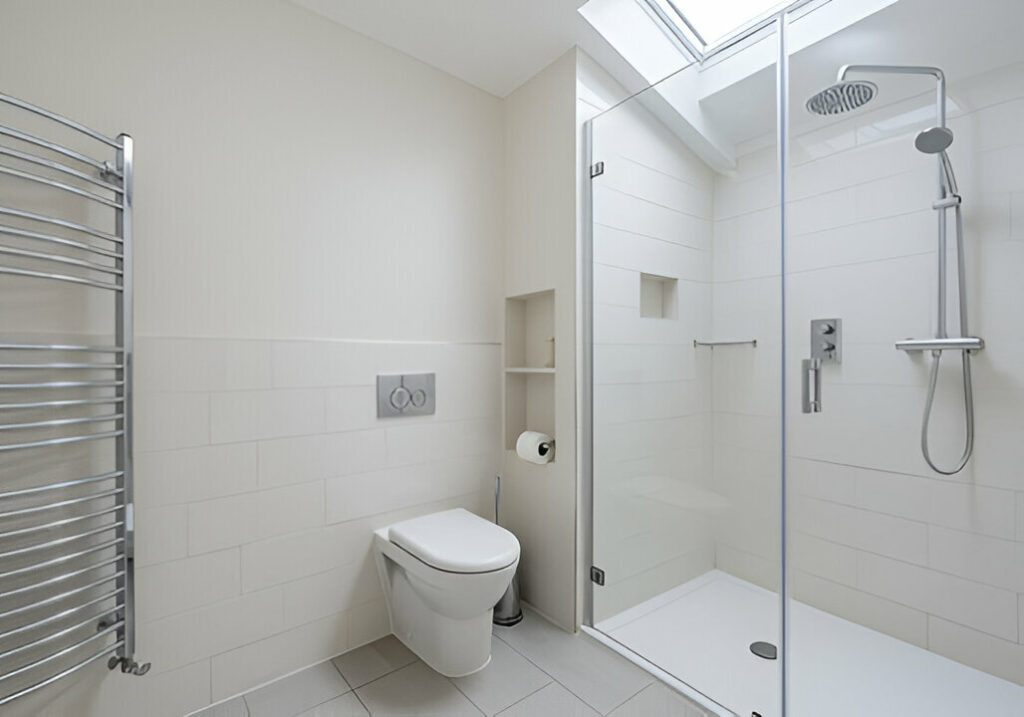
Benefits of Installing a Roll In Shower
Enhanced Accessibility
A roll in shower eliminates the need to step over a curb, significantly reducing fall risk and increasing independence.
Aging-In-Place Readiness
Many Maryland homeowners are planning proactively for long-term residence. A barrier-free shower supports mobility changes without requiring future structural renovations.
Improved Safety
Slip-resistant flooring, accessible controls, and reinforced grab bar locations contribute to a safer bathing environment.
Modern Architectural Appeal
Open, curb-less shower designs create a seamless visual flow. Large-format tile and frameless glass panels enhance aesthetic appeal while maintaining functionality.
Increased Market Appeal
Accessible bathrooms are increasingly attractive in multi-generational households and can broaden buyer interest.
Materials Used in Roll-In Shower Construction
Material selection directly impacts durability, maintenance, and waterproofing performance.
Common construction materials include:
- Porcelain or ceramic tile
- Natural stone
- Acrylic or composite shower pans
- Waterproof membrane systems
- Cement backer board
- Stainless steel linear drains
- Tempered glass panels
Proper waterproofing is non-negotiable. Beneath the finished surface, professional installers apply a sealed membrane system to protect subfloor structures from moisture intrusion.
Inadequate waterproofing is one of the most common causes of long-term bathroom damage.
Structural Requirements for Installation
Installing a roll-in shower typically requires more than surface-level remodeling.
Key structural considerations include:
- Subfloor modification or recessing
- Floor joist evaluation
- Plumbing relocation
- Drain repositioning
- Advanced waterproofing application
- Proper grading for water flow
Homes built on slab foundations may require different structural solutions than those with wood framing.
Working with experienced contractors such as USA Builders and Developers ensures that the shower integrates correctly with existing plumbing and structural systems, particularly in Maryland homes where building codes and moisture protection standards must be carefully followed.
Roll In Shower Cost Breakdown
Costs vary depending on size, materials, and type:
| Type of Shower | Average Cost | Description |
|---|---|---|
| Prefabricated Roll In Shower | $3,000 – $9,000 | Pre-built unit, faster installation |
| Custom Tile Roll In Shower | $6,000 – $15,000 | Fully customizable design, higher-end materials |
| Safety Add-ons | $200 – $1,000 | Grab bars, fold-down seats, hand-held shower heads |
Professional installation is recommended to ensure proper drainage, waterproofing, and long-lasting performance.
Roll-In Shower vs. Walk-In Shower
It is important to understand the difference between these two shower types, as they are often confused.
A walk-in shower is designed for convenience and modern style. It may have a low curb or slight step at the entrance. While it is easier to access than a traditional tub-shower combination, it is not always suitable for wheelchair users or individuals with limited mobility.
A roll-in shower, on the other hand, is completely barrier-free. The entry is flush with the bathroom floor, allowing a wheelchair or walker to move directly inside without obstruction. It is specifically designed to support safe, independent use.
If accessibility, long-term safety, and ease of movement are your main priorities, a roll-in shower is typically the better choice.
ADA Considerations and Residential Application
Although private homes in Maryland are not always legally required to meet ADA guidelines, following ADA design principles ensures maximum safety and long-term usability.
Common ADA-based recommendations include:
- Minimum clear floor space for maneuverability
- Maximum allowable threshold height (ideally zero)
- Accessible placement of shower controls
- Proper grab bar installation height
- Fold-down seating options
Professional contractors such as USA Builders and Developers often incorporate these standards into residential remodels, particularly for aging-in-place projects.
Planning a Roll-In Shower Remodel in Maryland
In Maryland, proper permitting, waterproofing compliance, and plumbing code adherence are critical during bathroom remodeling.
A professionally designed roll in shower should include:
- Code-compliant drain slope
- Approved waterproof membrane installation
- Structural reinforcement
- Proper ventilation
- Moisture-resistant wall materials
Experienced contractors understand regional moisture considerations and structural requirements specific to Maryland properties.
What is a roll-in shower?
A roll-in shower is a barrier-free shower designed with no raised step or curb at the entrance. The floor is level with the bathroom floor, allowing a wheelchair or walker to roll directly inside. It improves safety, accessibility, and ease of use.
What is the difference between a roll-in shower and a walk-in shower?
A walk-in shower may still have a small curb or step at the entrance. A roll-in shower has no barrier at all and is specifically designed for wheelchair access and mobility support.
Are roll-in showers only for people with disabilities?
No. While they are designed for accessibility, many homeowners install roll-in showers for safety, aging-in-place planning, and modern design. They are practical for anyone who wants a safer bathroom layout.
How much space do you need for a roll-in shower?
Most roll-in showers require enough space to allow comfortable movement inside. For full accessibility, a minimum of about 30 inches by 60 inches is commonly recommended, though larger spaces provide better maneuverability.
Can you add a roll-in shower to an existing bathroom?
Yes, in most cases an existing bathroom can be converted. However, the floor may need to be modified, plumbing adjusted, and proper waterproofing installed to ensure correct drainage and long-term durability.
Do roll-in showers increase home value?
Accessible and modern bathroom upgrades can increase buyer appeal, especially in multi-generational homes. Many buyers see barrier-free showers as a long-term benefit.
Final Thoughts
A roll in shower represents more than an accessibility feature, it is a forward-thinking approach to bathroom design. By eliminating barriers, improving safety, and integrating structural waterproofing best practices, it enhances both functionality and long-term property value.
Understanding what is a roll in shower allows homeowners to make informed remodeling decisions grounded in safety, durability, and practical design.
For Maryland homeowners considering a bathroom renovation, consulting experienced professionals such as USA Builders and Developers ensures that structural planning, drainage engineering, and waterproofing standards are executed correctly.
When properly designed and installed, a roll-in shower provides comfort, accessibility, and architectural refinement that supports both current needs and future living requirements.
Have Questions? Call Us Now!
We’re here to help—quick answers, friendly service, anytime you need!

