
Choosing the right sink is an important part of designing or remodeling a kitchen. While many homeowners focus on cabinets, countertops, and appliances, the sink plays a central role in daily kitchen tasks such as washing dishes, preparing food, and cleaning cookware. Understanding kitchen sink sizes helps you choose a sink that fits your kitchen layout and improves functionality.
Kitchen sinks come in different shapes, depths, and configurations. The size you choose should match your cabinet space, cooking habits, and the overall design of your kitchen. Whether you are installing a new sink or replacing an old one, knowing the standard kitchen sink size and common dimensions will help you make the right decision.
In this guide, we’ll explore the standard kitchen sink sizes, dimensions, and common sink configurations so homeowners can choose a sink that fits their kitchen perfectly.
What Are Standard Kitchen Sink Sizes?
Most kitchen sinks are designed to fit standard kitchen cabinets. The typical standard kitchen sink size ranges between 22 inches and 33 inches wide, although smaller and larger options are also available depending on the sink style.
The most common kitchen sink dimensions include:
| Sink Type | Typical Width | Typical Depth |
|---|---|---|
| Small kitchen sink | 22–24 inches | 7–8 inches |
| Standard kitchen sink | 30–33 inches | 8–10 inches |
| Large kitchen sink | 33–36 inches | 9–12 inches |
These measurements represent the average size kitchen sink used in many residential kitchens. However, the exact size depends on the number of bowls and the installation style.
Common Kitchen Sink Sizes and Dimensions
When looking at kitchen sink sizes dimensions, it is helpful to understand how different sink styles affect the overall size.
Single Bowl Sink Sizes
Single bowl sinks have one large basin and are popular in modern kitchens because they provide more space for washing large pots and pans.
Typical single bowl kitchen sink size:
- Width: 24–33 inches
- Depth: 8–10 inches
These sinks are ideal for smaller kitchens or homeowners who prefer a simple design.
Double Bowl Sink Sizes
Double bowl sinks have two basins that allow homeowners to wash and rinse dishes at the same time.
Typical common kitchen sink sizes for double bowls:
- Width: 30–36 inches
- Depth: 8–10 inches
Double sinks are popular for busy households because they improve workflow and organization.
Farmhouse Sink Sizes
Farmhouse sinks, also called apron-front sinks, are larger and deeper than traditional sinks. They create a distinctive look and provide extra capacity for large cookware.
Typical farmhouse kitchen sink sizes:
- Width: 30–36 inches
- Depth: 9–12 inches
Because of their size, these sinks require specific cabinet support.
Kitchen Sink Sizes Dimensions Chart
Here is a quick overview of typical kitchen sink sizes dimensions used in modern kitchens.
| Sink Style | Width | Length | Depth |
|---|---|---|---|
| Bar Sink | 15–20 in | 15–20 in | 6–7 in |
| Small Kitchen Sink | 22–24 in | 18–22 in | 7–8 in |
| Standard Sink | 30–33 in | 18–22 in | 8–10 in |
| Large Sink | 33–36 in | 20–24 in | 9–12 in |
This chart helps homeowners compare sink options before choosing a size that fits their cabinet and countertop layout.
Average Size Kitchen Sink for Modern Homes
The average size kitchen sink in most homes today is around 30 to 33 inches wide and about 8 to 10 inches deep. This size offers enough space for daily kitchen tasks while fitting standard kitchen cabinets.
Modern kitchen designs often favor deeper sinks because they allow homeowners to wash large cookware without splashing water onto the countertop. However, choosing the right sink size also depends on the size of the kitchen and the cabinet layout.
How to Choose the Right Kitchen Sink Size
Selecting the correct sink involves more than just picking a design you like. You should consider several factors before deciding.
Cabinet Size
Your base cabinet determines the maximum sink width you can install. Most kitchen sinks require at least 2–3 inches of clearance inside the cabinet.
Kitchen Layout
Smaller kitchens often benefit from compact sinks, while larger kitchens can accommodate deeper and wider sinks.
Cooking Habits
If you frequently cook large meals or use oversized cookware, a deeper sink may provide more convenience.
Installation Style
Kitchen sinks can be installed in several ways, including:
- top-mount sinks
- undermount sinks
- farmhouse sinks
- integrated sinks
Each installation style may affect the available kitchen sink size.
Why Sink Depth Matters
While width and length determine the overall size, depth plays a major role in usability. Shallow sinks may cause water splashes and limit the ability to wash large cookware. Deeper sinks allow more space for cleaning dishes and preparing food.
Most standard kitchen sink sizes today include depths between 8 and 10 inches, which provide a good balance between comfort and functionality.
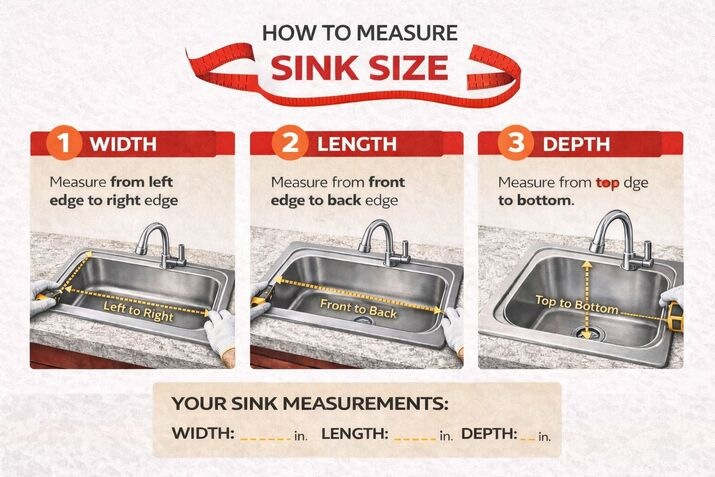
Tips for Measuring Your Kitchen Sink Space
Before purchasing a sink, it is important to measure the available space accurately.
Follow these simple steps:
- Measure the width of your base cabinet.
- Check the depth of your countertop cutout.
- Leave clearance for plumbing connections.
- Consider faucet placement and accessories.
Accurate measurements help ensure your new sink fits properly and avoids installation issues.
Kitchen Sink Installation Considerations
When installing a new sink, homeowners should consider both aesthetics and practicality. A well-installed sink improves the efficiency of your kitchen workspace and complements the overall design.
Professional installation can help ensure the sink is properly aligned with cabinets, plumbing connections, and countertops. This prevents leaks and improves long-term durability.
For homeowners planning kitchen upgrades or remodeling projects in Maryland, experienced contractors such as USA Builders and Developers can help ensure the sink installation fits the overall kitchen design and functions efficiently.
Final Thoughts
Understanding kitchen sink sizes is essential when designing or upgrading a kitchen. From compact sinks for small kitchens to large farmhouse models for modern homes, choosing the right sink size improves both convenience and functionality.
By considering factors such as cabinet size, sink depth, installation style, and cooking habits, homeowners can select a sink that fits their space perfectly.
Whether you are remodeling your kitchen or installing a new sink, knowing the standard kitchen sink sizes and dimensions helps you make an informed decision and create a kitchen that works efficiently for everyday use.
Have Questions? Call Us Now!
We’re here to help—quick answers, friendly service, anytime you need!


Contact USA Builders and Developers
🌐 Website: www.usabuildersanddevelopers.com
📍 Serving: Baltimore, Betheda, Silver spring, and Montgomery Maryland
📌 Address: 2144 Priest Bridge Court, Suite 8, Crofton, MD 21114, USA