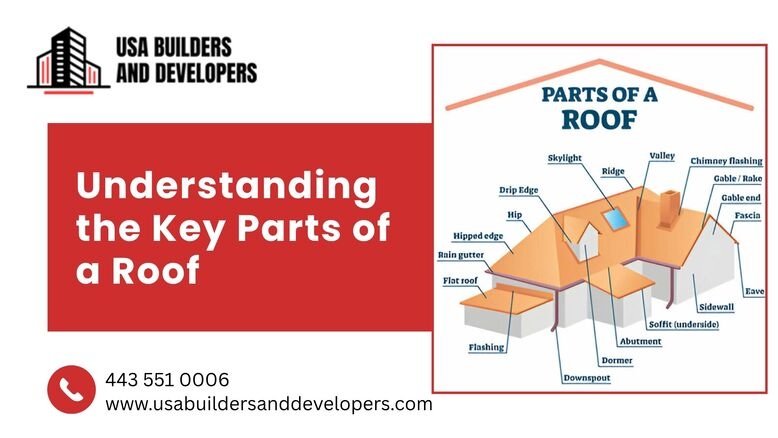
Understanding the parts of a roof is essential for every homeowner, builder, or DIY enthusiast. A roof is more than just shingles; it’s a complex system designed to protect your home from weather, regulate temperature, and enhance structural integrity. Knowing the roof parts can help with maintenance, repairs, and informed decisions when planning a new installation or replacement.
This guide explores every critical component of a roof, its purpose, materials, and common issues, giving you a complete understanding of roof anatomy.
What Are the Parts of a Roof?
The term “parts of a roof” refers to all the structural and functional elements that make up a roofing system. While the visible part is often just the shingles or tiles, a roof includes numerous components beneath the surface, each contributing to its strength, durability, and weather resistance.
These parts can be categorized into structural components, protective layers, and finishing elements. Let’s break them down.
Common Parts of a Roof: A Quick Look
| Roof Part | Function | Typical Materials |
|---|---|---|
| Rafters/Trusses | Support the roof and shape its slope | Wood, engineered lumber |
| Roof Decking/Sheathing | Base layer for shingles or roofing materials | Plywood, OSB, wooden boards |
| Underlayment | Secondary water barrier | Felt, synthetic, rubberized asphalt |
| Flashing | Redirect water around critical areas | Aluminum, galvanized steel |
| Shingles/Tiles/Panels | Protect against weather and provide aesthetics | Asphalt, metal, clay, wood |
| Ridge Cap | Seal roof peak and allow ventilation | Same material as roof covering |
| Drip Edge | Direct water into gutters | Metal (aluminum or steel) |
| Ventilation | Maintain airflow and prevent moisture | Plastic, metal |
| Gutters/Downspouts | Channel water away from the home | Aluminum, PVC, galvanized steel |
| Fascia/Soffits | Protect rafters and allow attic ventilation | Wood, PVC, aluminum |
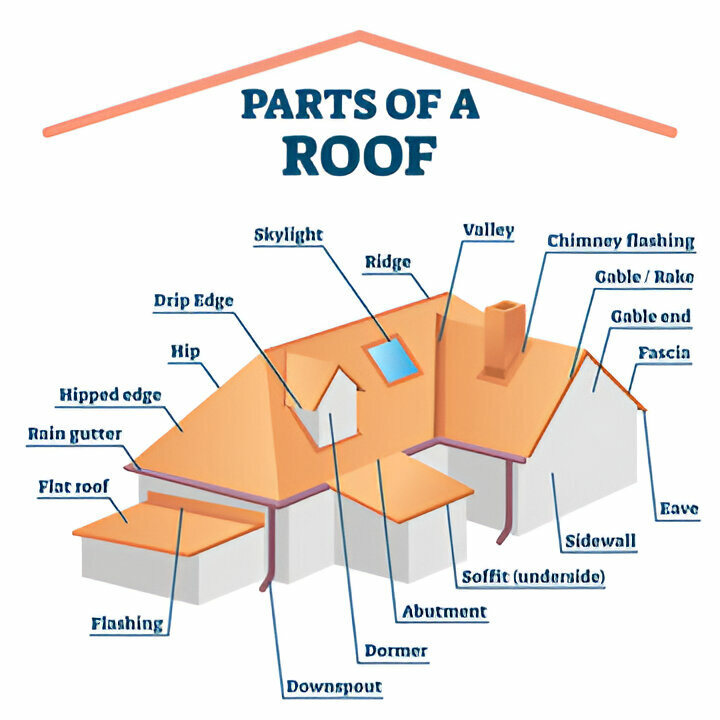
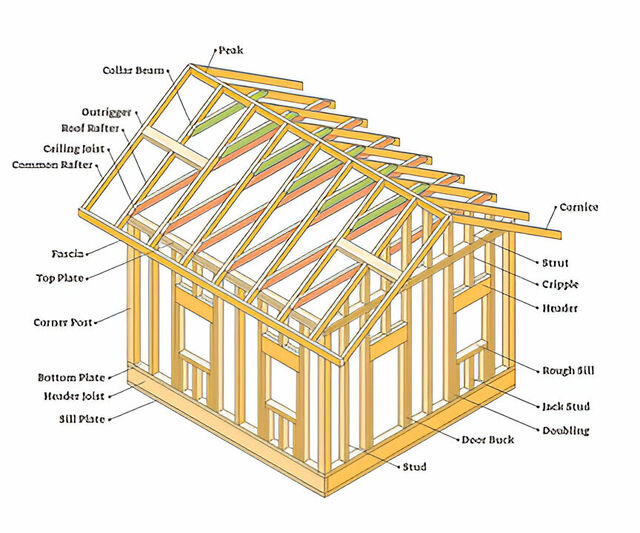
Structural Components of a Roof
The structural elements form the skeleton of the roof, providing support and determining the roof’s shape and load-bearing capacity. Key structural roof parts include:
1. Rafters
Rafters are sloped beams that run from the ridge of the roof to the edges, supporting the roof deck and transferring weight to the walls. They define the roof’s pitch and are crucial for stability.
2. Ridge Board
The ridge board is the horizontal beam at the top of the roof where rafters meet. It forms the peak and provides a secure anchoring point for the rafters.
3. Trusses
Trusses are pre-fabricated triangular frames that replace traditional rafters in modern construction. They are engineered for strength, speed up construction, and reduce material waste.
4. Purlins
Purlins are horizontal beams that run perpendicular to rafters or trusses. They provide additional support to the roof decking, especially on larger roofs.
5. Collar Ties
Collar ties are horizontal members connecting opposing rafters in the upper section of the roof. They prevent the roof from spreading outward and maintain structural integrity.
Roof Decking or Sheathing
The roof decking is the surface that covers the rafters or trusses. It serves as the base for all other layers, including underlayment and shingles.
- Materials: Plywood, OSB (Oriented Strand Board), or wooden boards.
- Function: Supports roof covering, resists wind uplift, and provides a secure base for fasteners.
Proper installation of roof decking is critical for the overall durability of the roof system.
Protective Layers of a Roof
Protective layers prevent water infiltration, reduce heat loss, and extend the roof’s lifespan. They include:
1. Underlayment
Underlayment is a water-resistant or waterproof layer installed over the decking. It acts as a secondary barrier against rain and snow.
- Common Materials: Felt paper, synthetic underlayment, rubberized asphalt.
- Benefits: Protects the home during installation delays and improves leak resistance.
2. Ice and Water Shield
In areas prone to ice dams, this self-adhering membrane is installed along eaves, valleys, and other vulnerable sections. It prevents water from seeping under shingles.
3. Roof Flashing
Flashing consists of thin metal strips installed around chimneys, vents, skylights, and valleys to redirect water away from seams. It prevents leaks at critical junctions.
4. Drip Edge
A drip edge is a metal strip along the roof’s edges that directs water into the gutters, preventing damage to fascia boards and foundation.
Roof Covering Materials (The Visible Layer)
The roofing material is the part most people see. It provides weather protection, aesthetic appeal, and influences energy efficiency. Common parts of a roof in this category include:
- Shingles: Asphalt, architectural, or fiberglass shingles are popular for residential homes.
- Metal Panels: Long-lasting and ideal for modern or industrial-style buildings.
- Tiles: Clay, concrete, or slate tiles provide durability and elegance.
- Wood Shakes: Offer a rustic look but require more maintenance.
Choosing the right roof covering impacts durability, cost, and maintenance frequency.
Finishing and Functional Components
Beyond structure and protection, several components enhance the roof’s performance and appearance:
1. Ridge Cap
The ridge cap covers the roof’s peak, sealing the top while allowing ventilation. It prevents rain and pests from entering the attic.
2. Gutters and Downspouts
Although technically part of the drainage system, gutters and downspouts work with the roof to safely channel water away from the home.
3. Ventilation
Roof vents, including ridge vents, soffit vents, and gable vents, regulate airflow, reduce moisture buildup, and improve energy efficiency.
4. Fascia and Soffits
Fascia boards line the roof edges, while soffits cover the underside of eaves. Together, they protect rafters, allow ventilation, and enhance curb appeal.
Common Issues with Roof Parts
Even well-constructed roofs can develop problems over time. Understanding parts of a roof can help homeowners identify issues early:
- Leaking Flashing: Rust or poor installation causes water infiltration.
- Damaged Shingles: Wind, hail, or age can lift or break shingles.
- Clogged Gutters: Can lead to water overflow and damage to roof edges.
- Ventilation Problems: Poor airflow increases moisture and shortens roof life.
Regular inspection and maintenance can prevent small problems from turning into costly repairs.
How Knowing Roof Parts Helps Homeowners
Understanding parts of a roof is not just for contractors, it’s essential for homeowners:
- Easier Maintenance: Knowing each component helps identify where leaks or damage originate.
- Better Communication with Contractors: You can describe issues accurately, ensuring proper repairs.
- Cost-Effective Decisions: Understand which parts can be repaired versus replaced.
- Informed Material Choices: Select roofing materials suited for climate, durability, and style.
What are the names of roof parts?
The main parts of a roof include the ridge, eaves, rafters, decking, flashing, gutters, valleys, hips, fascia, soffit, shingles, and underlayment. Each part plays a role in protecting your home from weather and supporting the roof structure.
What are the 8 components of a roof?
The eight essential roof components are:
- Ridge – The topmost horizontal line where two roof slopes meet.
- Rafters – Structural beams that support the roof deck.
- Decking – The surface layer, usually plywood or OSB, over rafters.
- Underlayment – Protective layer beneath shingles or tiles.
- Shingles/Tiles – The outer layer that sheds water.
- Flashing – Metal pieces that prevent leaks at joints or roof intersections.
- Eaves – Lower edges of the roof that overhang the walls.
- Gutters – Channels that direct rainwater away from the building.
What are the parts of ceiling and roof?
While the roof forms the exterior protective structure, the ceiling is the interior surface below the roof. Roof parts include rafters, decking, shingles, flashing, and underlayment. Ceiling parts include joists, drywall or plaster, insulation, and sometimes a suspended framework if using a drop ceiling.
Final Thoughts
A roof is a complex system made up of many interconnected parts of a roof. From structural components like rafters and trusses to protective layers such as underlayment and flashing, every part plays a crucial role in maintaining your home’s safety, energy efficiency, and aesthetics. Whether you are planning a new roof installation, repairing damage, or upgrading your home, understanding the parts of a roof helps you make informed decisions, avoid costly mistakes, and ensure your roof lasts for decades.
Regular inspections, timely maintenance, and professional care all play a key role in extending roof lifespan. If you’re planning repairs, upgrades, or a full replacement, learning more about roofing systems and professional roofing services can help ensure every roof component performs as it should.
Have Questions? Call Us Now!
We’re here to help—quick answers, friendly service, anytime you need!