Torch down roofing has become one of the most trusted options for these types of roofs. Widely used on commercial buildings, warehouses, apartment complexes, and even some residential flat roofs, this system is valued for its long-lasting performance, superior waterproofing, and resistance to harsh weather conditions.
If you’re exploring flat roofing options and want a clear understanding of how torch down roofing works, its advantages, practical uses, and installation costs, this comprehensive guide will walk you through everything in easy-to-understand language, helping you make an informed decision for your property.
What Is Torch Down Roofing?
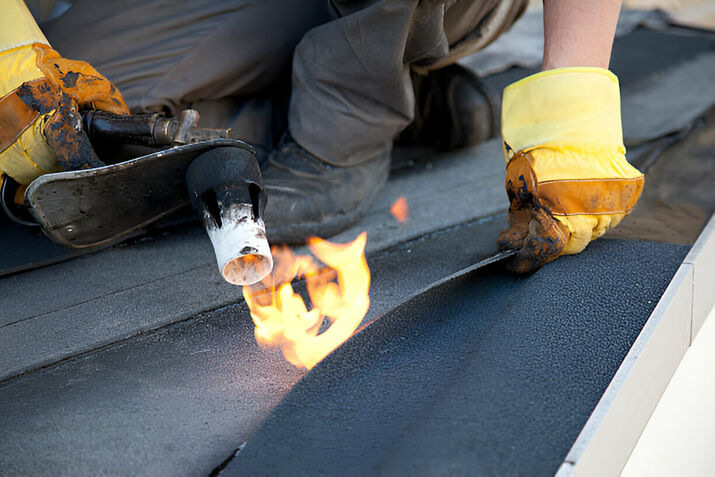
Torch Down Roofing is a flat roofing system installed by heating the underside of modified bitumen sheets with a propane torch and bonding them to the roof surface. The heat melts the asphalt layer, creating a strong, seamless waterproof barrier.
The term down roofing torch refers to the torch-applied installation process. The torch fuses the layers, minimizing seams where water could leak in. Because of this, torch down roofing is highly effective for flat and low-slope roofs.
How Torch Down Roofing Works
Torch down roofs usually involves multiple layers for strength and durability:
- Base Sheet: Attached to the roof deck, providing the first layer of protection
- Modified Bitumen Sheet: Heated with a torch and adhered to the base sheet
- Cap Sheet: The top layer, often covered with mineral granules, protects against UV rays and mechanical damage
During installation, the contractor carefully rolls the heated membrane onto the roof, ensuring strong adhesion and waterproofing. Proper installation is crucial because mistakes can lead to leaks or fire hazards if done incorrectly.
Types of Torch Down Roofing Systems
There are two main types of modified bitumen membranes used in torch down roofing:
APP (Atactic Polypropylene)
APP membranes are plastic-based, highly resistant to UV rays, and ideal for sunny climates. They provide excellent durability and are commonly used for commercial flat roofs.
SBS (Styrene-Butadiene-Styrene)
SBS membranes are rubber-based and more flexible, making them suitable for colder regions. While SBS is often installed using adhesives or cold-applied methods, some torch down systems use SBS as well.
APP-based torch down roofing is the most popular due to its heat tolerance and long-term performance.
Benefits of Torch Down Roofing
Torch down roofing remains popular for good reasons. Here are the key benefits that make it a reliable roofing option.
Superior Waterproofing
The heat-fused seams form a continuous, waterproof barrier, significantly reducing the risk of leaks. This protection safeguards the building structure, insulation, and interior spaces, even during heavy rain or snow.
Long Lifespan
When professionally installed and maintained, torch down roofing can last 20 to 30 years. Its durability makes it a long-term investment, minimizing the need for frequent repairs or replacements.
High Resistance to Weather
Torch down roofs are built to withstand extreme weather, including high winds, heavy rainfall, hail, and fluctuating temperatures. The membrane’s flexibility prevents cracking and ensures consistent protection year-round.
Strong Seam Integrity
Unlike mechanically fastened systems, torch down roofing creates minimal seams, forming a continuous surface that strengthens the roof and lowers the chance of water infiltration.
Cost-Effective for Commercial Roofs
While the upfront cost of torch down roofing may be slightly higher than some alternatives, its long lifespan, minimal repairs, and low maintenance make it a cost-effective solution for commercial and industrial buildings. Over time, property owners often save money due to fewer repairs, less downtime, and extended roof replacement intervals.
Common Uses of Torch Down Roofs
Torch down roofing is best suited for flat or low-slope roofs. It is widely used in:
- Commercial buildings
- Warehouses and factories
- Apartment complexes
- Office buildings
- Garages and extensions
- Residential flat roofs
Because of its strength and waterproofing, it is especially effective for roofs that experience foot traffic or heavy equipment loads.
Torch Down Roofing Costs in Maryland
The cost of torch down roofing in Maryland varies based on roof size, materials, labor, and local conditions. On average, property owners can expect the following:
| Cost Factor | Estimated Range (Maryland) |
|---|---|
| Materials | $3 – $6 per sq. ft. |
| Labor | $2 – $4 per sq. ft. |
| Total Installed | $5 – $10 per sq. ft. |
Torch Down Roofing vs Other Flat Roof Systems
Torch Down vs TPO
Torch down offers better puncture resistance, while TPO is more energy-efficient.
Torch Down vs EPDM
EPDM is easier to install but can have weaker seam integrity over time.
Torch Down vs Built-Up Roofing (BUR)
BUR is durable but heavier and labor-intensive. Torch down roofing provides a balance of durability, waterproofing, and cost.
Pros and Cons of Torch Down Roofing
Pros:
- Long-lasting (20–30 years)
- Excellent waterproofing
- Durable in extreme weather
- Minimal seams
- Cost-effective for commercial roofs
Cons:
- Requires professional installation
- Open-flame installation is a safety concern
- Higher upfront cost than some membrane systems
Maintenance and Care
Torch down roof requires minimal maintenance but regular inspections help extend its lifespan.
Recommended maintenance includes:
- Annual roof inspections
- Clearing debris and standing water
- Checking seams and flashing
- Prompt repair of surface damage
Proper care can prevent small issues from turning into major repairs.
What is torch down in roofing?
Torch down roofing is a type of flat roofing system made of modified bitumen. It is installed by heating the underside of the membrane with a propane torch, bonding it to the roof surface to create a strong, waterproof seal.
How much does torch down roofing cost?
The cost of torch down roofing varies depending on roof size, material, and labor. On average, it costs $5–$10 per square foot installed. Larger commercial projects may have lower per-square-foot costs.
What are the disadvantages of torch down roofing?
Some potential downsides include:
- Requires professional installation due to open flames
- Higher upfront cost than some flat roofing options
- Not ideal for steep-pitched roofs or areas with strict fire restrictions
What is a torch-applied roof system?
A torch-applied roof system uses heat to melt and adhere roofing membranes to the roof surface. This method creates a seamless, durable, and waterproof roof, which is the main principle behind torch down roofing.
How many years does a torch down roof last?
With proper installation and maintenance, a torch down roof can last 20–30 years, making it a long-term and cost-effective solution for flat and low-slope roofs.
Final Thoughts
Torch Down Roofing is one of the best flat roofing solutions available. Its heat-fused seams, long lifespan, and weather resistance make it an excellent investment for commercial and low-slope residential roofs. Understanding the installation process, benefits, costs, and limitations helps property owners make informed decisions. Using experienced roofing contractors ensures proper application and maximizes the roof’s performance.
If you are considering torch down roof for your building, consult professionals who understand down roofing torch installation techniques and safety standards. Companies like USA Builders and Developers offer expertise in commercial and industrial roofing, ensuring long-lasting results.
Just remember: torch down roofing should always be installed by professionals due to the open flame technique. Don’t take risks, choose skilled roofing contractor you can trust.
Have Questions? Call Us Now!
We’re here to help—quick answers, friendly service, anytime you need!